Aconcagua Edge: Inca Presence 500 BP

Download PDF creates a visual, rasterized copy. Use Print for selectable text and better assistive-technology support.

Bericht wird vorbereitet

Verfügbare Informationen und Referenzen werden geladen

Verbindung mit dem archäologischen Quellenbestand...

Alte Quellen werden zusammengestellt

Zum Hauptinhalt springen
Aconcagua Edge: Inca Presence 500 BP
Zivilisations-Spotlight

Aconcagua Edge: Inca Presence 500 BP

A lone genetic voice from Cerro Aconcagua linking high Andean archaeology and DNA

1400 CE - 1500 CE
Cerro Aconcagua, Mendoza Province, Argentina
Scrollen zum Start
Kapitel I

Die Geschichte

Die Aconcagua Edge: Inca Presence 500 BP-Kultur verstehen

Single-sample evidence (1400–1500 CE) from Cerro Aconcagua, Mendoza Province, Argentina, suggests Inca-era connections on the Andean frontier. Y-DNA Q and mtDNA C1b appear in the specimen — preliminary data that illuminate mobility and maternal lineages in a contested borderland.

Time Period

1400–1500 CE

Region

Cerro Aconcagua, Mendoza Province, Argentina

Common Y-DNA

Q (observed in 1 sample)

Common mtDNA

C1b (observed in 1 sample)

Kapitel II

Zeitleiste

Zentrale Momente in der Geschichte dieser Kultur

1400 CE

Inca expansion into southern Andes begins

Regional archaeological evidence marks increasing Inca political and economic influence in western Argentina and adjacent high valleys during the 15th century.

1480 CE

Cerro Aconcagua specimen dates to late pre-Columbian period

The lone genetic sample from Cerro Aconcagua is dated to this interval; interpretations remain preliminary due to sample size of one.

1536 CE

Colonial incursions reshape demographics

Early Spanish expeditions and later colonial processes begin to alter demographic patterns across the southern Andes and lowlands.

Kapitel III

Origins & Emergence

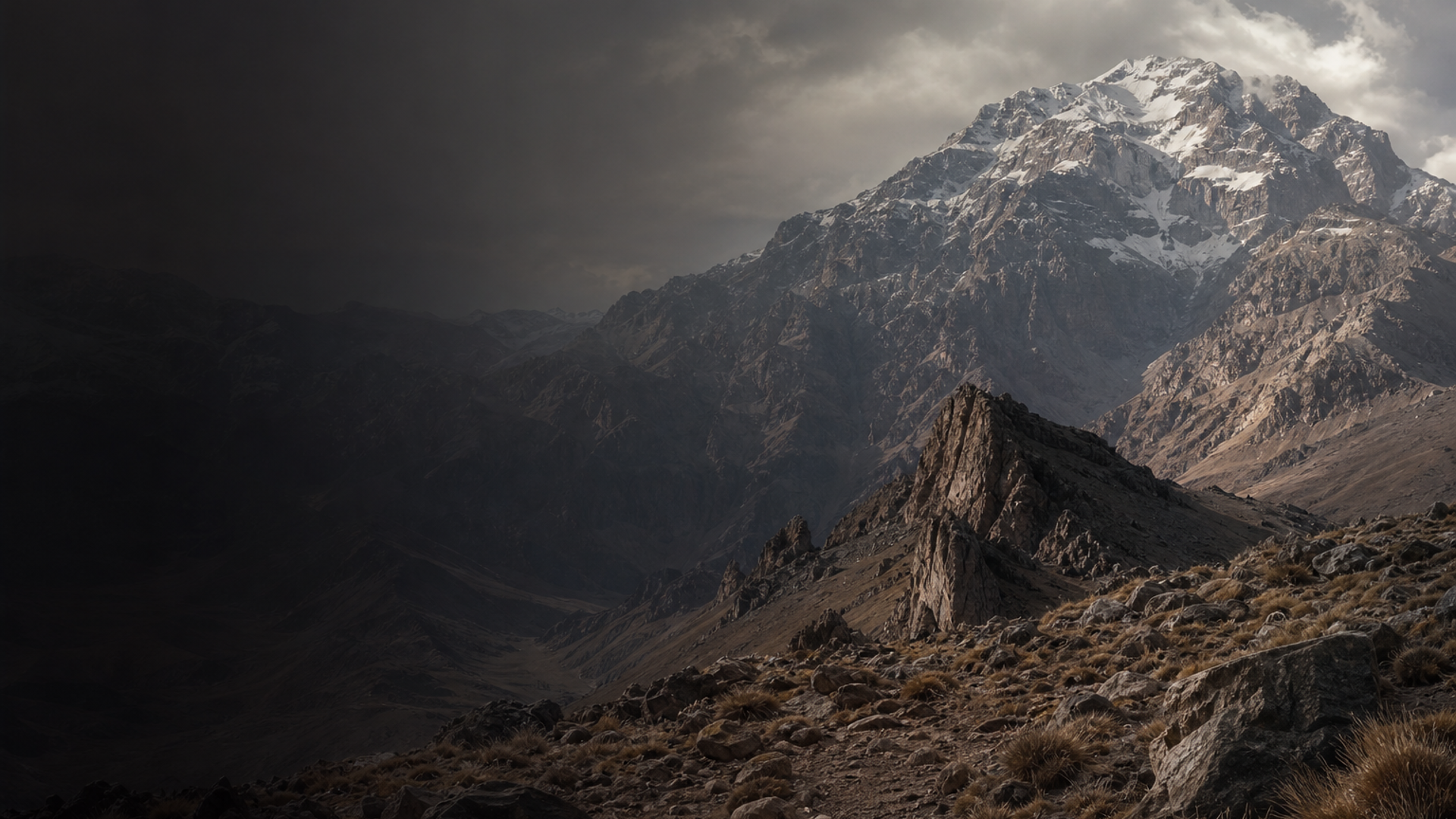
Perched at the threshold of the highest Andes, Cerro Aconcagua (Mendoza Province) is more than a towering peak: it is a landscape of contact. Archaeological data indicates that during the 15th century CE the Aconcagua basin lay within a shifting zone of Inca political and economic influence. Limited evidence from regional surveys and excavations in the high valleys and puna suggests the presence of administrative outposts, caravan trails, and material culture styles that echo Inca organization.

The specimen dated between 1400 and 1500 CE falls within this window of expansion and local interaction sometimes called the Aconcagua Inca horizon. While the cultural label “Inca” conveys imperial integration — road networks, vertical resource exchange, and tribute systems — frontier zones like Aconcagua often hosted blended practices: local communities negotiating new obligations while maintaining long-standing lifeways.

Because we have only a single archaeogenetic sample from Cerro Aconcagua, interpretations of demographic change or full-scale Inca colonization are necessarily cautious. The specimen offers a tangible anchor, however small, for linking regional archaeological patterns to biological descent and mobility along the high-Andean frontier.

  • Located at Cerro Aconcagua, Mendoza Province, Argentina (Andean frontier)
  • Dates to 1400–1500 CE, within the period of late Inca expansion
  • Evidence suggests administrative and exchange networks reached the Aconcagua basin
Kapitel IV

Daily Life & Society

Life in the Aconcagua highlands would have been lived at sharp atmospheric edges: thin air, seasonal decisiveness, and economic ties spanning vertical ecological zones. Archaeobotanical and zooarchaeological research across the southern Andean slopes indicates mixed economies — irrigated valley agriculture, high-altitude herding of camelids, and exchange of coastal products and Andean specialties. Archaeological data indicates storage structures, trail segments, and portable goods in nearby valleys that support a picture of logistical hubs rather than dense urban centers.

Socially, frontier communities often served as intermediaries — providing llama caravans, labor, and local knowledge to imperial administrators while retaining kinship networks and ritual practices. Limited evidence suggests high-mountain ritual use across the Andes, and it is plausible that peaks such as Aconcagua played ceremonial roles for local inhabitants and visiting officials alike. Craft practices, textile styles, and pottery found regionally hint at both local traditions and Inca-inspired forms; the material culture record points to negotiation rather than wholesale replacement.

Because the genetic dataset here is a single individual, these reconstructions of daily life must remain tentative and focused on broader regional patterns rather than claims about an individual’s specific role or status.

  • Mixed economy: valley agriculture, highland camelid herding, and exchange
  • Frontier communities acted as intermediaries between local and imperial systems
Kapitel V

Genetic Profile

The genetic signal from the Cerro Aconcagua specimen is concise but evocative: Y-chromosome haplogroup Q and mitochondrial haplogroup C1b. Haplogroup Q is widespread across Indigenous populations of the Americas and reflects deep male-line ancestry that traces back to early continental dispersals. Mitochondrial C1b is one branch of a set of maternal lineages common in South America, particularly in Andean and southern cone populations.

Taken together, these markers are consistent with a local, Indigenous genetic heritage during the late pre-Columbian period. Archaeogenetic interpretation must stress the sample-size constraint: with only one tested individual, we cannot determine population frequencies, patterns of sex-biased migration, or the extent of biological continuity or admixture across the Aconcagua basin. Limited evidence suggests that Inca administrative reach did not always entail wholesale population replacement; rather, genetic and archaeological data often show continuity with incoming cultural practices.

For DNA ancestry users, this single data point provides a high-confidence assignment of these particular haplogroups to an individual in the Aconcagua Inca context, but it should be treated as preliminary for broader demographic claims. Future sampling from multiple burials and sites in Mendoza and adjacent provinces is necessary to resolve questions of mobility, kinship, and imperial integration.

  • Y-DNA Q present — consistent with continental Indigenous male lineages
  • mtDNA C1b present — a common South American maternal lineage; single sample is preliminary
Kapitel VI

Legacy & Modern Connections

Aconcagua’s slopes hold memory as both a natural summit and a cultural borderland. Genetic echoes of haplogroups Q and C1b persist across modern Andean and southern cone populations, linking present-day communities to deep pre-Columbian ancestries. Archaeological continuity in material traditions and place-based rituals suggests cultural threads that survive in regional identities.

It is crucial to pair fascination with humility: a single genetic sample cannot map the social complexity of entire valleys or the fate of populations after European contact. Instead, this specimen serves as a prompt — a cinematic, human-scale glimpse that invites broader sampling and respectful collaboration with descendant communities. Expanded archaeogenetic research, integrated with archaeology and oral histories, will clarify how people of the Aconcagua highlands navigated empire, environment, and endurance.

  • Modern populations in the Andes share related genetic lineages, reflecting long-term continuity
  • Single-sample results invite more research and community-engaged inquiry
KI-gestützt

KI-Assistent

Stellen Sie Fragen zur Aconcagua Edge: Inca Presence 500 BP-Kultur

KI-Assistent von DNAGENICS

Funktion freischalten
Stellen Sie Fragen zur Kultur Aconcagua Edge: Inca Presence 500 BP. Unser KI-Assistent kann genetische Befunde, historischen Kontext, archäologische Belege und moderne Verbindungen erläutern.
Beispiel einer KI-Analyse

Die Aconcagua Edge: Inca Presence 500 BP-Kultur ist ein faszinierendes Kapitel der Menschheitsgeschichte...

Genetische Analysen zeigen Übereinstimmungen mit früheren Populationen und Hinweise auf besondere Anpassungen und kulturelle Innovationen. Alte DNA-Proben liefern Einblicke in Migrationsmuster, soziale Strukturen und genetische Verbindungen zwischen Populationen.

Dies ist eine Vorschau der KI-Analyse. Schalten Sie den vollständigen KI-Assistenten frei, um detaillierte Einblicke zu erkunden:

  • Genetische Zusammensetzung und genetische Ähnlichkeit
  • Migrationsmuster und Ursprünge
  • Alltag und kulturelle Praktiken
  • Genetischer Bezug zu heutigen Populationen

Weitere antike Kulturen erkunden

Geschichten von Zivilisationen aus der antiken Welt entdecken

Use code for 30% off • Expires Nov 08




