Angara River Bronze Age Echoes

Download PDF creates a visual, rasterized copy. Use Print for selectable text and better assistive-technology support.

Zum Hauptinhalt springen
Zivilisations-Spotlight

Angara River Bronze Age Echoes

Five Bronze Age individuals from the Cis‑Baikal Angara corridor, telling a tentative story of Siberian ancestry

2887 CE - 2201 BCE
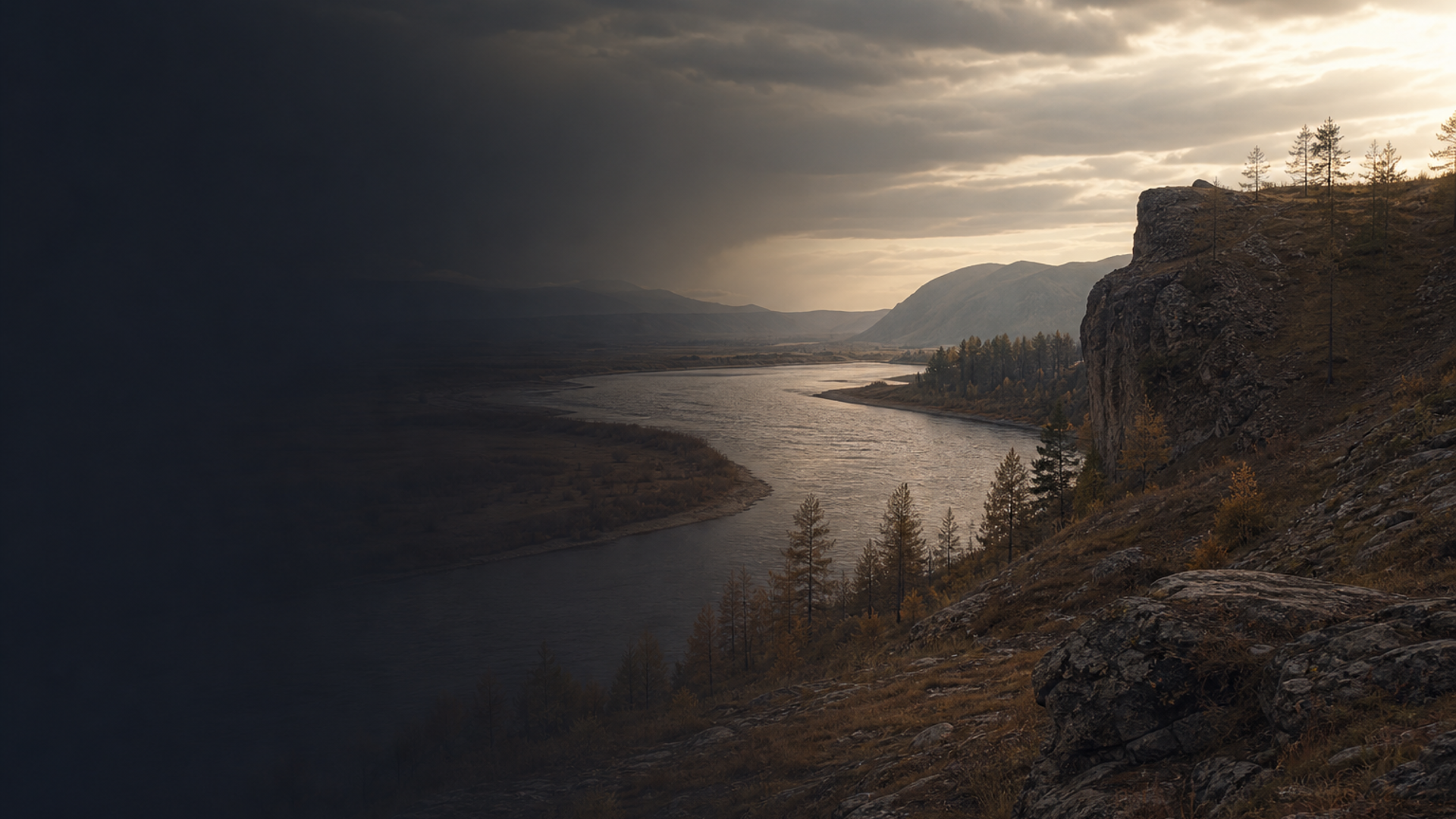
Cis‑Baikal, Angara River, Russia

Die Geschichte

Archaeological remains (2887–2201 BCE) from five Cis‑Baikal sites along the Angara River link local Bronze Age lifeways with predominantly Y‑DNA haplogroup Q. Limited sample size makes conclusions preliminary, but genetic profiles align with broader East Eurasian/Siberian maternal lineages.

Time Period

2887–2201 BCE

Region

Cis‑Baikal, Angara River, Russia

Common Y-DNA

Q (predominant among males)

Common mtDNA

F, A, D3*, C4* (diverse East Eurasian lineages)

Zeitleiste

2500 BCE

Bronze Age lifeways along the Angara

Radiocarbon dates center around 2500 BCE, marking riverine cemeteries and settlements in the Cis‑Baikal Angara corridor.

Origins & Emergence

Along the ice‑riven course of the Angara River, Bronze Age communities left sparse but evocative traces. Radiocarbon dates from human remains recovered at Glazkovo, Sukhaja Pad' Buret', Ust'-Dolgoe, Anosovo N 1 and Podostrozhnoe N 3 cluster between 2887 and 2201 BCE, placing these individuals firmly in a Cis‑Baikal Bronze Age horizon sometimes grouped under the Angara River Bronze Age culture. Archaeological data indicates continuity with earlier Neolithic forager traditions in settlement location and subsistence emphasis on riverine resources, even as new metal objects and trade items appear in the landscape.

The genetic evidence, though limited in scale, hints at population continuity with deep East Eurasian roots: four of five male-derived Y‑chromosomes fall into haplogroup Q, a lineage widely observed across Siberia and parts of northern Eurasia. This suggests a durable paternal substrate in the Angara corridor. However, with only five samples the picture is provisional; processes such as migration, admixture, and cultural diffusion cannot be fully resolved. Limited evidence suggests these people were part of broader regional networks that connected the Baikal littoral with interior Siberia, carrying both local traditions and new Bronze Age influences.

  • Radiocarbon range: 2887–2201 BCE
  • Sites: Glazkovo, Sukhaja Pad' Buret', Ust'-Dolgoe, Anosovo N 1, Podostrozhnoe N 3
  • Preliminary genetic continuity with East Eurasian lineages

Daily Life & Society

Archaeological traces from the Angara banks evoke a life shaped by river and taiga. Faunal remains and toolkits from nearby Cis‑Baikal contexts indicate fishing, hunting of elk and reindeer, and seasonal exploitation of aquatic resources—subsistence strategies that would have sustained small, mobile or semi‑sedentary household groups. Burial contexts at some sites show simple interments with occasional grave goods: worked bone, stone implements and, in a few cases, items of bronze or copper alloy. These artifacts suggest contact with wider Bronze Age exchange networks without implying wholesale cultural replacement.

Social organization can only be inferred cautiously. The mix of local subsistence economy with access to metal objects points to communities negotiating new social expressions—status markers and craft specializations—on top of long‑established lifeways. Settlement patterns along the Angara emphasize access to water transport and seasonally predictable resources, which likely structured kin groups and their movement. Archaeological data indicates variability across sites; some loci show more intensive use, while others appear to be episodic camps. This mosaic pattern is consistent with a riverine frontier where cultural transmission and mobility coexisted.

  • Riverine economy: fishing and hunting dominated
  • Material culture shows local traditions plus Bronze Age contacts

Genetic Profile

Ancient DNA from five individuals along the Angara River yields a compact but informative snapshot. Four male Y‑chromosomes are assigned to haplogroup Q, a lineage with deep distribution in Siberia and connections to later populations across northern Eurasia and the Americas. This concentration suggests a strong paternal continuity in the local population during the Bronze Age, although the small sample size (n=5) mandates caution: patterns observed here may not represent the full genetic diversity of the region.

Mitochondrial DNA among the sampled individuals includes haplogroups F, A, D3* and C4*—maternal lineages commonly associated with East and Northeast Asia and Siberia. This maternal diversity aligns with an East Eurasian genetic background and points to long‑standing local maternal ancestry. Archaeological data combined with these genetic signals indicate the Angara corridor hosted populations with predominant Siberian genetic affinities rather than obvious influxes of west Eurasian Bronze Age ancestry during this time window. Yet, given only five samples, admixture events, heterogeneity between sites, and temporal changes remain plausible and unresolved. Future sampling across more graves and settlements will be essential to test hypotheses about mobility, kinship, and interactions inferred from these preliminary genetic patterns.

  • Predominant Y‑DNA: Q (4 of 5 males sampled)
  • mtDNA diversity: F, A, D3*, C4* — typical East Eurasian maternal lineages

Legacy & Modern Connections

The genetic and archaeological imprint of the Angara River Bronze Age is subtle but resonant. Haplogroup Q and the East Eurasian maternal markers found among these five individuals mirror lineages observed in later Siberian populations and, in broader perspectives, link to genetic threads that reach into the peopling of the Americas. Archaeological continuities in settlement location and subsistence suggest cultural resilience in the face of changing material connections across Eurasia.

Caveats are crucial: with a small dataset interpretations must remain provisional. These individuals offer a window into local population structure during a centuries‑long period but cannot alone reconstruct large‑scale demographic processes. Ongoing ancient DNA sampling paired with detailed excavation at Cis‑Baikal sites will refine how Bronze Age lifeways along the Angara shaped subsequent genetic landscapes and cultural histories of Siberia.

  • Genetic ties to later Siberian populations and wider East Eurasian lineages
  • Interpretations are preliminary due to limited sample count

KI-Assistent

KI-Assistent von DNAGENICS

Funktion freischalten
Stellen Sie Fragen zur Kultur Angara River Bronze Age Echoes. Unser KI-Assistent kann genetische Befunde, historischen Kontext, archäologische Belege und moderne Verbindungen erläutern.

Beispiel einer KI-Analyse

Die Angara River Bronze Age Echoes-Kultur ist ein faszinierendes Kapitel der Menschheitsgeschichte...

Genetische Analysen zeigen Übereinstimmungen mit früheren Populationen und Hinweise auf besondere Anpassungen und kulturelle Innovationen. Alte DNA-Proben liefern Einblicke in Migrationsmuster, soziale Strukturen und genetische Verbindungen zwischen Populationen.

Dies ist eine Vorschau der KI-Analyse. Schalten Sie den vollständigen KI-Assistenten frei, um detaillierte Einblicke zu erkunden:

  • Genetische Zusammensetzung und genetische Ähnlichkeit
  • Migrationsmuster und Ursprünge
  • Alltag und kulturelle Praktiken
  • Genetischer Bezug zu heutigen Populationen
Use code for 30% off • Expires Nov 14




