Armenia: Early Bronze Age Echoes

Download PDF creates a visual, rasterized copy. Use Print for selectable text and better assistive-technology support.

Bericht wird vorbereitet

Verfügbare Informationen und Referenzen werden geladen

Verbindung mit dem archäologischen Quellenbestand...

Alte Quellen werden zusammengestellt

Zum Hauptinhalt springen
Armenia: Early Bronze Age Echoes
Zivilisations-Spotlight

Armenia: Early Bronze Age Echoes

A small-sample genetic and archaeological portrait from 3350–2354 BCE

3350 CE - 2354 BCE
Armenia
Scrollen zum Start
Kapitel I

Die Geschichte

Die Armenia: Early Bronze Age Echoes-Kultur verstehen

Archaeological remains from Kalavan, Talin, and Karnut (3350–2354 BCE) reveal Early Bronze Age lifeways in Armenia. Limited ancient DNA from five individuals provides a preliminary glimpse into paternal lineages (R) and diverse maternal lines (U, X2f, H, U7b).

Time Period

3350–2354 BCE

Region

Armenia

Common Y-DNA

R (1/5)

Common mtDNA

U (2), X2f (1), H (1), U7b (1)

Kapitel II

Zeitleiste

Zentrale Momente in der Geschichte dieser Kultur

2500 BCE

Community activity in Early Bronze Age Armenia

Around 2500 BCE, archaeological deposits at sites like Talin and Karnut reflect active settlement and burial practices characteristic of Early Bronze Age social life in the Armenian Highlands.

Kapitel III

Origins & Emergence

The Armenia_EBA assemblage sits within the broader Early Bronze Age transformation of the South Caucasus, a time of expanding settlements, new metal technologies, and changing social landscapes. Archaeological deposits dated 3350–2354 BCE at locales such as Kalavan, Talin (including the Talin cemetery), and the Karnut Archaeological Complex document burial contexts and habitation traces that reflect increasingly complex communities. Material culture—ceramics, metal fragments, and burial goods—points to local traditions elaborated through long-distance contacts across the Armenian Highlands.

Archaeological data indicates continuity with Chalcolithic patterns alongside innovations in craft and mortuary practice. Limited evidence suggests networks of exchange that brought raw materials and stylistic influences from neighboring regions, though the specific directions and scales of contact remain under study. Genetic data from this interval help situate these sites within population dynamics: rather than resolving grand migration narratives, the current DNA evidence provides a tentative map of lineage diversity within these early Bronze Age communities.

Because the sample set is small (five individuals), conclusions about origins and population turnover must remain cautious. Ongoing excavations and future aDNA sampling will be essential to test hypotheses about demographic change versus cultural diffusion during Armenia's Early Bronze Age.

  • Sites: Kalavan, Talin (incl. Talin cemetery), Karnut Archaeological Complex
  • Dates: 3350–2354 BCE, Early Bronze Age context
  • Evidence: burials, ceramics, metalwork; indications of regional exchange
Kapitel IV

Daily Life & Society

Archaeological contexts from the sites associated with Armenia_EBA paint a textured picture of everyday life and social organization. Excavated cemeteries and domestic layers indicate communities invested in crafted pottery, emerging metallurgical practices, and ritualized burial behavior. Burials in the Talin cemetery, for example, suggest structured mortuary placement and the inclusion of personal items that signal status differences or familial relationships.

Subsistence strategies likely combined local agriculture, pastoralism, and foraging of mountain resources—an adaptable economy suited to the highlands and river valleys of Armenia. Hearths, storage features, and tool assemblages reflect household-level production, while traces of metalworking hint at growing craft specialization. The material record implies social networks that connected villages and funerary sites, producing shared symbols and technical knowledge.

Archaeological interpretations are cautious: while artifacts reveal practices, the social meanings attached to them remain interpretive. Limited DNA data can help by indicating kinship patterns within cemeteries and detecting mobile individuals, but with only five samples we can only suggest possibilities rather than definitive reconstructions of social structure.

  • Economy: mixed agriculture, pastoralism, and local craft specialization
  • Mortuary evidence: Talin cemetery shows structured burial practices
Kapitel V

Genetic Profile

The Armenia_EBA dataset comprises five ancient individuals dated between 3350 and 2354 BCE from Kalavan, Talin (including a cemetery context), and the Karnut complex. This small sample yields a preliminary but intriguing genetic snapshot: one Y-chromosome belonging to haplogroup R and a range of mitochondrial haplogroups—two U lineages, one X2f, one H, and one U7b.

Mitochondrial diversity (U, X2f, H, U7b) reflects maternal ancestries typical of West Eurasia and the Caucasus region across the Holocene. Haplogroup U in its subclades is commonly observed in prehistoric European and Near Eastern contexts; X2f is less frequent but present in West Eurasian assemblages; H is widespread in later European populations; U7b has ties to Near Eastern and South Caucasus maternal lineages. The single paternal R lineage aligns with a broad West Eurasian paternal distribution but cannot, by itself, specify precise migration routes or cultural affiliations.

Archaeological and genetic data together hint at a population with mixed local Caucasus affinities and possible inputs from neighboring regions. However, because the dataset includes only five individuals, all genetic inferences must be treated as preliminary. Low sample count limits the ability to estimate ancestry proportions, detect kin groups, or identify subtle admixture events. Future sampling from additional graves and settlements will be necessary to move from suggestive patterns to robust demographic models.

  • Y-DNA: R found in 1 of 5 individuals (preliminary)
  • mtDNA: U (2), X2f (1), H (1), U7b (1) indicating diverse maternal lines
Kapitel VI

Legacy & Modern Connections

The archaeology and genetics of Armenia_EBA contribute to a long-running story of human occupation in the Armenian Highlands. Material culture preserves the imprint of craft, ritual, and exchange; genetic traces record lineages that have circulated across the Near East and Caucasus for millennia. While direct ancestry links between these five individuals and modern populations cannot be asserted with confidence, their genetic signatures echo haplogroups still present in the region today, suggesting threads of continuity alongside change.
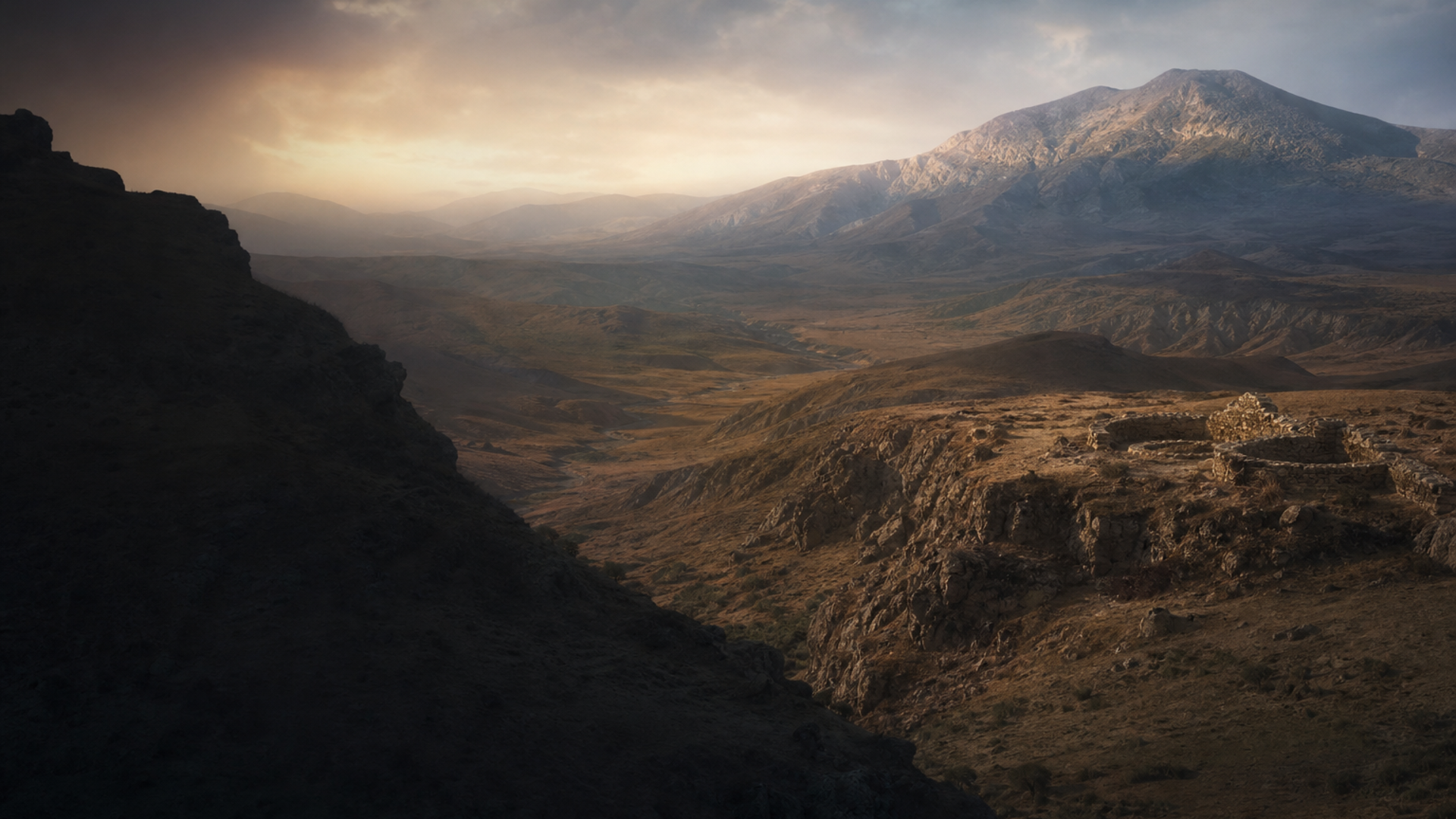

This small dataset underscores the promise—and limits—of combining archaeology with aDNA. Even a handful of genomes can reveal diversity and prompt new research questions about mobility, kinship, and cultural interaction. Expanded sampling and integrated study of artifacts, isotopes, and ancient genomes will better illuminate how Early Bronze Age communities in Armenia contributed to the deep human tapestry of the Caucasus.

  • Genetic echoes: haplogroups similar to present-day West Eurasian/Caucasus lineages
  • Research note: small sample size highlights need for more aDNA and contextual study
KI-gestützt

KI-Assistent

Stellen Sie Fragen zur Armenia: Early Bronze Age Echoes-Kultur

KI-Assistent von DNAGENICS

Funktion freischalten
Stellen Sie Fragen zur Kultur Armenia: Early Bronze Age Echoes. Unser KI-Assistent kann genetische Befunde, historischen Kontext, archäologische Belege und moderne Verbindungen erläutern.
Beispiel einer KI-Analyse

Die Armenia: Early Bronze Age Echoes-Kultur ist ein faszinierendes Kapitel der Menschheitsgeschichte...

Genetische Analysen zeigen Übereinstimmungen mit früheren Populationen und Hinweise auf besondere Anpassungen und kulturelle Innovationen. Alte DNA-Proben liefern Einblicke in Migrationsmuster, soziale Strukturen und genetische Verbindungen zwischen Populationen.

Dies ist eine Vorschau der KI-Analyse. Schalten Sie den vollständigen KI-Assistenten frei, um detaillierte Einblicke zu erkunden:

  • Genetische Zusammensetzung und genetische Ähnlichkeit
  • Migrationsmuster und Ursprünge
  • Alltag und kulturelle Praktiken
  • Genetischer Bezug zu heutigen Populationen

Weitere antike Kulturen erkunden

Geschichten von Zivilisationen aus der antiken Welt entdecken

Use code for 30% off • Expires Nov 08




