Ayayema Cave Seafarers

Download PDF creates a visual, rasterized copy. Use Print for selectable text and better assistive-technology support.

Bericht wird vorbereitet

Verfügbare Informationen und Referenzen werden geladen

Verbindung mit dem archäologischen Quellenbestand...

Alte Quellen werden zusammengestellt

Zum Hauptinhalt springen
Ayayema Cave Seafarers
Zivilisations-Spotlight

Ayayema Cave Seafarers

Mid‑Holocene coastal foragers from the western archipelago of southern Chile, glimpsed through cave deposits and one ancient genome.

3364 CE - 29335100 BCE
Patagonia, Chile (Western Archipelago)
Scrollen zum Start
Kapitel I

Die Geschichte

Die Ayayema Cave Seafarers-Kultur verstehen

Archaeological deposits at Ayayema Cave (Patagonia, Chile) date to 3364–2933 BCE. Material culture and midden remains indicate maritime foraging. One ancient male genome carries Y‑haplogroup Q; conclusions are preliminary given the single sample.

Time Period

3364–2933 BCE (ca. 5100 BP)

Region

Patagonia, Chile (Western Archipelago)

Common Y-DNA

Q (observed in 1 sample)

Common mtDNA

Unknown / not reported

Kapitel II

Zeitleiste

Zentrale Momente in der Geschichte dieser Kultur

3200 BCE

Radiocarbon horizon at Ayayema Cave

Stratified deposits dated to the mid‑Holocene indicate episodic cave occupation and intensive use of marine resources.

Kapitel III

Origins & Emergence

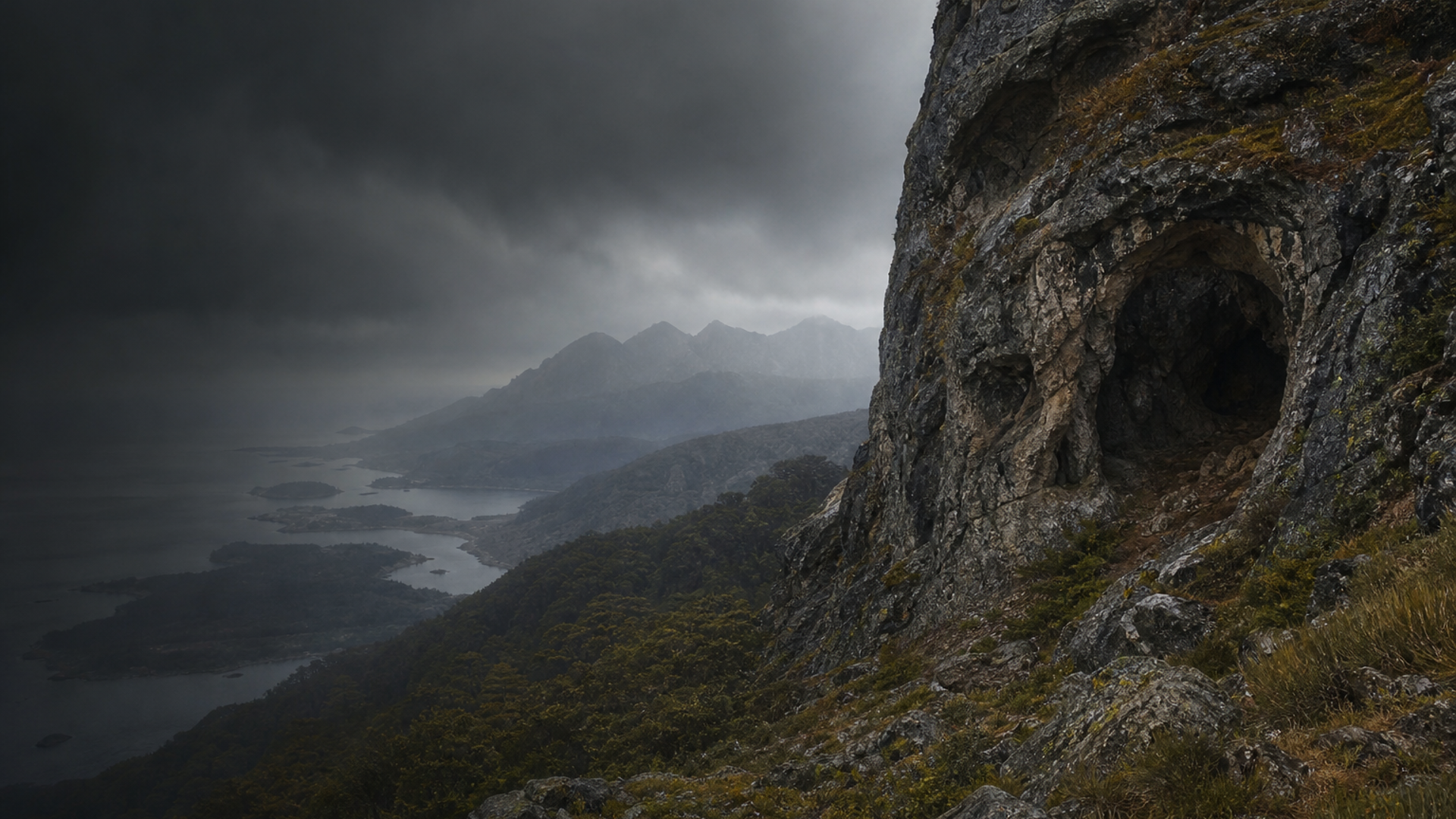
Ayayema Cave sits in the western archipelago off southern Chile, where rocky coves and narrow channels focus marine resources. Radiocarbon dates from stratified deposits place human activity in the mid‑Holocene, between roughly 3364 and 2933 BCE. Archaeological data indicates repeated occupation episodes: shell middens, fragmented bone of fish and seabirds, and chipped stone tools adapted for marine hunting and processing.

Limited evidence suggests these groups were part of a broader pattern of coastal foragers who specialized on rich intertidal and nearshore ecologies of southern Patagonia. Sea‑level adjustments and local ecological shifts in the mid‑Holocene likely shaped settlement intensity and mobility. The cultural label "Western Archipelago Ayayema" reflects a regional assemblage rather than a well‑defined ethnic identity — the archaeological signal is fragmentary and largely constrained to cave and coastal deposits.

Because the genetic dataset presently includes a single genome from Ayayema Cave, hypotheses about population origins, continuity, or interaction with inland groups remain provisional. Nevertheless, combining the stratigraphic record with this first genetic hint opens pathways to test ideas about maritime colonization, resource specialization, and long‑term coastal resilience.

  • Site: Ayayema Cave, western archipelago of Patagonia, Chile
  • Dates: ca. 3364–2933 BCE (mid‑Holocene)
  • Evidence: shell middens, fish and seabird remains, stone tools adapted to coastal foraging
Kapitel IV

Daily Life & Society

Life for the Ayayema occupants would have been shaped by tides, kelp forests, and seasonal runs of fish and seabirds. Middens preserve a daily ledger of meals: shells, fish bone, and scattered charcoal from hearths. Chipped stone points and scrapers suggest tasks of fishing, seabird harvesting, hide and feather processing, and woodworking for small watercraft or tools.

Social groups were likely small and flexible, moving between caves, rocky ledges, and sheltered bays in response to resource pulses. Caves like Ayayema provided shelter, discard spaces for food remains, and loci for tool manufacture. Artistic or symbolic materials are scarce in the current record, but curated tools and selective use of raw materials indicate knowledge networks—shared techniques adapted to a demanding coastal environment.

Archaeological data indicates a deep ecological knowledge of the archipelago. However, the narrow sample base limits inferences about social complexity, trade, or ritual life. Future excavations and additional dated contexts are required to flesh out community size, seasonality, and long‑distance contacts.

  • Diet dominated by marine resources: shellfish, fish, seabirds
  • Small, mobile groups using caves and coastal camps seasonally
Kapitel V

Genetic Profile

Ancient DNA from a single male individual recovered at Ayayema Cave carries Y‑chromosome haplogroup Q. Haplogroup Q is widespread among Native American paternal lineages and is consistent with deep Pan‑American ancestries deriving ultimately from Beringian founders. The absence of reported mtDNA from this sample prevents maternal lineage assessment.

Archaeogenetic interpretation must be cautious: with n=1, statements about population structure, continuity, or admixture are preliminary. The Y‑Q signal aligns broadly with expectations for Holocene South America, but it cannot resolve finer questions such as whether the Ayayema occupants were genetically continuous with earlier coastal populations, or whether they represent a later movement along the coast.

Combined genetic and archaeological approaches are powerful: genetics can reveal sex‑biased mobility, kinship within cemeteries, and links to distant groups; archaeology supplies context about diet, technology, and landscape use. For Ayayema, the immediate priority is additional sampling—multiple individuals, securely dated contexts, and mitochondrial genomes—to permit robust inferences about population history, local continuity, and interactions with inland Patagonian groups. Until then, any genetic narrative remains a preliminary glimpse rather than a conclusive story.

  • Observed paternal lineage: Y‑haplogroup Q (1 individual)
  • Conclusions are provisional due to a single sampled genome
Kapitel VI

Legacy & Modern Connections

The material traces at Ayayema Cave capture a human presence tuned to the sea—communities whose lifeways contributed to the long tapestry of Patagonian coastal occupation. Genetically, the Y‑Q lineage connects this individual to wider Native American paternal diversity, but direct links to present‑day groups require much more data.

For descendant communities and researchers alike, Ayayema is both heritage and a scientific frontier. Archaeological stewardship and collaborative genetic research with indigenous partners are essential to interpret biological ancestry respectfully and accurately. As more genomes and archaeological contexts are recovered across southern Chile, a clearer picture will emerge of how coastal lifeways persisted, transformed, and contributed to modern genetic landscapes. Presently, the Ayayema evidence should be read as an evocative, guarded glimpse into mid‑Holocene coastal life.

  • Provides a tentative genetic link to broader Native American paternal lineages
  • Highlights need for more samples and collaborative research with descendant communities
KI-gestützt

KI-Assistent

Stellen Sie Fragen zur Ayayema Cave Seafarers-Kultur

KI-Assistent von DNAGENICS

Funktion freischalten
Stellen Sie Fragen zur Kultur Ayayema Cave Seafarers. Unser KI-Assistent kann genetische Befunde, historischen Kontext, archäologische Belege und moderne Verbindungen erläutern.
Beispiel einer KI-Analyse

Die Ayayema Cave Seafarers-Kultur ist ein faszinierendes Kapitel der Menschheitsgeschichte...

Genetische Analysen zeigen Übereinstimmungen mit früheren Populationen und Hinweise auf besondere Anpassungen und kulturelle Innovationen. Alte DNA-Proben liefern Einblicke in Migrationsmuster, soziale Strukturen und genetische Verbindungen zwischen Populationen.

Dies ist eine Vorschau der KI-Analyse. Schalten Sie den vollständigen KI-Assistenten frei, um detaillierte Einblicke zu erkunden:

  • Genetische Zusammensetzung und genetische Ähnlichkeit
  • Migrationsmuster und Ursprünge
  • Alltag und kulturelle Praktiken
  • Genetischer Bezug zu heutigen Populationen

Weitere antike Kulturen erkunden

Geschichten von Zivilisationen aus der antiken Welt entdecken

Use code for 30% off • Expires Nov 08




