Archaeological traces from the Armenian Highlands during the Early Iron Age suggest a world of seasonal pastures, small fortified settlements, and workshops where bronze-age craft knowledge gradually incorporated new iron technologies. At sites regionally comparable to Beniamin, archaeologists recover household pottery, loom weights, metal tools, and evidence for animal husbandry — paints of ordinary life: woven garments, salted meat, and communal hearths.
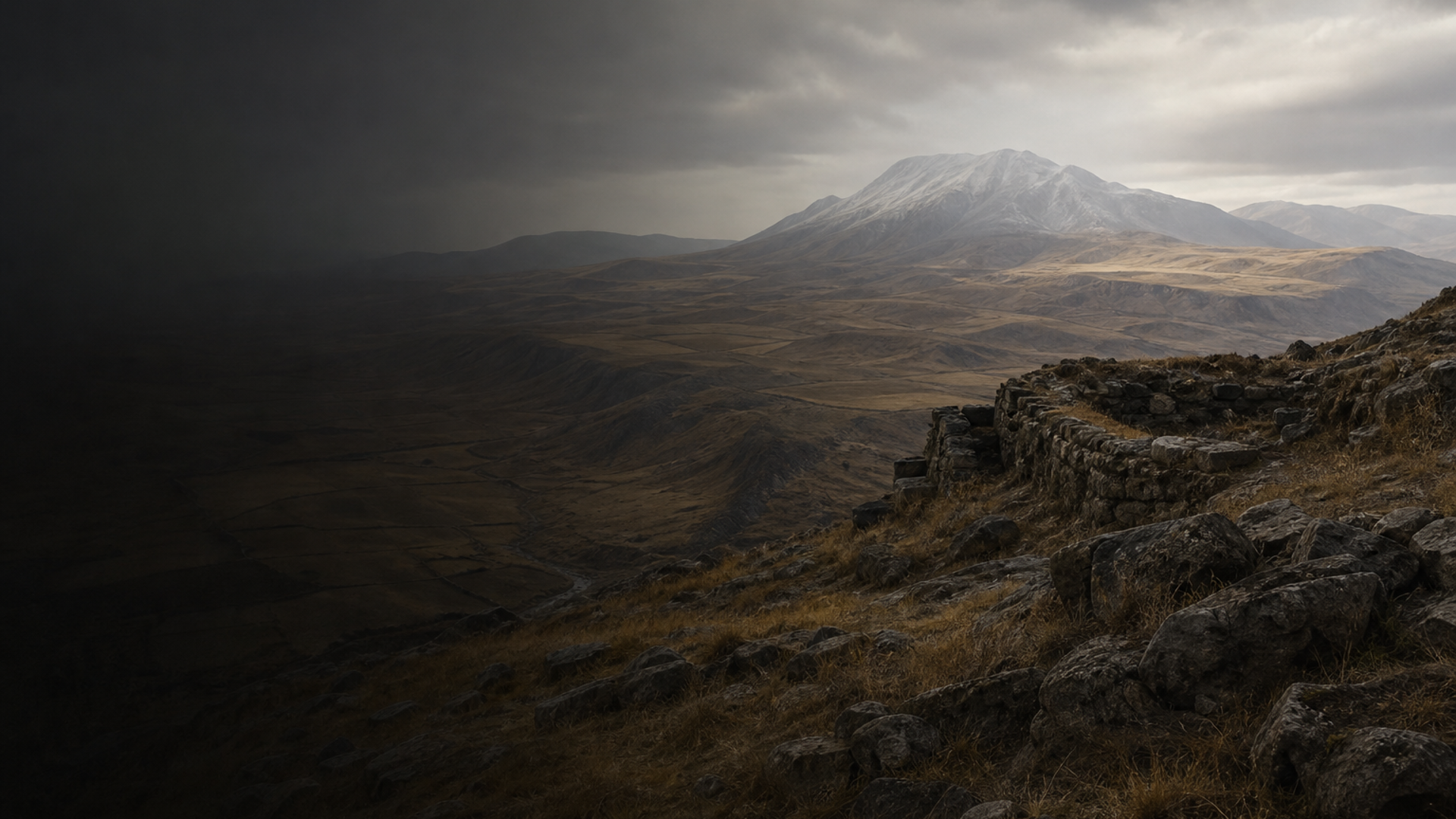
In this cinematic tableau, inhabitants navigated steep valleys and plateaus, exploiting diverse microenvironments. Archaeological data indicates a mixed economy: pastoral mobility coexisted with localized cultivation on terraces. Fortifications and hilltop settlements became more common in several parts of the Armenian Highlands by the Early Iron Age, signaling heightened concerns about security or the assertion of emerging local elites.
Mortuary practices in the region show variability — inhumations and secondary deposits — which complicates simple narratives of cultural uniformity. For the Beniamin find specifically, the single burial or skeletal context provides a human thread but cannot alone reconstruct social rank, craft specialization, or household organization. Instead, it illuminates a life lived within networks of kinship and exchange that crisscrossed the highlands and lowland trade routes toward Anatolia and the South Caucasus.