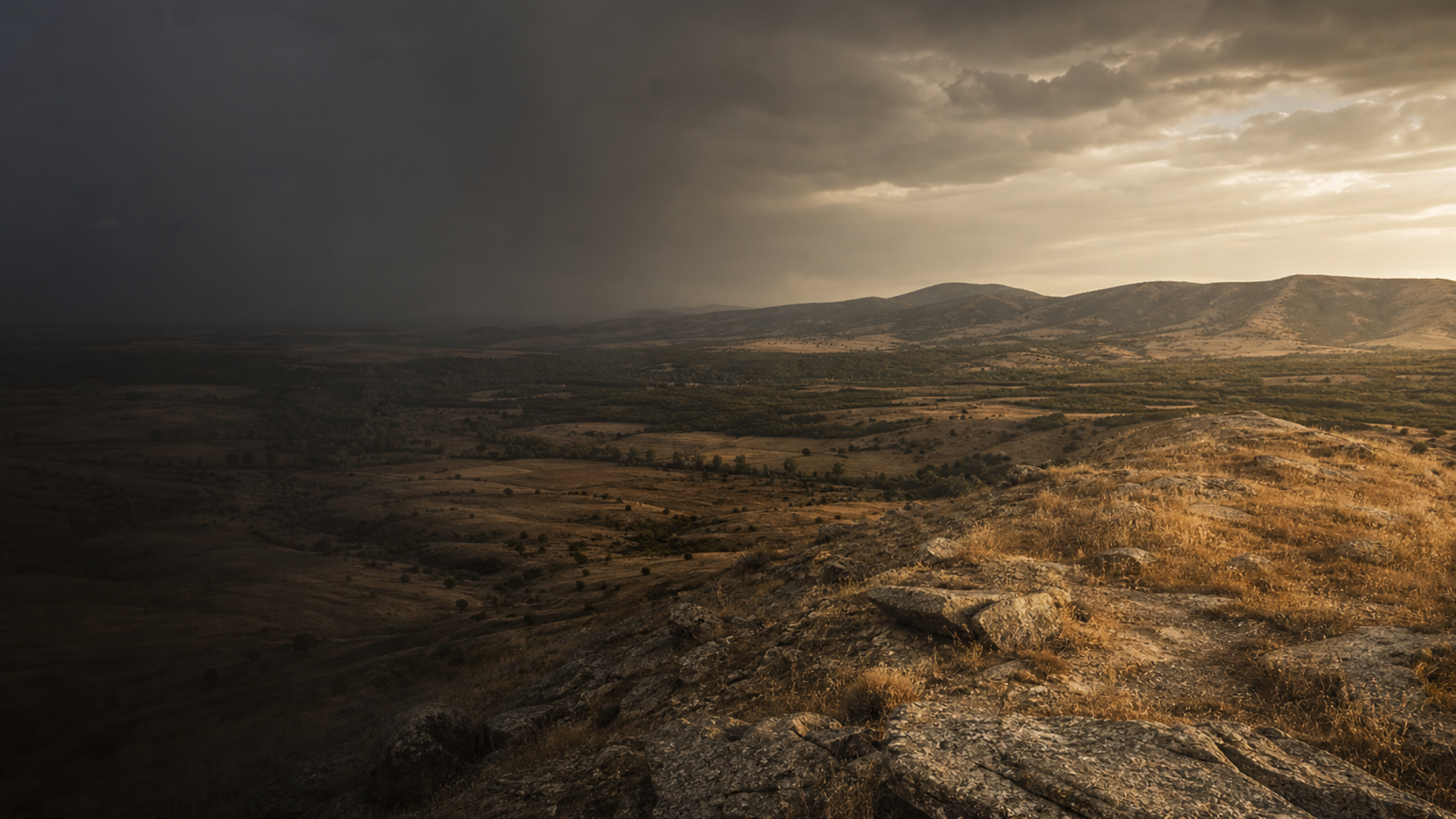
Archaeological data paints a picture of a dynamic, mixed economy in southern Bulgaria during this Early Bronze Age phase. Pastoralism — the seasonal movement of herds across open country — likely played a central role for groups associated with Yamnaya-style burials, but it is equally clear that settled farming communities persisted nearby. Artefactual traces from mounded burials and surface finds suggest exchange in animals, crafted items and possibly metals; these landscapes were nodes in wider networks stretching from the Pontic-Caspian steppe into the Balkans.
Socially, funerary monuments such as barrows or kurgan-like mounds are evocative markers of status and group identity. Burials often concentrate individuals and grave goods in raised mounds that would have dominated the rural skyline — deliberate, visible assertions of lineage and memory. At the same time, local ceramic styles and subsistence remains indicate continuity of Balkan traditions, showing that newly arriving or influential steppe elements were woven into existing social fabrics rather than replacing them outright.
Because the sample size for direct genetic study is small, archaeological interpretation of community size, kinship structures, and daily technologies depends heavily on contextual excavation data. Future interdisciplinary work combining more genomes, isotopes and microarchaeology will sharpen our view of everyday life in these frontier zones.