Calaveras County: 600 BP Voices

Download PDF creates a visual, rasterized copy. Use Print for selectable text and better assistive-technology support.

Bericht wird vorbereitet

Verfügbare Informationen und Referenzen werden geladen

Verbindung mit dem archäologischen Quellenbestand...

Alte Quellen werden zusammengestellt

Zum Hauptinhalt springen
Calaveras County: 600 BP Voices
Zivilisations-Spotlight

Calaveras County: 600 BP Voices

Late precontact communities in Central California (1296–1400 CE) — archaeology meets ancient DNA.

1296 CE - 1400600 CE
Calaveras County, Central California, USA
Scrollen zum Start
Kapitel I

Die Geschichte

Die Calaveras County: 600 BP Voices-Kultur verstehen

Archaeological and genetic glimpses from Calaveras County (1296–1400 CE). Six samples reveal Y-haplogroup Q predominance and diverse Native American mtDNA lineages, illuminating local population structure while remaining preliminary due to small sample size.

Time Period

1296–1400 CE (ca. 600 BP)

Region

Calaveras County, Central California, USA

Common Y-DNA

Q (3 of 6 samples)

Common mtDNA

C (2), A2 (2), B2 (1), D1 (1)

Kapitel II

Zeitleiste

Zentrale Momente in der Geschichte dieser Kultur

1296 CE

Earliest dated sample

Oldest directly dated individual in the dataset (ca. 1296 CE), from a Calaveras County burial context.

1400 CE

Latest precontact sample

Most recent sample in the cluster (ca. 1400 CE), representing late precontact lifeways in the foothills.

2015 CE

Ancient DNA analyses

Early 21st-century aDNA sampling and analysis produced the six-sample genetic profile, marking initial genetic insights.

Kapitel III

Origins & Emergence

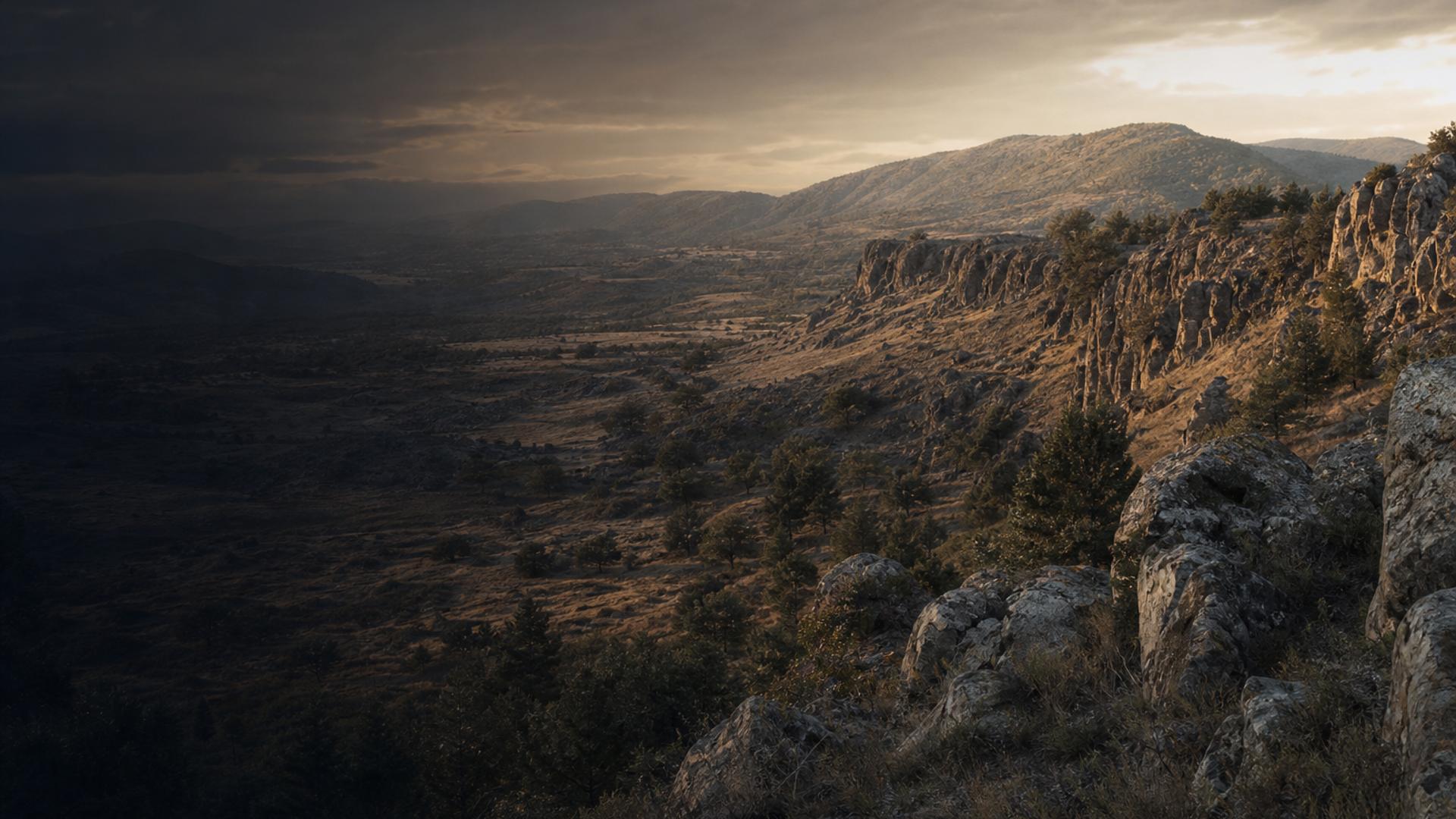
Across the oak-studded foothills of Calaveras County, communities in the late 13th and 14th centuries CE lived in landscapes shaped by seasonal rivers, grasslands, and oak groves. Archaeological data indicates occupation of terraces and short-term camps where flaked stone, grindingstones, and hearth features speak to seasonal mobility and intensive plant processing. Ethnographic parallels often link these places to Central Sierra foothill cultural groups — frequently associated in historic records with Miwok- and Yokuts-speaking peoples — but direct continuity must be inferred cautiously.

Genetic evidence from six individuals dated between 1296 and 1400 CE provides a narrow window into ancestry. The predominance of Y-chromosome haplogroup Q among half the sampled males fits a broader pattern across North America, where Q is a major Native American paternal lineage. Maternal lineages (mtDNA A2, B2, C, D1) represent the canonical founding clades observed continent-wide, suggesting deep ancestral connections to earlier migration events into the Americas. Limited evidence suggests local continuity of these deep lineages, but with only six samples the picture is preliminary: archaeological distributions and small ancient DNA cohorts both permit multiple interpretations about migration, kinship, and social organization.

  • Occupation dated to 1296–1400 CE on terraces and seasonal camps
  • Material culture indicates intensive plant processing and seasonal mobility
  • Genetic lineages mirror broader Native American founding haplogroups
Kapitel IV

Daily Life & Society

Picture rivers swollen in winter, acorn caches in the cool shade, and families moving on predictable rounds between wetland resources and oak groves. Archaeological assemblages in Calaveras County include grindingstones and chipped-stone tools consistent with acorn and seed processing, hearths for communal cooking, and localized lithic reduction areas. Shell or obsidian artifacts are less common in inland sites but occasional exotic lithics point to exchange networks that connected valleys and coasts.

Social life was likely organized around small, interconnected household groups. Mortuary practices evident in the sampled burials — when preserved — can hint at kinship and status, but preservation and sample size limit firm conclusions. Ethnographic records from neighboring regions describe flexible residence patterns, seasonal aggregation for ceremonies and trade, and finely tuned ecological knowledge. Archaeological data indicates similar adaptive strategies: storage features and specialized tools suggest planning across seasons, while ephemeral hearths and scatters of debitage reflect mobility and task-specific camps.

  • Economy centered on acorn processing, seasonal hunting, and plant use
  • Evidence of local exchange and mobility between river terraces and uplands
Kapitel V

Genetic Profile

The genetic snapshot from Calaveras County (six individuals) reveals a concise but informative profile. Three males carry Y-chromosome haplogroup Q, a lineage that predominates among many Native American male lineages and is consistent with deep Holocene ancestry across North America. On the maternal side, the mtDNA portfolio includes A2 (2), C (2), B2 (1), and D1 (1) — the four principal Native American maternal clades — indicating diversity within the local maternal gene pool.

These results align with continental patterns: the co-occurrence of multiple founding mtDNA clades in a single small locale suggests either long-term local diversity or connections through marriage and exchange across regions. However, with only six samples the statistical power is low; observed frequencies may not reflect the full community. Limited evidence suggests male-line continuity of Q in the area, but inferring social structures such as patrilocality or matrilocality would be speculative. Ancient DNA here provides important anchors linking archaeological contexts to broad migration models, but larger sample sizes and direct radiocarbon dating of each individual will be essential to move from suggestive patterns to robust demographic reconstructions.

  • Y haplogroup Q present in 3 of 6 samples, consistent with Native American paternal lineages
  • mtDNA diversity (A2, C, B2, D1) mirrors continental founding clades; conclusions preliminary
Kapitel VI

Legacy & Modern Connections

The genetic and archaeological traces from Calaveras County connect contemporary people to a deep and living past. The same mtDNA and Y-DNA lineages found in these late precontact samples persist in descendant communities across California and the Americas, underscoring long-term biological continuity alongside cultural change. Archaeological features—grindingstones, hearths, and seasonal campsite signatures—resonate with traditional ecological knowledge still practiced by indigenous communities in the region.

Because the dataset is small, interpretations must respect uncertainty: these six individuals are fragments of community histories rather than complete portraits. When integrated respectfully with oral histories, ethnography, and expanded genetic sampling, these data can help reconstruct ancestry, migration pathways, and the resilience of lifeways in Central California. Collaboration with descendant communities and transparent reporting of limitations are essential for turning preliminary genetic signals into meaningful heritage narratives.

  • Lineages observed have continuity with broader Native American genetic patterns
  • Small sample size means links to modern communities require careful, collaborative study
KI-gestützt

KI-Assistent

Stellen Sie Fragen zur Calaveras County: 600 BP Voices-Kultur

KI-Assistent von DNAGENICS

Funktion freischalten
Stellen Sie Fragen zur Kultur Calaveras County: 600 BP Voices. Unser KI-Assistent kann genetische Befunde, historischen Kontext, archäologische Belege und moderne Verbindungen erläutern.
Beispiel einer KI-Analyse

Die Calaveras County: 600 BP Voices-Kultur ist ein faszinierendes Kapitel der Menschheitsgeschichte...

Genetische Analysen zeigen Übereinstimmungen mit früheren Populationen und Hinweise auf besondere Anpassungen und kulturelle Innovationen. Alte DNA-Proben liefern Einblicke in Migrationsmuster, soziale Strukturen und genetische Verbindungen zwischen Populationen.

Dies ist eine Vorschau der KI-Analyse. Schalten Sie den vollständigen KI-Assistenten frei, um detaillierte Einblicke zu erkunden:

  • Genetische Zusammensetzung und genetische Ähnlichkeit
  • Migrationsmuster und Ursprünge
  • Alltag und kulturelle Praktiken
  • Genetischer Bezug zu heutigen Populationen

Weitere antike Kulturen erkunden

Geschichten von Zivilisationen aus der antiken Welt entdecken

Use code for 30% off • Expires Nov 08




