Cyprus PPNB: Early Island Colonists

Download PDF creates a visual, rasterized copy. Use Print for selectable text and better assistive-technology support.

Bericht wird vorbereitet

Verfügbare Informationen und Referenzen werden geladen

Verbindung mit dem archäologischen Quellenbestand...

Alte Quellen werden zusammengestellt

Zum Hauptinhalt springen
Cyprus PPNB: Early Island Colonists
Zivilisations-Spotlight

Cyprus PPNB: Early Island Colonists

Pre-Pottery Neolithic B settlers at Kissonerga-Mylouthkia — archaeology meets ancient DNA.

8300 CE - 7000 BCE
Cyprus (Kissonerga-Mylouthkia)
Scrollen zum Start
Kapitel I

Die Geschichte

Die Cyprus PPNB: Early Island Colonists-Kultur verstehen

Archaeological evidence from Kissonerga-Mylouthkia (8300–7000 BCE) reveals early Neolithic seafaring to Cyprus. Limited ancient DNA (three samples) offers preliminary genetic links to mainland Near Eastern farmers; conclusions remain tentative pending larger datasets.

Time Period

8300–7000 BCE

Region

Cyprus (Kissonerga-Mylouthkia)

Common Y-DNA

Undetermined (limited samples: 3)

Common mtDNA

Undetermined (limited samples: 3)

Schlagwörter
Kapitel II

Zeitleiste

Zentrale Momente in der Geschichte dieser Kultur

8300 BCE

Initial PPNB colonization at Kissonerga-Mylouthkia

Earliest secure occupation of Kissonerga-Mylouthkia, marking Neolithic settlement on Cyprus and maritime links to the Near East.

Kapitel III

Origins & Emergence

The Cyprus PPNB (Pre-Pottery Neolithic B) represents some of the earliest known year-round settlements on the island. Archaeological excavations at Kissonerga-Mylouthkia (southwest Cyprus) reveal occupation layers dated to ca. 8300–7000 BCE. The material culture — including architectural remains, ground stone tools, and portable art — shows affinities with contemporaneous PPNB communities on the Levantine coast and southeastern Anatolia.

Maritime colonization is the most parsimonious explanation: small groups appear to have crossed short sea channels carrying domesticated plants and animals, new technologies, and cultural practices. Archaeological data indicates voyaging and exchange networks in the eastern Mediterranean during this period, signaled by nonlocal raw materials and stylistic parallels. Limited evidence suggests these early Cypriot communities were founded by mainland migrants rather than by in situ forager adoption alone.

Caveat: the Cyprus PPNB corpus remains small and patchy. Radiocarbon dates at Kissonerga-Mylouthkia provide a secure chronological anchor, but broader settlement patterns and the full extent of mainland connections will only become clear with additional excavations and direct-dating campaigns.

  • Occupation at Kissonerga-Mylouthkia dated ca. 8300–7000 BCE
  • Material culture parallels with Levantine and Anatolian PPNB
  • Seafaring and small-scale maritime colonization are likely
Kapitel IV

Daily Life & Society

Daily life in Cyprus PPNB settlements combined new Neolithic lifeways with island adaptations. Architecture at coastal sites suggests substantial, multi-room structures with durable stone features, while hearths and storage facilities point to sedentism and food surplus management. Ground stone tools, sickle elements, and seed-processing equipment indicate plant cultivation; faunal remains show a mix of managed species and continued exploitation of marine resources.

Socially, communities were likely small and closely knit. Portable art and figurines imply shared symbolic worlds and ritual behaviors, but the precise organization of households and community leadership remains unclear. Environmental constraints on an island — limited fresh water and arable land — would have shaped settlement size, resource diversification, and possibly practices of storage and exchange. Archaeobotanical and zooarchaeological datasets for Cyprus PPNB are growing but remain incomplete; interpretations must therefore be cautious.

  • Sedentary villages with stone architecture and storage features
  • Mixed economy: early cultivation alongside marine and wild resource use
Kapitel V

Genetic Profile

Genetic data for Cyprus PPNB is very limited: currently only three ancient individuals have produced analyzable DNA. Because the sample count is below ten, any population-level inference is preliminary and should be treated as hypothesis-generating rather than definitive.

That said, the available genomes tentatively show affinities with early Neolithic populations from the Levant and Anatolia rather than later Bronze Age or steppe-derived groups. This pattern is consistent with an island colonization model in which incoming farming groups from the Near East brought crop and animal domesticates to Cyprus. No robust, recurring Y-chromosome or mitochondrial haplogroup patterns can yet be established from three samples; published haplogroup assignments are either absent or underpowered to represent population frequencies.

Genetic signals also point to potential founder effects and increased genetic drift expected in small island populations. Over generations, such processes can amplify certain lineages and differentiate islanders from source populations even if initial affinities were close. Future sampling across multiple PPNB sites on Cyprus, combined with high-coverage genomes and isotopic data, will be essential to test patterns of kinship, mobility, and continuity with later Cypriot populations.

  • Only 3 aDNA samples available — conclusions are highly preliminary
  • Preliminary affinities with Levantine/Anatolian early farmers; no consensus haplogroups yet
Kapitel VI

Legacy & Modern Connections

The Cyprus PPNB phase represents the island’s earliest long-term Neolithic presence and set ecological and cultural trajectories that shaped later prehistory. Archaeologically, these first villages anchored local trajectories of agriculture, craft production, and maritime exchange that persisted into subsequent Neolithic and Chalcolithic phases.
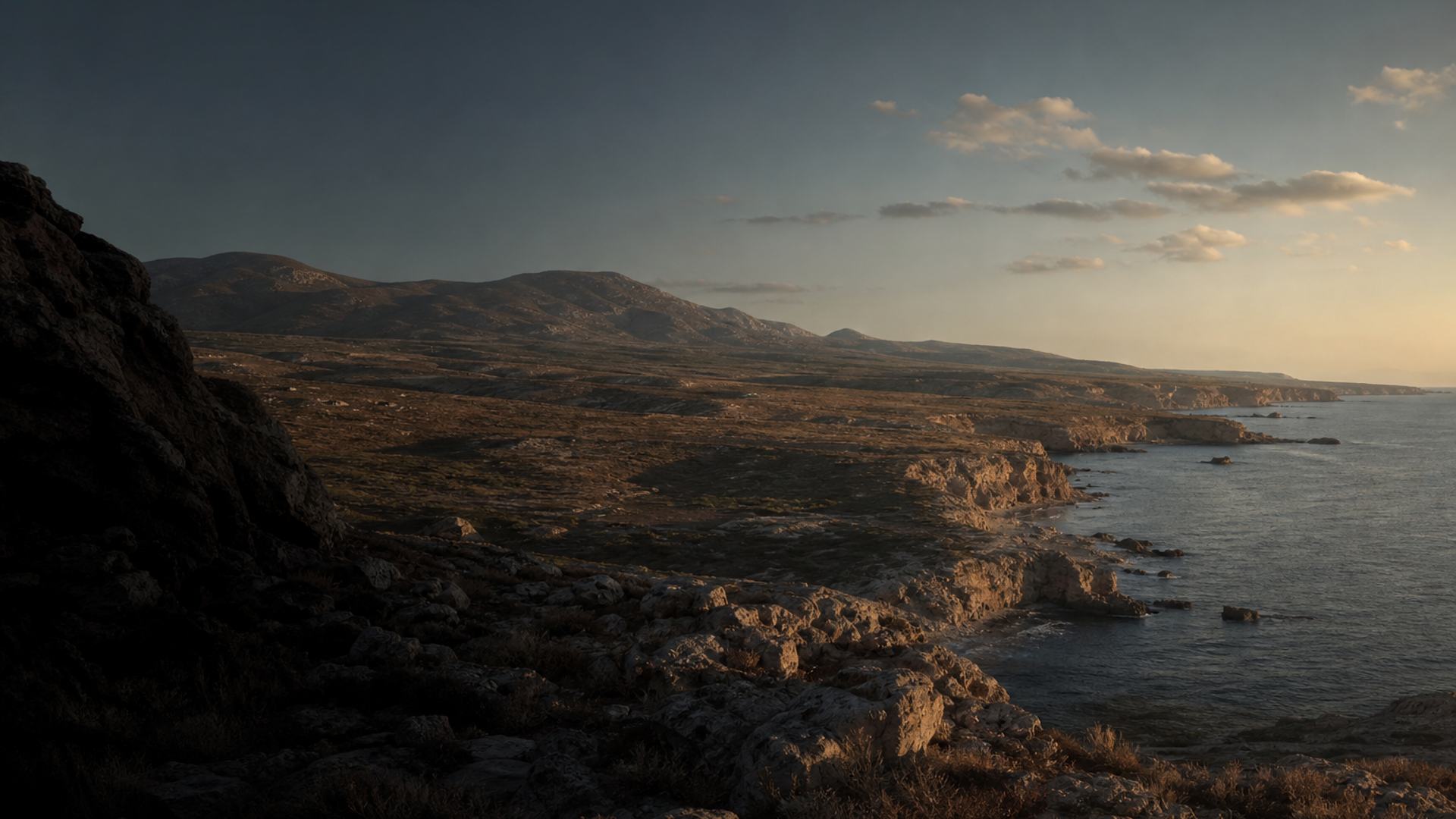
Genetically, whether a direct line connects these early settlers to modern Cypriots remains unresolved. Limited aDNA hints at Near Eastern farmer ancestry in the first islanders, but later migrations, gene flow, and population shifts complicate simple continuity models. Thus, while PPNB colonists contributed foundational demographic and cultural layers, the story of continuity versus replacement on Cyprus awaits larger and more geographically diverse ancient DNA sampling.

  • PPNB established island farming and exchange patterns that influenced later eras
  • Possible genetic contribution to later Cypriot populations, but more aDNA is needed
KI-gestützt

KI-Assistent

Stellen Sie Fragen zur Cyprus PPNB: Early Island Colonists-Kultur

KI-Assistent von DNAGENICS

Funktion freischalten
Stellen Sie Fragen zur Kultur Cyprus PPNB: Early Island Colonists. Unser KI-Assistent kann genetische Befunde, historischen Kontext, archäologische Belege und moderne Verbindungen erläutern.
Beispiel einer KI-Analyse

Die Cyprus PPNB: Early Island Colonists-Kultur ist ein faszinierendes Kapitel der Menschheitsgeschichte...

Genetische Analysen zeigen Übereinstimmungen mit früheren Populationen und Hinweise auf besondere Anpassungen und kulturelle Innovationen. Alte DNA-Proben liefern Einblicke in Migrationsmuster, soziale Strukturen und genetische Verbindungen zwischen Populationen.

Dies ist eine Vorschau der KI-Analyse. Schalten Sie den vollständigen KI-Assistenten frei, um detaillierte Einblicke zu erkunden:

  • Genetische Zusammensetzung und genetische Ähnlichkeit
  • Migrationsmuster und Ursprünge
  • Alltag und kulturelle Praktiken
  • Genetischer Bezug zu heutigen Populationen

Weitere antike Kulturen erkunden

Geschichten von Zivilisationen aus der antiken Welt entdecken

Use code for 30% off • Expires Nov 08




