Czarnówko Wielbark: Baltic Threads

Download PDF creates a visual, rasterized copy. Use Print for selectable text and better assistive-technology support.

Bericht wird vorbereitet

Verfügbare Informationen und Referenzen werden geladen

Verbindung mit dem archäologischen Quellenbestand...

Alte Quellen werden zusammengestellt

Zum Hauptinhalt springen
Czarnówko Wielbark: Baltic Threads
Zivilisations-Spotlight

Czarnówko Wielbark: Baltic Threads

Iron Age burials in Pomerania whose artifacts and DNA reveal local roots and surprising lineages

100 CE - 300 CE
Czarnówko, Pomeranian Province, Poland
Scrollen zum Start
Kapitel I

Die Geschichte

Die Czarnówko Wielbark: Baltic Threads-Kultur verstehen

A concise look at seven Iron Age individuals (100–300 CE) from Czarnówko, Poland. Archaeology ties them to the Wielbark tradition; preliminary DNA shows mostly European maternal lineages and unexpected paternal signals. Small sample size makes conclusions tentative.

Time Period

100–300 CE (Iron Age)

Region

Czarnówko, Pomeranian Province, Poland

Common Y-DNA

L (2), AM (1) — 7 samples total (preliminary)

Common mtDNA

T (2), H (1), U (1), H27 (1), T2b (1)

Kapitel II

Zeitleiste

Zentrale Momente in der Geschichte dieser Kultur

100 CE

Local Wielbark burials at Czarnówko

Funerary contexts at Czarnówko are dated to c. 100 CE, showing Wielbark-associated burial practices in Pomerania.

300 CE

End of sampled phase

By c. 300 CE the sampled cemetery contexts reflect continuity and change within the Wielbark horizon.

Kapitel III

Origins & Emergence

The Czarnówko assemblage sits within the broader Wielbark cultural horizon that occupied parts of the southern Baltic coast during the early Iron Age. Archaeological excavations at Czarnówko (Nowa Wieś Lęborska, Lębork County) reveal funerary contexts dated c. 100–300 CE: inhumations, grave goods such as brooches and pottery, and burial layouts consistent with Wielbark practices. These material patterns speak to a community oriented to coastal trade routes and inland exchange networks.

Limited evidence suggests Wielbark communities were culturally dynamic — absorbing influences from neighbouring groups and participating in long-distance contacts across the Baltic and Central Europe. At Czarnówko, the skeletal and artifact record captures a local population shaped by regional craft traditions and maritime connections. However, archaeological data alone cannot resolve the full picture of mobility: isotopic and genetic lines of evidence are needed to test whether people buried here were lifelong locals or migrants whose lifeways became locally embedded.

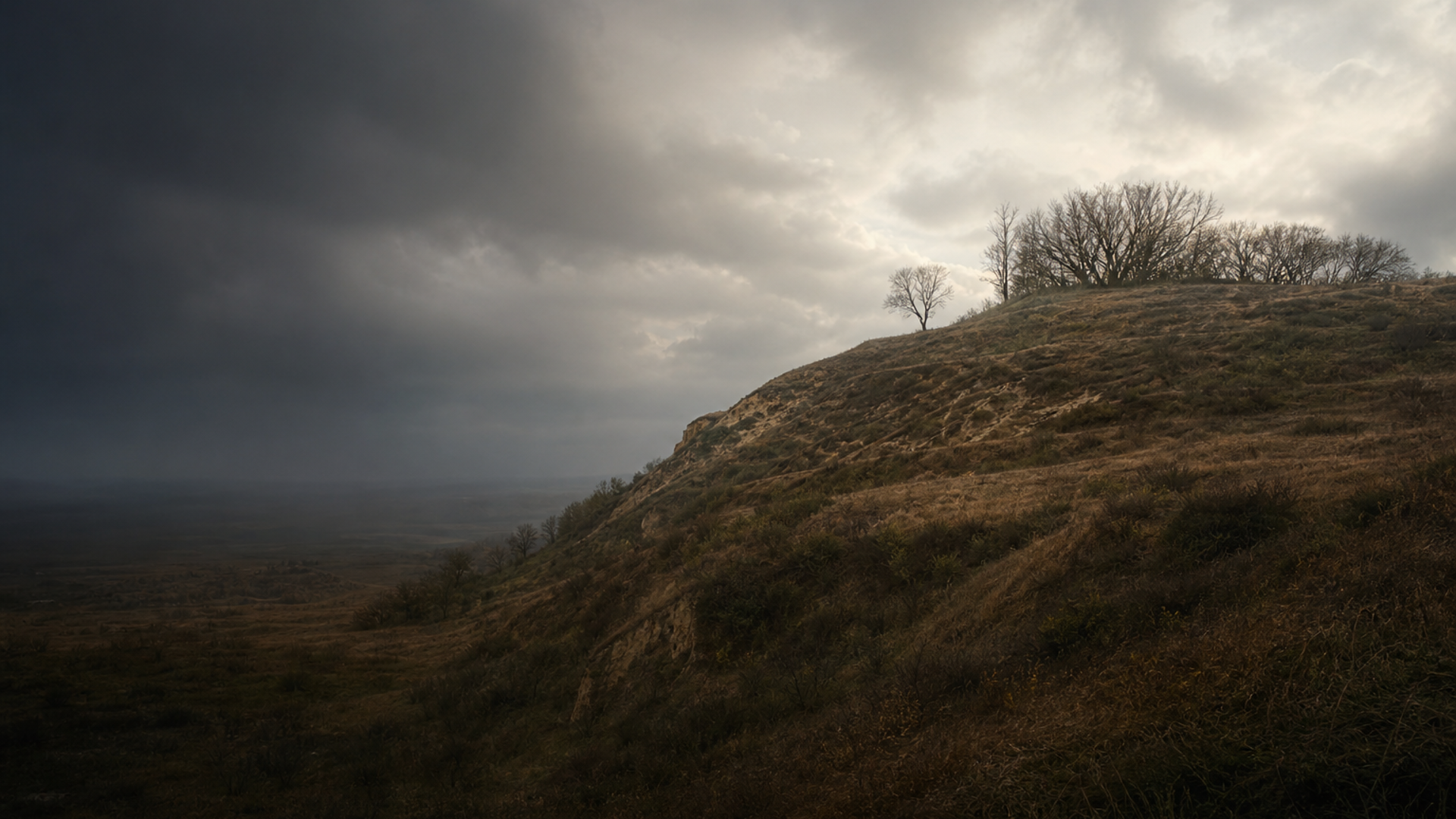
The cinematic sweep of the coastline — amber-laden shores, small hamlets and burial grounds — offers a landscape in which identities were negotiated through objects, rites, and possibly migration. Yet, given the modest size of the sampled assemblage, any reconstruction of origins remains provisional.

  • Czarnówko site (Nowa Wieś Lęborska), dated c. 100–300 CE
  • Material culture aligns with Wielbark funerary traditions
  • Evidence points to local coastal communities with regional connections
Kapitel IV

Daily Life & Society

Daily existence for Wielbark-affiliated people around Czarnówko likely combined small-scale farming, animal husbandry, craft production and trade. Archaeological traces in the region—pottery sherds, metalwork fragments and occasional imported items—suggest household economies that were both self-sufficient and connected to wider exchange networks, including the Baltic amber routes.

Social life can be glimpsed through burial practices: variations in grave goods and body treatment imply differentiated identities — perhaps age, gender, craft or status. The landscapes around Lębork hosted dispersed homesteads rather than dense urban centers; life would have been structured by seasonal rhythms, kin networks, and the sea’s resources. Craft specialists made and repaired metal objects and fibulae; ceramic styles indicate regional traditions with occasional external influences.

Archaeological data indicates a community attuned to both land and sea, where material culture and funerary rites expressed belonging. Yet the record is fragmentary: preservation biases and limited excavated contexts mean reconstructions of daily life remain interpretive, inviting integration with bioarchaeological and genetic studies to refine our view.

  • Mixed economy of farming, herding, craft and Baltic trade
  • Burial variability suggests social differentiation within the community
Kapitel V

Genetic Profile

Seven individuals sampled from Czarnówko provide a small but evocative genetic window into this Wielbark-associated population. Maternal lineages (mtDNA) in the assemblage—primarily T (2), H (1), U (1), plus H27 and T2b—are broadly consistent with mitochondrial haplogroups commonly found across Iron Age and later European populations, suggesting continuity of some maternal genetic threads in the region.

The paternal signal is more surprising: two individuals carry Y-haplogroup L and one carries a marker labeled AM. Haplogroup L today is most frequent in South Asia and is rare in northern Europe; AM is an uncommon designation in standard Y-haplogroup nomenclature and may reflect either a specific subclade label used in this dataset or low-confidence assignment. Such results must be treated with caution. Possible explanations include: limited sample size and stochasticity, rare but real incoming male lineages in the Baltic trade networks, misclassification due to low coverage, or contamination/artifact of analysis pipelines.

Because the sample count is low (<10), any population-level inference is preliminary. Archaeogenomic interpretation here benefits from combining these findings with isotopic mobility data, broader Wielbark and contemporary regional genetic datasets, and increased sampling to test whether the unexpected paternal signatures represent isolated anomalies or evidence of wider, previously under-recognized connections.

  • mtDNA shows mainly European lineages (T, H, U) consistent with local ancestry
  • Y-DNA includes unexpected L (2) and AM (1); small sample makes this preliminary
Kapitel VI

Legacy & Modern Connections

The people buried at Czarnówko were part of cultural currents that helped shape later Baltic and Polish landscapes. Archaeological continuity in material styles and burial forms links Wielbark communities to subsequent regional traditions, while their participation in amber and coastal networks left an economic imprint on the area.

Genetically, the mitochondrial signatures align with broader European maternal heritage, suggesting that at least some maternal lines persisted in the region. The unusual paternal signals, if corroborated, would indicate episodes of long-distance connection that complicate simple narratives of isolation. For modern individuals using DNA ancestry platforms, these ancient genomes provide potential deep-time anchors — but with an important caveat: with only seven samples from Czarnówko, connections to present-day populations are suggestive rather than definitive. Expanded sampling and integrated archaeological contexts will sharpen how these ancient threads tie into the tapestry of modern ancestry.

  • Archaeological continuity links Wielbark traditions to later regional groups
  • Genetic hints suggest mostly European maternal continuity; paternal signals need more data
KI-gestützt

KI-Assistent

Stellen Sie Fragen zur Czarnówko Wielbark: Baltic Threads-Kultur

KI-Assistent von DNAGENICS

Funktion freischalten
Stellen Sie Fragen zur Kultur Czarnówko Wielbark: Baltic Threads. Unser KI-Assistent kann genetische Befunde, historischen Kontext, archäologische Belege und moderne Verbindungen erläutern.
Beispiel einer KI-Analyse

Die Czarnówko Wielbark: Baltic Threads-Kultur ist ein faszinierendes Kapitel der Menschheitsgeschichte...

Genetische Analysen zeigen Übereinstimmungen mit früheren Populationen und Hinweise auf besondere Anpassungen und kulturelle Innovationen. Alte DNA-Proben liefern Einblicke in Migrationsmuster, soziale Strukturen und genetische Verbindungen zwischen Populationen.

Dies ist eine Vorschau der KI-Analyse. Schalten Sie den vollständigen KI-Assistenten frei, um detaillierte Einblicke zu erkunden:

  • Genetische Zusammensetzung und genetische Ähnlichkeit
  • Migrationsmuster und Ursprünge
  • Alltag und kulturelle Praktiken
  • Genetischer Bezug zu heutigen Populationen

Weitere antike Kulturen erkunden

Geschichten von Zivilisationen aus der antiken Welt entdecken

Use code for 35% off • Expires Nov 09




