Dzharkutan: Bronze Age Echoes

Download PDF creates a visual, rasterized copy. Use Print for selectable text and better assistive-technology support.

Bericht wird vorbereitet

Verfügbare Informationen und Referenzen werden geladen

Verbindung mit dem archäologischen Quellenbestand...

Alte Quellen werden zusammengestellt

Zum Hauptinhalt springen
Dzharkutan: Bronze Age Echoes
Zivilisations-Spotlight

Dzharkutan: Bronze Age Echoes

A riverside Bronze Age settlement in Uzbekistan where pottery, graves, and DNA whisper of changing ancestries

2100 CE - 1434 BCE
Dzharkutan, modern Uzbekistan (Central Asia)
Scrollen zum Start
Kapitel I

Die Geschichte

Die Dzharkutan: Bronze Age Echoes-Kultur verstehen

Dzharkutan (2100–1434 BCE) was a Bronze Age settlement in what is now Uzbekistan. Archaeology reveals craft, trade, and complex burial rites. Ten ancient DNA samples provide a modest genetic glimpse—mtDNA dominated by HV and U lineages and a single Y‑R signal—suggesting mixed West Eurasian ancestries, but conclusions remain preliminary.

Time Period

2100–1434 BCE

Region

Dzharkutan, modern Uzbekistan (Central Asia)

Common Y-DNA

R (observed)

Common mtDNA

HV (3), U (2), T (1), R (1), J1b (1)

Kapitel II

Zeitleiste

Zentrale Momente in der Geschichte dieser Kultur

2100 BCE

Settlement florescence at Dzharkutan

Settlement activity and craft production intensify at Dzharkutan, marking its role as a Bronze Age local center in southern Central Asia.

Kapitel III

Origins & Emergence

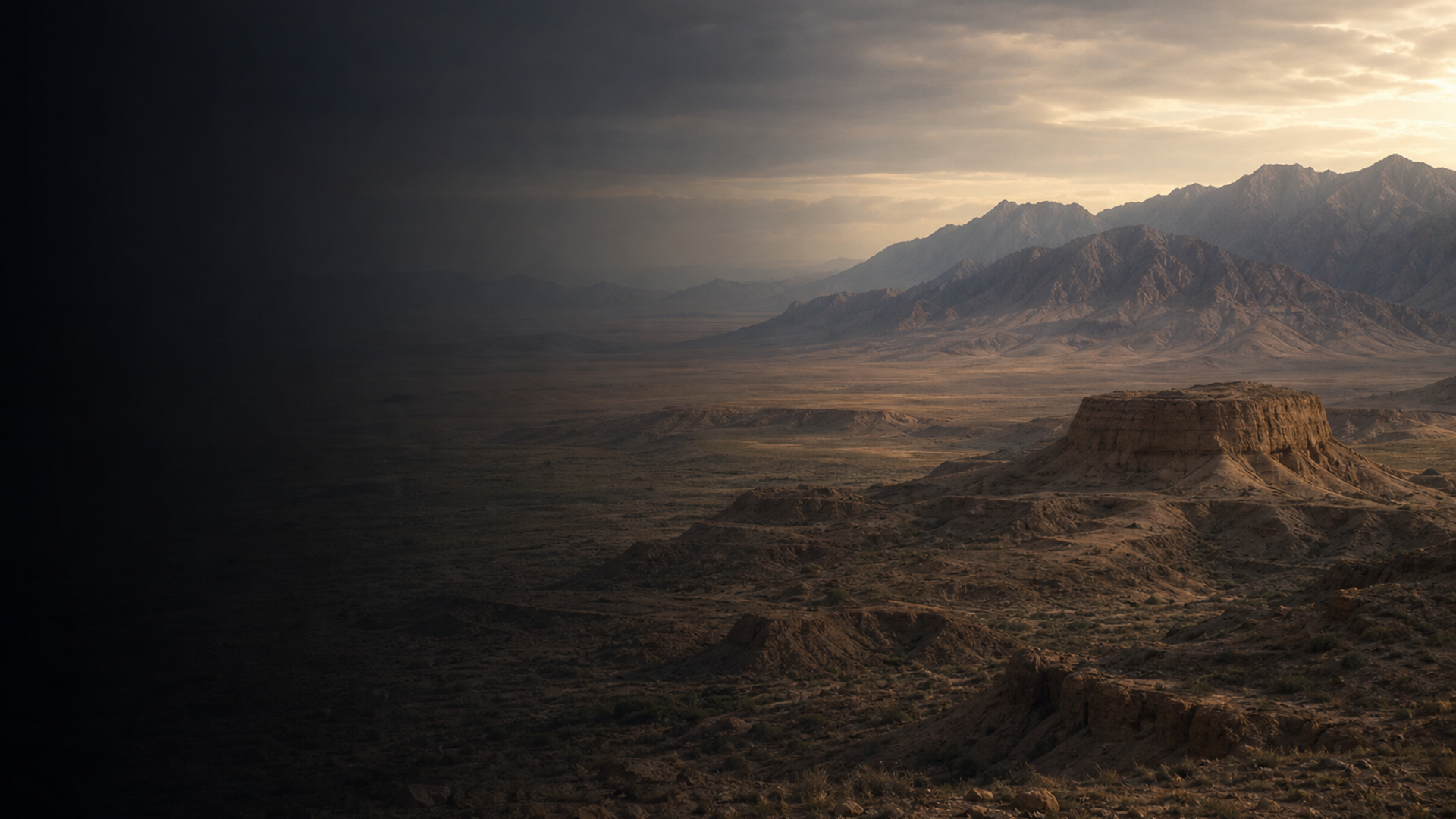
Dzharkutan rises in the Bronze Age horizon of southern Central Asia, flourishing between roughly 2100 and 1434 BCE. Archaeological data indicates a nucleated settlement with substantial mudbrick architecture, craft workshops, and cemeteries that record changing funerary choices. The site sits at a crossroads of river valleys and arid steppe, a landscape that encouraged both local sedentary lifeways and long‑distance exchange.

Material culture from excavations—burnished ceramics, metalworking debris, and sealed administrative objects—speaks to organized production and connectivity. Limited evidence suggests affinities with broader Oxus/Bactria‑Margiana traditions in southern Central Asia, while also reflecting local innovations. Radiocarbon dates from habitation and burial contexts anchor Dzharkutan within the Middle to Late Bronze Age, a period of shifting networks as pastoral steppe groups and oasis town economies interacted.

Cinematic layers of daily smoke, hammered bronze, and hollowed grain stores emerge from the stratigraphy; yet many questions remain. The archaeological record provides clear glimpses of urbanizing life but cannot alone resolve the full story of population movement. Ancient DNA now offers a new lens to read those human journeys, though current genetic sampling remains modest.

  • Settlement active c.2100–1434 BCE with substantial architecture
  • Material culture links to Oxus/BMAC traditions and local craft
  • Positioned at a landscape crossroads of river valley and steppe
Kapitel IV

Daily Life & Society

Archaeological strata at Dzharkutan reveal a tactile world: rooms layered with hearths, workshops strewn with crucible fragments, and courtyards where pottery vessels dried in the sun. Agricultural features—storage pits and grinding stones—indicate reliance on cereals and pastoral husbandry, while faunal remains point to sheep, goat, and cattle as economic mainstays. Craft specialization is implied by concentrations of metalworking slag and finished bronze goods, suggesting artisans worked alongside householders.

Burial practices are evocative and varied. Grave assemblages range from modest inhumations to burials with ornaments and ceramic offerings, hinting at social differentiation. Seals and tokens imply administrative practices—control of goods or production—consistent with the more complex socioeconomies of Bronze Age oasis towns. Trade seems to have been a lifeblood: exotic raw materials and stylistic echoes of distant regions testify to long‑distance exchange networks, carried along river corridors and seasonal pastoral routes.

Archaeological data indicates a community skilled in craft, tied to land and herds, and engaged in networks that reached beyond the valley. The daily rhythms of food, work, and ritual at Dzharkutan were the scaffold on which broader cultural interactions played out.

  • Mixed farming and pastoralism with evidence for craft specialization
  • Diverse burial rites suggesting social differentiation and ritual
Kapitel V

Genetic Profile

Ten ancient individuals from Dzharkutan provide a modest but informative genetic snapshot of this Bronze Age settlement. MtDNA haplogroups observed include HV (3 samples), U (2), T (1), R (1), and J1b (1). A single observable Y‑chromosome assignment falls into haplogroup R. These maternal and paternal markers are broadly West Eurasian in character, and many of them are common across Bronze Age Eurasia.

Archaeogenetic patterns from Central Asia often reflect mixtures of local southern/West Eurasian lineages with inflows related to Steppe pastoralists; the Dzharkutan dataset is consistent with this broad pattern but cannot firmly resolve admixture proportions. The single R Y‑line is noteworthy because R subclades are commonly associated with Steppe expansions, yet R is a large haplogroup with many regional variants, and one sample cannot indicate wide‑scale replacement.

Importantly, ten samples represent a modest sample size: conclusions must remain tentative. Some individuals in the dataset lacked high‑quality genome coverage, and not all uniparental lineages were resolvable. Future sampling and genome‑wide analyses could clarify whether Dzharkutan was genetically stable, a meeting point for diverse groups, or a community shaped by episodic migration.

  • MtDNA dominated by HV and U lineages, reflecting West Eurasian maternal ancestry
  • Single observed Y‑DNA R haplogroup—suggestive but insufficient to infer broader paternal patterns
Kapitel VI

Legacy & Modern Connections

The echoes of Dzharkutan reverberate into the deep genetic and cultural palimpsest of Central Asia. Maternal lineages such as HV and U detected at the site continue to appear in modern West Eurasian and Central Asian populations, indicating threads of continuity in mitochondrial heritage, though continuity should not be assumed without caution. Cultural legacies—craft traditions, settlement patterns, and participation in long‑distance exchange—feed into the later tapestry of oasis towns and regional trade routes.

Archaeological and genetic data together paint Dzharkutan as a locus of interaction: a place where local traditions and incoming influences met. For modern people of Uzbekistan and neighboring regions, Dzharkutan is one chapter among many in a multilayered ancestry. The current genetic sample is modest, so any direct line of descent is provisional; however, the site contributes a valuable piece to the evolving story of how Bronze Age demographics shaped subsequent populations across Central Asia.

  • Maternal haplogroups at Dzharkutan resonate with modern West Eurasian and Central Asian lineages
  • Cultural and genetic data together suggest a role as a regional interaction hub
KI-gestützt

KI-Assistent

Stellen Sie Fragen zur Dzharkutan: Bronze Age Echoes-Kultur

KI-Assistent von DNAGENICS

Funktion freischalten
Stellen Sie Fragen zur Kultur Dzharkutan: Bronze Age Echoes. Unser KI-Assistent kann genetische Befunde, historischen Kontext, archäologische Belege und moderne Verbindungen erläutern.
Beispiel einer KI-Analyse

Die Dzharkutan: Bronze Age Echoes-Kultur ist ein faszinierendes Kapitel der Menschheitsgeschichte...

Genetische Analysen zeigen Übereinstimmungen mit früheren Populationen und Hinweise auf besondere Anpassungen und kulturelle Innovationen. Alte DNA-Proben liefern Einblicke in Migrationsmuster, soziale Strukturen und genetische Verbindungen zwischen Populationen.

Dies ist eine Vorschau der KI-Analyse. Schalten Sie den vollständigen KI-Assistenten frei, um detaillierte Einblicke zu erkunden:

  • Genetische Zusammensetzung und genetische Ähnlichkeit
  • Migrationsmuster und Ursprünge
  • Alltag und kulturelle Praktiken
  • Genetischer Bezug zu heutigen Populationen

Weitere antike Kulturen erkunden

Geschichten von Zivilisationen aus der antiken Welt entdecken

Use code for 30% off • Expires Nov 08




