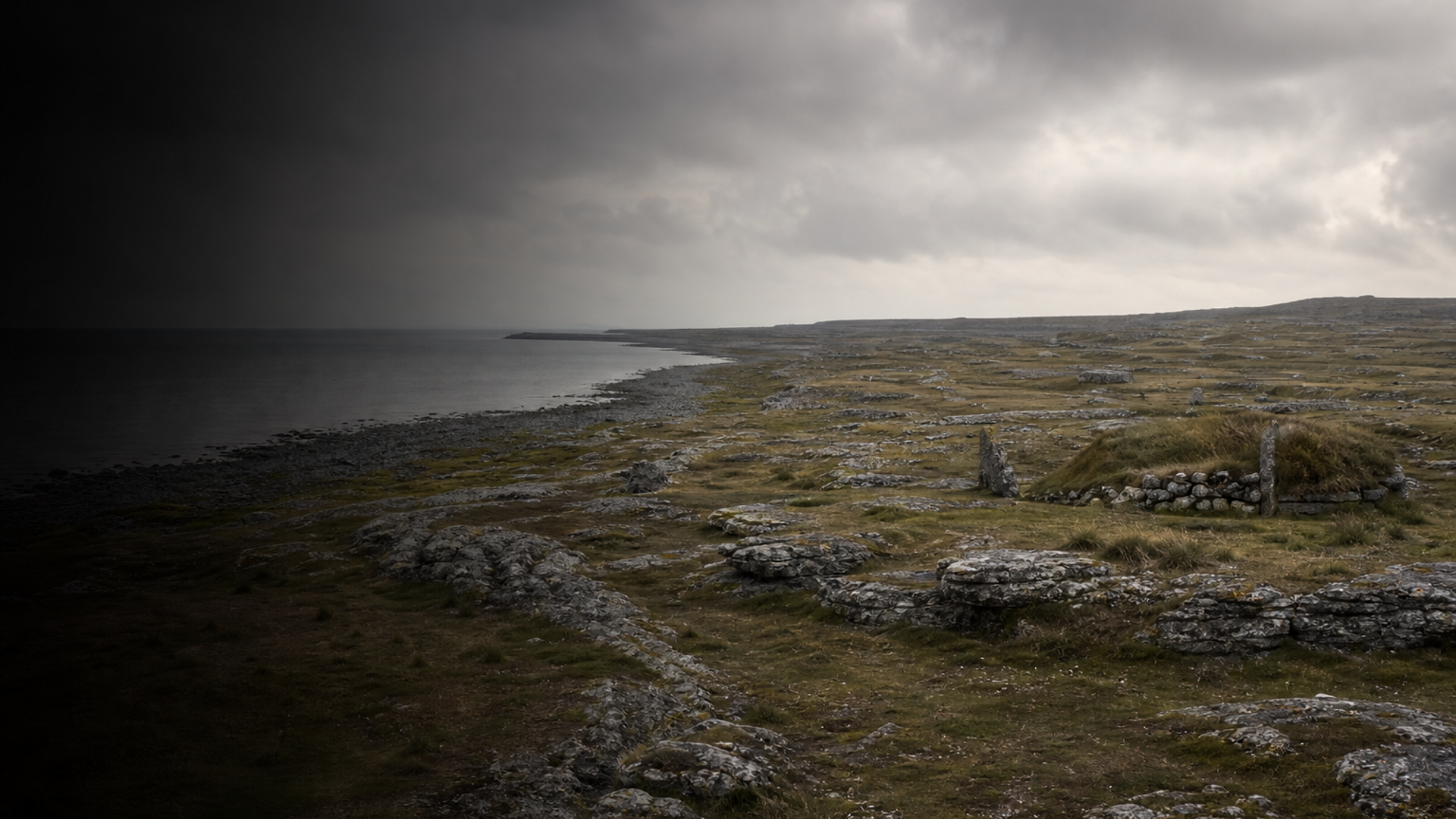
Early Viking Öland: Sweden, 700–800 CE

Download PDF creates a visual, rasterized copy. Use Print for selectable text and better assistive-technology support.

Bericht wird vorbereitet

Verfügbare Informationen und Referenzen werden geladen

Verbindung mit dem archäologischen Quellenbestand...

Alte Quellen werden zusammengestellt

Zum Hauptinhalt springen
Early Viking Öland: Sweden, 700–800 CE
Zivilisations-Spotlight

Early Viking Öland: Sweden, 700–800 CE

Archaeological and genetic glimpses from Öland’s Early Viking landscapes

700 CE - 800 CE
Öland, Sweden
Scrollen zum Start
Kapitel I

Die Geschichte

Die Early Viking Öland: Sweden, 700–800 CE-Kultur verstehen

Small but illuminating DNA samples from Öland (700–800 CE) link burial landscapes and material culture to broader Scandinavian mobility. Limited sample size (n=3) makes conclusions provisional; archaeological evidence indicates maritime life, trade, and regional continuity.

Time Period

700–800 CE

Region

Öland, Sweden

Common Y-DNA

I1 (1), I (1), CT (1)

Common mtDNA

H (2), U (1)

Kapitel II

Zeitleiste

Zentrale Momente in der Geschichte dieser Kultur

750 CE

Early Viking burials on Öland

Burials dated c. 700–800 CE on Öland reflect maritime lifeways and participation in wider Scandinavian networks.

Kapitel III

Origins & Emergence

The Early Viking presence on Öland unfolds at the cusp of a world reshaped by seafaring energy and regional realignments. Archaeological data indicates small cemeteries and isolated burials dating to c. 700–800 CE, placed along the island’s sheltered coasts. These graves sit within a longer Scandinavian trajectory: settlement continuity from late Iron Age communities, intensified coastal exchange, and emerging warrior-elite visibility in mortuary practice.

Limited evidence suggests that Öland functioned as both a local home base and a waypoint on wider sea routes linking the Baltic and North Sea. The island’s archaeology—coastal cemeteries, tool assemblages, and imported goods observed elsewhere in the region—evokes a community oriented to maritime resources, seasonal fishing, and long-distance contacts. Yet precise origins are hard to pin down: genetic samples are few, and material culture shows both regional continuity and incoming stylistic influences.

Archaeological interpretation must therefore balance evocative narratives of Viking mobility with careful restraint: the picture that emerges is one of a landscape already embedded in Scandinavian networks, where local lifeways adapted to broader economic and social changes at the beginning of the Viking Age. Continued excavation and more ancient DNA will refine the story of how Öland’s people participated in this transformative era.

  • Cemeteries and burials on Öland dated to 700–800 CE
  • Island served as coastal hub within Baltic–North Sea networks
  • Origins show continuity with late Iron Age traditions, with incoming influences
Kapitel IV

Daily Life & Society

Archaeological traces paint a cinematic, tactile portrait of daily life: timber longhouses warmed by peat fires, boats moored in shallow bays, and toolkits for fishing, weaving, and metalworking that speak to a mixed subsistence economy. Excavated features across Öland’s coastal sites reveal hearths, postholes, and middens containing fish bone, domestic animal remains, and worked bone—evidence of a community intimately tied to sea and soil.

Grave goods, when present, are modest but meaningful: personal adornments, practical iron tools, and occasional exotic items point to social differentiation and connections beyond the island. Archaeological data indicates craft specialization at small scales—blacksmithing, textile production, and boat repair—supporting seasonal trade or tribute opportunities. Maritime technology and navigational knowledge underpinned mobility; the material record suggests seasonal movement, raiding, trading, and kin-based networks rather than uniformly large-scale colonizing expeditions.

Society on Öland thus appears rooted in kinship clusters and local leadership, with social prestige expressed through controlled access to sea routes and material tokens. However, the archaeological record is patchy: settlement evidence is fragmentary and burial practices variable, so reconstructions remain provisional pending further fieldwork and more comprehensive sampling.

  • Mixed economy: fishing, animal husbandry, craft production
  • Material culture shows local traditions with external contacts
Kapitel V

Genetic Profile

Ancient DNA from three individuals recovered on Öland (dated to 700–800 CE) offers a tantalizing but highly preliminary genetic snapshot. Y-chromosome results show I1 (1), I (1), and CT (1). The presence of I1 aligns with broader Scandinavian male-line patterns in the Viking Age and later centuries; I (a broader clade) is also common in northern Europe. CT is a low-resolution assignment that could reflect either degraded data or lineages not resolvable to more specific clades with the current dataset.

Mitochondrial DNA haplogroups are H (2) and U (1). Haplogroup H is widespread across Europe and common in both ancient and modern Scandinavian populations; U represents older northern European maternal lineages seen sporadically through the Mesolithic and later prehistory. Taken together, these maternal and paternal markers are consistent with a predominantly local northern European ancestry but do not rule out recent mobility or gene flow.

Critically, sample count is extremely small (n=3). Limited evidence suggests continuity with regional genetic profiles, but any demographic inferences—about migration, sex-biased mobility, or social structure—must be framed as provisional. Archaeogenetic interpretation benefits from integration with burial context, isotopic data (mobility and diet), and expanding sample sizes. Future recovery of additional genomes from Öland and nearby mainland sites will be essential to move beyond snapshot observations to robust models of population dynamics in the Early Viking Age.

  • Y-DNA: I1 and I lineages consistent with Scandinavian male ancestry
  • mtDNA: H and U indicate common European maternal lineages; conclusions are provisional (n=3)
Kapitel VI

Legacy & Modern Connections

The genetic echoes of Öland’s Early Viking individuals resonate with modern Scandinavia but must be treated cautiously. Archaeological continuity and shared haplogroups suggest threads of biological and cultural persistence into later medieval and modern populations of Sweden. Today’s prevalence of paternal I1 in northern Europe is compatible with continuity in male lines, while maternal H and U haplogroups remain common across Europe.

However, the limited ancient sample set prevents firm claims of direct ancestry. Cultural legacies—seafaring traditions, maritime craftsmanship, and regional identities tied to islands like Öland—are clearer in the archaeological record than strict genetic continuity. Integrating more ancient genomes, isotopic mobility studies, and high-resolution Y-chromosome subclade analysis will illuminate how these early communities contributed to the genetic tapestry of modern Scandinavians.

  • Genetic patterns hint at continuity with modern Scandinavians but remain provisional
  • Cultural legacy stronger in archaeology; more DNA needed to map precise ancestry links
KI-gestützt

KI-Assistent

Stellen Sie Fragen zur Early Viking Öland: Sweden, 700–800 CE-Kultur

KI-Assistent von DNAGENICS

Funktion freischalten
Stellen Sie Fragen zur Kultur Early Viking Öland: Sweden, 700–800 CE. Unser KI-Assistent kann genetische Befunde, historischen Kontext, archäologische Belege und moderne Verbindungen erläutern.
Beispiel einer KI-Analyse

Die Early Viking Öland: Sweden, 700–800 CE-Kultur ist ein faszinierendes Kapitel der Menschheitsgeschichte...

Genetische Analysen zeigen Übereinstimmungen mit früheren Populationen und Hinweise auf besondere Anpassungen und kulturelle Innovationen. Alte DNA-Proben liefern Einblicke in Migrationsmuster, soziale Strukturen und genetische Verbindungen zwischen Populationen.

Dies ist eine Vorschau der KI-Analyse. Schalten Sie den vollständigen KI-Assistenten frei, um detaillierte Einblicke zu erkunden:

  • Genetische Zusammensetzung und genetische Ähnlichkeit
  • Migrationsmuster und Ursprünge
  • Alltag und kulturelle Praktiken
  • Genetischer Bezug zu heutigen Populationen

Weitere antike Kulturen erkunden

Geschichten von Zivilisationen aus der antiken Welt entdecken

Use code for 30% off • Expires Nov 08