East Yorkshire: Late Iron Age Echoes

Download PDF creates a visual, rasterized copy. Use Print for selectable text and better assistive-technology support.

Bericht wird vorbereitet

Verfügbare Informationen und Referenzen werden geladen

Verbindung mit dem archäologischen Quellenbestand...

Alte Quellen werden zusammengestellt

Zum Hauptinhalt springen
East Yorkshire: Late Iron Age Echoes
Zivilisations-Spotlight

East Yorkshire: Late Iron Age Echoes

Fragmentary lives from North Ferriby to Nunburnholme, seen through bones and genomes

196 BCE - 50 CE
East Riding of Yorkshire, United Kingdom
Scrollen zum Start
Kapitel I

Die Geschichte

Die East Yorkshire: Late Iron Age Echoes-Kultur verstehen

Six Late Iron Age individuals (196 BCE–50 CE) from East Riding of Yorkshire link archaeological context at North Ferriby, Pocklington, Thornholme and Nunburnholme with preliminary ancient DNA: Y-haplogroup R and diverse maternal lineages (K, H, U), suggesting local continuity and continental connections.

Time Period

196 BCE – 50 CE

Region

East Riding of Yorkshire, United Kingdom

Common Y-DNA

R (observed in 2/6)

Common mtDNA

K (2), H (2), U (1), H3 (1)

Kapitel II

Zeitleiste

Zentrale Momente in der Geschichte dieser Kultur

100 BCE

Late Iron Age occupation

Communities in East Yorkshire farmed, traded via the Humber, and created burial deposits that later yielded human remains and DNA samples.

43 CE

Roman contact and influence

Beginning of Roman presence in southern Britain brings new trade and mobility patterns that may have affected East Yorkshire networks.

Kapitel III

Origins & Emergence

Against the low, wind-scoured ridges of East Yorkshire, Late Iron Age communities carved lives from fertile soils and river corridors. Archaeological data indicates activity at coastal and inland loci — notably North Ferriby (Melton Quarry), Pocklington (Burnby Lane), Thornholme (East Coast Pipeline field 16 and Town Pasture) and Nunburnholme Wold — during the centuries surrounding the turn of the era (196 BCE–50 CE). Material culture across the region shows continuity with earlier Iron Age traditions while also absorbing continental motifs; metalwork and imported goods recorded elsewhere in East Yorkshire suggest active trade and cultural exchange with northwestern Europe.

Limited evidence suggests that these places were a mixture of settled farmsteads, ritual landscapes and burial locales rather than dense urban centers. Human remains recovered in quarry and field contexts provide direct windows into those lives: their diets, health, and — increasingly — their genomes. Because the current ancient DNA sample is small (n = 6), any narrative about migration or demographic turnover must remain cautious. Still, the archaeological record and preliminary genetic signals together paint a picture of a region rooted in local traditions but open to external contacts during the Late Iron Age.

  • Sites: North Ferriby (Melton Quarry), Pocklington (Burnby Lane), Thornholme, Nunburnholme Wold
  • Dates: 196 BCE – 50 CE (Late Iron Age)
  • Landscape: coastal plains, river valleys, mixed farming and exchange networks
Kapitel IV

Daily Life & Society

Archaeological traces evoke a rhythm of agricultural labor, seasonal gatherings and riverborne trade. Fields around the Humber estuary and the Wolds supported cereal cultivation and pastoralism; isotope studies elsewhere in Britain indicate mixed diets of cereals, dairy and local proteins — a likely scenario for East Yorkshire too, although direct isotopic data for these six individuals is limited or absent. Material remains from the broader region reveal craft specialization: metalworking, textile production and the use of imported goods that signal connections beyond the immediate landscape.

Burial practices were varied in Iron Age Britain, and the contexts that yielded these genomes include quarry and pasture finds that may reflect secondary deposition, isolated burials or remnants of larger funerary complexes. Osteological evidence from comparable sites suggests lives marked by physical labor, episodic nutritional stress, and common infectious conditions; however, specific pathological assessments for these individuals should be treated as preliminary. Socially, communities likely balanced kin-based households with wider alliances mediated by exchange, marriage and ritual performance, with the river and coast serving as arteries of mobility.

  • Economy: mixed farming, pastoralism, regional trade via Humber estuary
  • Burials: varied contexts; funerary interpretation is cautious given limited samples
Kapitel V

Genetic Profile

The genetic snapshot from six individuals in East Yorkshire provides tantalizing but tentative insights. Two males carried broad R-lineage Y haplogroups, a pattern commonly found across later prehistoric and historic western Europe; however, the precise subclades (e.g., R1b versus other R branches) are not resolved here, and with only two Y-chromosome carriers the picture is incomplete. Mitochondrial diversity is higher in the small sample: two individuals each with haplogroups K and H, one with U, and one with H3. Haplogroups K and H are frequently observed in European populations across the Neolithic to Iron Age transition and can indicate long-term maternal continuity in northwest Europe, while U lineages have deep roots in earlier hunter-gatherer and subsequent Bronze Age populations.

Genetic affinities suggested by these uniparental markers are consistent with a community showing both local continuity and links to wider Atlantic and continental gene pools. Yet with a sample count below ten, conclusions about migration, sex-biased mobility, or population replacement remain preliminary. Future genomic work with larger sample sizes, autosomal analyses and well-contextualized isotopic data will be required to resolve whether East Yorkshire’s Late Iron Age people derived mainly from local ancestry, received substantial continental influx, or experienced complex admixture events.

  • Y-DNA: R observed in 2 of 6 males — limited resolution and sample size
  • mtDNA: K (2), H (2), U (1), H3 (1) — suggests maternal continuity with regional lineages
Kapitel VI

Legacy & Modern Connections

The skeletal fragments and genomes from North Ferriby, Pocklington, Thornholme and Nunburnholme whisper across two millennia to modern inhabitants of Yorkshire. Archaeological continuity in settlement patterns and the persistence of maternal haplogroups such as H and K hint at genetic threads that extend from the Late Iron Age into later periods. At the same time, the presence of broadly European Y-lineages is compatible with the long history of movement and exchange across the North Sea.
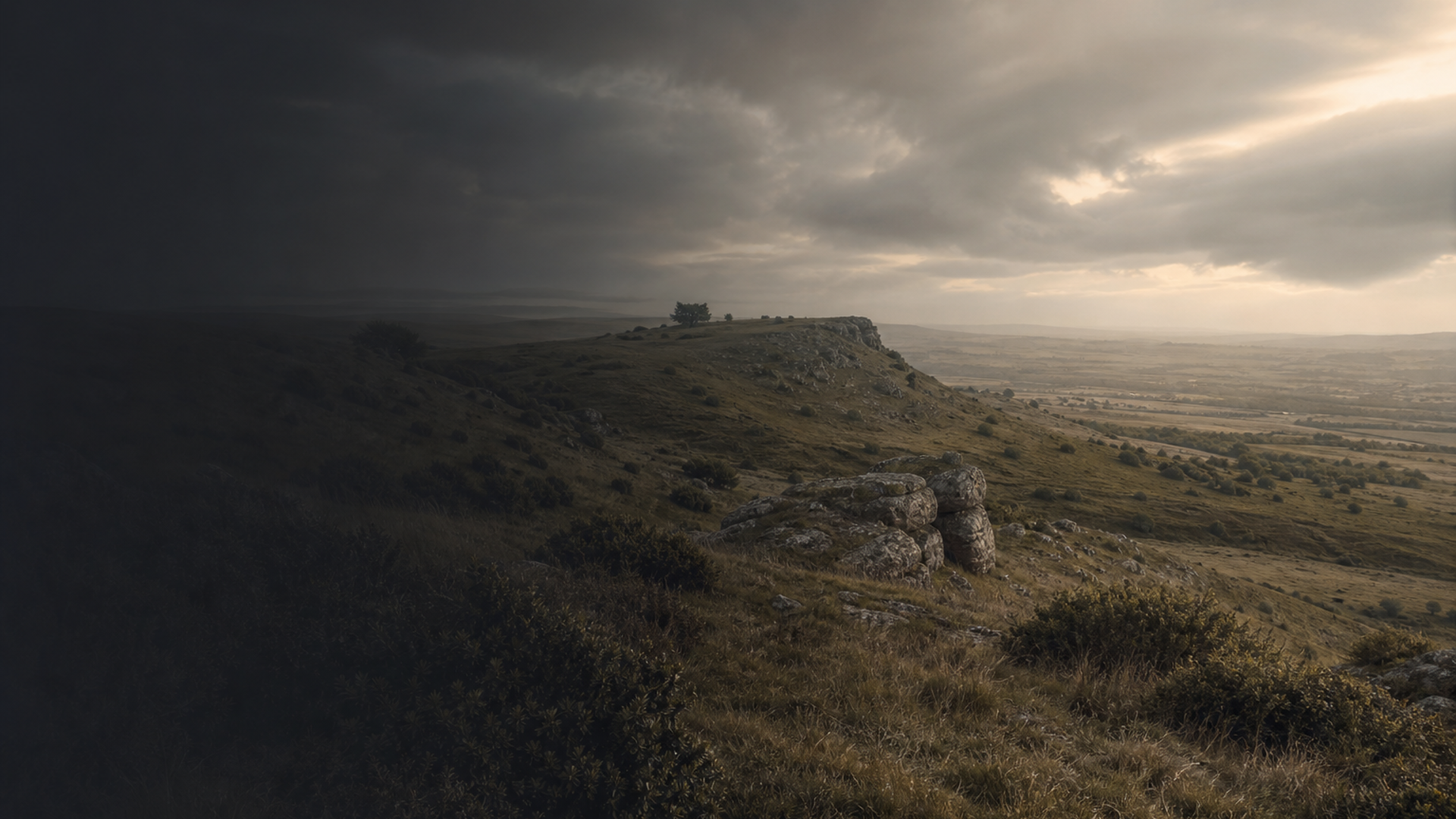

Interpreting legacy requires caution: with only six samples, any direct line between an individual in the 1st century BCE and a named modern population would be speculative. Nevertheless, when combined with larger datasets from Britain and continental Europe, these individuals contribute to a growing mosaic showing localized persistence intertwined with episodic external influence — a pattern that helps explain the genetic and cultural complexity of modern Britain.

  • Maternal continuity: H and K persisting in regional lineages
  • Caveat: small sample size (n=6) — findings are preliminary and part of a larger, evolving dataset
KI-gestützt

KI-Assistent

Stellen Sie Fragen zur East Yorkshire: Late Iron Age Echoes-Kultur

KI-Assistent von DNAGENICS

Funktion freischalten
Stellen Sie Fragen zur Kultur East Yorkshire: Late Iron Age Echoes. Unser KI-Assistent kann genetische Befunde, historischen Kontext, archäologische Belege und moderne Verbindungen erläutern.
Beispiel einer KI-Analyse

Die East Yorkshire: Late Iron Age Echoes-Kultur ist ein faszinierendes Kapitel der Menschheitsgeschichte...

Genetische Analysen zeigen Übereinstimmungen mit früheren Populationen und Hinweise auf besondere Anpassungen und kulturelle Innovationen. Alte DNA-Proben liefern Einblicke in Migrationsmuster, soziale Strukturen und genetische Verbindungen zwischen Populationen.

Dies ist eine Vorschau der KI-Analyse. Schalten Sie den vollständigen KI-Assistenten frei, um detaillierte Einblicke zu erkunden:

  • Genetische Zusammensetzung und genetische Ähnlichkeit
  • Migrationsmuster und Ursprünge
  • Alltag und kulturelle Praktiken
  • Genetischer Bezug zu heutigen Populationen

Weitere antike Kulturen erkunden

Geschichten von Zivilisationen aus der antiken Welt entdecken

Use code for 30% off • Expires Nov 08




