Echoes from the Yellow River

Download PDF creates a visual, rasterized copy. Use Print for selectable text and better assistive-technology support.

Bericht wird vorbereitet

Verfügbare Informationen und Referenzen werden geladen

Verbindung mit dem archäologischen Quellenbestand...

Alte Quellen werden zusammengestellt

Zum Hauptinhalt springen
Echoes from the Yellow River
Zivilisations-Spotlight

Echoes from the Yellow River

Late Neolithic communities in Henan where pottery, millet, and genes tell a converging story

2861 CE - 1850 BCE
Henan, Yellow River basin, China
Scrollen zum Start
Kapitel I

Die Geschichte

Die Echoes from the Yellow River-Kultur verstehen

Archaeogenetic and archaeological evidence from Henan (2861–1850 BCE) links Pingliangtai, Haojiatai, and Wadian sites to Late Neolithic Yellow River lifeways. Small-sample ancient DNA shows East Asian maternal lineages (D, F2h) and Y-lineages (O, N, C), suggesting local continuity with regional interactions.

Time Period

2861–1850 BCE

Region

Henan, Yellow River basin, China

Common Y-DNA

O, N, C

Common mtDNA

D, F2h, D4, N

Kapitel II

Zeitleiste

Zentrale Momente in der Geschichte dieser Kultur

2500 BCE

Late Neolithic village life

Villages in Henan like Pingliangtai and Wadian are occupied; millet cultivation, pottery, and differentiated burials are common.

Kapitel III

Origins & Emergence

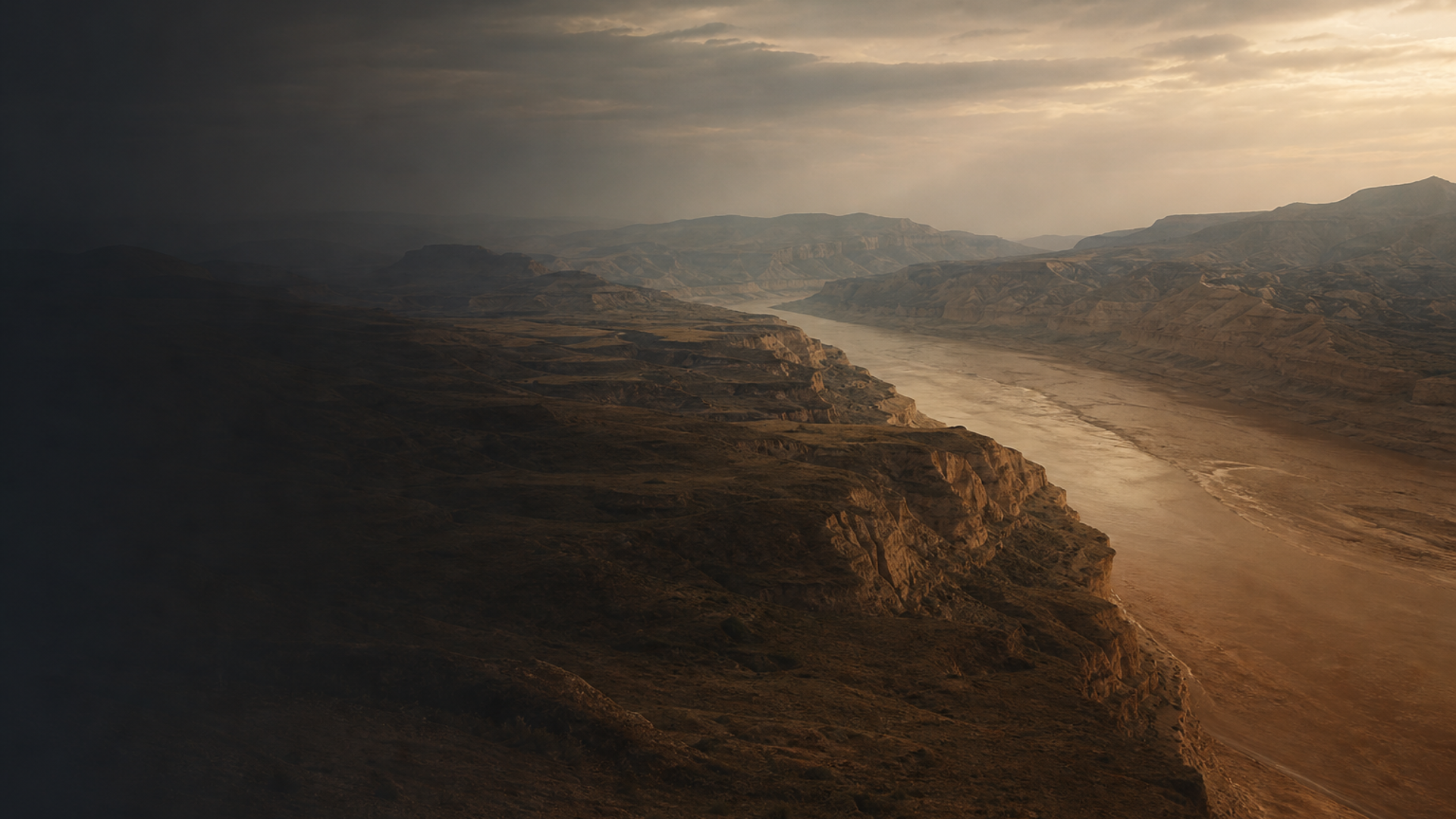
Along the fertile floodplains of the Yellow River, burial mounds and pottery shelters mark the slow accrual of settled life. At Pingliangtai (Huaiyang, Henan), Haojiatai (Shicaozhao, Luohe), and Wadian (Yuzhou), radiocarbon dates cluster between the late 3rd and mid 2nd millennium BCE (approx. 2861–1850 BCE), placing these communities in the Late Neolithic Yellow River horizon. Archaeological data indicates intensified millet agriculture, the development of painted and cord-marked pottery, and emerging craft specialization.

Material culture suggests a mosaic of local innovation and regional exchange: traded stone tools and stylistic parallels link Henan settlements to broader Yellow River networks. Osteological and burial patterns show differences in status and age at death, implying increasingly complex social organization. Genetic data from a small set of eight individuals offers a first glimpse of biological ancestry in these sites, consistent with East Asian maternal lineages and Y-chromosome types that are frequent in northern China today. Limited evidence suggests continuity with earlier Yellow River populations, but the sample is small; broader sampling is needed to confirm demographic trajectories.

  • Sites: Pingliangtai, Haojiatai, Wadian in Henan province
  • Dates: c. 2861–1850 BCE, Late Neolithic Yellow River period
  • Evidence of millet farming, pottery, and regional exchange
Kapitel IV

Daily Life & Society

Life along the Yellow River was shaped by the rhythm of seasons and the demands of millet cultivation. Houses of post-and-wattle construction, storage pits, and hearths reflect stable village life; archaeological layers preserve charred millet and broomcorn grains, suggesting staple diets based on domesticated cereals. Ceramic assemblages—both utilitarian and painted wares—attest to household production and aesthetic expression, while stone sickles and grinding stones reveal agricultural labor.

Burial customs vary across the sites: simple inhumations with pottery offerings are common, but occasional richly furnished graves indicate emerging social differentiation. Faunal remains show a mixed economy of domesticated pigs, dogs, and wild resource procurement. Craft specialists—potters and lithic workers—left durable traces in workshop debris and standardized tool types. Archaeological data indicates growing connectivity between Henan villages and neighboring river valleys, through exchange of goods, styles, and possibly marriage ties. Remember that many behavioral inferences come from material remains; where organic artifacts are absent, interpretations remain cautious.

  • Millet agriculture, storage pits, and hearth-centered households
  • Variation in burials suggests incipient social differentiation
Kapitel V

Genetic Profile

Ancient DNA from eight individuals associated with the China_YR_LN assemblage provides preliminary but evocative genetic signals. Maternal lineages are dominated by haplogroup D (five individuals), with single occurrences of F2h, D4, and N—lineages commonly observed across Neolithic and later East Asia. This mitochondrial pattern suggests strong local continuity of maternal ancestry in the Yellow River basin and links to broader East Asian maternal diversity.

On the paternal side, Y-chromosome markers include haplogroup O (two individuals), N (one), and C (one). Haplogroup O is widespread among modern East Asian populations and is frequently detected in Neolithic samples from the Yellow River region; its presence here is consistent with regional male-line continuity. Haplogroups N and C, while less frequent, point to subregional diversity and possible gene flow along north–south or riverine corridors.

Crucially, the sample count is small (n = 8). Limited evidence suggests these patterns are representative of local populations, but conclusions are preliminary. Wider sampling, higher-resolution genome-wide data, and comparisons with contemporaneous sites will be necessary to resolve migration, kinship, and sex-biased demographic processes. Archaeogenetics here acts as a complement to archaeology: genetic affinities echo material continuity but also hint at networks of interaction.

  • mtDNA dominated by D (5/8), with F2h, D4, N present
  • Y-DNA shows O (2), N (1), C (1); preliminary evidence for regional continuity
Kapitel VI

Legacy & Modern Connections

The people of the Late Neolithic Yellow River left a durable imprint on the landscape: agricultural systems, ceramic traditions, and settlement patterns that scaffold later Bronze Age states. Genetic links—maternal haplogroup D and paternal haplogroup O among them—mirror lineages that persist in modern northern Chinese populations, suggesting threads of ancestry that run from Neolithic villages to contemporary communities.

Archaeological continuity in Henan helps explain cultural developments in subsequent millennia, but we must stress caution. With only eight ancient genomes, claims about direct descent or sweeping demographic events remain tentative. Nonetheless, these samples illuminate a chapter of human history where rivers carried not just water and silt, but ideas, genes, and the beginnings of complex society.

  • Genetic signals align with lineages common in modern northern China
  • Material culture from Henan contributed to later Bronze Age developments
KI-gestützt

KI-Assistent

Stellen Sie Fragen zur Echoes from the Yellow River-Kultur

KI-Assistent von DNAGENICS

Funktion freischalten
Stellen Sie Fragen zur Kultur Echoes from the Yellow River. Unser KI-Assistent kann genetische Befunde, historischen Kontext, archäologische Belege und moderne Verbindungen erläutern.
Beispiel einer KI-Analyse

Die Echoes from the Yellow River-Kultur ist ein faszinierendes Kapitel der Menschheitsgeschichte...

Genetische Analysen zeigen Übereinstimmungen mit früheren Populationen und Hinweise auf besondere Anpassungen und kulturelle Innovationen. Alte DNA-Proben liefern Einblicke in Migrationsmuster, soziale Strukturen und genetische Verbindungen zwischen Populationen.

Dies ist eine Vorschau der KI-Analyse. Schalten Sie den vollständigen KI-Assistenten frei, um detaillierte Einblicke zu erkunden:

  • Genetische Zusammensetzung und genetische Ähnlichkeit
  • Migrationsmuster und Ursprünge
  • Alltag und kulturelle Praktiken
  • Genetischer Bezug zu heutigen Populationen

Weitere antike Kulturen erkunden

Geschichten von Zivilisationen aus der antiken Welt entdecken

Use code for 30% off • Expires Nov 08




