Echoes of Modern Iran

Download PDF creates a visual, rasterized copy. Use Print for selectable text and better assistive-technology support.

Bericht wird vorbereitet

Verfügbare Informationen und Referenzen werden geladen

Verbindung mit dem archäologischen Quellenbestand...

Alte Quellen werden zusammengestellt

Zum Hauptinhalt springen
Echoes of Modern Iran
Zivilisations-Spotlight

Echoes of Modern Iran

Living landscapes where archaeology and DNA illuminate a continuous, layered past

2000 CE
Iran (Iranian Plateau, Caspian coast, Persian Gulf)
Scrollen zum Start
Kapitel I

Die Geschichte

Die Echoes of Modern Iran-Kultur verstehen

A concise portrait of Modern Iran using archaeological context and 60 genetic samples from Iranian sites and migrants. Discusses regional diversity, archaeological sites (Urmia, Shiraz, Bandar Abbas), and how genetics complements material evidence while noting uncertainties.

Time Period

2000 CE (Modern)

Region

Iran (Iranian Plateau, Caspian coast, Persian Gulf)

Common Y-DNA

Diverse; no single dominant haplogroup in this dataset

Common mtDNA

Diverse maternal lineages; regionally mixed

Kapitel II

Zeitleiste

Zentrale Momente in der Geschichte dieser Kultur

550 BCE

Rise of the Achaemenid realms

Formation of imperial networks across the Iranian plateau that reshaped trade and mobility (archaeological remains densely distributed).

330 BCE

Hellenistic contacts

Alexander’s campaigns opened new cultural exchanges between Iran and the Mediterranean world.

2000 CE

Modern sampling snapshot

Sixty modern samples collected from Iranian sites and migrants, providing a present-day genetic snapshot for integrative study.

Kapitel III

Origins & Emergence

Modern Iran is best understood as a palimpsest: millennia of settlement, conquest, trade and migration have written layer upon layer into the landscape. Archaeological sites mentioned in the sample set—Urmia and its satellite sites (Adeh; Gug Tappeh), Shiraz in Fars, Bandar Abbas on the Persian Gulf, Babol on the Caspian littoral, and Khoramabad in Lorestan—preserve material traditions that range from local agricultural economies to nodes of long-distance commerce. Archaeological data indicates continuity of settlement in many valleys and coastal plains, interspersed with episodes of movement and cultural change.

Genetically, the 60 modern samples offer a window into that layered history: they capture regional mixtures formed by ancient Neolithic farmers, later movements across the Iranian plateau, and historic connections to the Caucasus, Anatolia, the Arabian Peninsula and Central Asia. Limited evidence from this modern-only dataset cannot by itself resolve ancient migration timings; comparisons with ancient DNA (aDNA) from well-dated archaeological contexts remain essential. Where sample sizes from particular sites are small, conclusions should be treated as provisional. Still, when coupled with archaeological stratigraphy and historical sources, these modern genomes help trace how ancient demographic processes persist into the present.

  • Samples come from diverse Iranian locales and migrants in Kuwait and Israel
  • Archaeology shows continuity punctuated by episodic migrations
  • Modern genomes reflect a long history of regional mixture
Kapitel IV

Daily Life & Society

The material traces that archaeologists read—pottery, house foundations, agricultural terraces, port remains—are also the settings in which genomes were formed. In coastal Bandar Abbas, centuries of maritime trade on the Persian Gulf left archaeological signatures of commercial exchange and cultural mixing; genetic inputs from maritime networks can appear in coastal populations. In Mazandaran (Babol), archaeobotanical and settlement data indicate wet-rice and irrigated agriculture along the Caspian fringe, producing locally distinct lifeways and genetic continuity within the plain. In Lorestan (Khoramabad), the mountainous terrain has preserved distinct tribal and pastoral traditions, visible archaeologically in burial practices and material culture; such landscape barriers can also promote genetic differentiation.

Modern migration—the movement of laborers and families to Kuwait and Israel and return migration—adds a contemporary chapter to this story. Migrant samples capture both the genetic imprint of origin communities and recent admixture events tied to economic and social networks. Archaeological perspectives remind us that daily life, subsistence, and trade shape gene flow over centuries, while modern demographic processes continue to rework those patterns.

  • Coastal trade and inland agriculture produced distinct archaeological footprints
  • Topography (plains vs mountains) influenced social structure and genetic diversity
Kapitel V

Genetic Profile

The genetic dataset includes 60 modern samples collected from Iranian sites (Urmia, Adeh, Gug Tappeh, Shiraz, Bandar Abbas, Babol, Khoramabad) and from migrants sampled in Kuwait and Israel. With this sample size, population-level signals begin to emerge, but interpretation must remain cautious: 60 modern genomes provide insight into recent population structure and admixture, but cannot substitute for time-stamped ancient DNA when inferring deep demographic events.

Preliminary patterns indicate substantial heterogeneity across sampled locales. Coastal and Caspian samples show affinities consistent with long-contact maritime and littoral connections; northwestern samples around Urmia show increased affinity to populations of the southern Caucasus and Anatolia in comparative analyses, consistent with archaeological ties in that region. Inland and mountainous samples (Lorestan) often show signals of relative local continuity and isolation. Because the dataset is modern, recent admixture—over the past centuries—contributes to observed diversity. Precise assignment to Y-DNA or mtDNA haplogroups was not uniform across the dataset; broadly, maternal and paternal lineages are mixed, reflecting Iran’s role as a crossroads.

Further work integrating autosomal analyses, haplogroup calls, and comparisons to ancient genomes from the Iranian plateau and neighboring regions is essential. Where specific site sample counts are low (<10), results should be treated as preliminary and hypothesis-generating rather than definitive.

  • 60 modern samples reveal regional heterogeneity but require cautious interpretation
  • Comparative signals link coastal, northwestern, and inland groups to neighboring regions
Kapitel VI

Legacy & Modern Connections

Modern Iran’s cultural and genetic landscape is a living archive. Archaeological continuity in valleys and ports, layered with episodes of migration and exchange, has created a population tapestry visible in both artifacts and genomes. Contemporary identity and language reflect these long-term processes: material culture and genetic ancestry often tell complementary stories—one of daily life, the other of biological inheritance.
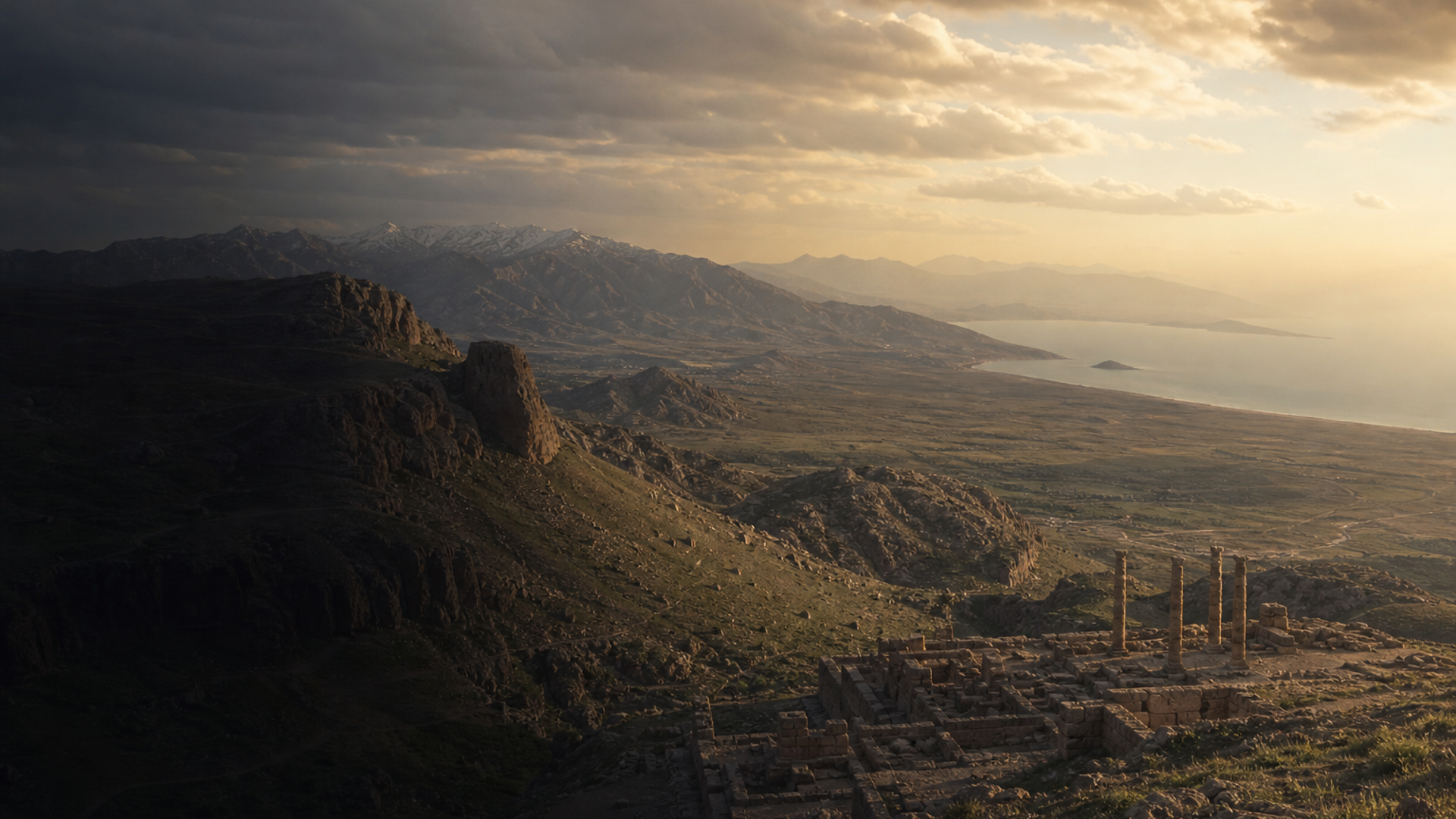
The sampled migrants in Kuwait and Israel underscore how recent mobility reshapes genetic patterns on short timescales, just as historic trade and conquest did across centuries. For researchers and museum audiences, the lesson is cinematic but measured: artifacts carry the imprint of human choices, and genomes record the movements of people who made those choices. Integrating archaeology with genetics produces a richer, more nuanced narrative, while acknowledging uncertainties and the continuing need for ancient DNA to anchor genetic inferences in time.

  • Material culture and genomes together reveal layered continuity and movement
  • Recent migration adds a modern layer to a long history of regional connectivity
KI-gestützt

KI-Assistent

Stellen Sie Fragen zur Echoes of Modern Iran-Kultur

KI-Assistent von DNAGENICS

Funktion freischalten
Stellen Sie Fragen zur Kultur Echoes of Modern Iran. Unser KI-Assistent kann genetische Befunde, historischen Kontext, archäologische Belege und moderne Verbindungen erläutern.
Beispiel einer KI-Analyse

Die Echoes of Modern Iran-Kultur ist ein faszinierendes Kapitel der Menschheitsgeschichte...

Genetische Analysen zeigen Übereinstimmungen mit früheren Populationen und Hinweise auf besondere Anpassungen und kulturelle Innovationen. Alte DNA-Proben liefern Einblicke in Migrationsmuster, soziale Strukturen und genetische Verbindungen zwischen Populationen.

Dies ist eine Vorschau der KI-Analyse. Schalten Sie den vollständigen KI-Assistenten frei, um detaillierte Einblicke zu erkunden:

  • Genetische Zusammensetzung und genetische Ähnlichkeit
  • Migrationsmuster und Ursprünge
  • Alltag und kulturelle Praktiken
  • Genetischer Bezug zu heutigen Populationen

Weitere antike Kulturen erkunden

Geschichten von Zivilisationen aus der antiken Welt entdecken

Use code for 35% off • Expires Nov 09




