Echoes of the Central Asian Bronze Horizon

Download PDF creates a visual, rasterized copy. Use Print for selectable text and better assistive-technology support.

Bericht wird vorbereitet

Verfügbare Informationen und Referenzen werden geladen

Verbindung mit dem archäologischen Quellenbestand...

Alte Quellen werden zusammengestellt

Zum Hauptinhalt springen
Echoes of the Central Asian Bronze Horizon
Zivilisations-Spotlight

Echoes of the Central Asian Bronze Horizon

Archaeology and DNA from Sappali Tepe to Sarazm reveal a layered Bronze Age world

4486 BCE - 1000 BCE
Uzbekistan, Tajikistan (Central Asia)
3 antike Proben
Scrollen zum Start
Kapitel I

Die Geschichte

Die Echoes of the Central Asian Bronze Horizon-Kultur verstehen

Archaeological and genomic data from 49 individuals (4486 BCE–1000 BCE) across Uzbekistan and Tajikistan illuminate Bronze Age communities around Sappali Tepe, Sarazm, and Ferghana. Material culture, burial practice, and mixed ancestry profiles point to local continuity with incoming influences.

Time Period

4486 BCE - 1000 BCE

Region

Uzbekistan, Tajikistan (Central Asia)

Common Y-DNA

R (8), J (6), G (2), L (2), Q (2)

Common mtDNA

U (10), HV (7), T (4), J (3), N (2)

Kapitel II

Zeitleiste

Zentrale Momente in der Geschichte dieser Kultur

2500 BCE

Bronze Age florescence near Sappali Tepe

Peak Bronze Age occupation and intensified metallurgy around Sappali Tepe and Ferghana; exchange networks expand across highland-lowland corridors.

Kapitel III

Origins & Emergence

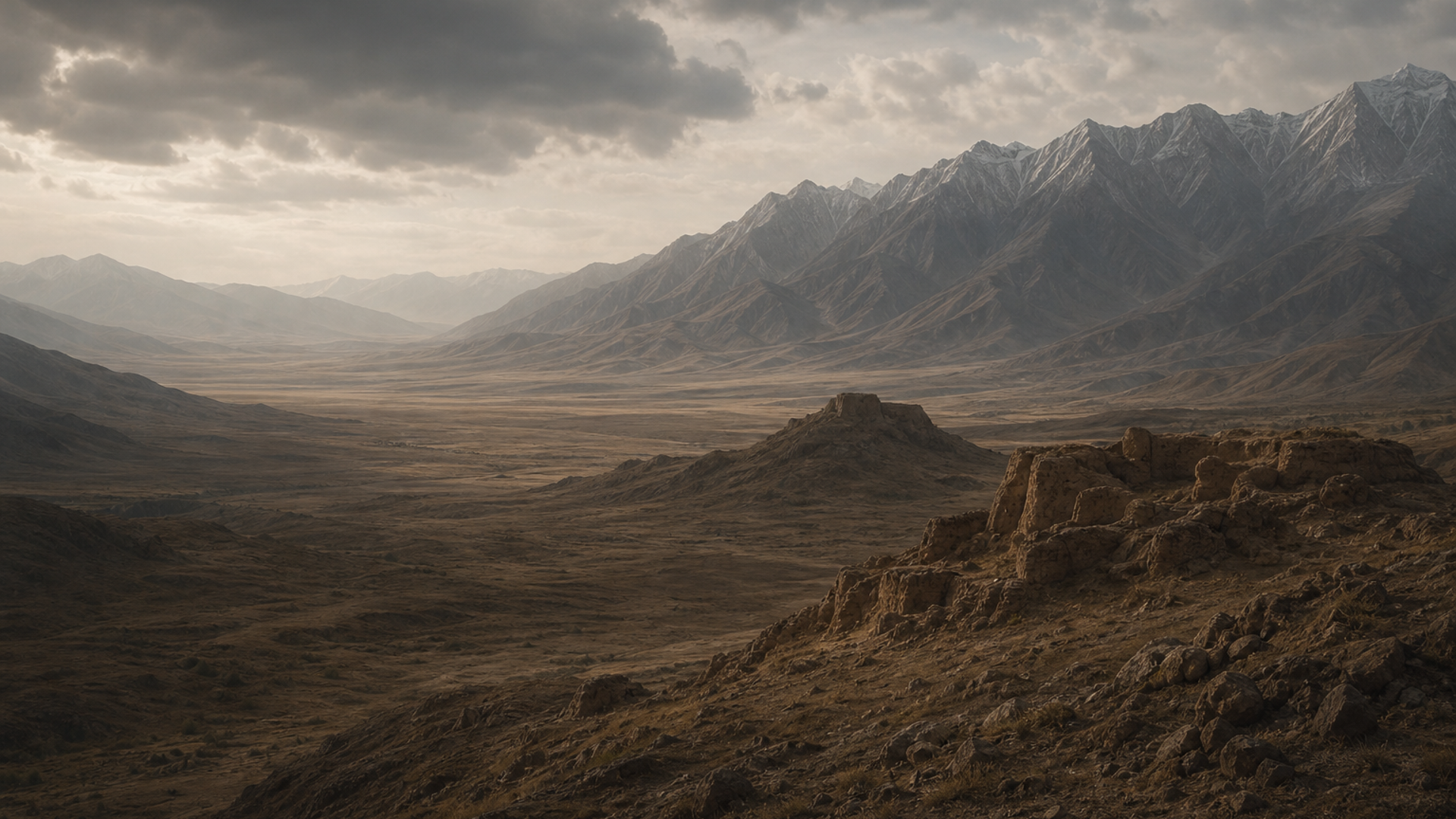
Across river terraces and mountain shadows of modern Uzbekistan and Tajikistan, the earliest individuals in this dataset date as far back as 4486 BCE, with a concentration of remains in Bronze Age layers through the first millennium BCE. Sites such as Sappali Tepe (Uzbekistan), Sarazm (Tajikistan), Dzharkutan, and Kashkarchi anchor a regional sequence in which Chalcolithic farming settlements gradually coalesce into more complex Bronze Age communities.

Archaeological data indicates increased sedentism, craft specialization, and copper working by the mid-3rd millennium BCE. At Sarazm, excavations reveal dense occupational layers, storage architecture, and long-distance exchange in metals and luxury goods. In the Ferghana corridor, wetter soils and river systems supported irrigated fields and orchard planting; settlements there show continuity from earlier Chalcolithic horizons into Bronze Age settlement agglomerations.

Culturally, this landscape is a mosaic: Dashti Kozy and Zaman-Baba related material traits appear alongside local ceramic traditions. Limited evidence suggests episodic mobility—seasonal pastoralism and exchange networks—rather than wholesale population replacement. Genetic and isotopic data, when layered onto stratigraphy and artifact assemblages, point to a narrative of local development coupled with intermittent influxes of people and ideas across the highland-lowland interface.

  • Earliest samples: 4486 BCE; range extends to 1000 BCE
  • Key sites: Sappali Tepe, Sarazm, Dzharkutan, Kashkarchi
  • Blend of local Chalcolithic continuity and Bronze Age innovations
Kapitel IV

Daily Life & Society

Ceramics, hearths, and burial rites paint a vivid daily picture: households clustered around courtyard compounds, storage pits for grain, and workshops where copper was hammered into tools and ornaments. At Bustan and Kokcha 3, archaeologists document craft zones adjacent to living areas—evidence of family-based production and specialist know-how passed across generations.

Burial contexts range from simple inhumations in flat graves to more elaborate interments with metal objects and beads, as seen in Dzharkutan and Kashkarchi. Funerary variability likely reflects status differentiation and diverse local practices; some graves suggest centralized ritual spaces while others point to household-level commemorations. Zooarchaeological remains indicate mixed economies: sheep and goats dominate herding signatures, while cattle and horse appear in certain assemblages, hinting at both pastoral mobility and traction/agricultural uses.

Material remains such as spindle whorls, loom weights, and weaving tools attest to textile production, an essential part of women’s and household labor. Limited botanical evidence suggests wheat, barley, and orchard crops in irrigated pockets of the Ferghana and lowland valleys. While trade networks brought obsidian, copper, and exotic goods, local landscapes remained central: water control, storage technology, and seasonal pastures structured daily life.

  • Household craft and metallurgy attested at Bustan and Kokcha 3
  • Diverse burial practices indicate social differentiation
Kapitel V

Genetic Profile

Forty-nine sampled individuals provide a moderate-sized window into ancestry and social dynamics across this Central Asian corridor. Y-chromosome diversity is varied: haplogroup R is the most frequent (8 individuals), followed by J (6), with smaller counts of G (2), L (2), and Q (2). Maternal lineages are dominated by mtDNA U (10) and HV (7), with notable representation of T, J, and N lineages.

This combination suggests a long-standing local substrate (maternal U and HV lineages common across western and central Eurasia) alongside paternal inputs that reflect both regional continuity and episodic inflows. Haplogroup R includes lineages common across Eurasia and can reflect steppe-affiliated ancestry in some contexts; haplogroup J is frequent in Near Eastern and Iranian-related populations, which aligns with material evidence for exchange with southern highland zones. The presence of L and Q—though limited in number—signals additional diversity, perhaps tied to southern or eastern connections.

Genomic ancestry models for these individuals indicate admixture between local Chalcolithic farmers, steppe-influenced groups, and Iranian-related components. However, caution is necessary: while 49 samples allow population-level inference, geographic sampling is uneven across sites and time slices. Limited temporal resolution for some locations means that inferences about migration timing remain provisional. Future sampling and radiocarbon-secured contexts will refine the sequence of demographic change.
  • Diverse paternal pool: R and J most common; smaller G, L, Q components
  • Maternal lineages dominated by U and HV, suggesting deep local roots
Kapitel VI

Legacy & Modern Connections

The material and genetic threads from Sappali Tepe, Sarazm, and neighboring sites weave into later cultural landscapes of Central Asia. Archaeological continuities—irrigation, metalworking, and pastoral strategies—persist into the first millennium BCE and help shape historical societies in the Ferghana and Zarafshan valleys.
Genetically, modern populations of Uzbekistan and Tajikistan inherit a palimpsest of ancestries visible in this Bronze Age sample: deep maternal lineages common to West and Central Eurasia, paternal signals that reflect both local lineages and broader trans-regional connections. However, direct one-to-one lineage claims are premature; population processes over three millennia include many pulses of movement. These ancient individuals offer touchstones for understanding how local communities adapted to environmental challenges and engaged in long-distance networks that would define the human geography of Central Asia.

  • Archaeological practices (irrigation, metallurgy) persist regionally
  • Modern genetic variation reflects layered ancestry, with caution about direct descent claims
Kapitel VII

Probenkatalog

3 alte DNA-Proben, die mit der Echoes of the Central Asian Bronze Horizon-Kultur in Verbindung stehen und genetische Einordnungen zu den Menschen dieses Zeitraums liefern.

3 / 3 Proben
Porträt Probe Land Epoche Datum Kultur Geschlecht Y-DNA mtDNA
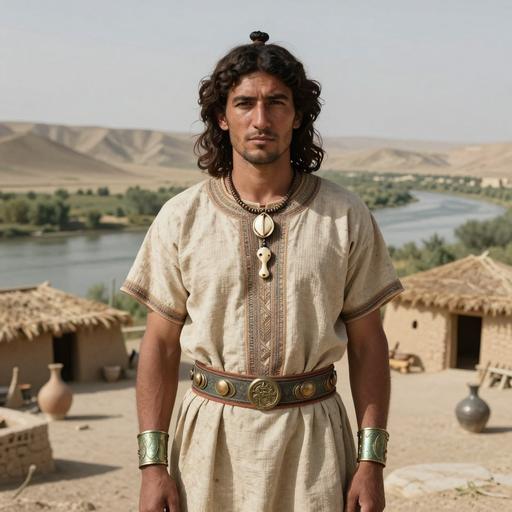
Künstlerische Rekonstruktion von BA individual, Uzbekistan
BA individual, Uzbekistan
Uzbekistan Uzbekistan_Kokcha_BA 1497-1316 calBCE (3145±25 BP, PSUAMS-5284) Central Asian Civilization M R-YP413 U5b1e1
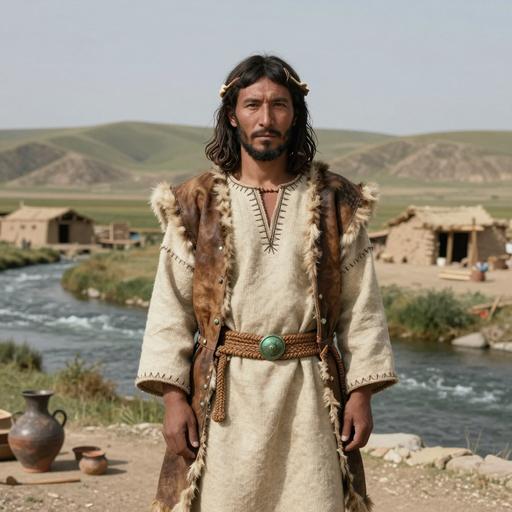
Künstlerische Rekonstruktion von BA individual, Uzbekistan
BA individual, Uzbekistan
Uzbekistan Uzbekistan_Kokcha_BA 1741-1613 calBCE (3375±20 BP, PSUAMS-5275) Central Asian Civilization M Q-F4705 T
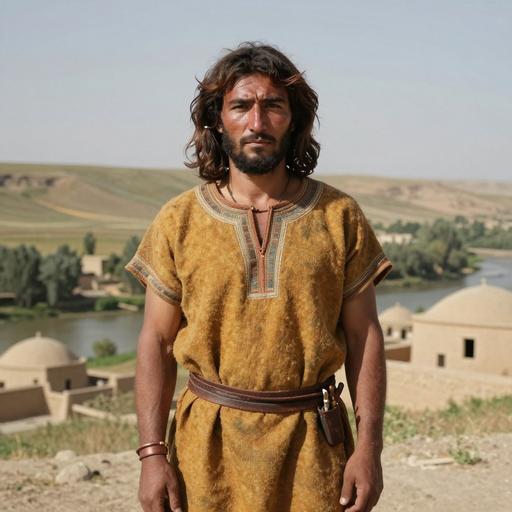
Künstlerische Rekonstruktion von BA individual, Uzbekistan
BA individual, Uzbekistan
Uzbekistan Uzbekistan_Kokcha_BA 2500-1500 BCE Central Asian Civilization M R-M417 U2e2a1d
KI-gestützt

KI-Assistent

Stellen Sie Fragen zur Echoes of the Central Asian Bronze Horizon-Kultur

KI-Assistent von DNAGENICS

Funktion freischalten
Stellen Sie Fragen zur Kultur Echoes of the Central Asian Bronze Horizon. Unser KI-Assistent kann genetische Befunde, historischen Kontext, archäologische Belege und moderne Verbindungen erläutern.
Beispiel einer KI-Analyse

Die Echoes of the Central Asian Bronze Horizon-Kultur ist ein faszinierendes Kapitel der Menschheitsgeschichte...

Genetische Analysen zeigen Übereinstimmungen mit früheren Populationen und Hinweise auf besondere Anpassungen und kulturelle Innovationen. Alte DNA-Proben liefern Einblicke in Migrationsmuster, soziale Strukturen und genetische Verbindungen zwischen Populationen.

Dies ist eine Vorschau der KI-Analyse. Schalten Sie den vollständigen KI-Assistenten frei, um detaillierte Einblicke zu erkunden:

  • Genetische Zusammensetzung und genetische Ähnlichkeit
  • Migrationsmuster und Ursprünge
  • Alltag und kulturelle Praktiken
  • Genetischer Bezug zu heutigen Populationen

Weitere antike Kulturen erkunden

Geschichten von Zivilisationen aus der antiken Welt entdecken

Use code for 30% off • Expires Nov 08