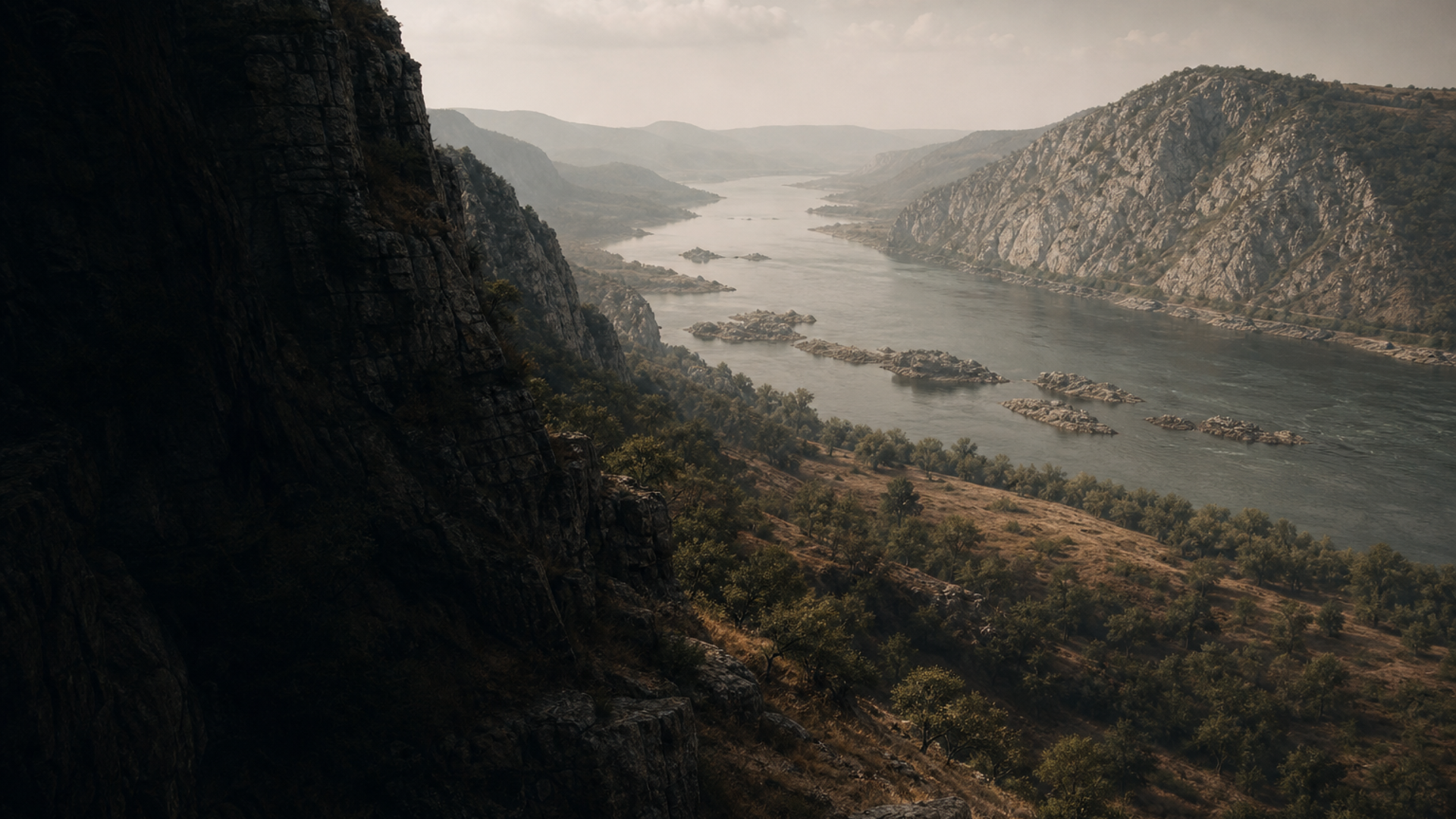
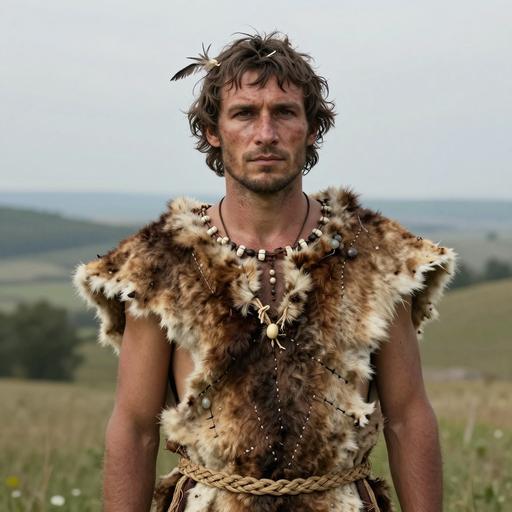
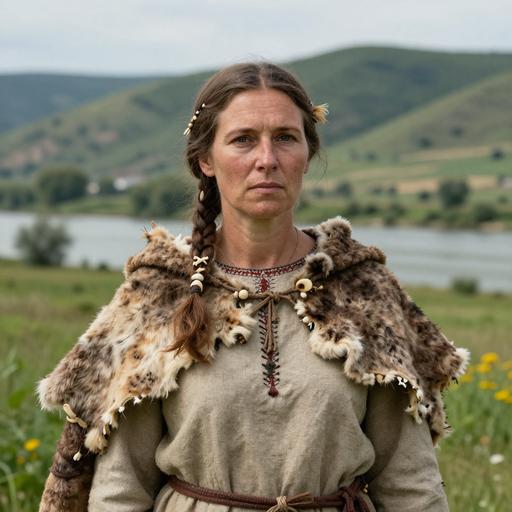
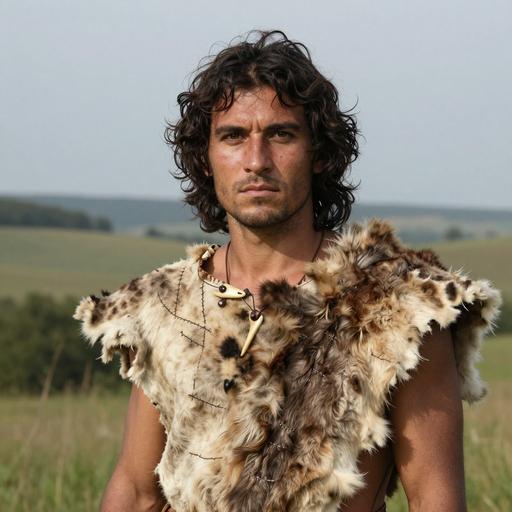
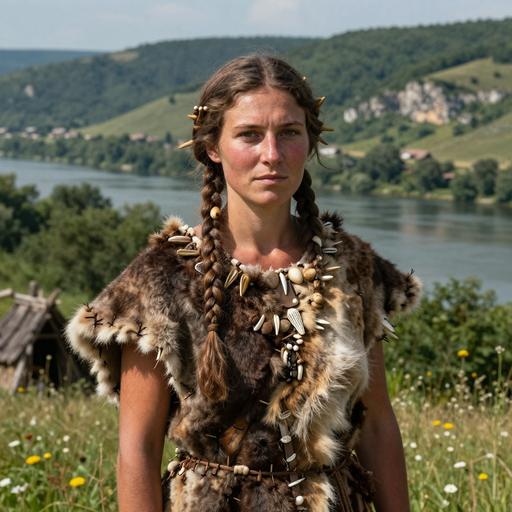
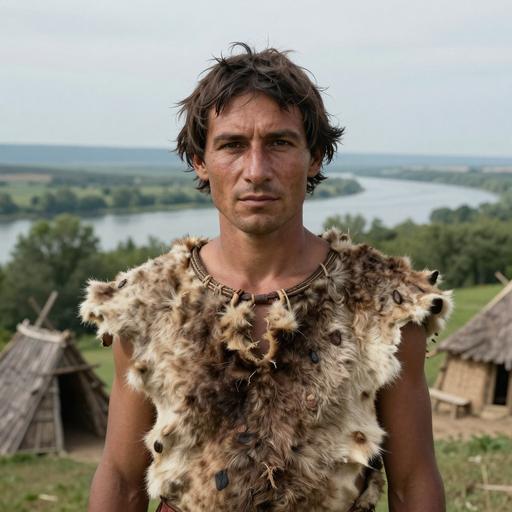
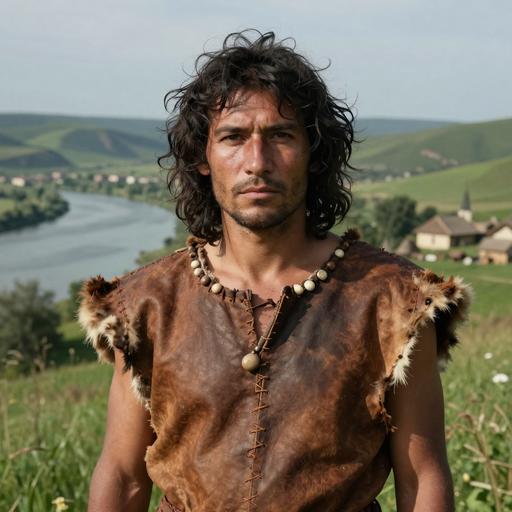
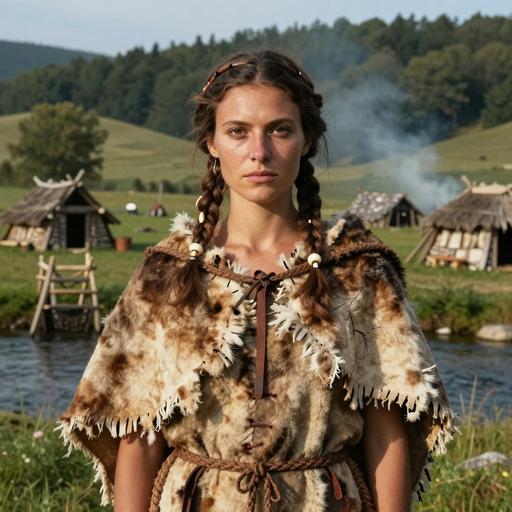
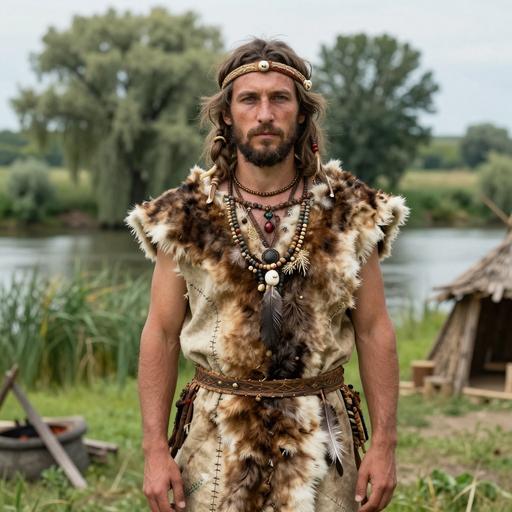
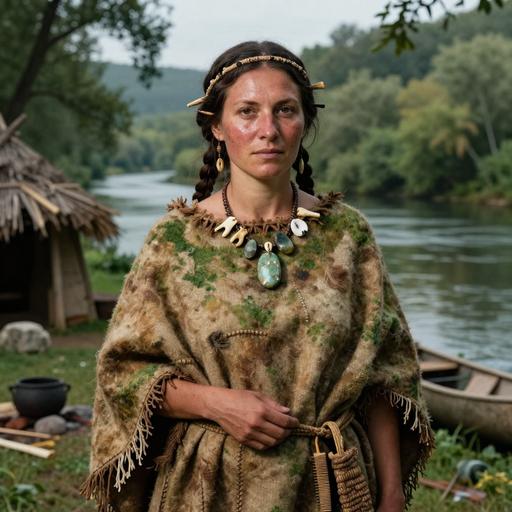
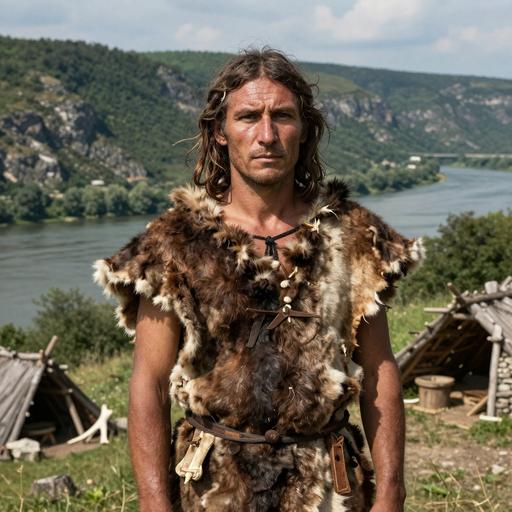
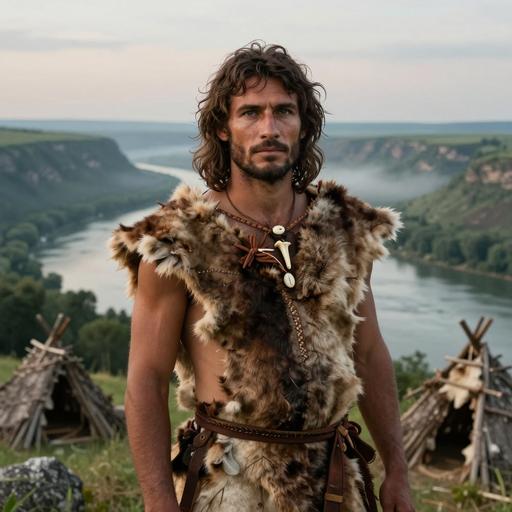
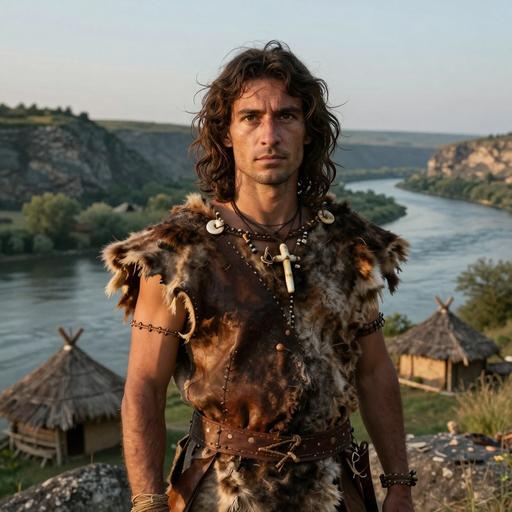
A continental portrait of European hunter‑gatherers (c. 33,749–2,900 BCE): archaeological sites from Balma Guilanya to the Iron Gates combined with 141 ancient genomes reveal persistent maternal U lineages, frequent Y haplogroups I and R, and regionally varied lifeways shaped by rivers, coasts, and forests.
Die interaktive Karte ist nicht verfügbar. Die Fundorte findest du im Probenkatalog.
Zeitleiste
2500 BCE
Late Mesolithic persistence and Neolithic encounters
By 2500 BCE many hunter‑gatherer groups had experienced substantial contact and admixture with Neolithic farmers, though pockets of high HG ancestry persisted along rivers and in northern and western refugia.
Origins & Emergence
The long arc of these peoples stretches from Late Upper Paleolithic refugia into the Mesolithic, with the dataset spanning an exceptional temporal window (one sample as old as c. 33,749 BCE and many through to c. 2,900 BCE). Archaeological finds — rock shelters and open camps such as Balma Guilanya (Spain), Falkenstein‑Höhle and Ofnet Caves (Germany), and the riverine cemeteries along the Iron Gates (Serbia/Romania) — document continuity and regional diversity. Material culture shows a trajectory from Magdalenian and Azilian toolkits in the west to characteristic Mesolithic microliths, bone points and fishing gear along coasts and major rivers.
Genetic data complement the archaeology: a high frequency of mtDNA U lineages echoes patterns found in other European hunter‑gatherer assemblages and supports deep maternal continuity in many regions. Y‑chromosome haplogroups I and R are prominent, reflecting male lineages that expanded in post‑glacial Europe. Limited evidence indicates rarer haplogroups (M, C) in a few individuals; these occurrences are intriguing but still preliminary.
Archaeological data indicates mobility, local adaptation, and long‑term population persistence in many landscapes. However, the early end of the chronology and patchy preservation mean some aspects of origin and dispersal remain debated. Regional variation — Iberian cave sequences versus Baltic and Danubian river systems — underscores that "European Hunter‑Gatherers" is an umbrella for multiple, overlapping groups rather than a single uniform population.
Samples span c. 33,749–2,900 BCE, linking Upper Paleolithic to late Mesolithic contexts
Material culture shows regional tool traditions and increasing specialization for riverine/coastal resources
Daily Life & Society
Across rivers, coasts and forests these people carved livelihoods from seasonal abundance. At the Iron Gates on the Danube — sites excavated in Serbia and Romania — archaeologists recover extensive fish bone assemblages, hearths, and cemeteries that testify to dense riverine occupation and specialized fishing technology. In more northern settings (Sweden, Latvia, Lithuania, Poland), seasonal rounds combined hunting of elk and deer with fishing and gathering; in southern refugial zones like Balma Guilanya people exploited Mediterranean resources including shellfish.
Lithic evidence is dominated by microliths and retooled blade fragments, used as barbs and projectiles; bone and antler tools for fishing and hide working are ubiquitous. Burials range from isolated interments to grouped cemeteries: some sites (e.g., Ofnet Caves) show unusual mortuary practices that suggest complex social responses to trauma or crisis. Artistic expression appears in portable art and occasional decorated objects, but preservation is uneven.
Social organization was likely flexible and small‑scale, with kin networks and seasonal aggregation events. Archaeological data indicates limited hierarchical differentiation in most Mesolithic contexts, though ritualized burial treatments and grave goods at select localities hint at emerging social complexity. Environmental shifts and contacts with expanding Neolithic farmers would later reshape settlement and social patterns.
Diet: riverine and coastal fisheries, large and small game, plant resources
This dataset of 141 genomes provides a robust window into the genetic landscape of European hunter‑gatherers. Mitochondrial DNA is strongly dominated by haplogroup U sublineages (108 samples), a hallmark of Paleolithic and Mesolithic maternal ancestry across Europe. Minor mtDNA contributions from K and specific H subtypes appear regionally. On the paternal side, haplogroups I (≈40) and R (≈32) are the most common, consistent with male lineages observed in contemporary Western and Eastern Hunter‑Gatherer clusters.
Population structure within this broad category is evident: Western Hunter‑Gatherers (WHG) linked to western and central European sites show genetic affinities that differ from Scandinavian and Eastern hunter‑gatherers, and the Iron Gates Mesolithic samples often show distinctive local ancestry consistent with prolonged occupation along the Danube. Admixture with incoming Neolithic farming groups is visible later in the sequence, reducing hunter‑gatherer genetic dominance in many regions, while pockets of elevated HG ancestry persist into the Neolithic and beyond.
Rare Y markers like M and C appear in a handful of individuals (5 and 1, respectively). Because those counts are low, conclusions about their broader significance must remain tentative. Overall, the genetic evidence corroborates archaeological signals of regional continuity, mobility, and episodic contact with neighboring populations.
Dominant maternal lineages: mtDNA U (108/141), with regional K and H variants
Dominant paternal lineages: Y haplogroups I and R; rare occurrences of M and C require cautious interpretation
Legacy & Modern Connections
The genetic and archaeological legacies of European hunter‑gatherers are woven into the continent’s later demographic history. Although Neolithic farmers and, later, Bronze Age steppe migrants reshaped Europe's genetic landscape, hunter‑gatherer ancestry endures in modern populations — most strongly in regions such as parts of Iberia, the Baltic, and in riverine refugia where Mesolithic continuity was substantial. Traces of ancient HG ancestry contribute to genetic diversity in mitochondrial U lineages and to localized autosomal components detectable in modern genomes.
Beyond genes, the cultural imprint persists in subsistence strategies adapted to specific landscapes, and in the archaeological record that informs modern ecological knowledge (seasonal resource use, fishing technologies). Caution is needed when linking ancient DNA to modern identities: genetic continuity is complex and regionally variable. Nevertheless, the combination of stones, bones and genomes offers a cinematic but rigorous narrative of people who lived between cliffs, rivers and forest margins for millennia — a deep human chapter still readable in both soil and DNA.
HG ancestry contributes to modern European genetic variation, especially mtDNA U lineages
Archaeological techniques and ecological knowledge traceable to Mesolithic lifeways
Probenkatalog
10 / 14 Proben
Keine Proben entsprechen deiner Suche.
Porträt
Probe
Land
Epoche
Datum
Kultur
Geschlecht
Y-DNA
mtDNA
Romania
Romania_IronGates_Mesolithic
7250 BCE
European Hunter-Gatherers
M
R-FT360000
U5a1c3*
Romania
Romania_IronGates_Mesolithic
7026 BCE
European Hunter-Gatherers
F
-
K1i
Romania
Romania_IronGates_Mesolithic
7022 BCE
European Hunter-Gatherers
M
R1b1
K1i
Romania
Romania_IronGates_Mesolithic
7451-6698 calBCE
F
-
U5a2+16362
Romania
Romania_IronGates_Mesolithic
7451 BCE
European Hunter-Gatherers
F
-
-
Romania
Romania_IronGates_Mesolithic
7000-6300 BCE
European Hunter-Gatherers
M
R-FT360000
U5a1c1
Romania
Romania_IronGates_Mesolithic
7125 BCE
European Hunter-Gatherers
M
R-FT360000
U5b2c
Romania
Romania_IronGates_Mesolithic
7584 BCE
European Hunter-Gatherers
M
-
H13
Romania
Romania_IronGates_Mesolithic
6641 BCE
European Hunter-Gatherers
F
-
K1+16362
Romania
Romania_IronGates_Mesolithic
7022 BCE
European Hunter-Gatherers
M
R-V2219
K1+16362
Romania
Romania_IronGates_Mesolithic
5810-5630 calBCE (6829±47 BP, PSUAMS-2334)
European Hunter-Gatherers
F
-
K1
Romania
Romania_IronGates_Mesolithic
7446-6643 calBCE (8047±122 BP, OxA-4380)
European Hunter-Gatherers
M
I-S2599
U5a2
Romania
Romania_IronGates_Mesolithic
7581 BCE
European Hunter-Gatherers
M
R-L754
H13
Romania
Romania_IronGates_Mesolithic
7059 BCE
European Hunter-Gatherers
M
R-M173
K1
Mesolithic Iron Gates, Romania - Romania - Iron Gates. Schela Cladovei
Romania Romania_IronGates_Mesolithic 7250 BCE
Y: R-FT360000mt: U5a1c3*
Mesolithic Iron Gates, Romania - Romania - Iron Gates. Ostrovul Corbului
Romania Romania_IronGates_Mesolithic 7026 BCE
mt: K1i
Mesolithic Iron Gates, Romania - Romania - Iron Gates. Ostrovul Corbului
Romania Romania_IronGates_Mesolithic 7022 BCE
Y: R1b1mt: K1i
I4654
Romania Romania_IronGates_Mesolithic 7451-6698 calBCE
mt: U5a2+16362
Mesolithic Iron Gates, Romania - Romania - Iron Gates. Schela Cladovei
Romania Romania_IronGates_Mesolithic 7451 BCE
Mesolithic Iron Gates, Romania - Romania - Iron Gates. Schela Cladovei
Romania Romania_IronGates_Mesolithic 7000-6300 BCE
Y: R-FT360000mt: U5a1c1
Mesolithic Iron Gates, Romania - Romania - Iron Gates. Schela Cladovei
Romania Romania_IronGates_Mesolithic 7125 BCE
Y: R-FT360000mt: U5b2c
Mesolithic Iron Gates, Romania - Romania - Ostrovul-Corbului (Mehedinți County, Hinova)
Romania Romania_IronGates_Mesolithic 7584 BCE
mt: H13
Mesolithic Iron Gates, Romania - Romania - Ostrovul-Corbului (Mehedinți County, Hinova)
Romania Romania_IronGates_Mesolithic 6641 BCE
mt: K1+16362
Mesolithic Iron Gates, Romania - Romania - Ostrovul-Corbului (Mehedinți County, Hinova)
Romania Romania_IronGates_Mesolithic 7022 BCE
Y: R-V2219mt: K1+16362
Mesolithic Iron Gates, Romania - Romania - Magura Buduiasca. Teleor 3
Romania Romania_IronGates_Mesolithic 5810-5630 calBCE (6829±47 BP, PSUAMS-2334)
mt: K1
Mesolithic Iron Gates, Romania - Romania - Iron Gates. Schela Cladovei
Romania Romania_IronGates_Mesolithic 7446-6643 calBCE (8047±122 BP, OxA-4380)
Y: I-S2599mt: U5a2
Mesolithic Iron Gates, Romania - Romania - Iron Gates. Ostrovul Corbului
Romania Romania_IronGates_Mesolithic 7581 BCE
Y: R-L754mt: H13
Mesolithic Iron Gates, Romania - Romania - Iron Gates. Schela Cladovei
Romania Romania_IronGates_Mesolithic 7059 BCE
Y: R-M173mt: K1
KI-Assistent
KI-Assistent
von DNAGENICS
Funktion freischalten
Stellen Sie Fragen zur Kultur Echoes of the European Hunter‑Gatherers. Unser KI-Assistent kann genetische Befunde, historischen Kontext, archäologische Belege und moderne Verbindungen erläutern.
AI-generated interpretation of genetic similarity, not proof of ancestry. Informational only, not professional advice.
Read full notice
Before you continue: the analysis you are about to generate is produced by an AI model. AI output can be incomplete, inaccurate, or simply wrong. It describes statistical genetic similarity to reference populations and is not proof of ancestry, ethnicity, identity, or descent. It is provided for informational and educational purposes only, and is not medical, diagnostic, genealogical, legal, or other professional advice. Do not rely on it to make health, financial, legal, or family decisions. To the fullest extent permitted by applicable law, DNA Genics, S.L. accepts no liability for any loss or decision arising from your use of this AI output.
Beispiel einer KI-Analyse
Die Echoes of the European Hunter‑Gatherers-Kultur ist ein faszinierendes Kapitel der Menschheitsgeschichte...
Genetische Analysen zeigen Übereinstimmungen mit früheren Populationen und Hinweise auf besondere Anpassungen und kulturelle Innovationen. Alte DNA-Proben liefern Einblicke in Migrationsmuster, soziale Strukturen und genetische Verbindungen zwischen Populationen.
Dies ist eine Vorschau der KI-Analyse. Schalten Sie den vollständigen KI-Assistenten frei, um detaillierte Einblicke zu erkunden:
Genetische Zusammensetzung und genetische Ähnlichkeit