Echoes of the Iberian Foragers

Download PDF creates a visual, rasterized copy. Use Print for selectable text and better assistive-technology support.

Bericht wird vorbereitet

Verfügbare Informationen und Referenzen werden geladen

Verbindung mit dem archäologischen Quellenbestand...

Alte Quellen werden zusammengestellt

Zum Hauptinhalt springen
Echoes of the Iberian Foragers
Zivilisations-Spotlight

Echoes of the Iberian Foragers

Ancient hunter-gatherers of Spain seen through archaeology and DNA

40000 CE - 5000 BCE
Spain (Iberian Peninsula)
Scrollen zum Start
Kapitel I

Die Geschichte

Die Echoes of the Iberian Foragers-Kultur verstehen

Archaeological remains from La Braña, Cueva de la Carigüela and other Spanish sites (40,000–5,000 BCE) reveal hunter-gatherer lifeways. Ancient DNA from seven individuals links them to broader Western European hunter-gatherer lineages while highlighting rare, deep-rooted Y lineages. Conclusions remain preliminary.

Time Period

40,000–5,000 BCE

Region

Spain (Iberian Peninsula)

Common Y-DNA

C (2), F (1), CT (1), I (1)

Common mtDNA

U (6), including U5b (1)

Kapitel II

Zeitleiste

Zentrale Momente in der Geschichte dieser Kultur

8000 BCE

Mesolithic Continuity in Iberia

Archaeological transition toward microlithic toolkits and increased forager regionalization across Spanish sites, reflecting post-glacial adaptations and localized lifeways.

Kapitel III

Origins & Emergence

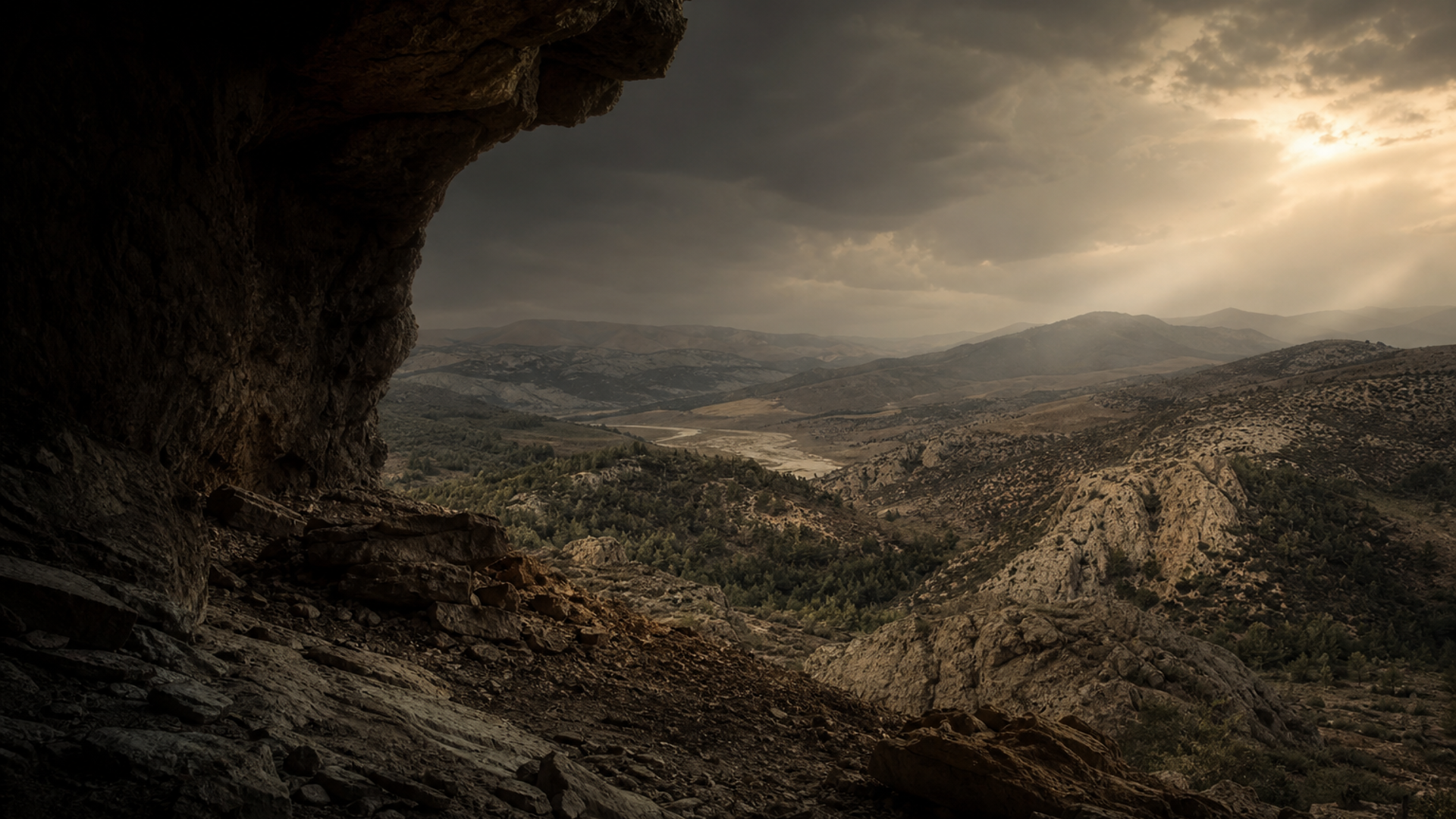
Beneath limestone shelters and highland caves, the Spain_HG story unfolds across a vast span—from Upper Paleolithic horizons into late Mesolithic contexts (approximately 40,000–5,000 BCE). Archaeological sites such as La Braña-Arintero (León), Cueva de la Carigüela (Piñar, Granada), Cingle del Mas Nou (Ares del Maestre, Castelló) and Cueva de la Cocina (Dos Aguas, València) preserve stone tools, hearths and faunal remains that speak to seasonal mobility, specialized hunting, and long-standing coastal and interior traditions.

Material culture indicates continuity and regional adaptation: blade industries and microlithic toolkits appear alongside site-specific practices tied to upland oak forests, river valleys and Mediterranean scrub. Limited evidence suggests population continuity in some valleys, while changes in tool form and site use around 7,000–5,000 BCE hint at broader ecological and social shifts. Archaeological data indicate that these groups lived in small, mobile bands with deep knowledge of local landscapes—an image evoked by the layers of charcoal and flint in cave floors and the dispersed scatters of butchery debris.

While the archaeological record is robust in places, geographic gaps remain. The long time span covered by the Spain_HG designation encompasses multiple climatic oscillations and cultural responses, and so any single narrative must treat continuity and change as regional and time-dependent phenomena.

  • Sites span 40,000–5,000 BCE across northern and eastern Spain
  • Stone tool continuity with regional variation in microlithic traditions
  • Evidence for seasonal mobility and small band organization
Kapitel IV

Daily Life & Society

Life for Spain_HG communities was intimate with landscape and season. Archaeozoological remains from La Braña and Cueva de la Cocina show hunting of red deer, wild boar and smaller mammals, while shell middens and freshwater fish remains at some coastal and riverine sites suggest varied subsistence strategies. Hearth features and fire-cracked stones point to repeated occupation episodes; hearth lenses preserve charred seeds and nuts that hint at gathered plant foods and a broad-spectrum diet.

Material traces such as bone and antler blanks, ochre fragments, and personal ornaments indicate social expression—perhaps kin signaling, ritual acts or identity marking within small groups. Burial evidence is sparse but evocative: interments found at La Braña show deliberate deposition and grave goods that imply social recognition. Seasonal migration between uplands and lowlands likely structured social calendars, with knowledge of water sources, salt licks and hunting corridors passed between generations.

Craft production appears opportunistic and efficient: on-site reduction of lithic materials, occasional curated tool forms, and localized craft traditions. Overall, archaeological data indicate resilient, place-informed lifeways shaped by changing climates and resource availability.

  • Mixed hunting, fishing and gathering economies with regional variation
  • Use of ochre, ornaments and deliberate burials suggest social complexity
Kapitel V

Genetic Profile

Seven ancient genomes attributed to Spain_HG have been analyzed, a small sample that requires cautious interpretation. Mitochondrial DNA is dominated by haplogroup U (6 of 7 samples), with at least one U5b lineage—patterns consistent with broader Western European hunter-gatherer (WHG) maternal ancestry. On the paternal side, recovered Y-DNA haplogroups include C (2), F (1), CT (1) and I (1). The detection of haplogroup I aligns with known European hunter-gatherer lineages, while occurrences of C, F and CT point to either rare deep-rooted Eurasian lineages persisting in Iberia or to previously under-sampled diversity in prehistoric western Europe.

Archaeogenetic affinity analysis places Spain_HG individuals closer to WHG clusters than to early Neolithic farmers, supporting archaeological inferences of long-term forager lifeways. However, with only seven genomes, population-level parameters—such as effective population size, micro-regional structure, and gene flow events—remain tentative. Limited evidence suggests pockets of continuity amid episodes of demographic turnover elsewhere in Europe, but further sampling across the peninsula is needed to resolve questions about migration, admixture and the persistence of archaic lineages.

In sum, the genetic portrait is evocative: a maternal signature dominated by U lineages and a paternal record that preserves both common WHG markers and rarer haplogroups, highlighting the Iberian Peninsula as a repository of ancient genetic diversity.

  • mtDNA dominated by haplogroup U; includes U5b
  • Y-DNA shows I plus rarer C, F, CT lineages—interpretation preliminary
Kapitel VI

Legacy & Modern Connections

The genetic and archaeological threads of Spain_HG weave into the longer story of Europe. Maternal U lineages and the presence of haplogroup I connect these foragers to the broader West European hunter-gatherer legacy that later populations encountered and sometimes absorbed. Traces of rare Y lineages hint that Iberia preserved pockets of deep ancestry that may have contributed, in subtle ways, to the genetic tapestry of later Mediterranean and Atlantic populations.

For modern DNA users, Spain_HG emphasizes caution and wonder: matches to deep U lineages or rare paternal markers can signal very old regional roots, but small sample sizes mean that direct ancestry claims should be conservative. Archaeology reminds us that culture, mobility and environment shaped genetic outcomes; genetics reveals inheritance patterns that archaeology alone cannot. Together they offer a cinematic but scientifically restrained portrait of resilient forager communities whose lives were carved into caves and plains—and whose genetic echoes still whisper in the genomes of people living around the Iberian coasts.

  • Connects to broader Western European hunter-gatherer ancestry
  • Small ancient sample size means modern links are suggestive, not definitive
KI-gestützt

KI-Assistent

Stellen Sie Fragen zur Echoes of the Iberian Foragers-Kultur

KI-Assistent von DNAGENICS

Funktion freischalten
Stellen Sie Fragen zur Kultur Echoes of the Iberian Foragers. Unser KI-Assistent kann genetische Befunde, historischen Kontext, archäologische Belege und moderne Verbindungen erläutern.
Beispiel einer KI-Analyse

Die Echoes of the Iberian Foragers-Kultur ist ein faszinierendes Kapitel der Menschheitsgeschichte...

Genetische Analysen zeigen Übereinstimmungen mit früheren Populationen und Hinweise auf besondere Anpassungen und kulturelle Innovationen. Alte DNA-Proben liefern Einblicke in Migrationsmuster, soziale Strukturen und genetische Verbindungen zwischen Populationen.

Dies ist eine Vorschau der KI-Analyse. Schalten Sie den vollständigen KI-Assistenten frei, um detaillierte Einblicke zu erkunden:

  • Genetische Zusammensetzung und genetische Ähnlichkeit
  • Migrationsmuster und Ursprünge
  • Alltag und kulturelle Praktiken
  • Genetischer Bezug zu heutigen Populationen

Weitere antike Kulturen erkunden

Geschichten von Zivilisationen aus der antiken Welt entdecken

Use code for 30% off • Expires Nov 08