Gotland's Maritime Foragers

Download PDF creates a visual, rasterized copy. Use Print for selectable text and better assistive-technology support.

Bericht wird vorbereitet

Verfügbare Informationen und Referenzen werden geladen

Verbindung mit dem archäologischen Quellenbestand...

Alte Quellen werden zusammengestellt

Zum Hauptinhalt springen
Gotland's Maritime Foragers
Zivilisations-Spotlight

Gotland's Maritime Foragers

Pitted Ware people of Sweden, seen through archaeology and ancient DNA

3100 CE - 2150 BCE
Gotland, Sweden
Scrollen zum Start
Kapitel I

Die Geschichte

Die Gotland's Maritime Foragers-Kultur verstehen

Archaeological and genetic evidence from Gotland (3100–2150 BCE) illuminates the Pitted Ware communities: maritime hunter-gatherers with predominantly Y-haplogroup I and U-series maternal lineages. Limited samples suggest continuity with northern hunter-gatherer ancestry.

Time Period

3100–2150 BCE

Region

Gotland, Sweden

Common Y-DNA

I (6/7)

Common mtDNA

U4d (4), U (2), V (1)

Kapitel II

Zeitleiste

Zentrale Momente in der Geschichte dieser Kultur

2500 BCE

Peak Pitted Ware activity on Gotland

Concentration of shell middens, cemeteries (Ajvide), and pitted ceramics reflects maritime-focused communities with distinct material culture and emerging social differentiation.

Kapitel III

Origins & Emergence

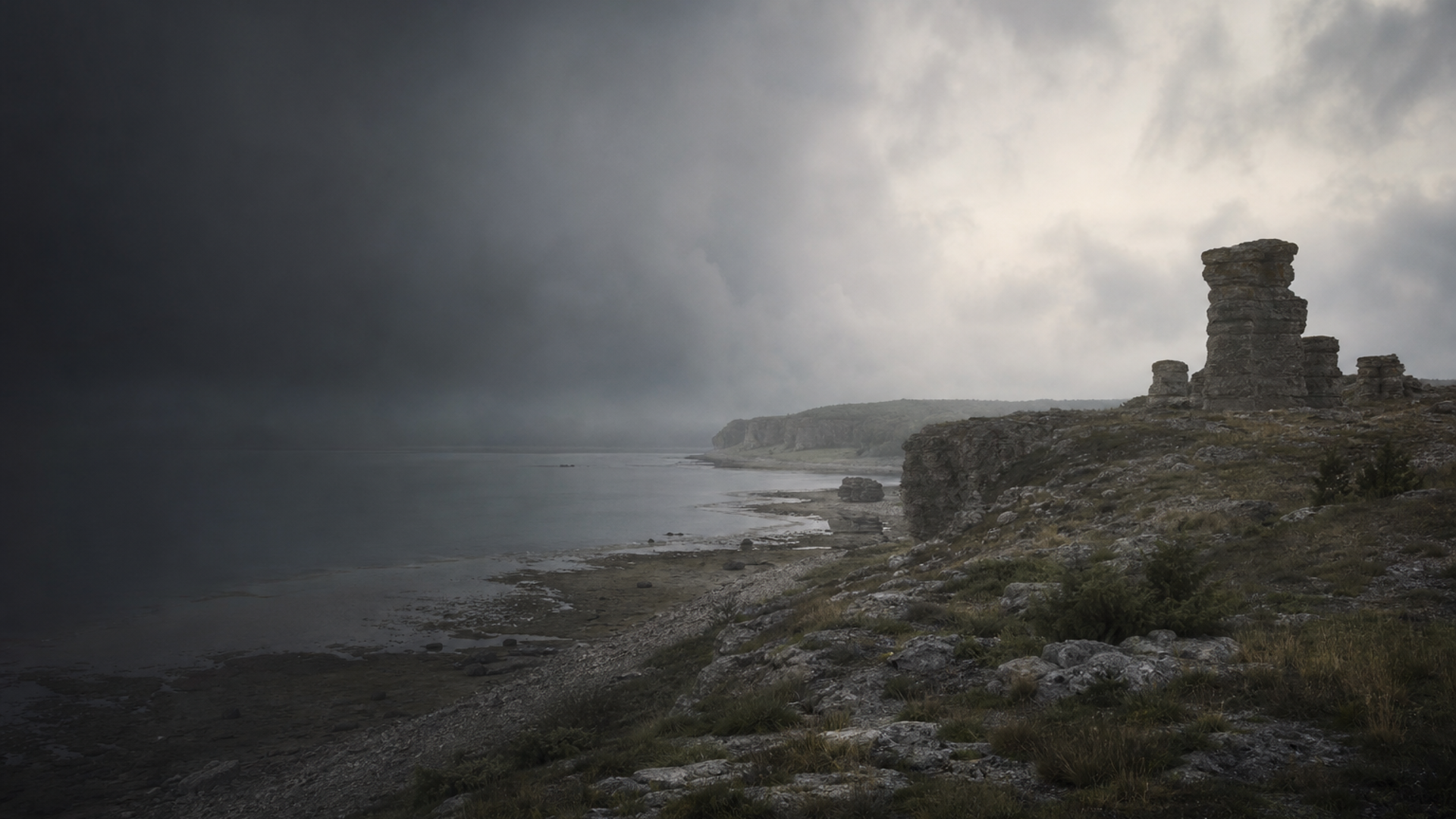
Along the windswept shores of Gotland—at Ajvide and Stora Karlsö—archaeological deposits record communities often grouped with the Pitted Ware tradition. Radiocarbon dates for the Sweden_PWC samples fall between c. 3100 and 2150 BCE, a span when maritime hunter‑gatherer lifeways persisted alongside expanding farming populations on the Scandinavian mainland. Archaeological data indicates specialized seal and fish exploitation, stone and bone toolkits, and characteristic pitted ceramics that give the culture its name.

Genetically, the available dataset is small (7 individuals) but informative: the male lineages are overwhelmingly haplogroup I, a marker frequently associated with long-term northern European hunter‑gatherer ancestry. Maternal lineages—dominated here by U4d, other U types, and a V—also track with northern Mesolithic and Neolithic forager groups. Limited evidence suggests these communities maintained a distinct biological profile from nearby farming groups (e.g., Funnelbeaker farmers) while also interacting with them culturally and economically.

Because the sample count is low, conclusions about population continuity, migration, and admixture remain provisional. Future sampling and broader genomic comparisons will refine whether Gotland Pitted Ware groups represent deep continuity of local forager populations, selective male-line continuity, or more complex demographic processes.

  • Dates: c. 3100–2150 BCE; sites: Ajvide, Stora Karlsö (Gotland)
  • Material culture: pitted ceramics, marine-focused toolkit
  • Caution: only 7 genetic samples—interpretations are preliminary
Kapitel IV

Daily Life & Society

On rocky beaches and offshore skerries, daily life for Sweden_PWC communities was shaped by the sea. Hunting seals, fishing cod and flatfish, and exploiting seabird colonies created seasonal rhythms. Ajvide’s large shell middens and burial grounds preserve butchered bones, hearths, and personal ornaments—evidence of intensive coastal resource use and craft specialization. Lithic and bone tools found at Stora Karlsö and Ajvide display a continuity of flaked stone and polished bone implements suited to harpooning, processing hides, and marine hunting.

Social life likely wove ritual and subsistence together: graves at Ajvide contain grave goods and structured deposits suggesting social differentiation and collective memory. Pottery with distinctive pit impressions appears both utilitarian and symbolic, perhaps marking group identity in a seascape shared with neighboring farming communities. Interaction with inland farmers is visible archaeologically in exchange items and occasional shared practices, but coastal sites maintain a recognizable forager character.

Archaeological context supports a picture of mobile, maritime-adapted groups with seasonal aggregation sites, strong maritime technological traditions, and social networks anchored to the sea and shore.

  • Economy centered on seal, fish, and seabirds; shell middens at Ajvide
  • Distinctive pitted pottery and maritime toolkits indicate cultural identity
Kapitel V

Genetic Profile

Ancient DNA from seven individuals attributed to Sweden_PWC (Gotland) reveals a striking pattern: six males belong to Y‑chromosome haplogroup I, while the mitochondrial markers are dominated by U4d (4 individuals), with two other U types and one V. These lineages are commonly associated with northern European hunter‑gatherer ancestries (WHG/EHG-related components) in wider ancient DNA studies.
The prevalence of haplogroup I in males suggests male-line continuity with pre‑farm forager populations or strong patrilineal transmission within these communities. Mitochondrial U‑lineages likewise point to maternal descent from long‑standing northern forager pools. Together, the uniparental markers support a demographic scenario where maritime forager ancestry remained biologically significant on Gotland during the Late Neolithic–Early Bronze Age transition.

However, the dataset is small (<10 samples), so broader genomic inferences (e.g., proportions of farmer vs. hunter‑gatherer autosomal ancestry, or admixture timing) remain tentative. Archaeological contrasts with nearby Funnelbeaker and later Bronze Age communities suggest cultural contact; genomic analyses with larger sample sizes would be required to quantify gene flow and the extent to which cultural exchange translated into biological admixture.

  • High frequency of Y‑haplogroup I suggests male continuity from northern foragers
  • mtDNA dominated by U4d and U types, consistent with WHG/EHG-related maternal ancestry
Kapitel VI

Legacy & Modern Connections

The Pitted Ware communities of Gotland leave a vivid archaeological legacy: shell middens, clustered cemeteries at Ajvide, and pottery impressions that speak of seascapes central to identity. Genetically, the Sweden_PWC profile—marked by haplogroup I and U‑lineages—adds to a broader pattern in northern Europe where Mesolithic and Neolithic forager ancestries persisted alongside incoming farmers. These threads contribute to the genetic tapestry of contemporary Scandinavians, although the small sample size means direct lines of descent should be proposed cautiously.

Modern interest in coastal lifeways, maritime technology, and regional identity finds deep roots in sites like Ajvide and Stora Karlsö. Continued ancient DNA sampling across Sweden and the Baltic will clarify how much of this Pitted Ware signal survives in later populations and how it interwove with farming and steppe-derived ancestries in the millennia that followed.

  • Archaeological features (Ajvide middens, graves) remain key evidence of maritime lifeways
  • Genetic signal suggests persistence of northern forager ancestry but requires more data
KI-gestützt

KI-Assistent

Stellen Sie Fragen zur Gotland's Maritime Foragers-Kultur

KI-Assistent von DNAGENICS

Funktion freischalten
Stellen Sie Fragen zur Kultur Gotland's Maritime Foragers. Unser KI-Assistent kann genetische Befunde, historischen Kontext, archäologische Belege und moderne Verbindungen erläutern.
Beispiel einer KI-Analyse

Die Gotland's Maritime Foragers-Kultur ist ein faszinierendes Kapitel der Menschheitsgeschichte...

Genetische Analysen zeigen Übereinstimmungen mit früheren Populationen und Hinweise auf besondere Anpassungen und kulturelle Innovationen. Alte DNA-Proben liefern Einblicke in Migrationsmuster, soziale Strukturen und genetische Verbindungen zwischen Populationen.

Dies ist eine Vorschau der KI-Analyse. Schalten Sie den vollständigen KI-Assistenten frei, um detaillierte Einblicke zu erkunden:

  • Genetische Zusammensetzung und genetische Ähnlichkeit
  • Migrationsmuster und Ursprünge
  • Alltag und kulturelle Praktiken
  • Genetischer Bezug zu heutigen Populationen

Weitere antike Kulturen erkunden

Geschichten von Zivilisationen aus der antiken Welt entdecken

Use code for 30% off • Expires Nov 08




