Goyet Q53-1 — Ice Age Voice

Download PDF creates a visual, rasterized copy. Use Print for selectable text and better assistive-technology support.

Bericht wird vorbereitet

Verfügbare Informationen und Referenzen werden geladen

Verbindung mit dem archäologischen Quellenbestand...

Alte Quellen werden zusammengestellt

Zum Hauptinhalt springen
Goyet Q53-1 — Ice Age Voice
Zivilisations-Spotlight

Goyet Q53-1 — Ice Age Voice

A lone Upper Paleolithic genome from Goyet’s Troisieme caverne, Belgium (c. 26,400–25,800 BCE)

26440 CE - 25823 BCE
Goyet Cave, Namur province, Belgium
Scrollen zum Start
Kapitel I

Die Geschichte

Die Goyet Q53-1 — Ice Age Voice-Kultur verstehen

Genetic and archaeological evidence from a single individual recovered in the Troisieme caverne of Goyet Cave (Belgium) offers a rare glimpse into Upper Paleolithic life in northwestern Europe. Limited samples mean conclusions are preliminary, but DNA (mtDNA U2) links to broader Ice Age populations.

Time Period

c. 26,440–25,823 BCE

Region

Goyet Cave, Namur province, Belgium

Common Y-DNA

Unknown (not reported)

Common mtDNA

U2 (1 sample)

Kapitel II

Zeitleiste

Zentrale Momente in der Geschichte dieser Kultur

26131 BCE

Goyet Q53-1 — Upper Paleolithic individual

Single individual dated to c. 26,440–25,823 BCE recovered from the Troisieme caverne of Goyet Cave, Belgium.

Kapitel III

Origins & Emergence

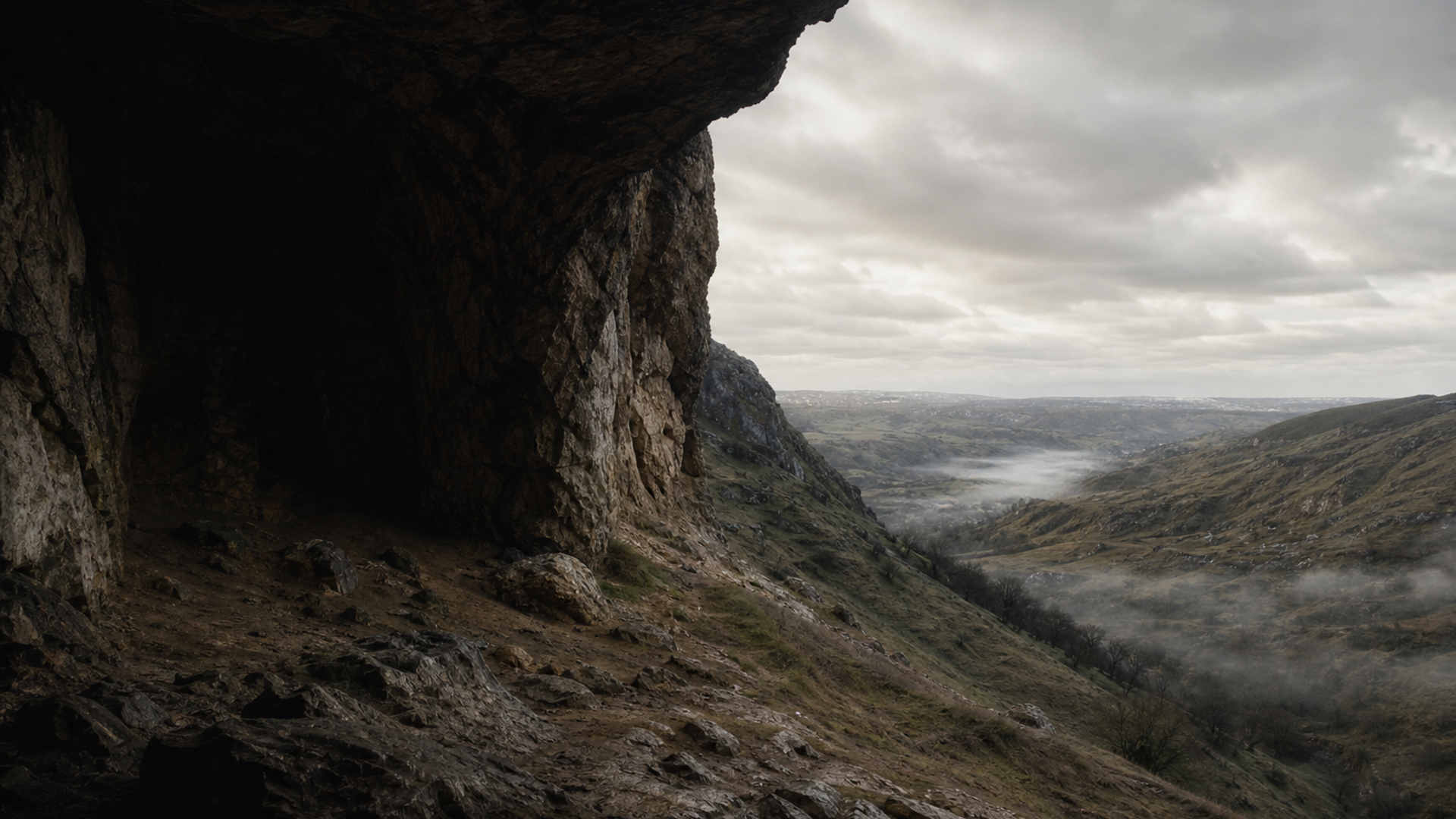
The lone genome from Goyet’s Troisieme caverne dates to the heart of the Last Glacial Maximum’s aftermath, roughly between 26,440 and 25,823 BCE. Archaeological layers at Goyet Cave (Troisieme caverne) preserve a tapestry of stone tools, hearths, and faunal remains that speak to repeated human use across millennia. The individual designated Belgium_UP_GoyetQ53_1 emerged within a landscape of cold tundra interspersed with riverine woodlands along the Meuse basin.

Archaeological data indicates occupation by Upper Paleolithic hunter-gatherers who exploited reindeer, horse, and other large mammals; lithic assemblages from Goyet are often linked with Late Aurignacian to Gravettian technologies in this region. Limited direct associations between a single genetic sample and broader material culture mean that any cultural assignment must be cautious. Genetic evidence provides a complementary angle: the mitochondrial lineage (U2) places this person within maternal diversity known in Upper Paleolithic Europe, suggesting connections to wide-ranging Ice Age populations.

Limited evidence suggests mobility and interaction across western Europe during this time, but with only one sequenced individual from this context, patterns of population movement, continuity, or replacement remain tentative and should be treated as provisional.

  • Single genome dated c. 26,440–25,823 BCE from Troisieme caverne, Goyet Cave
  • Material culture at Goyet spans Late Aurignacian–Gravettian traditions
  • mtDNA U2 links to maternal lineages seen in other Upper Paleolithic Europeans
Kapitel IV

Daily Life & Society

In the flicker of hearthlight within Goyet’s chambers, daily life would have centered on hunting, tool production, and social sharing. Archaeological excavations in the Goyet complex reveal concentrations of flint knapping debris, charred bone, and stones arranged around hearths—evidence of repeated occupation episodes. Faunal remains suggest specialization on cold-adapted species such as reindeer and horse; these animals were vital for meat, hides, and raw materials for clothing and shelter.

Spatial patterns within the Troisieme caverne indicate activity zones where stone tools were produced and repaired, and where food processing took place. Artistic expression and symbolic behavior are known from other chambers in Goyet (faunal modifications and possible personal ornaments), hinting at shared rituals or identity markers among groups that used the cave system.

Because the genetic dataset here consists of a single individual, social structure, kinship patterns, and community size cannot be robustly inferred. However, integrating archaeology with even one genome allows us to imagine a person embedded in networks of cooperation, seasonal mobility, and technological knowledge transmission across Ice Age western Europe.

  • Hearths, flint knapping debris, and faunal concentrations attest to repeated occupation
  • Hunting of reindeer and horse provided food, hides, and tools
Kapitel V

Genetic Profile

The sequenced individual from Goyet (Belgium_UP_GoyetQ53_1) preserves mitochondrial haplogroup U2. In Upper Paleolithic Europe, U2 is one of several maternal lineages (including U5 and U4) that reflect deep Ice Age ancestry. The presence of U2 in this sample suggests maternal connections to broad western Eurasian hunter-gatherer populations during the Late Pleistocene.
No Y-chromosome haplogroup is reported for this individual, and the sample count is one; therefore any population-level claims would be premature. Archaeogenomic comparisons typically use pooled datasets to detect admixture, continuity, or demographic shifts. With only a single mtDNA data point, we can cautiously say the maternal lineage is consistent with other Ice Age genomes but cannot resolve local population structure, sex-biased migration, or fine-scale kinship.

Still, even a solitary genome can anchor archaeological layers to genetic landscapes: it provides a temporal genetic snapshot from the Troisieme caverne and helps calibrate broader models of post-glacial recolonization, refugia, and later interactions. Future samples from Goyet and neighboring sites are essential to test hypotheses about population continuity or replacement in Belgium during the Upper Paleolithic.

  • mtDNA U2 identified — aligns with known Upper Paleolithic maternal diversity
  • Only one genome: conclusions about population structure are preliminary
Kapitel VI

Legacy & Modern Connections

The echo of this Ice Age individual persists in two complementary ways: materially, through the stone and bone record preserved in Goyet’s caverns; genetically, through a mitochondrial lineage that participates in Europe’s deep ancestral mosaic. Archaeological strata at Goyet connect multiple episodes of human presence in a key corridor of northwestern Europe, while the mitochondrial signal situates one person within continental patterns of maternal descent.

Caution is paramount: a single mitochondrial record cannot trace direct ancestry to modern populations. Nevertheless, the sample enriches our temporal coverage, narrowing the gap between archaeological chronology and genetic history. As more genomes from Belgium and adjacent regions are recovered, researchers will better resolve how Ice Age populations contributed to later Mesolithic and Neolithic gene pools. For museum audiences, Goyet Q53-1 offers a cinematic reminder that deep human stories are built from both stone and strand.

  • Provides a genetic anchor for Goyet’s Upper Paleolithic layers
  • Highlights need for additional samples to link Ice Age genomes to later Europeans
KI-gestützt

KI-Assistent

Stellen Sie Fragen zur Goyet Q53-1 — Ice Age Voice-Kultur

KI-Assistent von DNAGENICS

Funktion freischalten
Stellen Sie Fragen zur Kultur Goyet Q53-1 — Ice Age Voice. Unser KI-Assistent kann genetische Befunde, historischen Kontext, archäologische Belege und moderne Verbindungen erläutern.
Beispiel einer KI-Analyse

Die Goyet Q53-1 — Ice Age Voice-Kultur ist ein faszinierendes Kapitel der Menschheitsgeschichte...

Genetische Analysen zeigen Übereinstimmungen mit früheren Populationen und Hinweise auf besondere Anpassungen und kulturelle Innovationen. Alte DNA-Proben liefern Einblicke in Migrationsmuster, soziale Strukturen und genetische Verbindungen zwischen Populationen.

Dies ist eine Vorschau der KI-Analyse. Schalten Sie den vollständigen KI-Assistenten frei, um detaillierte Einblicke zu erkunden:

  • Genetische Zusammensetzung und genetische Ähnlichkeit
  • Migrationsmuster und Ursprünge
  • Alltag und kulturelle Praktiken
  • Genetischer Bezug zu heutigen Populationen

Weitere antike Kulturen erkunden

Geschichten von Zivilisationen aus der antiken Welt entdecken

Use code for 35% off • Expires Nov 09




