Haut-Rhin Iron Age Echoes

Download PDF creates a visual, rasterized copy. Use Print for selectable text and better assistive-technology support.

Zum Hauptinhalt springen
Zivilisations-Spotlight

Haut-Rhin Iron Age Echoes

Seven Iron Age individuals from Haut-Rhin reveal regional ties via burials, artifacts, and DNA.

810 BCE - 1 BCE
Grand Est (Haut-Rhin), France

Die Geschichte

Archaeogenetic and archaeological data from four site clusters in Haut-Rhin (810–1 BCE) illuminate Iron Age lifeways in northeastern France. Limited sample size (n=7) makes conclusions preliminary, but combined material and DNA evidence suggests continuity with regional Iron Age traditions and mixed ancestry signals.

Time Period

810 BCE – 1 BCE

Region

Grand Est (Haut-Rhin), France

Common Y-DNA

R (2), G (2)

Common mtDNA

J (2), H1e, H, T2, T

Zeitleiste

2500 BCE

Bronze Age antecedents set the stage

Regional Bronze Age settlement and metallurgy create economic and social foundations later adapted during the Iron Age in Haut-Rhin.

Origins & Emergence

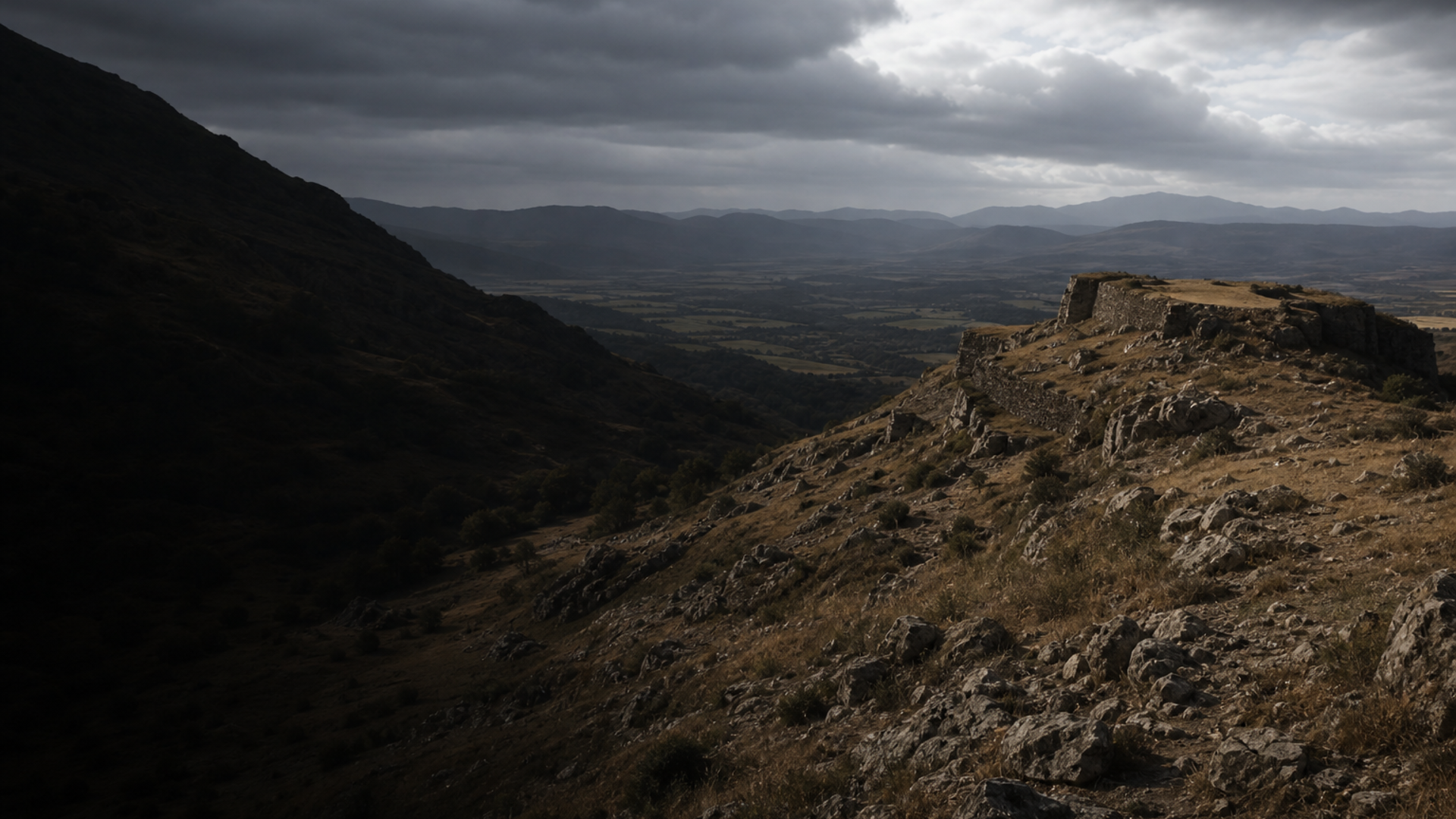
In the low hills and river valleys of Haut-Rhin, the archaeological record speaks in weathered pottery, burial hollows, and metal fragments. Sites sampled for this profile — Jardin des Aubépines near Colmar, the Oberes Holzackerfeld fields at Sainte-Croix-en-Plaine (including an older 2005 excavation locus recorded as Oberes Holzackerfeld / Echangeur Gendarmerie), and Wettholsheim-Ricoh near Mulhouse — occupy a landscape long traversed by trade routes and seasonal pastures.

Archaeological data indicates an Iron Age presence at these sites during the first millennium BCE, a period when local communities adopted iron technology, intensified craft specialization, and engaged in regional exchange. Material signals connect these settlements to broader western European Iron Age lifeways, including funerary practices and portable craft. Limited evidence suggests continuity with preceding Bronze Age traditions in settlement placement and some artifact types, but the transition is nuanced and regionally variable.

Because only seven individuals are genetically analyzed, any reconstruction of population movement or cultural adoption must remain cautious. Nevertheless, the combination of stratigraphy, artifact assemblages, and radiocarbon-calibrated dates frames a story of emergence: local groups adapting long-standing practices under the new social and technological currents of the Iron Age.

  • Sites: Jardin des Aubépines, Oberes Holzackerfeld, Wettholsheim-Ricoh
  • Context: Iron Age occupation (810–1 BCE) in Haut-Rhin
  • Evidence: burials, artifacts, and landscape continuity with Bronze Age features

Daily Life & Society

The everyday world of Haut-Rhin Iron Age communities can be glimpsed through objects and place. Archaeological deposits at the sampled locations yield traces consistent with small agrarian settlements: domestic refuse, fragments of pottery used for storage and cooking, and evidence for metalworking in nearby contexts. These remnants evoke a cinematic scene of fields and hearths, with people moving seasonally between cultivated plots and pastures.

Funerary contexts — often the best-preserved windows into belief and status — show variation in burial treatment, suggesting social differentiation. Grave goods recorded in regional surveys (though not necessarily in every sampled burial) hint at personal adornment and utilitarian items that accompanied the dead. Archaeological data indicates participation in interregional exchange: imported forms or metallurgical styles appear alongside locally made wares, implying networks that reached beyond Haut-Rhin.

Mobility was likely part seasonal economic strategy and part long-distance connection: trade in raw materials and finished metalwork would have linked these villages to broader Iron Age circuits. Yet, without large assemblages and comprehensive excavation reports for each locus, reconstructions of household size, craft specialization, and social hierarchy remain provisional.

  • Economy centered on mixed agriculture, herding, and local craft
  • Burial variation suggests social differences and regional exchange

Genetic Profile

Seven individuals from Haut-Rhin dated between 810 BCE and 1 BCE provide a cautious genetic snapshot of local Iron Age variation. Y-chromosome results show two individuals assigned to broad R lineages and two to G lineages. R lineages are widespread in Europe by the Iron Age, while G lineages are often observed in contexts with longer continuity to Neolithic farmer ancestries; the specific subclades are not reported here, so detailed phylogeographic claims should be avoided.

Mitochondrial diversity among the seven samples includes J (two individuals), H1e, H, T2, and T. Haplogroup J and T2 are commonly associated with Neolithic expansion signals and continued Near Eastern farmer-derived maternal ancestry in Europe; H and its subclades are the dominant European maternal lineages across later prehistory. This mixture of maternal types is consistent with a community carrying both long-standing European maternal lineages and lineages introduced during earlier Neolithic movements.

Autosomal inferences for small samples are inherently limited: with n=7, population-level statistics are unstable. Nonetheless, the genetic picture aligns with archaeological expectations of a mixed ancestry profile in northeastern France during the Iron Age — one reflecting deep local continuity layered with regional contacts. Because sample count is below ten, all genetic interpretations here are preliminary and should be tested with larger, contextualized datasets.

  • Y-DNA: presence of R and G lineages (2 each) — subclade details unknown
  • mtDNA: diverse maternal pool (J, H1e, H, T2, T) consistent with Neolithic and local European signals

Legacy & Modern Connections

The genetic and material echoes from Haut-Rhin's Iron Age hint at threads connecting ancient inhabitants to later populations of northeastern France. Maternal and paternal haplogroups observed among the seven individuals mirror lineages that persist in the region today, suggesting elements of genetic continuity across millennia. Archaeologically, the maintenance of settlement locations and reuse of local landscape features indicate cultural resilience.

However, the story is not one of uninterrupted sameness. Iron Age lifeways were part of dynamic networks of exchange and mobility; genetic mixtures recorded here reflect those connections. Given the small sample size, it is premature to draw direct lineage-to-present-day assertions. Instead, these data serve as an invitation: to expand sampling, integrate more comprehensive archaeological context, and refine how we understand the deep ancestry of communities in Haut-Rhin.

  • Observed lineages align with long-term regional genetic continuity, but conclusions are tentative
  • Findings underscore the need for larger, context-rich sampling to trace modern connections

KI-Assistent

KI-Assistent von DNAGENICS

Funktion freischalten
Stellen Sie Fragen zur Kultur Haut-Rhin Iron Age Echoes. Unser KI-Assistent kann genetische Befunde, historischen Kontext, archäologische Belege und moderne Verbindungen erläutern.
Beispiel einer KI-Analyse

Die Haut-Rhin Iron Age Echoes-Kultur ist ein faszinierendes Kapitel der Menschheitsgeschichte...

Genetische Analysen zeigen Übereinstimmungen mit früheren Populationen und Hinweise auf besondere Anpassungen und kulturelle Innovationen. Alte DNA-Proben liefern Einblicke in Migrationsmuster, soziale Strukturen und genetische Verbindungen zwischen Populationen.

Dies ist eine Vorschau der KI-Analyse. Schalten Sie den vollständigen KI-Assistenten frei, um detaillierte Einblicke zu erkunden:

  • Genetische Zusammensetzung und genetische Ähnlichkeit
  • Migrationsmuster und Ursprünge
  • Alltag und kulturelle Praktiken
  • Genetischer Bezug zu heutigen Populationen
Use code for 30% off • Expires Nov 14




