Jirentaigoukou: Voices of Early Iron Age Xinjiang

Download PDF creates a visual, rasterized copy. Use Print for selectable text and better assistive-technology support.

Bericht wird vorbereitet

Verfügbare Informationen und Referenzen werden geladen

Verbindung mit dem archäologischen Quellenbestand...

Alte Quellen werden zusammengestellt

Zum Hauptinhalt springen
Jirentaigoukou: Voices of Early Iron Age Xinjiang
Zivilisations-Spotlight

Jirentaigoukou: Voices of Early Iron Age Xinjiang

A small, varied maternal genetic snapshot from Yili's Jirentaigoukou (401–106 BCE)

401 CE - 106 BCE
Xinjiang (Yili Region), China — Jirentaigoukou, Nileke County
Scrollen zum Start
Kapitel I

Die Geschichte

Die Jirentaigoukou: Voices of Early Iron Age Xinjiang-Kultur verstehen

Archaeological and aDNA data from five individuals at Jirentaigoukou (Nileke County, Yili, Xinjiang) dated 401–106 BCE reveal diverse maternal lineages (U, C4, T, H, D). Limited sample size suggests early iron-age connectivity between eastern and western Eurasian gene pools.

Time Period

401–106 BCE (Early Iron Age)

Region

Xinjiang (Yili Region), China — Jirentaigoukou, Nileke County

Common Y-DNA

Undetermined (no consistent Y haplogroup reported; data limited)

Common mtDNA

U, C4, T, H, D (each observed once; n=5)

Kapitel II

Zeitleiste

Zentrale Momente in der Geschichte dieser Kultur

401 BCE

Earliest sampled individuals at Jirentaigoukou

Human remains from Jirentaigoukou begin in this date range, marking the start of the site's sampled Early Iron Age interval.

Kapitel III

Origins & Emergence

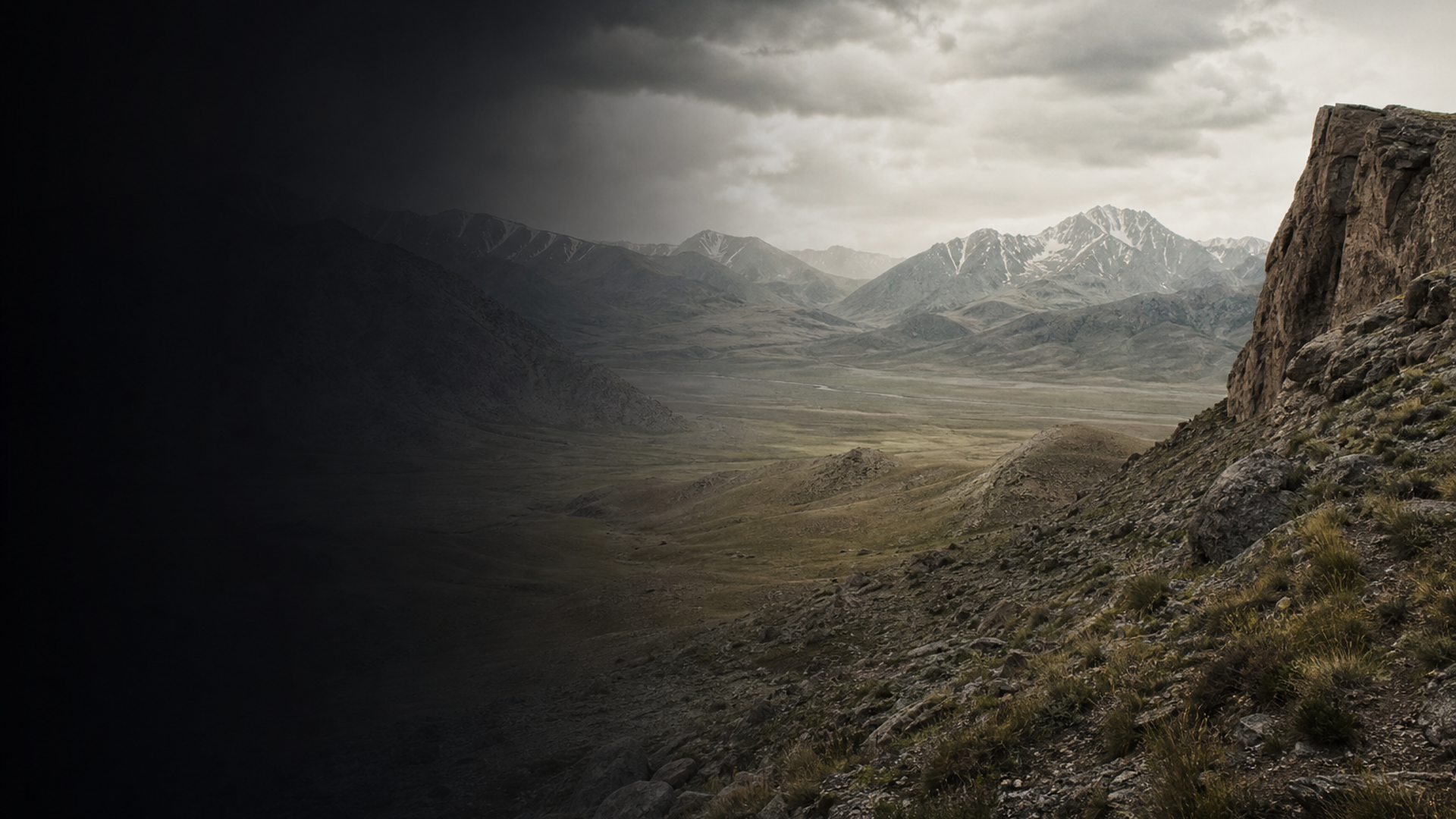
Jirentaigoukou sits in the broad Ili (Yili) Valley of northern Xinjiang, a landscape where mountain shadows meet river plains and ancient routes funneled people and goods across Eurasia. Archaeological data indicates the site was used in the Early Iron Age, with the dated human remains spanning roughly 401–106 BCE. The material culture of the greater Yili region in this period shows a tapestry of local pastoral lifeways and increasing contacts with neighboring steppe and Central Asian communities.

Limited evidence suggests that Jirentaigoukou was part of a network of valleys and passes that enabled seasonal mobility and exchange. The site's chronology places it within a time of political and economic change across Inner Asia: iron technologies spread, new burial expressions appear, and trade routes intensified. While the archaeological record at Jirentaigoukou itself is modest, the location and dates align it with broader regional transformations that reflect mobility, interaction, and cultural blending.

Because the site’s genetic dataset is small (five individuals), conclusions about population origins must remain tentative. Nevertheless, the convergence of archaeological context and genetic hints paints a picture of a frontier community at the crossroads of eastern and western influences.

  • Located in Ili (Yili) Valley, Nileke County, Xinjiang
  • Dates: 401–106 BCE, within the Early Iron Age in China
  • Archaeology indicates regional mobility and long-distance contacts
Kapitel IV

Daily Life & Society

The daily rhythms around Jirentaigoukou likely unfolded against a backdrop of pastoral economies, riverine agriculture, and seasonal movement. Archaeological patterns across the Yili region point to mixed subsistence strategies: herding of sheep and goats, use of mountain pastures, and cultivation in fertile valley bottoms. Such economies often produce burial practices and material assemblages that reflect both local traditions and influences arriving along trade corridors.

Material evidence from contemporaneous sites in Xinjiang shows a blend of functional objects—metal tools, ceramics, and textiles—that reveal hands skilled in both local crafts and imported techniques. Archaeological data indicates that communities in the Ili Valley participated in wider exchange networks, which could bring exotic goods, new technologies, and people. Social structure in such communities tend to be flexible, with networks of kinship, patronage, and seasonal aggregation for markets or ritual.

At Jirentaigoukou, the archaeological footprint is limited and the human sample set small. Therefore reconstructions of social hierarchy or household composition are necessarily cautious. Still, the landscape and material traces suggest lives shaped by movement, adaptation, and connections across the early first millennium BCE.

  • Mixed pastoral and agricultural subsistence inferred regionally
  • Participation in long-distance exchange networks likely
Kapitel V

Genetic Profile

Ancient DNA from five individuals at Jirentaigoukou reveals a strikingly diverse maternal profile: mtDNA haplogroups U, C4, T, H, and D each occur once among the five samples. This diversity, within a very small dataset, hints at maternal lineages from both western Eurasian (U, H, T) and eastern Eurasian (C4, D) traditions. Archaeological data indicates the region was a corridor for movement; the mtDNA mix is consistent with gene flow along east–west exchange routes during the Early Iron Age.

No consistent Y-DNA haplogroup pattern is reported for this assemblage, and small sample size (n=5) makes it impossible to characterize paternal structure or sex-biased migration robustly. Limited evidence therefore suggests a heterogeneous maternal ancestry rather than a single, uniform population origin.

Genetic signals must be interpreted cautiously: with fewer than ten individuals, sampling noise is high and regional representativeness is low. Nonetheless, the observed combination of mtDNA lineages aligns with broader ancient DNA studies in Xinjiang and adjacent steppe zones that document admixture between eastern and western Eurasian gene pools during the first millennium BCE. Future sampling and high-coverage genomes would be necessary to resolve the timing, magnitude, and social mechanisms of admixture.

  • mtDNA shows both western (U, H, T) and eastern (C4, D) maternal lineages
  • Sample size is small (n=5); conclusions are preliminary and tentative
Kapitel VI

Legacy & Modern Connections

The Jirentaigoukou assemblage offers a cinematic snapshot of Early Iron Age frontier life: a small chorus of mitochondrial lineages echoing broader patterns of mobility across Eurasia. While the dataset is currently too limited to draw firm threads to specific modern populations, the presence of both eastern and western maternal haplogroups underscores the deep antiquity of east–west interactions in Xinjiang.

Archaeogenetic work like this helps bridge archaeological landscapes and modern genetic diversity by documenting moments of contact and admixture. As more samples are recovered and broader comparative datasets expand, Jirentaigoukou may serve as an important local reference for how populations in the Ili Valley contributed to the tapestry of Eurasian ancestry. For now, its greatest legacy is as a reminder: the margins of great landscapes are often where mixtures are born, recorded faintly in bone and genome.

  • Reflects early east–west genetic interaction in Xinjiang
  • Current data are a preliminary reference point for future studies
KI-gestützt

KI-Assistent

Stellen Sie Fragen zur Jirentaigoukou: Voices of Early Iron Age Xinjiang-Kultur

KI-Assistent von DNAGENICS

Funktion freischalten
Stellen Sie Fragen zur Kultur Jirentaigoukou: Voices of Early Iron Age Xinjiang. Unser KI-Assistent kann genetische Befunde, historischen Kontext, archäologische Belege und moderne Verbindungen erläutern.
Beispiel einer KI-Analyse

Die Jirentaigoukou: Voices of Early Iron Age Xinjiang-Kultur ist ein faszinierendes Kapitel der Menschheitsgeschichte...

Genetische Analysen zeigen Übereinstimmungen mit früheren Populationen und Hinweise auf besondere Anpassungen und kulturelle Innovationen. Alte DNA-Proben liefern Einblicke in Migrationsmuster, soziale Strukturen und genetische Verbindungen zwischen Populationen.

Dies ist eine Vorschau der KI-Analyse. Schalten Sie den vollständigen KI-Assistenten frei, um detaillierte Einblicke zu erkunden:

  • Genetische Zusammensetzung und genetische Ähnlichkeit
  • Migrationsmuster und Ursprünge
  • Alltag und kulturelle Praktiken
  • Genetischer Bezug zu heutigen Populationen

Weitere antike Kulturen erkunden

Geschichten von Zivilisationen aus der antiken Welt entdecken

Use code for 30% off • Expires Nov 08