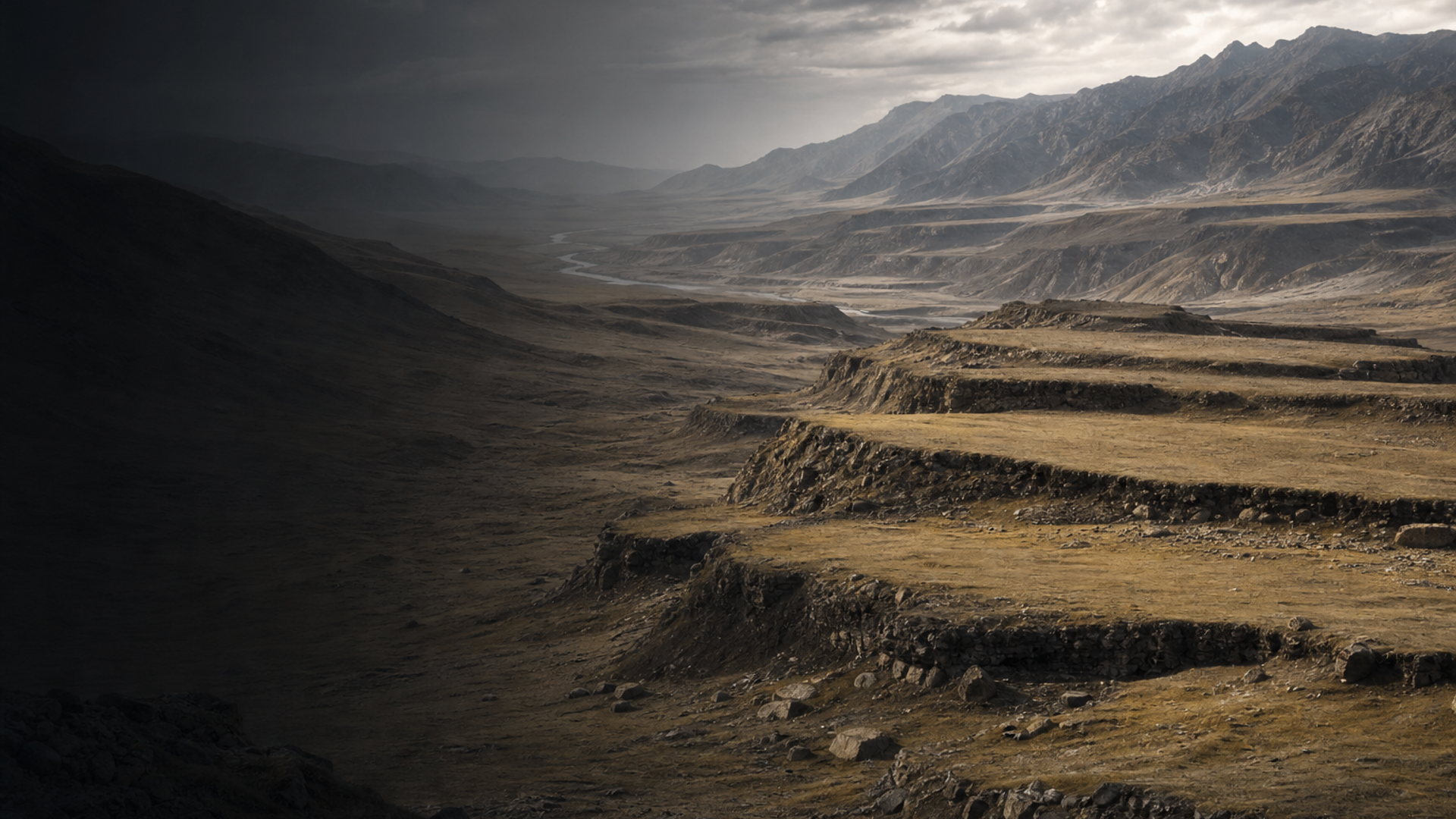
The human story on the Uliastai terraces is one of movement, seasonal rhythms, and intimate relationship with the steppe. Archaeological contexts point to pastoral households that shifted camp with the seasons, exploiting riverine grasses and upland pastures. Faunal remains in comparable Khovd assemblages commonly indicate sheep, goat, horse, and cattle herding; while actual species lists from these three samples are limited, the terrace setting strongly implies herding at the core of subsistence.
Burial contexts found in terrace deposits range from single interments to scattered grave goods, reflecting social differentiation through time. Metal objects and worked bone recovered in nearby Khovd sites imply access to metallurgical networks that linked the Mongolian plateau to broader Eurasian circuits. Seasonal aggregation at rivers like the Uliastai would have facilitated exchange of animals, marriage ties, and climatic buffering during harsh winters.
Archaeological indicators also suggest roles for both mobility and ritual in daily life: transient camps leave thin but telling traces—fire-cracked stones, postholes, and occasional grave cuttings—each a quiet testimony to lives lived in motion across an expansive landscape.