Lassithi Minoans — Heart of East Crete

Download PDF creates a visual, rasterized copy. Use Print for selectable text and better assistive-technology support.

Bericht wird vorbereitet

Verfügbare Informationen und Referenzen werden geladen

Verbindung mit dem archäologischen Quellenbestand...

Alte Quellen werden zusammengestellt

Zum Hauptinhalt springen
Lassithi Minoans — Heart of East Crete
Zivilisations-Spotlight

Lassithi Minoans — Heart of East Crete

A vivid glimpse into Bronze Age Lassithi, where palaces, pottery and genes trace island life

2400 CE - 1700 BCE
Crete (Lassithi), Greece
Scrollen zum Start
Kapitel I

Die Geschichte

Die Lassithi Minoans — Heart of East Crete-Kultur verstehen

Archaeological and genetic traces from five individuals (2400–1700 BCE) in Lassithi, Crete, suggest an Anatolian‑linked Minoan community with maternal lineages dominated by haplogroup H and paternal J signals. Conclusions are preliminary due to small sample size.

Time Period

2400–1700 BCE

Region

Crete (Lassithi), Greece

Common Y-DNA

J (observed in 2/5)

Common mtDNA

H (3), H5 (1), U (1)

Kapitel II

Zeitleiste

Zentrale Momente in der Geschichte dieser Kultur

2500 BCE

Consolidation of Bronze Age communities

Regional settlements in Lassithi grow into interconnected communities engaged in craft, agriculture, and maritime exchange, setting the stage for Minoan cultural florescence.

Kapitel III

Origins & Emergence

Beneath the ochre light of the Aegean dawn, communities in eastern Crete coalesced into complex Bronze Age societies between c. 2400 and 1700 BCE. Archaeological data from the Lassithi region — including settlement remains and material culture found at sites such as Petras and the eastern Zakros area — indicate dense occupation, specialized craft production, and maritime exchange networks connecting Crete with mainland Greece and the Near East. Pottery styles, metalwork, and architectural forms reflect a distinct Minoan cultural horizon that emerged from earlier Neolithic and Early Bronze traditions on the island.

Genetically, the small set of five sampled individuals from Lassithi offers a slender window into this emergence. Limited evidence suggests continuity with Aegean/Anatolian Neolithic farmer ancestries that are characteristic of broader Minoan populations, alongside signatures consistent with seaborne contacts to the east. Because we are working with only five genomes, assertions about population movement, demography, or the pace of cultural change must remain tentative. Archaeological patterns — specialized craft, long-distance trade goods, and developing palatial centers elsewhere on Crete (Knossos, Malia, Phaistos) — frame a plausible scenario of local development amplified by interregional exchange rather than wholesale population replacement.

  • Emergence during Early–Middle Bronze Age (c. 2400–1700 BCE)
  • Occupations attested at Lassithi sites like Petras and Zakros
  • Material culture shows Aegean‑Anatolian exchange networks
Kapitel IV

Daily Life & Society

In the shadow of olive groves and terraced hills, life in Lassithi combined agricultural abundance with maritime opportunity. Archaeological remains suggest a diet based on cereals, pulses, olives, and marine resources; storage vessels, press installations, and animal bones recovered from contemporaneous Crete point to an economy anchored in both land and sea. Craft specialists — potters, metalworkers, and textile producers — left traces in kiln remains, slag, and spindle whorls. The spatial layout of settlements and the presence of elite goods imply social differentiation: households varied in size and wealth, and communal or institutional spaces may have mediated redistribution and craft control.

Ceremony and visual culture were central. Fresco fragments, carved stone libation tables, and ritual objects recovered across eastern Crete evoke public display and religious practice. Maritime trade connected Lassithi to the wider Aegean and to Anatolia, bringing exotic raw materials and stylistic influences that appear in local artefacts. Still, the archaeological record in Lassithi is patchy compared with larger palace centers: careful excavation and further aDNA sampling will sharpen our picture of everyday life and social organization.

  • Agriculture, fishing, and craft production shaped daily economy
  • Material culture implies social hierarchy and ritual practice
Kapitel V

Genetic Profile

The genetic snapshot from five Lassithi individuals (2400–1700 BCE) offers suggestive but preliminary insights. Paternal markers: two of the five Y‑chromosome profiles belong to haplogroup J, a lineage commonly associated with Anatolian and Near Eastern populations in Bronze Age Aegean contexts. Maternal markers: mitochondrial haplogroups were dominated by H (three unspecified H lineages), one individual carrying H5 (a subclade of H), and one carrying U. This distribution indicates strong continuity with the matrilineal diversity typical of Neolithic and Bronze Age Aegean populations, where H and U appear frequently.

Interpreting ancestry: these haplogroup observations are compatible with broader Minoan genetic patterns that emphasize substantial Anatolian/Neolithic farmer–related ancestry and little Steppe‑related input, but two caveats apply. First, haplogroups alone do not quantify ancestry proportions; autosomal DNA provides the fuller picture. Second, with only five samples the statistical power is low—population‑level inferences (migration rates, sex‑biased gene flow, or demographic shifts) remain tentative. Nevertheless, the presence of Y‑J and mtDNA‑H/U aligns with an island community integrated into Aegean–Anatolian networks and suggests a genetic profile shaped more by maritime Neolithic/Anatolian connections than by northern Steppe influx.

  • Y haplogroup J observed in 2 of 5 males, suggesting Anatolian links
  • mtDNA dominated by H (including H5) and U; sample size limits conclusions
Kapitel VI

Legacy & Modern Connections

Echoes of Lassithi’s Bronze Age life persist in the genetic and cultural fabric of the eastern Mediterranean. The maternal and paternal lineages recovered mirror broader Aegean patterns that continue to contribute to the modern gene pool of Crete and surrounding regions. Archaeologically, Minoan artistic motifs and maritime technologies influenced later island and mainland cultures, seeding motifs that appear in Greek iconography centuries later.
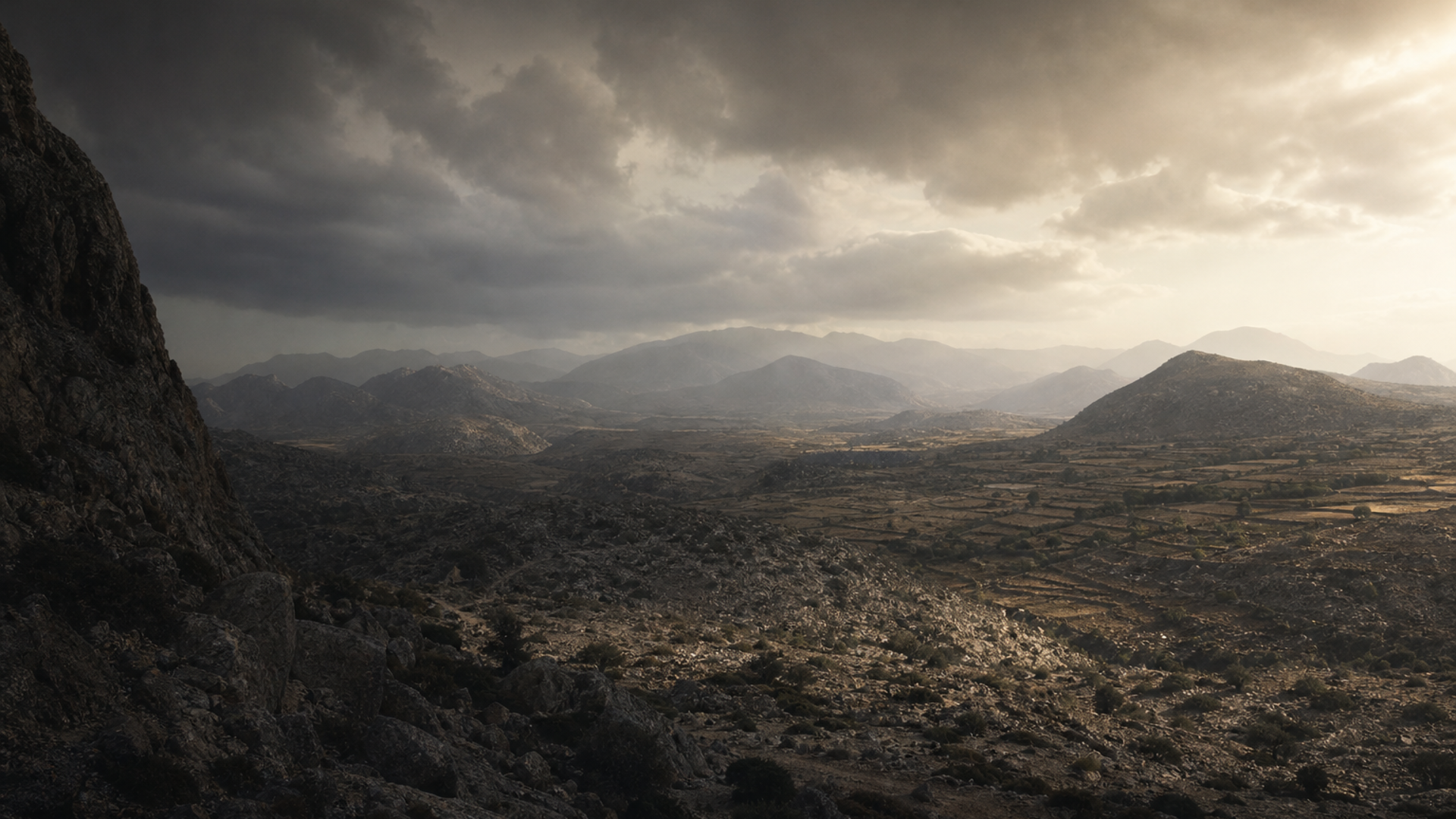

Because only five ancient genomes are available from Lassithi, any direct claim about continuity to modern populations must be cautious. Still, when combined with larger regional datasets, these samples help map the threads of ancestry that tie modern Cretans to island farmers, sailors, and craftsmen of the Bronze Age. The result is a layered legacy: tangible ruins and artifacts paired with genetic signatures that, together, tell of a seafaring people woven into the broader tapestry of the ancient Mediterranean.

  • Genetic lineages contribute to broader Aegean ancestry patterns
  • Cultural influence visible in later Aegean and Greek traditions
KI-gestützt

KI-Assistent

Stellen Sie Fragen zur Lassithi Minoans — Heart of East Crete-Kultur

KI-Assistent von DNAGENICS

Funktion freischalten
Stellen Sie Fragen zur Kultur Lassithi Minoans — Heart of East Crete. Unser KI-Assistent kann genetische Befunde, historischen Kontext, archäologische Belege und moderne Verbindungen erläutern.
Beispiel einer KI-Analyse

Die Lassithi Minoans — Heart of East Crete-Kultur ist ein faszinierendes Kapitel der Menschheitsgeschichte...

Genetische Analysen zeigen Übereinstimmungen mit früheren Populationen und Hinweise auf besondere Anpassungen und kulturelle Innovationen. Alte DNA-Proben liefern Einblicke in Migrationsmuster, soziale Strukturen und genetische Verbindungen zwischen Populationen.

Dies ist eine Vorschau der KI-Analyse. Schalten Sie den vollständigen KI-Assistenten frei, um detaillierte Einblicke zu erkunden:

  • Genetische Zusammensetzung und genetische Ähnlichkeit
  • Migrationsmuster und Ursprünge
  • Alltag und kulturelle Praktiken
  • Genetischer Bezug zu heutigen Populationen

Weitere antike Kulturen erkunden

Geschichten von Zivilisationen aus der antiken Welt entdecken

Use code for 35% off • Expires Nov 09




