Late Tylos — Sasanian Bahrain

Download PDF creates a visual, rasterized copy. Use Print for selectable text and better assistive-technology support.

Bericht wird vorbereitet

Verfügbare Informationen und Referenzen werden geladen

Verbindung mit dem archäologischen Quellenbestand...

Alte Quellen werden zusammengestellt

Zum Hauptinhalt springen
Late Tylos — Sasanian Bahrain
Zivilisations-Spotlight

Late Tylos — Sasanian Bahrain

A coastal nexus at the edge of Sasanian power, glimpsed through archaeology and ancient DNA

300 CE - 647 CE
Bahrain (Madinat Hamad, Northern Governorate)
Scrollen zum Start
Kapitel I

Die Geschichte

Die Late Tylos — Sasanian Bahrain-Kultur verstehen

Archaeological remains and three ancient mitochondrial genomes from Madinat Hamad (300–647 CE) illuminate Late Tylos under Sasanian influence. Limited samples suggest mixed West and South/Central Asian maternal ancestries, consistent with Bahrain’s role as a maritime crossroads.

Time Period

300–647 CE

Region

Bahrain (Madinat Hamad, Northern Governorate)

Common Y-DNA

Not reported / data absent

Common mtDNA

R2 (1), T2b (1), U (1)

Kapitel II

Zeitleiste

Zentrale Momente in der Geschichte dieser Kultur

224 CE

Rise of the Sasanian Empire

The Sasanian state consolidates Persian power across the Gulf, shaping trade and administration affecting Bahrain.

300 CE

Late Tylos Period (archaeological horizon)

Local coastal communities in Bahrain flourish within Sasanian-era networks; material culture shows regional connections.

647 CE

Early Islamic Transformations

Islamic expansions bring political and social change to the Gulf, marking the end of the Sasanian-era samples' date range.

Kapitel III

Origins & Emergence

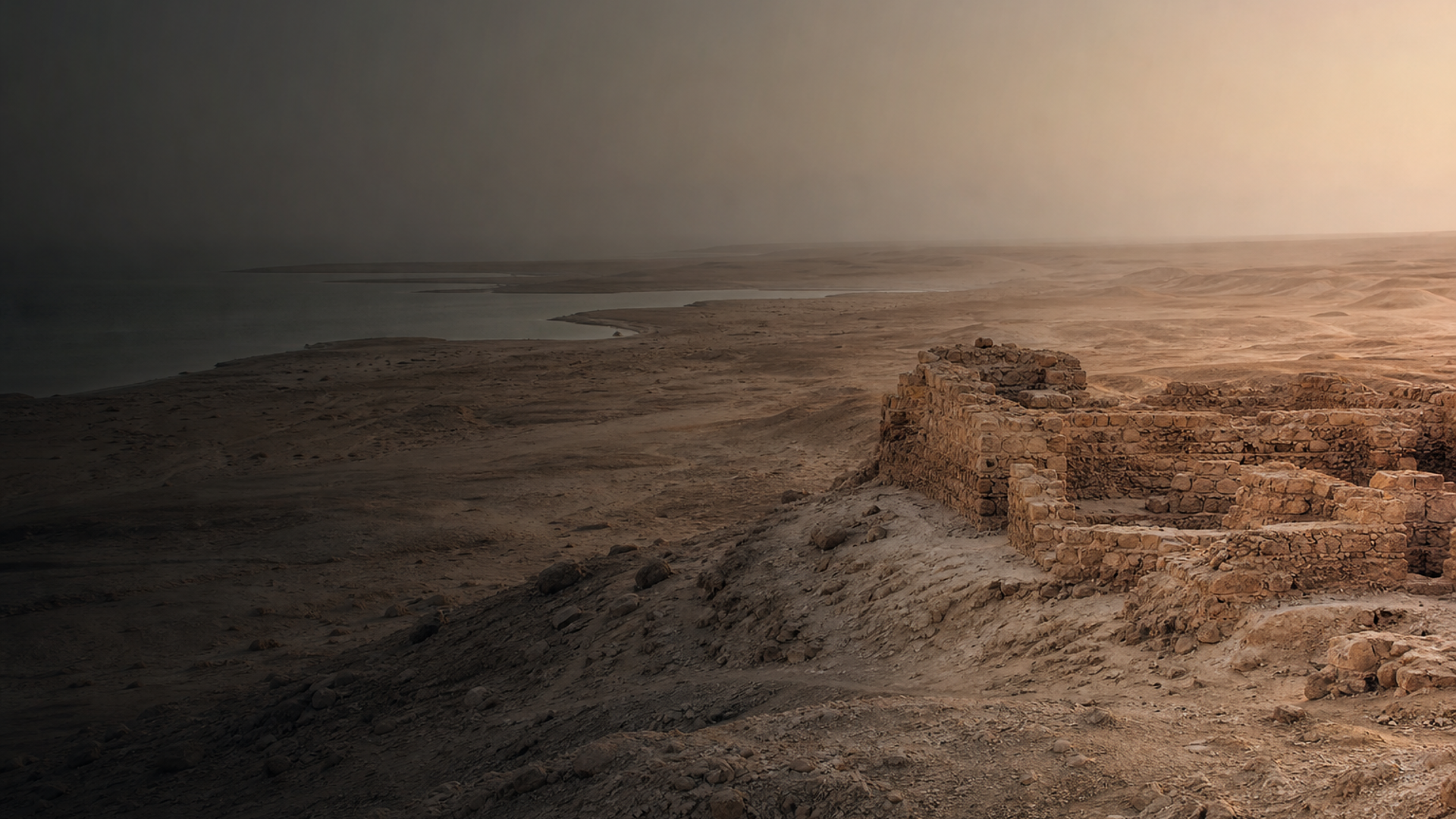
On the low, salt-stung shores of Bahrain, the Late Tylos landscape was a palimpsest of older Dilmun memory and new imperial rhythms. Archaeological data indicates that by the 3rd–4th centuries CE (the Late Tylos horizon) the islands were integrated into long-distance maritime networks. Material traces — imported ceramics, Sasanian-style administrative objects, and local craft traditions — evoke a port society shaped by Persian Gulf commerce and the political reach of the Sasanian Empire.

Madinat Hamad, in the modern Northern Governorate, yields burials and settlement debris contemporary with Sasanian control of the Gulf. Limited evidence suggests population movement and cultural exchange rather than wholesale replacement: trade, seasonal seafaring, and mercantile families likely underpinned demographic connections across the Gulf and beyond. The archaeological record is regionally rich but locally sparse for this period; many interpretations rely on burials, small finds, and coastal infrastructure visible in survey and excavation reports.

Caution is essential: only three ancient DNA samples are available from this context, so genetic inferences remain preliminary. Still, the convergence of material culture and preliminary genetic signals paints a cinematic picture of islands as crossroads where Persian, Arabian, and wider Indian Ocean worlds met.

  • Integration into Sasanian-period Gulf trade and administration
  • Madinat Hamad provides the primary local archaeological context
  • Interpretations remain cautious due to small sample sizes
Kapitel IV

Daily Life & Society

Life in Late Tylos was coastal and cosmopolitan. Archaeological evidence from the Gulf littoral and excavations around Bahrain suggests communities oriented to sea-based economies: fishing, pearl-gathering, boat-building, and trade in dates and salt. Imported amphorae and ceramics point to connections with Mesopotamia, the Arabian Peninsula, and the wider Indian Ocean.

Social life likely revolved around merchant families, dockside laborers, and artisan households. Burial practices recovered at island cemeteries show a mix of local and regional customs — tomb forms and grave goods indicate both continuity with earlier Gulf traditions and new elements traceable to Sasanian funerary norms. Administrative seals and inscribed objects in other Gulf sites imply bureaucratic links to Sasanian authorities, suggesting that local elites negotiated autonomy and imperial ties.

Archaeobotanical and faunal remains hint at cultivated date palms, pastoralism, and imported foodstuffs. The sensory world would have been saltwind, crowded quays, foreign languages, and the constant rhythm of ships arriving from distant ports.

  • Maritime economy: pearls, fish, trade goods
  • Burials mix local Gulf and Sasanian-influenced elements
Kapitel V

Genetic Profile

Three mitochondrial genomes recovered from Madinat Hamad (dating 300–647 CE) provide a fragile but illuminating window into Late Tylos maternal ancestry. The mtDNA types are R2 (1 sample), T2b (1), and U (1). Each haplogroup carries regional associations but must be interpreted cautiously given the n = 3 sample size.

  • R2: today found at higher frequencies in South and Central Asia and parts of the Near East. Its presence could reflect maritime links or movement of people and goods across the Indian Ocean and Persian Gulf.
  • T2b: a West Eurasian lineage common in the Mediterranean and Near East, consistent with connections to Levantine or Anatolian networks that reached the Gulf through trade.
  • U: a broad West Eurasian lineage with deep time depth in Eurasia; its occurrence here aligns with widespread maternal ancestries across Iran, Arabia, and the Levant.

No Y-DNA haplogroups are reported for these individuals, so paternal lineages remain unknown. Archaeological context and these maternal signals together suggest a mixed maternal heritage in coastal Bahrain during Late Antiquity — plausibly integrating West Eurasian and South/Central Asian elements. Given the sample count is below ten, conclusions are preliminary: more genomes (including autosomal data) would be needed to model admixture, directionality, and continuity with modern Bahraini populations.

  • mtDNA: R2, T2b, U — suggesting mixed West and South/Central Asian maternal links
  • Y-DNA absent and sample size (n=3) makes conclusions provisional
Kapitel VI

Legacy & Modern Connections

The Late Tylos — Sasanian chapter is a thread in the long tapestry of Gulf population history. Archaeology and early genetic glimpses imply that medieval and modern Bahraini ancestry likely reflects layered inputs: ancient Gulf inhabitants, Iranian plateau connections during Sasanian rule, and long-standing Indian Ocean exchanges. Cultural legacies endure in place names, craft traditions, and the continued importance of maritime commerce.

However, demographic continuity is not guaranteed. The 7th-century Islamic expansions and subsequent centuries of trade, migration, and empire-building introduced additional genetic and cultural shifts. Modern genetic profiles of Bahrainis are the product of millennia of mobility; the three Late Tylos mitochondrial genomes provide tantalizing, but incomplete, clues to an earlier coastal mosaic.

  • Sasanian-era links likely contributed to regional ancestry in the Gulf
  • Modern Bahraini genetics reflect many later layers; early signals are preliminary
KI-gestützt

KI-Assistent

Stellen Sie Fragen zur Late Tylos — Sasanian Bahrain-Kultur

KI-Assistent von DNAGENICS

Funktion freischalten
Stellen Sie Fragen zur Kultur Late Tylos — Sasanian Bahrain. Unser KI-Assistent kann genetische Befunde, historischen Kontext, archäologische Belege und moderne Verbindungen erläutern.
Beispiel einer KI-Analyse

Die Late Tylos — Sasanian Bahrain-Kultur ist ein faszinierendes Kapitel der Menschheitsgeschichte...

Genetische Analysen zeigen Übereinstimmungen mit früheren Populationen und Hinweise auf besondere Anpassungen und kulturelle Innovationen. Alte DNA-Proben liefern Einblicke in Migrationsmuster, soziale Strukturen und genetische Verbindungen zwischen Populationen.

Dies ist eine Vorschau der KI-Analyse. Schalten Sie den vollständigen KI-Assistenten frei, um detaillierte Einblicke zu erkunden:

  • Genetische Zusammensetzung und genetische Ähnlichkeit
  • Migrationsmuster und Ursprünge
  • Alltag und kulturelle Praktiken
  • Genetischer Bezug zu heutigen Populationen

Weitere antike Kulturen erkunden

Geschichten von Zivilisationen aus der antiken Welt entdecken

Use code for 30% off • Expires Nov 08




