Lucier Ancestors — Southwestern Ontario

Download PDF creates a visual, rasterized copy. Use Print for selectable text and better assistive-technology support.

Bericht wird vorbereitet

Verfügbare Informationen und Referenzen werden geladen

Verbindung mit dem archäologischen Quellenbestand...

Alte Quellen werden zusammengestellt

Zum Hauptinhalt springen
Lucier Ancestors — Southwestern Ontario
Zivilisations-Spotlight

Lucier Ancestors — Southwestern Ontario

A portrait of mobile hunter-gatherers stitched from stone, bone and ancient DNA

2914 BCE - 1637 CE
Southwestern Ontario, Canada (Lucier site)
Scrollen zum Start
Kapitel I

Die Geschichte

Die Lucier Ancestors — Southwestern Ontario-Kultur verstehen

Archaeological remains from Lucier (Southwestern Ontario; 2914 BCE–1637 CE) reveal mobile hunter-gatherer lifeways. Ancient DNA from 9 individuals shows mainly mtDNA C and paternal Q, offering preliminary links to Indigenous North American lineages. Conclusions remain tentative given small sample size.

Time Period

2914 BCE – 1637 CE

Region

Southwestern Ontario, Canada (Lucier site)

Common Y-DNA

Q (1), BT (1), IJK (1)

Common mtDNA

C (6), A2i (2), X (1)

Kapitel II

Zeitleiste

Zentrale Momente in der Geschichte dieser Kultur

2500 BCE

Early Lucier occupation

Evidence of seasonal camps and tool production at Lucier indicates human activity in the mid-late third millennium BCE.

Kapitel III

Origins & Emergence

The human story at Lucier unfolds across millennia of lakeshore wind and forest edge. Archaeological data indicates repeated, episodic occupation of the Lucier locality in southwestern Ontario between at least 2914 BCE and the early historic era (1637 CE). Lithic scatter, ephemeral hearths and recovered skeletal material suggest highly mobile hunter-gatherer groups exploiting rich freshwater and forest resources.

Cinematic images of people moving with the seasons — spring fish runs, summer plant harvests, fall hunts, winter camps — are consistent with the site’s stratigraphy and tool assemblage. Limited evidence suggests connections or cultural affinities with broader northern tool traditions; the input dataset lists the Arctic Small Tool Tradition as a related era, indicating potential technological parallels or long-distance networks rather than direct cultural identity.

Radiocarbon dates bracket long-term use, but the occupational picture is fragmentary. With only nine ancient DNA samples from Lucier, genetic interpretations must remain cautious. Archaeological context provides the frame: Lucier is a palimpsest of short-term camps and returning family ranges, a landscape written in scattered hearths and the slow accrual of cultural traces. Further excavation and careful collaboration with descendant communities are essential to deepen the story.

  • Repeated episodic occupation 2914 BCE–1637 CE
  • Mobile hunter-gatherer lifeways inferred from lithics and hearths
  • Possible technological affinities with Arctic Small Tool Tradition
Kapitel IV

Daily Life & Society

Archaeological indicators at Lucier suggest a routine shaped by seasonal rhythms and resources of the Great Lakes basin. Stone tools and faunal remains recovered in the region point to fishing, waterfowl and terrestrial game hunting, as well as plant processing. Hearth features and ephemeral living floors imply short-term camps occupied by small task groups rather than large, permanent villages.

Social life in such a setting is likely organized around flexible bands with strong kin ties. Material culture — portable tools, personal ornaments when present, and curated blade technologies — indicates investment in mobility and multi-purpose toolkits. Burial evidence is limited in the Lucier assemblage available for study; where skeletal remains occur, they provide rare windows into diet, health and mobility through isotopes and aDNA.

Archaeological data indicates a degree of interaction across the landscape: raw material sourcing for lithics sometimes points to nonlocal stone, suggesting exchange networks or seasonal rounds that connected distant watersheds. Ethnographic analogy and regional archaeology portray communities skilled at reading and moving through lake-edge ecologies, tied to specific territories while engaging in broader social networks.

  • Seasonal exploitation of fisheries, waterfowl, and terrestrial game
  • Small, mobile camps with curated, multi-use toolkits
Kapitel V

Genetic Profile

The genetic snapshot from Lucier is compelling but provisional. Nine samples yield a mitochondrial profile dominated by haplogroup C (6/9), with A2i (2/9) and X (1/9) also present. Maternally inherited mtDNA C and A2 lineages are common in ancient and modern Indigenous populations across North America, which supports continuity of maternal ancestries within the region. The single X lineage is less frequent but has documented presence in some pre-contact North American contexts; its interpretation here is tentative given the small count.

Paternal results are sparse: a single Q Y-chromosome is observed, consistent with widespread Native American paternal lineages. The presence of BT and IJK in one sample each is ambiguous. BT is a broad upstream clade and may reflect limited resolution; IJK is uncommon as a Native American marker and could reflect analytical uncertainty, contamination, or rare substructure. Given the total sample count is nine (<10), these patterns should be considered preliminary.

Archaeogeneticists combine these molecular signals with archaeological context — dating, isotopes, and tool associations — to infer mobility, kinship structure, and demographic continuity. At Lucier, the preponderance of mtDNA C suggests enduring maternal line continuity in the local gene pool, while Y-chromosome data remain too limited to define paternal patterns robustly. More samples, strict contamination controls, and collaboration with Indigenous communities are needed to refine these genetic narratives.

  • mtDNA dominated by C (6/9), with A2i (2) and X (1)
  • Y-DNA shows Q (1); BT and IJK are ambiguous and require cautious interpretation
Kapitel VI

Legacy & Modern Connections

The Lucier assemblage speaks to long-standing human presence in southwestern Ontario and offers a genetic thread that may connect past populations with present-day Indigenous communities. Archaeological data indicates persistent use of the landscape across millennia, while preliminary aDNA signals suggest maternal lineages commonly found among Indigenous North Americans.
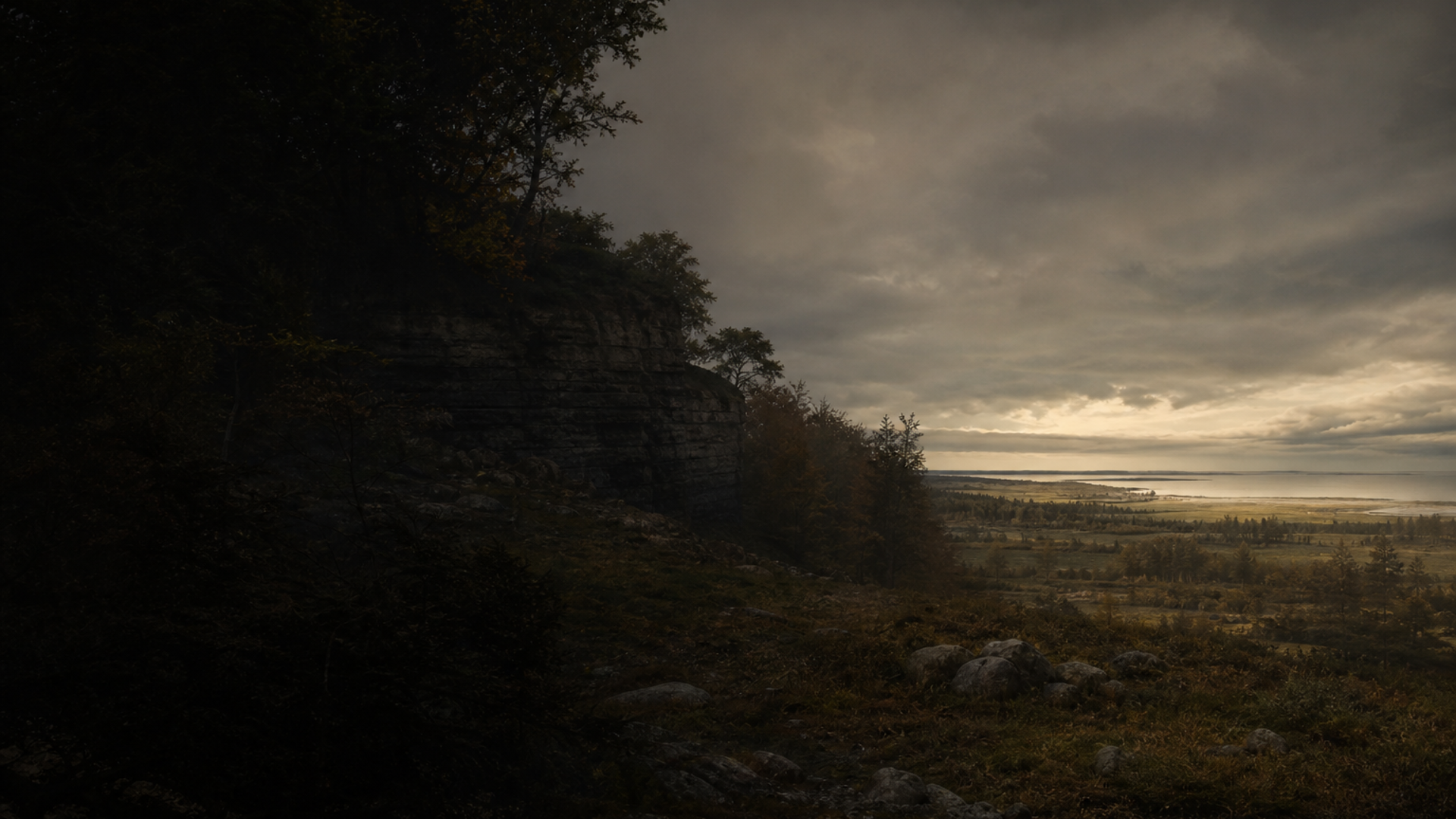
Interpretation must be handled with care and humility. Small sample numbers (n=9) limit broad claims, and the ethical imperative to work in partnership with descendant communities is paramount. When combined respectfully with oral histories, archaeological evidence and expanded genetic sampling can illuminate patterns of continuity, migration and adaptation. The cinematic image is of ancestors moving along shorelines and rivers — their biographies encoded in bone, their stories continuing through living cultures and landscapes. Future research, guided by community collaboration and rigorous methods, will sharpen the portrait of Lucier’s human past.

  • Preliminary genetic links to Indigenous North American maternal lineages
  • Necessity of community collaboration and larger sample sets for robust conclusions
KI-gestützt

KI-Assistent

Stellen Sie Fragen zur Lucier Ancestors — Southwestern Ontario-Kultur

KI-Assistent von DNAGENICS

Funktion freischalten
Stellen Sie Fragen zur Kultur Lucier Ancestors — Southwestern Ontario. Unser KI-Assistent kann genetische Befunde, historischen Kontext, archäologische Belege und moderne Verbindungen erläutern.
Beispiel einer KI-Analyse

Die Lucier Ancestors — Southwestern Ontario-Kultur ist ein faszinierendes Kapitel der Menschheitsgeschichte...

Genetische Analysen zeigen Übereinstimmungen mit früheren Populationen und Hinweise auf besondere Anpassungen und kulturelle Innovationen. Alte DNA-Proben liefern Einblicke in Migrationsmuster, soziale Strukturen und genetische Verbindungen zwischen Populationen.

Dies ist eine Vorschau der KI-Analyse. Schalten Sie den vollständigen KI-Assistenten frei, um detaillierte Einblicke zu erkunden:

  • Genetische Zusammensetzung und genetische Ähnlichkeit
  • Migrationsmuster und Ursprünge
  • Alltag und kulturelle Praktiken
  • Genetischer Bezug zu heutigen Populationen

Weitere antike Kulturen erkunden

Geschichten von Zivilisationen aus der antiken Welt entdecken

Use code for 30% off • Expires Nov 08




