Maglemose Dawn

Download PDF creates a visual, rasterized copy. Use Print for selectable text and better assistive-technology support.

Bericht wird vorbereitet

Verfügbare Informationen und Referenzen werden geladen

Verbindung mit dem archäologischen Quellenbestand...

Alte Quellen werden zusammengestellt

Zum Hauptinhalt springen
Maglemose Dawn
Zivilisations-Spotlight

Maglemose Dawn

Forest, fen and the first postglacial hunters of Denmark, seen through archaeology and DNA

8698 CE - 5540 BCE
Denmark (Jutland, Zealand, Funen)
Scrollen zum Start
Kapitel I

Die Geschichte

Die Maglemose Dawn-Kultur verstehen

A cinematic portrait of Denmark's early Mesolithic Maglemose communities (8698–5540 BCE). Archaeology from Koelbjerg, Kongemose and other wetlands meets genetic data from five samples to suggest a Western Hunter‑Gatherer affinity, with cautious notes due to small sample size.

Time Period

8698–5540 BCE

Region

Denmark (Jutland, Zealand, Funen)

Common Y-DNA

I (majority), CT (rare)

Common mtDNA

U (most), H, K1e

Kapitel II

Zeitleiste

Zentrale Momente in der Geschichte dieser Kultur

8698 BCE

Earliest recorded Maglemosian occupations

Earliest calibrated dates in the sample set mark occupation of Danish wetlands, beginning in the late tenth millennium BCE.

Kapitel III

Origins & Emergence

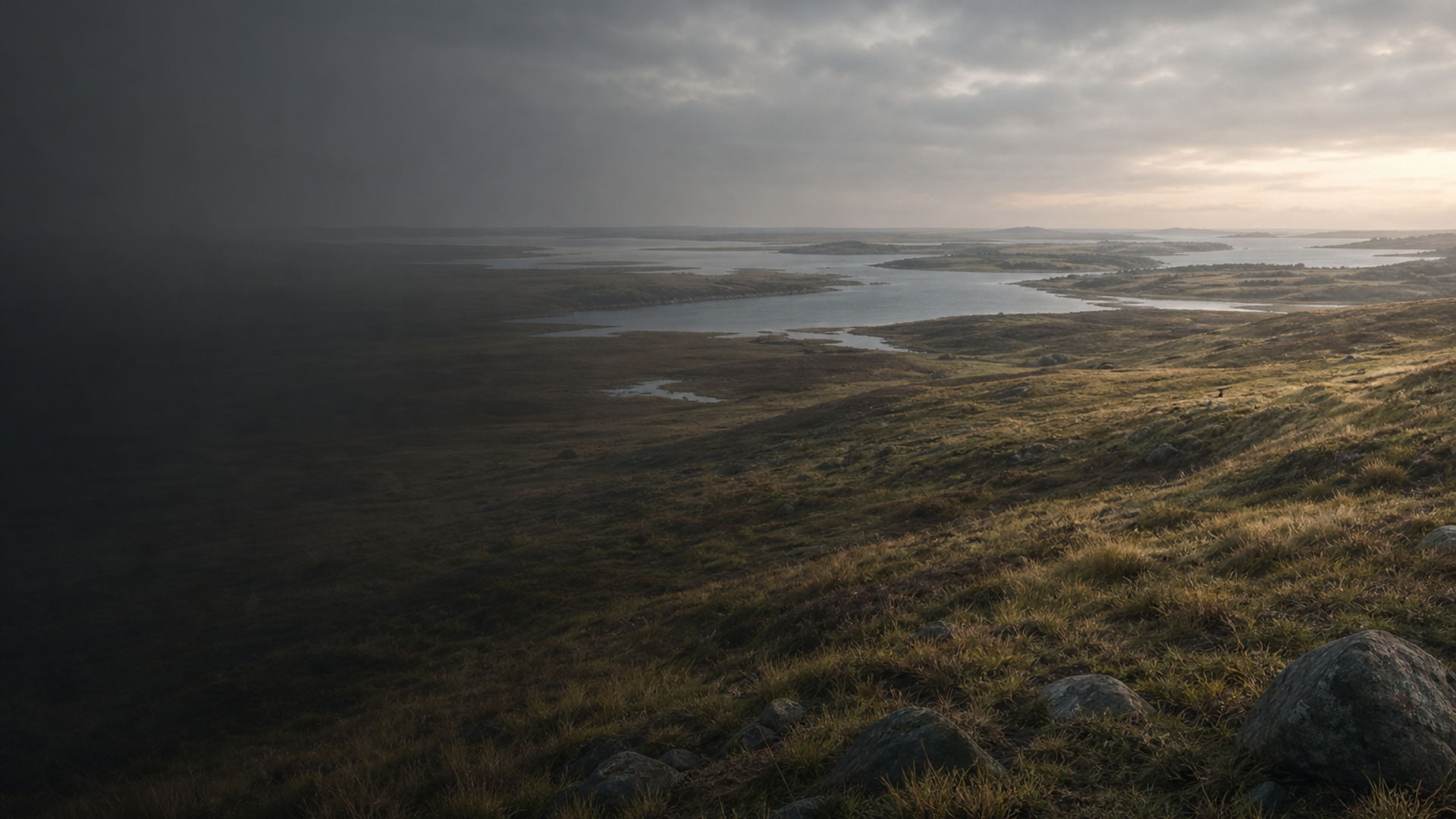
As ice retreated after the Last Glacial Maximum, a mosaic of new lakes, rivers and swampy forests rose across what is now Denmark. Into this green, watery world stepped the peoples archaeologists group under the Maglemose umbrella—mobile, inventive forest and wetland foragers who left their mark in peat bogs, lakeshores and drowned landscapes.

Archaeological data indicates occupation across Jutland, Zealand and Funen between roughly 8698 and 5540 BCE. Key sites in the present dataset include Koelbjerg (Funen), Hedegaard (Bislev, Jutland), Kongemose (Zealand), Køge Sønakke (Zealand) and Strøby Grøftemar (Zealand). These places preserve wood, bone and antler tools, microliths and fish‑trap features that speak of intimate knowledge of rivers, marshes and seasonally shifting resources.

Limited evidence suggests that Maglemosian lifeways emerged from earlier postglacial populations in northern Europe and share technological traits with contemporaneous groups across southern Scandinavia and northern Germany. Genetic data from five samples (see Genetics) provide preliminary support for affinities with broader Western Hunter‑Gatherer ancestries, but the small number of genomes means conclusions remain tentative. The interplay of archaeological context and DNA begins to illuminate how pioneering communities adapted to a changing, watery world.

  • Postglacial wetland landscapes fostered Maglemosian sites
  • Key sites: Koelbjerg, Kongemose, Køge Sønakke, Hedegaard, Strøby Grøftemar
  • Emergence likely tied to wider Northern European Mesolithic networks
Kapitel IV

Daily Life & Society

Imagine dawn mist lifting from a shallow lake, a group of people hauling a dugout canoe from reeds while children gather flint microliths on the shore. Archaeological remains—hearths, bone points, composite microlith assemblages and preserved wooden implements—paint a picture of highly skilled wetland foragers. Fish, eel and waterfowl formed reliable staples; red deer and wild boar were taken in the surrounding forests.

Wet, oxygen‑poor deposits at the recorded sites have preserved organic artifacts that are otherwise lost on dry sites: antler harpoons, rope impressions and occasional plank fragments. These finds imply complex toolkits for fishing, trapping and woodworking, and seasonal rounds that moved groups between river valleys, lake shores and forested uplands. Social units were likely small and flexible, with networks of exchange for raw materials such as flint and amber. Burials are rare in the sample set; when human remains occur—such as the early Koelbjerg individual—contextual interpretation requires caution because funerary practices and site taphonomy vary.

Archaeology thus reveals everyday ingenuity and mobility; DNA provides a complementary thread, cautiously hinting at biological relationships between individuals and populations across these watery landscapes.

  • Wetland preservation yields wood, bone and rope impressions
  • Fishing, trapping and seasonal mobility dominated subsistence
Kapitel V

Genetic Profile

Five individuals from Maglemose‑associated contexts were analyzed for this profile. Y‑chromosome results show haplogroup I in four males and a single CT call in one individual; mitochondrial lineages include U (three individuals), H (one) and K1e (one). These findings align broadly with expectations for Mesolithic northern Europe: mitochondrial U is commonly associated with Western Hunter‑Gatherer (WHG) ancestries, and Y‑haplogroup I is frequently observed among Mesolithic male lineages in northern and central Europe.

However, the small sample count (<10) requires restraint. With only five genomes, population‑level patterns cannot be robustly inferred. The presence of H and K1e—haplogroups more commonly found in later prehistoric and Neolithic contexts—could reflect regional diversity, temporal mixing, or post‑depositional complexities; archaeological calibration and additional genomes are needed to distinguish these scenarios.

Preliminary modeling suggests affinity to WHG‑related ancestries rather than strong Near Eastern Neolithic input in these samples, consistent with an early Mesolithic hunter‑gatherer signature. Future sampling from more sites and tighter radiocarbon chronologies will be essential to trace whether these genetic signals reflect single continuous populations, episodic contacts, or subtle demographic shifts across the Maglemosian timespan.

  • Y: Predominantly I; one CT — typical Mesolithic pattern but sample limited
  • mtDNA: U dominant; presence of H and K1e highlights diversity or later admixture
Kapitel VI

Legacy & Modern Connections

The Maglemose peoples shaped Denmark’s earliest postglacial cultural landscape and left echoes in both the archaeological record and genetic heritage of northern Europe. Haplogroup I survives into later populations of Northern Europe, and mitochondrial U lineages remain a marker of deep European hunter‑gatherer ancestry in modern genomes. Yet the story is not simple continuity: millennia of migration, population turnover and cultural change have layered new ancestries atop these early signatures.

Archaeologically, the Maglemosian ingenuity with wood, bone and wetlands informs our understanding of human resilience and adaptation to changing climates—an enduring lesson as coastlines and ecosystems shifted even in prehistory. Genetically, these five genomes are tantalizing glimpses; they suggest WHG‑like roots in Denmark’s earliest foragers but are far from definitive. Expanded ancient DNA sampling across time and place is the next act in a story that joins peat, plank and genome to illuminate the lives of Denmark’s first forest dwellers.

  • Genetic echoes of Maglemosian ancestry persist but are obscured by later migrations
  • Archaeological innovations in wetlands influenced northern European Mesolithic lifeways
KI-gestützt

KI-Assistent

Stellen Sie Fragen zur Maglemose Dawn-Kultur

KI-Assistent von DNAGENICS

Funktion freischalten
Stellen Sie Fragen zur Kultur Maglemose Dawn. Unser KI-Assistent kann genetische Befunde, historischen Kontext, archäologische Belege und moderne Verbindungen erläutern.
Beispiel einer KI-Analyse

Die Maglemose Dawn-Kultur ist ein faszinierendes Kapitel der Menschheitsgeschichte...

Genetische Analysen zeigen Übereinstimmungen mit früheren Populationen und Hinweise auf besondere Anpassungen und kulturelle Innovationen. Alte DNA-Proben liefern Einblicke in Migrationsmuster, soziale Strukturen und genetische Verbindungen zwischen Populationen.

Dies ist eine Vorschau der KI-Analyse. Schalten Sie den vollständigen KI-Assistenten frei, um detaillierte Einblicke zu erkunden:

  • Genetische Zusammensetzung und genetische Ähnlichkeit
  • Migrationsmuster und Ursprünge
  • Alltag und kulturelle Praktiken
  • Genetischer Bezug zu heutigen Populationen

Weitere antike Kulturen erkunden

Geschichten von Zivilisationen aus der antiken Welt entdecken

Use code for 30% off • Expires Nov 08




