Mereke Middle Bronze Echoes

Download PDF creates a visual, rasterized copy. Use Print for selectable text and better assistive-technology support.

Zum Hauptinhalt springen
Zivilisations-Spotlight

Mereke Middle Bronze Echoes

A small but vivid window into Bronze Age lives on the Kazakh steppe

3315 CE - 2032 BCE
Mereke, Taskala district, West Kazakhstan

Die Geschichte

Archaeological and aDNA evidence from three Middle Bronze Age individuals at Mereke (Taskala district, Western Kazakhstan) reveals northern Eurasian paternal lineages (Y‑DNA N) and diverse maternal haplogroups. Limited samples make conclusions preliminary, but links to steppe pastoral lifeways are suggested.

Time Period

3315–2032 BCE

Region

Mereke, Taskala district, West Kazakhstan

Common Y-DNA

N (2 of 3 samples)

Common mtDNA

I1b, U4, U

Zeitleiste

2500 BCE

Middle Bronze occupation at Mereke

Archaeological and preliminary aDNA evidence indicate pastoral occupations and diverse ancestry around 2500 BCE at Mereke, Taskala district.

Origins & Emergence

Dawn on the western steppe

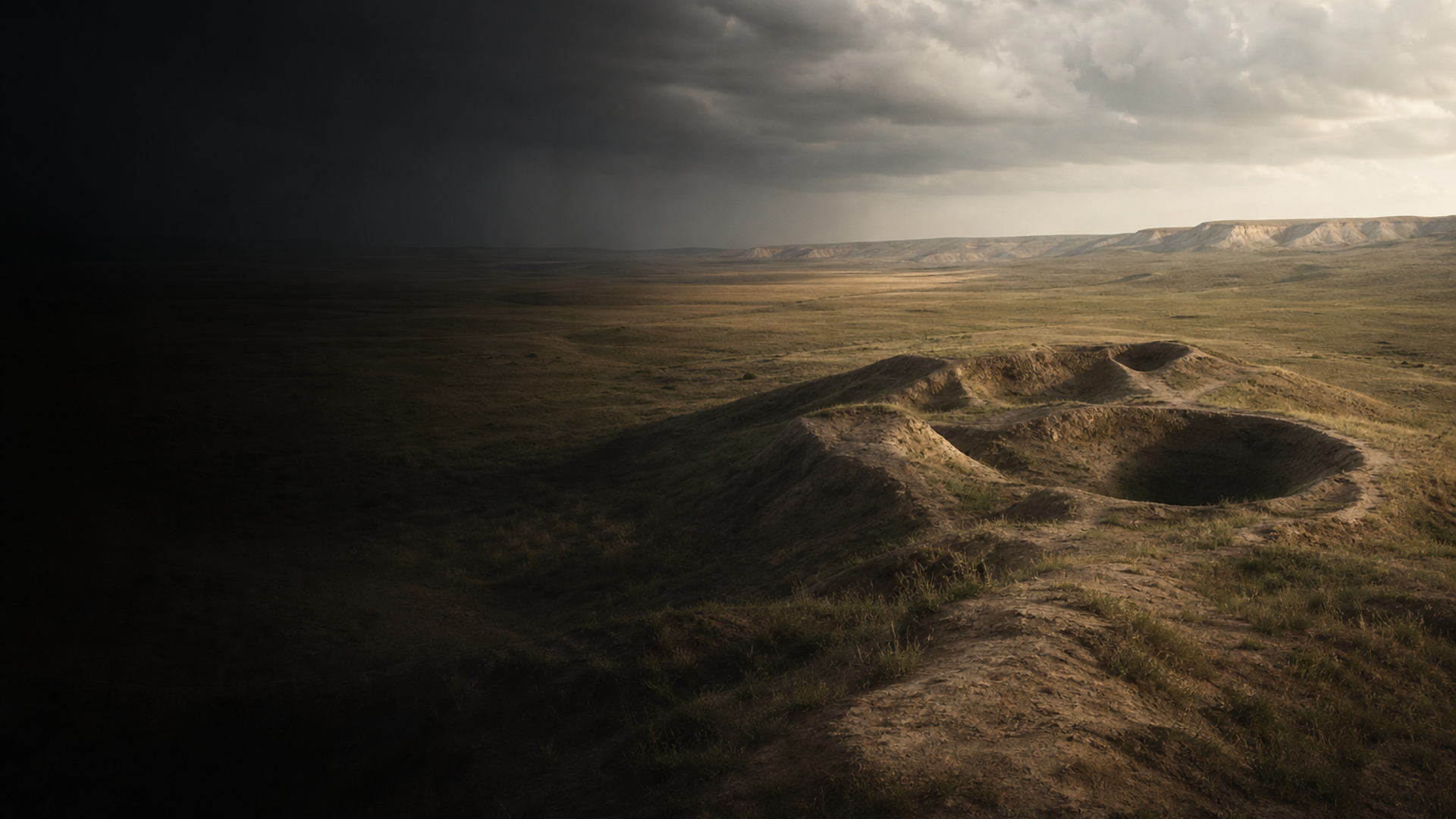
The Mereke assemblage sits within a broad Middle Bronze Age horizon on the western Kazakh steppe (site: Mereke, Taskala district, Zapadno‑Kazahstanskaya Oblast). Archaeological data indicates occupation between c. 3315 and 2032 BCE. The material landscape of this era is often dominated by mobile pastoral strategies and transient settlements; at Mereke the imprint is delicate, a palimpsest of ephemeral hearths, possible habitation features and funerary traces.

Geographically, Mereke occupies a crossroads where southern steppe routes meet more northerly corridors into the forest‑steppe. This liminal position likely shaped cultural exchange: trade in metal objects and flint, seasonal pastoral calendars, and movement of people. Limited excavation and small sample sizes mean the picture is fragmentary. However, both the archaeological context and burial practices associated with Middle Bronze assemblages in the region point toward communities organized around livestock, kin groups and flexible use of landscape.

Emergence at Mereke therefore appears less like the sudden arrival of a people and more like the layering of steppe lifeways — mobile herding, regional networks, and shifting alliances — whose traces are preserved unevenly in soil and bone.

  • Site: Mereke, Taskala district, West Kazakhstan
  • Date range: c. 3315–2032 BCE (Middle Bronze Age)
  • Archaeological data indicates pastoral, mobile lifeways; evidence is fragmentary

Daily Life & Society

Life on the move: seasons, herds, and kin

The everyday world suggested by Mereke is cinematic: summer pastures ripening beneath wide skies, winter shelters clustered near water, and flocks and herds shaping social rhythms. Archaeological indicators typical for Middle Bronze Age steppe communities — light dwellings, corrals, ephemeral storage pits and curated personal objects — hint at a society organized around mobility and animal husbandry. Food economy was likely dominated by sheep, goats, cattle and horses, with hunting and gathering as seasonal supplements.

Social life may have centered on extended family units and lineage ties. Funerary traces from the region often emphasize selective deposition of goods and differentiated burial treatments, suggesting emerging social distinctions, but the Mereke sample is small and does not allow firm conclusions about hierarchy. Craft and exchange also mattered: metalworking debris and exotic raw materials in comparable steppe sites imply long‑distance contacts, seasonal trade fairs and the movement of artisans.

Daily life at Mereke was thus probably a blend of intimate household routines and wide‑ranging connections — a rhythm of pastures, migration corridors, and cultural exchange that left fertile but fleeting signatures in the archaeology.

  • Economy likely centered on pastoralism (sheep, goats, cattle, horses)
  • Social organization probably kin‑based and mobile; evidence for status differentiation is limited

Genetic Profile

Tracing ancestry in ancient genomes

Three genome samples from Mereke provide a narrow but informative glimpse into biological ancestry. Two of the three male individuals carry Y‑DNA haplogroup N — a paternal lineage today frequent in parts of northern Eurasia and often associated with Uralic‑speaking and northerly steppe groups. Maternal lineages in the sample include I1b, U4 and a broader U clade, mitochondrial haplogroups commonly observed across northern and eastern Europe and the Eurasian steppe.

Taken together, the aDNA suggests a mixture of northerly paternal affinities and maternally derived lineages that have broad west‑Eurasian distributions. This pattern is compatible with a population nestled between forest‑steppe and open steppe ecotones, absorbing gene flow from multiple directions. However, the sample count is just three — far below thresholds for population‑level inference. Because fewer than ten samples are available, any demographic or linguistic associations remain highly tentative.

Genetic signals from nearby and later Bronze Age assemblages indicate that the steppe was dynamic, with multiple incoming and local components. The Mereke data add a cautionary note: even in a single site, individuals can carry different maternal and paternal stories, reflecting mobility, marriage networks and the complex tapestry of Bronze Age population structure.

  • Two of three males carry Y‑DNA haplogroup N — suggesting northern Eurasian paternal links
  • mtDNA diversity (I1b, U4, U) indicates maternal connections to broad Eurasian steppe and northern European lineages; conclusions are preliminary

Legacy & Modern Connections

Echoes into the present

The genetic and archaeological traces from Mereke resonate with later patterns across the Kazakh steppe: a mosaic of lineages, languages and lifeways shaped by mobility. Haplogroup N's presence connects the site to a broader northern Eurasian genetic landscape, while maternal U and I lineages reflect long‑standing west‑Eurasian maternal continuity on the steppe. These threads help explain why modern populations of Kazakhstan and neighboring regions carry a complex admixture of western and eastern Eurasian ancestry.

Because of the limited sample size, Mereke should be read as a tantalizing vignette rather than a comprehensive portrait. Future excavations and additional ancient genomes from Taskala district and surrounding regions will be essential to clarify patterns of continuity, migration, and cultural transmission.

For visitors and researchers alike, Mereke offers a cinematic reminder: individual lives — shepherds, mothers, wandering kin — leave faint but decipherable marks that, when combined with genetics, illuminate the deep human stories of the Bronze Age steppe.

  • Genetic signals suggest continuity and interaction between northern Eurasian and steppe groups
  • Findings are preliminary; more samples needed to map long‑term population change

KI-Assistent

KI-Assistent von DNAGENICS

Funktion freischalten
Stellen Sie Fragen zur Kultur Mereke Middle Bronze Echoes. Unser KI-Assistent kann genetische Befunde, historischen Kontext, archäologische Belege und moderne Verbindungen erläutern.
Beispiel einer KI-Analyse

Die Mereke Middle Bronze Echoes-Kultur ist ein faszinierendes Kapitel der Menschheitsgeschichte...

Genetische Analysen zeigen Übereinstimmungen mit früheren Populationen und Hinweise auf besondere Anpassungen und kulturelle Innovationen. Alte DNA-Proben liefern Einblicke in Migrationsmuster, soziale Strukturen und genetische Verbindungen zwischen Populationen.

Dies ist eine Vorschau der KI-Analyse. Schalten Sie den vollständigen KI-Assistenten frei, um detaillierte Einblicke zu erkunden:

  • Genetische Zusammensetzung und genetische Ähnlichkeit
  • Migrationsmuster und Ursprünge
  • Alltag und kulturelle Praktiken
  • Genetischer Bezug zu heutigen Populationen
Use code for 30% off • Expires Nov 14




