Miaozigou: Voices of the Middle Neolithic

Download PDF creates a visual, rasterized copy. Use Print for selectable text and better assistive-technology support.

Bericht wird vorbereitet

Verfügbare Informationen und Referenzen werden geladen

Verbindung mit dem archäologischen Quellenbestand...

Alte Quellen werden zusammengestellt

Zum Hauptinhalt springen
Miaozigou: Voices of the Middle Neolithic
Zivilisations-Spotlight

Miaozigou: Voices of the Middle Neolithic

Three genomes from Inner Mongolia illuminate northern Neolithic lifeways and ancestry — small sample, big implications.

3550 CE - 3050 BCE
Inner Mongolia, China (Miaozigou site)
Scrollen zum Start
Kapitel I

Die Geschichte

Die Miaozigou: Voices of the Middle Neolithic-Kultur verstehen

Middle Neolithic Miaozigou (c. 3550–3050 BCE), from the Miaozigou site in Uraharura, Qahar Youyi Qianqi, Inner Mongolia, yields three genomes. Two carry Y-DNA C; mtDNA includes A14, C, D. Limited samples suggest links to northern East Asian lineages; conclusions remain preliminary.

Time Period

c. 3550–3050 BCE (Middle Neolithic)

Region

Inner Mongolia, China (Miaozigou site)

Common Y-DNA

C (2 of 3)

Common mtDNA

A14, C, D (each in 1 sample)

Kapitel II

Zeitleiste

Zentrale Momente in der Geschichte dieser Kultur

3300 BCE

Miaozigou middle Neolithic occupation

Occupations at the Miaozigou site reflect settled households, pottery production, and participation in regional networks around c. 3300 BCE.

Kapitel III

Origins & Emergence

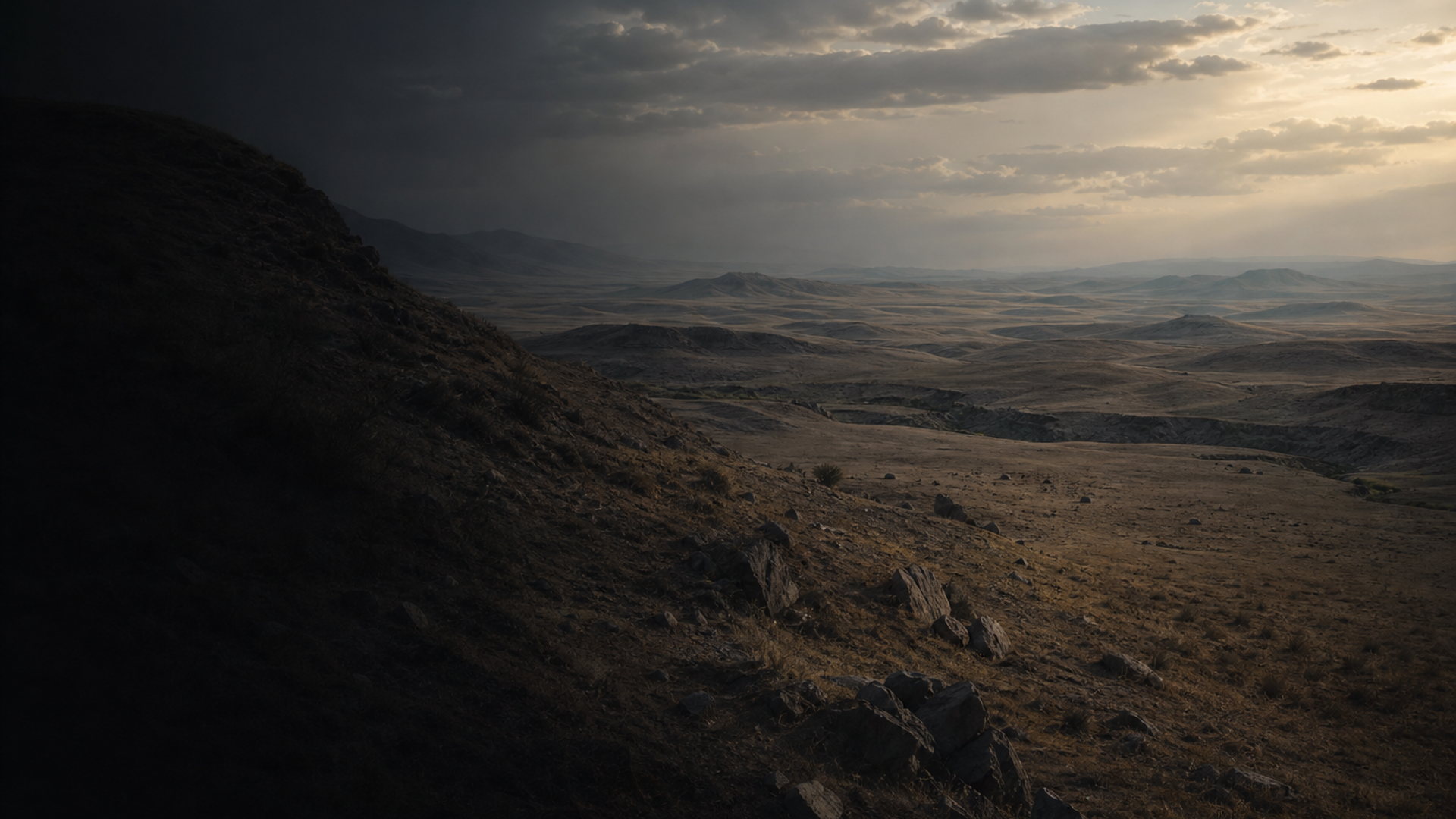
The Miaozigou occupation sits in the cool plains and river valleys of what is today eastern Inner Mongolia. Archaeological data indicates intermittent settlement at the Miaozigou site (Uraharura, Qahar Youyi Qianqi) during the Middle Neolithic, roughly between 3550 and 3050 BCE. The material record from Miaozigou-related assemblages includes pottery, ground stone tools, and house features that point to settled communities experimenting with cultivation, seasonal mobility, and local resource exploitation.

Cinematic landscapes — winds sweeping across grasslands and reed-lined streams — frame a period when human groups in northern China were negotiating a mosaic of wild resources and emerging domesticated plants and animals. Limited evidence suggests that millet cultivation was part of the broader subsistence economy in northern China by this time; archaeobotanical remains from the region indicate early millet use, though direct, abundant plant data from Miaozigou itself is sparse.

In cultural terms, Miaozigou stands within a web of Middle Neolithic interaction across northeastern China. Pottery styles and lithic technologies show affinities with contemporaneous northern cultures, implying networks of exchange and shared knowledge rather than a single, uniform lifeway. Given the small genetic sample available, any narrative linking Miaozigou peoples to later populations must be tentative and framed as a working hypothesis pending broader sampling.

  • Miaozigou site: Uraharura, Qahar Youyi Qianqi, Inner Mongolia
  • Middle Neolithic occupation: c. 3550–3050 BCE
  • Archaeological evidence suggests pottery, house features, and early millet in the regional record
Kapitel IV

Daily Life & Society

Life in the Miaozigou world likely blended settled tasks with seasonal movement. Archaeological features such as house foundations and storage pits at related regional sites indicate households organized around processing plant foods and craft production. Ground stone tools and pottery forms imply activities like grain processing, cooking, and storage. The visual image is domestic and tactile: hands turning pottery, stones worn smooth by repeated grinding, and smoke from hearths marking the rhythm of days.

Hunting, fishing, and foraging of wild plants probably complemented early cultivation. Faunal remains from the broader northern Chinese Neolithic point to a mixed economy where people exploited deer, boar, and freshwater fish alongside cultivated cereals. Socially, small aggregated settlements and burial practices hint at kin-based groups with emerging differentiation, but extensive hierarchical complexity is not clearly visible in the Miaozigou record.

Material culture and site layout suggest dense local networks of interaction — exchange of pottery styles, lithic raw materials, and possibly ritual objects — connecting Miaozigou communities with neighboring groups. However, archaeological data specific to Miaozigou remains incomplete, and many reconstructions of social life rely on parallels from better-sampled contemporaneous sites.

  • Mixed subsistence: early cultivation likely paired with hunting and foraging
  • Household crafts and food processing visible in regional archaeological assemblages
Kapitel V

Genetic Profile

Three ancient genomes from the Miaozigou site (dated to c. 3550–3050 BCE) provide a narrow but evocative window into people of northern Neolithic China. Two of the three male individuals carry Y-chromosome haplogroup C, and the three mitochondrial lineages are A14, C, and D. These haplogroups are broadly associated with northern and northeastern Asian populations in the prehistoric and modern record.

Y-haplogroup C has deep roots across East Asia and Siberia and appears in multiple ancient contexts; its presence in two Miaozigou males aligns with northern Eurasian paternal connections. Mitochondrial haplogroups A, C, and D are common markers of northern East Asian maternal ancestry and are frequently encountered in ancient and present-day populations across East Asia and the Russian Far East.

Crucially, the sample size is very small (n = 3). Limited sampling means population-wide inferences are preliminary: frequencies observed here may not represent the full diversity of the Miaozigou community. Archaeogenetic signals are consistent with continuity of northern East Asian lineages in this region, but alternative scenarios — local diversity, drift, or connections with neighbouring groups — remain plausible. Future sampling across more Miaozigou burials and nearby sites will be essential to test whether these haplogroups reflect broader demographic patterns or a restricted subset of the community.

  • Two of three males carry Y-DNA haplogroup C
  • mtDNA lineages: A14, C, D — consistent with northern East Asian maternal ancestry
Kapitel VI

Legacy & Modern Connections

The genetic and archaeological threads from Miaozigou weave into a longer tapestry of northern East Asia. The observed haplogroups (Y-C; mtDNA A, C, D) echo lineages that persist in many modern populations across northeastern China and Siberia, suggesting at least partial demographic continuity in the broad region. Cultural legacies — pottery traditions, house-building techniques, and early cultivation practices — contributed to the mosaic of Neolithic adaptations that would shape later societies.

Yet the story must be told with restraint. With only three genomes, the Miaozigou genetic snapshot is a beginning, not a conclusion. Archaeological nuance and expanded ancient DNA sampling are needed to map how Miaozigou people relate to subsequent cultures in Inner Mongolia, northern China, and beyond. When integrated carefully, archaeology and genetics together will illuminate how everyday life, mobility, and ancestry combined to shape the long history of this landscape.

  • Genetic affinities align with broader northern East Asian lineages, suggesting regional continuity
  • Interpretations remain tentative until more archaeological and genetic sampling is available
KI-gestützt

KI-Assistent

Stellen Sie Fragen zur Miaozigou: Voices of the Middle Neolithic-Kultur

KI-Assistent von DNAGENICS

Funktion freischalten
Stellen Sie Fragen zur Kultur Miaozigou: Voices of the Middle Neolithic. Unser KI-Assistent kann genetische Befunde, historischen Kontext, archäologische Belege und moderne Verbindungen erläutern.
Beispiel einer KI-Analyse

Die Miaozigou: Voices of the Middle Neolithic-Kultur ist ein faszinierendes Kapitel der Menschheitsgeschichte...

Genetische Analysen zeigen Übereinstimmungen mit früheren Populationen und Hinweise auf besondere Anpassungen und kulturelle Innovationen. Alte DNA-Proben liefern Einblicke in Migrationsmuster, soziale Strukturen und genetische Verbindungen zwischen Populationen.

Dies ist eine Vorschau der KI-Analyse. Schalten Sie den vollständigen KI-Assistenten frei, um detaillierte Einblicke zu erkunden:

  • Genetische Zusammensetzung und genetische Ähnlichkeit
  • Migrationsmuster und Ursprünge
  • Alltag und kulturelle Praktiken
  • Genetischer Bezug zu heutigen Populationen

Weitere antike Kulturen erkunden

Geschichten von Zivilisationen aus der antiken Welt entdecken

Use code for 30% off • Expires Nov 08