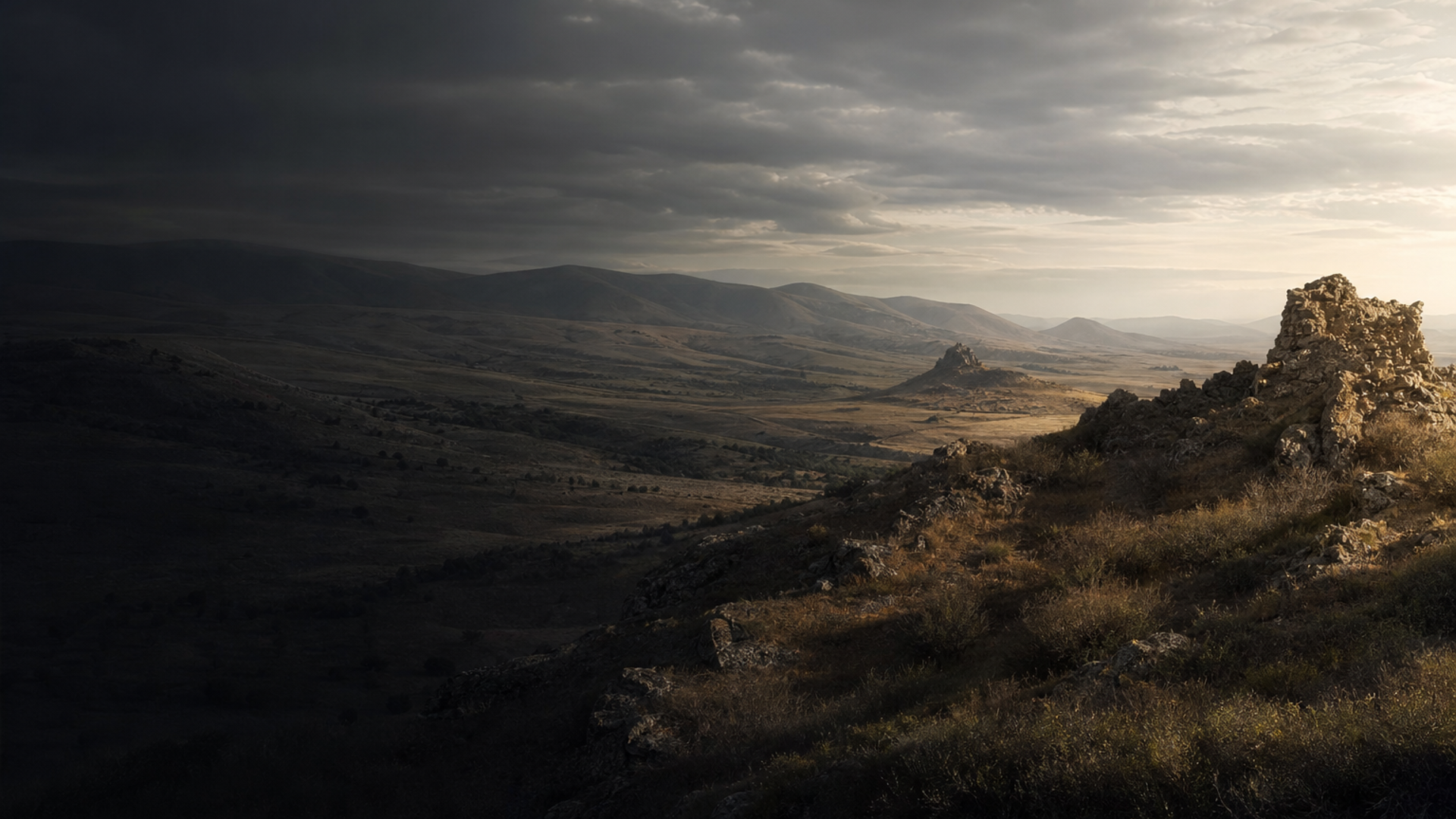
Middle–Late Avar Hungary

Download PDF creates a visual, rasterized copy. Use Print for selectable text and better assistive-technology support.

Bericht wird vorbereitet

Verfügbare Informationen und Referenzen werden geladen

Verbindung mit dem archäologischen Quellenbestand...

Alte Quellen werden zusammengestellt

Zum Hauptinhalt springen
Middle–Late Avar Hungary
Zivilisations-Spotlight

Middle–Late Avar Hungary

650–804 CE Avar communities on the Hungarian plain where archaeology and DNA reveal layered origins

650 CE - 804 CE
Carpathian Basin (modern Hungary)
Scrollen zum Start
Kapitel I

Die Geschichte

Die Middle–Late Avar Hungary-Kultur verstehen

Forty-eight genomes from Middle to Late Avar burials (650–804 CE) in Hungary reveal a tapestry of steppe, local European and West Asian ancestries. Archaeology at Kunszállás-Fülöpjakab, Kunpeszér and Rákóczifalva combines with DNA to illuminate migration, mobility and social diversity in the Carpathian Basin.

Time Period

650–804 CE (Middle–Late Avar)

Region

Carpathian Basin (modern Hungary)

Common Y-DNA

J (11), R (4), N (3), GHIJK (1), C (1)

Common mtDNA

H (11), G (5), M (5), F (3), D (3)

Kapitel II

Zeitleiste

Zentrale Momente in der Geschichte dieser Kultur

568 CE

Avar confederation established in the Carpathian Basin

Medieval sources and archaeology mark the arrival and consolidation of Avar groups in the region, initiating centuries of Avar presence in the basin.

Kapitel III

Origins & Emergence

The Middle–Late Avar period (c. 650–804 CE) is an era of transformation across the Hungarian plain. Archaeological strata and rich cemetery assemblages at sites such as Kunszállás-Fülöpjakab (Bács-Kiskun County), Kunpeszér-Felsőpeszéri út and Rákóczifalva-Bagi-földek (Szolnok region) reveal a people shaped by steppe mobility, local European traditions and long-distance connections.

Material culture — horse trappings, iron weaponry, belt sets and distinct grave orientations — signals continuity with earlier Avar elite practices while also showing regional variability typical of a confederation of groups. Archaeological data indicates funerary customs shifted over time, reflecting changing social hierarchies and contacts with neighboring polities (Byzantine, Slavic and Bulgar groups).

Genetic evidence from 48 analyzed individuals provides a biological window onto these processes. The mixture of paternal haplogroups (notably a predominance of J but also R and N) and diverse maternal lineages suggests layered origins: some lineages trace to steppe and Inner Asian sources, others to the broader West Eurasian and local European gene pool. Limited evidence suggests that migration into the Carpathian Basin during the 6th–7th centuries brought a diversity of peoples whose descendants formed the heterogeneous Avar communities we observe archaeologically.

Because archaeological and genetic datasets each have biases (preservation, burial selection, sampling), interpretations remain provisional and benefit from continued excavation and analysis.

  • Avar material culture shows steppe roots plus local adaptation
  • Key cemetery sites: Kunszállás-Fülöpjakab, Kunpeszér, Rákóczifalva
  • Genetics indicate multi-directional ancestry and regional admixture
Kapitel IV

Daily Life & Society

Archaeology paints the Middle–Late Avar world as both mobile and rooted. Cemeteries at Kunszállás and Kunpeszér include richly furnished graves with horse gear, harness plates and weaponry: markers of mounted status and martial identity for certain individuals. Yet many burials are modest, indicating a spectrum of wealth and roles within communities.

Craft specialization is visible in metalwork and textile fragments; ironworking and skilled belt-making appear regionally distributed. Ceramic types show continuity with local pottery traditions, suggesting that everyday domestic life often followed indigenous patterns even as elite material culture introduced new fashions. Zooarchaeological and botanical remains (where preserved) indicate mixed agropastoral economies: domesticates were central, but mobility and horse management remained culturally important.

Grave orientations, gendered artifact distributions and spatial clustering in cemeteries suggest household or kin-based community organization with differentiated status. Archaeological data indicates interaction with Byzantine and Slavic neighbors through imported goods and stylistic influences, pointing to trade, tribute and diplomatic exchange.

Mobility is a key theme: isotopic studies in comparable contexts often show life histories that include childhood origin outside the burial place. Combined with genetic diversity from 48 samples, the picture is of communities where migrants and locals lived, married and exchanged material culture — producing the characteristic Avar social landscape of the Carpathian Basin.

  • Evidence of mounted elites alongside modest burials
  • Mixed agropastoral economy with specialized metal and textile crafts
Kapitel V

Genetic Profile

Forty-eight Middle–Late Avar individuals provide a moderate-sized dataset for the Carpathian Basin (650–804 CE). The Y-chromosome distribution includes a notable count of haplogroup J (11 individuals), followed by R (4), N (3), single occurrences of GHIJK and C. Maternal diversity is pronounced: haplogroup H is most frequent (11), with eastern Eurasian-associated lineages G (5), M (5), F (3) and D (3) present.

Interpretation: the mixed maternal profile demonstrates significant input from both West Eurasian and East Eurasian maternal ancestries. Haplogroups M, D and certain sublineages of G and F are often associated with Inner Asian or Siberian origins in Eurasian prehistory, suggesting maternal gene flow from eastern sources into Avar communities. The presence of Y-DNA haplogroup N and C, and to a lesser degree J, further supports paternal links that include steppe and possibly Inner Asian ancestries; haplogroup R reflects wider European and Eurasian paternal lineages.

These patterns align with a model of multi-directional admixture: migrating groups with steppe and Inner Asian components mixed with local Carpathian Basin populations and with people connected to West Asian networks. The prominence of J among male lineages could indicate male-mediated gene flow from regions where J is common, but caution is needed: demographic processes (founder effects, social stratification of burials) can skew Y-chromosome frequencies. Because the sample size is 48, conclusions are moderate in confidence and should be refined with larger, geographically broader datasets and chronological resolution.

Genetic data therefore complements archaeological inference: an Avar population that was biologically diverse, mobile and connected across Eurasia.

  • Mixture of West Eurasian and East Eurasian maternal lineages (H, G, M, F, D)
  • Paternal mix with J dominant, plus R, N and single C and GHIJK — indicating multilayered male ancestries
Kapitel VI

Legacy & Modern Connections

The Avar period left an imprint on the cultural landscape of the Carpathian Basin: burial traditions, metalwork styles and the memory of a steppe-oriented polity feature in medieval sources and archaeological continuities. Genetically, the Avar contribution to present-day Hungarians is detectable but limited: modern Hungarian genomes are a palimpsest of many past migrations (Slavic, Turkic, Germanic, Magyar) and subsequent mixing.

Archaeogenetic data indicate that while some lineages from the Avar era persist regionally, wholesale continuity is unlikely. The diverse maternal and paternal signals in the 48-sample dataset caution against simple ancestry narratives; instead they point to a legacy of admixture and cultural transmission. Elements of Avar material culture and equestrian symbolism influenced later medieval art and craft traditions in the Carpathian Basin, but genetic impact must be understood as one thread within a complex tapestry of population change.

Ongoing paleogenomic sampling across broader temporal and geographic scales will clarify how much Avar-era people contributed biologically to later populations and to what extent their cultural practices were inherited or transformed.

  • Avar culture influenced regional medieval material traditions
  • Genetic contribution to modern Hungarians exists but is one part of a complex admixture history
KI-gestützt

KI-Assistent

Stellen Sie Fragen zur Middle–Late Avar Hungary-Kultur

KI-Assistent von DNAGENICS

Funktion freischalten
Stellen Sie Fragen zur Kultur Middle–Late Avar Hungary. Unser KI-Assistent kann genetische Befunde, historischen Kontext, archäologische Belege und moderne Verbindungen erläutern.
Beispiel einer KI-Analyse

Die Middle–Late Avar Hungary-Kultur ist ein faszinierendes Kapitel der Menschheitsgeschichte...

Genetische Analysen zeigen Übereinstimmungen mit früheren Populationen und Hinweise auf besondere Anpassungen und kulturelle Innovationen. Alte DNA-Proben liefern Einblicke in Migrationsmuster, soziale Strukturen und genetische Verbindungen zwischen Populationen.

Dies ist eine Vorschau der KI-Analyse. Schalten Sie den vollständigen KI-Assistenten frei, um detaillierte Einblicke zu erkunden:

  • Genetische Zusammensetzung und genetische Ähnlichkeit
  • Migrationsmuster und Ursprünge
  • Alltag und kulturelle Praktiken
  • Genetischer Bezug zu heutigen Populationen

Weitere antike Kulturen erkunden

Geschichten von Zivilisationen aus der antiken Welt entdecken

Use code for 35% off • Expires Nov 09