Modern Cyprus: Nicosia DNA Portrait

Download PDF creates a visual, rasterized copy. Use Print for selectable text and better assistive-technology support.

Bericht wird vorbereitet

Verfügbare Informationen und Referenzen werden geladen

Verbindung mit dem archäologischen Quellenbestand...

Alte Quellen werden zusammengestellt

Zum Hauptinhalt springen
Modern Cyprus: Nicosia DNA Portrait
Zivilisations-Spotlight

Modern Cyprus: Nicosia DNA Portrait

A concise, evidence‑aware view of present-day Cypriot ancestry from Nicosia samples

2000 CE
Cyprus (Nicosia)
Scrollen zum Start
Kapitel I

Die Geschichte

Die Modern Cyprus: Nicosia DNA Portrait-Kultur verstehen

This entry links archaeological context and genetic data for Modern Cyprus (Nicosia, 2000 CE). Based on eight samples, conclusions are preliminary. Archaeological patterns and regional genetics suggest layered Eastern Mediterranean ancestry; limited sampling highlights the need for broader datasets.

Time Period

2000 CE (Modern)

Region

Cyprus (Nicosia)

Common Y-DNA

Not reported / undetermined (limited data)

Common mtDNA

Not reported / undetermined (limited data)

Kapitel II

Zeitleiste

Zentrale Momente in der Geschichte dieser Kultur

1960 CE

Independence of Cyprus

Cyprus gained independence from British rule in 1960; modern statehood reshaped demographics and historic preservation in urban centers like Nicosia.

Kapitel III

Origins & Emergence

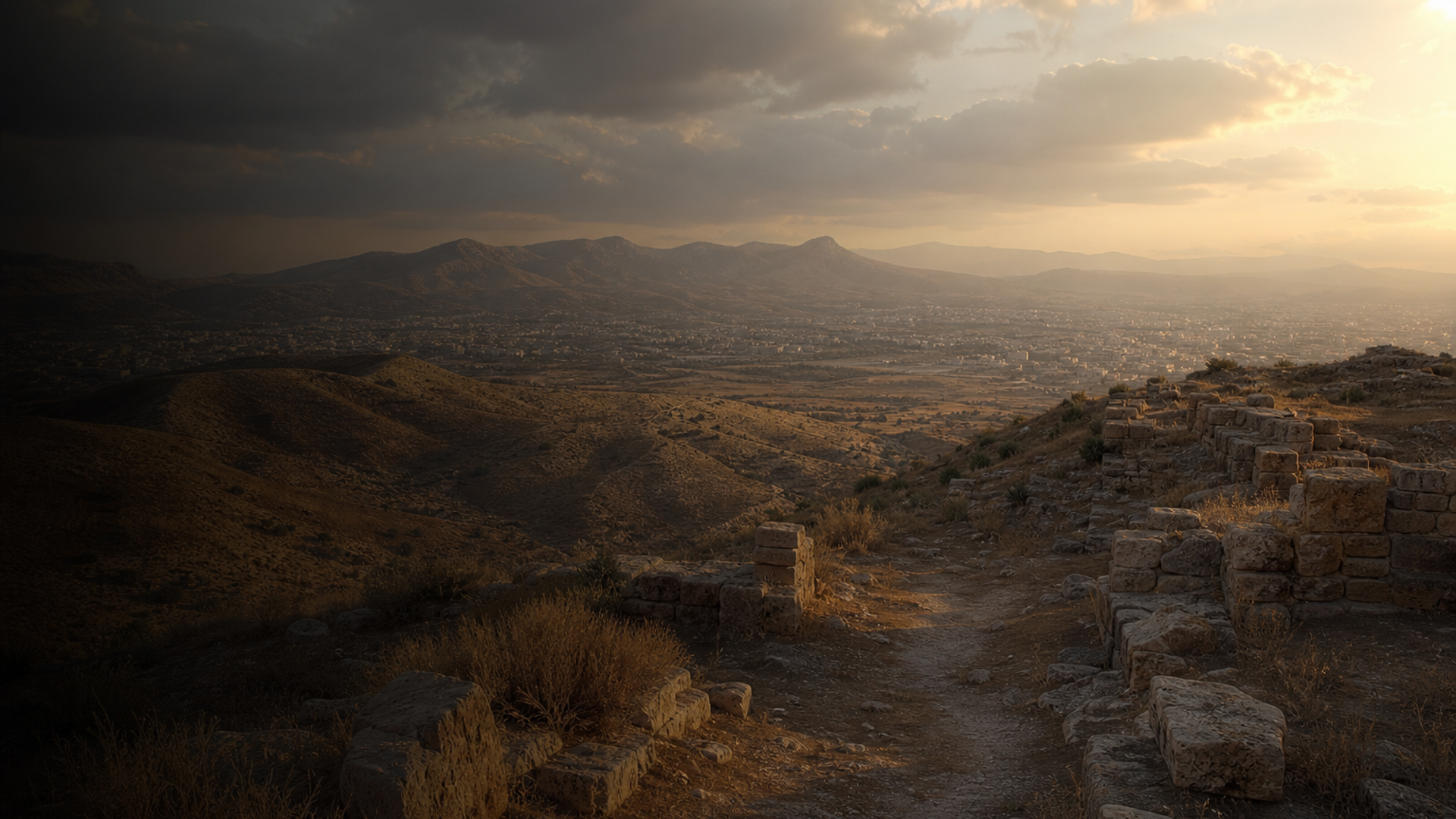
The population labeled here as Modern Cyprus is anchored in the living city of Nicosia and the island’s long urban traditions. Archaeological data indicates Nicosia occupies a palimpsest of historical layers—classical, Byzantine, Lusignan, Venetian, Ottoman and British—each contributing to the city’s material culture and demographic history. In a cinematic sense, the island reads like strata of memory: stone walls and street plans reveal interruptions and continuities in habitation, trade and migration that shape modern identity.

For the year 2000 CE, archaeological evidence is primarily contextual: urban excavations, historic cemeteries, and curated museum collections provide material anchors such as ceramics, architectural remains and recorded funerary practices. These remains point to centuries of connectivity across the Eastern Mediterranean: maritime trade, population movements from Anatolia and the Levant, and historical ties with Greece and the Near East. Genetic sampling from eight individuals in Nicosia must be seen against this backdrop: while archaeological indicators suggest layered ancestry, small genetic sample sizes limit our ability to resolve the timing and magnitude of specific migrations. Limited evidence suggests continuity with broader Cypriot and Eastern Mediterranean population patterns, but precise origins and micro‑demographic events remain unresolved without larger, spatially diverse sampling.

  • Nicosia is a multi‑layered urban site with continuous habitation.
  • Material culture reflects long Eastern Mediterranean connectivity.
  • Small genetic sample size limits fine-scale origin models.
Kapitel IV

Daily Life & Society

Modern daily life in Nicosia—around the year 2000 CE—is best reconstructed through a blend of archaeological observation, documentary history, and ethnographic continuity. Urban excavations expose domestic architecture, market areas and street patterns that reflect a city functioning as both administrative center and commercial hub. Pottery, personal items, and the layout of homes point to dense, multi‑generational households, with social life organized around neighborhoods, markets and religious institutions.

Archaeological indicators such as household refuse, repaired masonry, and re‑used building stone suggest economic resilience and adaptive reuse, hallmarks of cities with long histories. Where human remains are available in modern contexts, they often come from municipal or church cemeteries, which provide information on burial practice but are subject to recent disturbance—urban development, conflict and modern infrastructure projects. These realities complicate direct archaeological inference about health, diet and mobility; here, genetic data offers a complementary lens. DNA can illuminate kinship networks and ancestry profiles that artifacts alone cannot, but the current Nicosia dataset (eight samples) is too small to reconstruct population‑level social structures. Accordingly, archaeological signals of trade, craft specialization and neighborhood cohesion remain essential for understanding everyday life.

  • Urban archaeology shows dense, multi‑generational households.
  • Material reuse and repair indicate resilience in the urban economy.
Kapitel V

Genetic Profile

Genetic data from the Modern Cyprus entry are scarce: eight samples from Nicosia dated around 2000 CE. Because this is a small, localized dataset (<10 samples), any inference must be explicitly preliminary. Archaeological context helps frame expectations: centuries of trade and migration across the Eastern Mediterranean make a mixed genetic background plausible, with contributions from Anatolian, Levantine, Greek and other regional sources. However, the available samples lack reported common Y‑DNA and mtDNA haplogroup summaries, so concrete statements about paternal or maternal lineage frequencies are not possible.
What can be said with scientific caution: the archaeological record’s evidence of long‑distance connections aligns with regional genetic studies that find gradients of ancestry across the eastern Mediterranean. These patterns often reflect layered admixture events rather than single migrations. For this Nicosia set, genetic analyses could potentially reveal: recent local continuity, signals of recent admixture consistent with 19th–20th century mobility, or affinities with neighboring populations. Yet, with only eight individuals, distinguishing local microstructure from random sampling noise is difficult. Future work should expand the geographic and temporal scope, compare modern and historical cohorts, and integrate uniparental markers and autosomal data to detect subtle ancestry components. Until then, conclusions remain tentative and framed by archaeological uncertainty.

  • Dataset of eight Nicosia samples is too small for definitive conclusions.
  • Archaeological connectivity suggests mixed Eastern Mediterranean ancestry.
Kapitel VI

Legacy & Modern Connections

Modern Cypriot identity is a living palimpsest: the island’s material culture, built environment and genetic signals all carry echoes of past contacts. Archaeological traces in Nicosia—streets, churches, Ottoman and colonial layers—anchor community memory and social continuity. Genetically, the island sits at a crossroads; even if current samples are limited, they point toward a broader narrative of layered ancestry that mirrors the visible urban layers.

For present and future ancestry research, the key legacy is methodological: integrating precise archaeological provenience, robust sampling strategies, and transparent reporting of sample sizes and marker data. Only with larger, well-documented datasets can we move from evocative narrative to quantifiable models of recent Cypriot ancestry. Until then, interpretations should highlight continuity and connectivity while stressing the preliminary status of small-sample genetic findings.

  • Modern identity reflects millennia of cultural layering and connectivity.
  • Robust, expanded sampling is required to clarify genetic legacies.
KI-gestützt

KI-Assistent

Stellen Sie Fragen zur Modern Cyprus: Nicosia DNA Portrait-Kultur

KI-Assistent von DNAGENICS

Funktion freischalten
Stellen Sie Fragen zur Kultur Modern Cyprus: Nicosia DNA Portrait. Unser KI-Assistent kann genetische Befunde, historischen Kontext, archäologische Belege und moderne Verbindungen erläutern.
Beispiel einer KI-Analyse

Die Modern Cyprus: Nicosia DNA Portrait-Kultur ist ein faszinierendes Kapitel der Menschheitsgeschichte...

Genetische Analysen zeigen Übereinstimmungen mit früheren Populationen und Hinweise auf besondere Anpassungen und kulturelle Innovationen. Alte DNA-Proben liefern Einblicke in Migrationsmuster, soziale Strukturen und genetische Verbindungen zwischen Populationen.

Dies ist eine Vorschau der KI-Analyse. Schalten Sie den vollständigen KI-Assistenten frei, um detaillierte Einblicke zu erkunden:

  • Genetische Zusammensetzung und genetische Ähnlichkeit
  • Migrationsmuster und Ursprünge
  • Alltag und kulturelle Praktiken
  • Genetischer Bezug zu heutigen Populationen

Weitere antike Kulturen erkunden

Geschichten von Zivilisationen aus der antiken Welt entdecken

Use code for 35% off • Expires Nov 09




