Modern Finland: Living Landscape

Download PDF creates a visual, rasterized copy. Use Print for selectable text and better assistive-technology support.

Bericht wird vorbereitet

Verfügbare Informationen und Referenzen werden geladen

Verbindung mit dem archäologischen Quellenbestand...

Alte Quellen werden zusammengestellt

Zum Hauptinhalt springen
Modern Finland: Living Landscape
Zivilisations-Spotlight

Modern Finland: Living Landscape

A present-day population portrait linking archaeology, place, and genomes

2000 CE
Finland (including Utsjoki, Enontekiö)
Scrollen zum Start
Kapitel I

Die Geschichte

Die Modern Finland: Living Landscape-Kultur verstehen

Contemporary Finland (2000 CE) sampled across Lapland and southern regions. Archaeological continuity and recent history meet genetic diversity in 104 modern samples, offering a baseline for comparing ancient northern European genomes.

Time Period

2000 CE (Modern)

Region

Finland (including Utsjoki, Enontekiö)

Common Y-DNA

Diverse; see Genetic Profile

Common mtDNA

Diverse; see Genetic Profile

Kapitel II

Zeitleiste

Zentrale Momente in der Geschichte dieser Kultur

2000 CE

Contemporary genomic sampling

A modern-genome baseline: 104 samples collected across Finland (including Utsjoki and Enontekiö) provide a present-day reference for archaeogenetic comparisons.

Kapitel III

Origins & Emergence

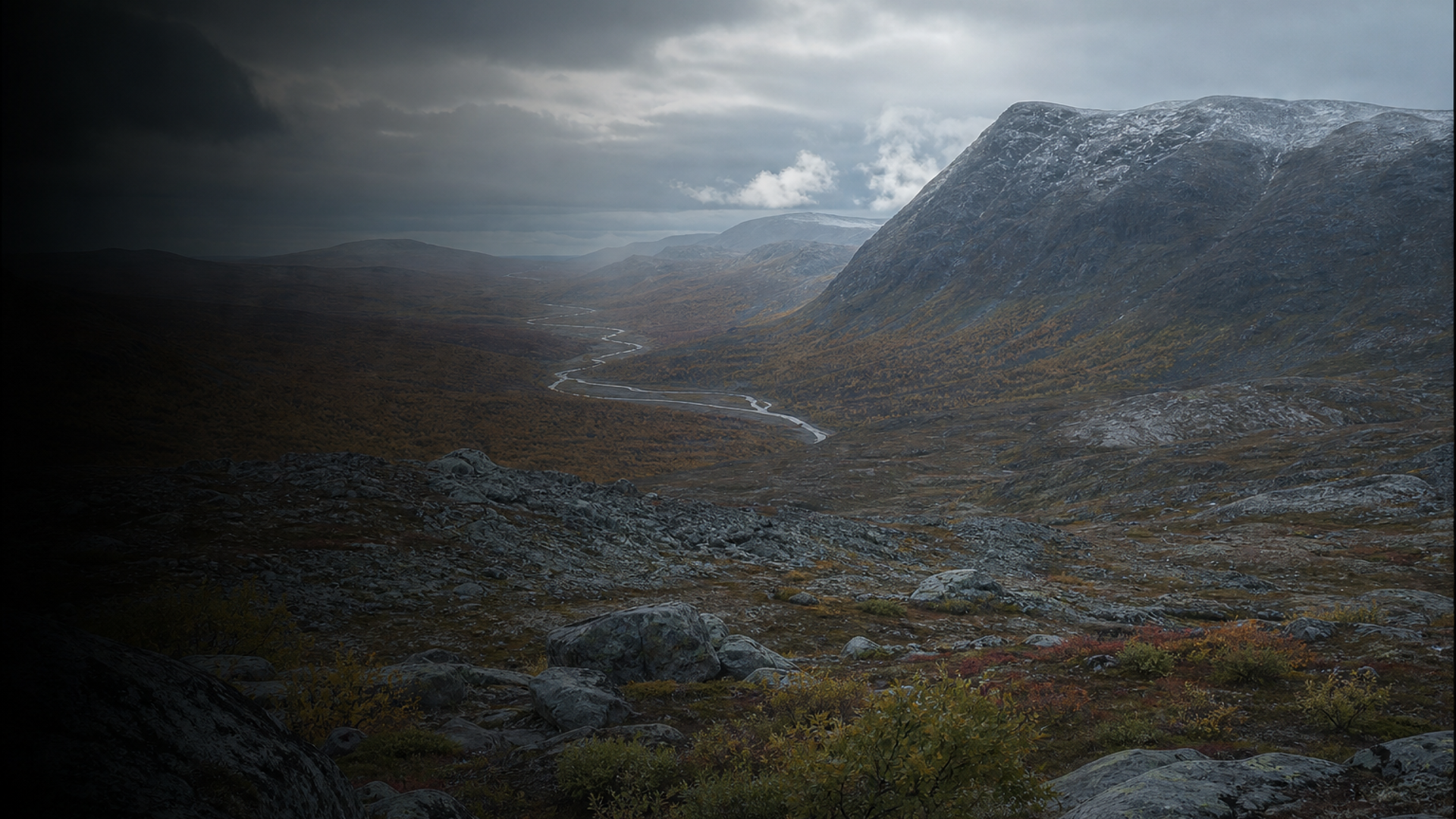
Across the granite ribs and boreal forests of Finland, the modern population is the latest layer in a long palimpsest of human habitation. Archaeological data indicates continuity of settlement in coastal and inland zones from the Iron Age through the medieval period into the present day, with shifting material cultures recorded at sites such as Turku and Oulu. In the far north, places like Utsjoki and Enontekiö lie within landscapes long used by Sámi peoples; archaeological traces there—seasonal camps, reindeer corrals, and small finds—speak to a distinctive northern lifeway.

For 2000 CE, archaeological evidence is primarily historical and ethnographic: built environments, cemeteries, church records, and recent excavations that document continuity and change over centuries. Limited evidence of very recent micro-regional shifts is supplemented by archival documentary sources rather than deep stratigraphic sequences. Where excavations intersect living memory, they illuminate persistence of place names, land use, and artisanal traditions.

Genetically, modern Finnish populations form a living endpoint of many earlier demographic processes—post-glacial recolonization, Iron Age mobility, medieval contacts with Scandinavia and Russia, and more recent national-scale movements. Archaeology provides the landscape and material anchors; genetics measures the invisible threads of ancestry that tie contemporary people to those past processes. Together they create a richer, though still incomplete, story of emergence.

  • Archaeological continuity from Iron Age to present in many regions
  • Northern sites (Utsjoki, Enontekiö) show continuity of Sámi lifeways
  • Modern landscape informed by centuries of mobility, trade, and settlement
Kapitel IV

Daily Life & Society

The everyday world of Finland in 2000 CE is ethnographically and historically rich: cities like Helsinki and Turku coexist with rural farmsteads and the tundra-edge communities of Lapland. Material culture is both modern and deeply rooted—wooden architecture, fishing and farming gear, and seasonal pastoral systems remain visible alongside industrial and digital infrastructures. Archaeological perspectives in the modern epoch rely heavily on historic-built environment studies, cemetery archaeology, and salvage excavations conducted during development projects.

In northern communities such as Utsjoki and Enontekiö, seasonal mobility linked to reindeer herding, fishing, and hunting shapes settlements and artifact distributions. Ethnoarchaeological work and historical records document craft traditions—textiles, boat-building, and leatherwork—that persist as cultural continuities. Elsewhere, coastal archaeology reveals layered harbors and trade networks that connected Finnish communities with Scandinavia, the Baltic, and Russia throughout the medieval and modern eras.

These material traces contextualize genetic data: patterns of kinship, marriage practices, and long-distance trade influence how genomes are distributed across landscapes. For example, historical matrilocal or patrilocal residence patterns can leave subtle signatures in mitochondrial or Y-chromosome diversity. Combined, archaeological and ethnographic evidence frames how people lived, moved, and formed the communities sampled in modern genetic studies.

  • Modern artifacts complement historic archaeology and ethnography
  • Northern lifeways (reindeer, fishing) leave distinctive archaeological signatures
Kapitel V

Genetic Profile

The dataset of 104 modern Finnish samples (collected across Finland, including Utsjoki and Enontekiö) provides a contemporary genetic snapshot useful as a baseline for comparing older ancient genomes. Modern Finnish populations show regional structure: northern communities often diverge in allele frequencies from southern and coastal populations, reflecting historical isolation, differing ancestry components, and localized demographic events. Archaeogenetic studies of northern Fennoscandia indicate admixture layers from ancient hunter-gatherers, incoming Uralic-speaking groups, medieval Scandinavian and East Baltic contacts, and more recent mobility.

For this sample set, specific haplogroup lists were not provided in the metadata; therefore conclusions here emphasize patterns rather than precise haplogroup frequencies. Genetic analyses of modern Finnish cohorts generally reveal higher levels of population structure than many neighboring regions, with detectable north–south and east–west clines. These patterns correlate with archaeological evidence: regions with long-standing settlement continuity and distinct cultural practices often show characteristic genetic signatures. The sample count of 104 is robust for many population-genetic comparisons, but regional substructure (especially within Lapland) means fine-scale inferences should be made cautiously. Where sample sizes for subregions are small, conclusions remain preliminary and benefit from integration with archaeological and historical data to avoid overinterpretation.

  • 104 modern samples form a useful baseline for ancient comparisons
  • Regional genetic structure mirrors archaeological and historical divisions
Kapitel VI

Legacy & Modern Connections

Modern Finns inhabit a landscape where deep-time processes remain legible: language, place names, built heritage, and demographic patterns all carry echoes of the past. Genetic baselines established from contemporary samples are invaluable to archaeogenetics because they help distinguish long-standing local ancestry from more recent mobility and admixture. In addition, they ground interpretations of ancient DNA by providing living reference points against which ancient genomes can be compared.

Caution is essential: modern population structure reflects recent historical events as well as ancient ones. Thus, archaeologists and geneticists working together can identify where cultural continuity aligns with biological continuity and where later movements have reshaped genetic landscapes. For museum and public audiences, this synthesis casts the people of modern Finland as both inheritors and active shapers of a northern European story that continues to unfold.

  • Modern genomes provide baseline data for interpreting ancient DNA
  • Collaborative archaeology and genetics reveal continuity and change
KI-gestützt

KI-Assistent

Stellen Sie Fragen zur Modern Finland: Living Landscape-Kultur

KI-Assistent von DNAGENICS

Funktion freischalten
Stellen Sie Fragen zur Kultur Modern Finland: Living Landscape. Unser KI-Assistent kann genetische Befunde, historischen Kontext, archäologische Belege und moderne Verbindungen erläutern.
Beispiel einer KI-Analyse

Die Modern Finland: Living Landscape-Kultur ist ein faszinierendes Kapitel der Menschheitsgeschichte...

Genetische Analysen zeigen Übereinstimmungen mit früheren Populationen und Hinweise auf besondere Anpassungen und kulturelle Innovationen. Alte DNA-Proben liefern Einblicke in Migrationsmuster, soziale Strukturen und genetische Verbindungen zwischen Populationen.

Dies ist eine Vorschau der KI-Analyse. Schalten Sie den vollständigen KI-Assistenten frei, um detaillierte Einblicke zu erkunden:

  • Genetische Zusammensetzung und genetische Ähnlichkeit
  • Migrationsmuster und Ursprünge
  • Alltag und kulturelle Praktiken
  • Genetischer Bezug zu heutigen Populationen

Weitere antike Kulturen erkunden

Geschichten von Zivilisationen aus der antiken Welt entdecken

Use code for 30% off • Expires Nov 08




