Mont‑Aimé Neolithic Collective

Download PDF creates a visual, rasterized copy. Use Print for selectable text and better assistive-technology support.

Bericht wird vorbereitet

Verfügbare Informationen und Referenzen werden geladen

Verbindung mit dem archäologischen Quellenbestand...

Alte Quellen werden zusammengestellt

Zum Hauptinhalt springen
Mont‑Aimé Neolithic Collective
Zivilisations-Spotlight

Mont‑Aimé Neolithic Collective

Mont‑Aimé burials (Marne, France) reveal Neolithic lifeways and mixed ancestries

3366 CE - 2887 BCE
Marne, Northeastern France
Scrollen zum Start
Kapitel I

Die Geschichte

Die Mont‑Aimé Neolithic Collective-Kultur verstehen

Archaeological and genetic analysis of 11 individuals from Mont‑Aimé hypogées (3366–2887 BCE, Marne, France) connects megalithic burial practice with a mixture of local hunter‑gatherer and incoming farmer ancestries. Limited samples make conclusions provisional.

Time Period

3366–2887 BCE

Region

Marne, Northeastern France

Common Y-DNA

I (5), H (1) — limited sample

Common mtDNA

K (3), U (2), J (2), H (2), H3 (1)

Kapitel II

Zeitleiste

Zentrale Momente in der Geschichte dieser Kultur

3366 BCE

Early use of Mont‑Aimé hypogées

Radiocarbon dates indicate the beginning of burial activity in the Mont‑Aimé chambers around 3366 BCE, marking the site's role as a persistent mortuary focus in the Marne landscape.

Kapitel III

Origins & Emergence

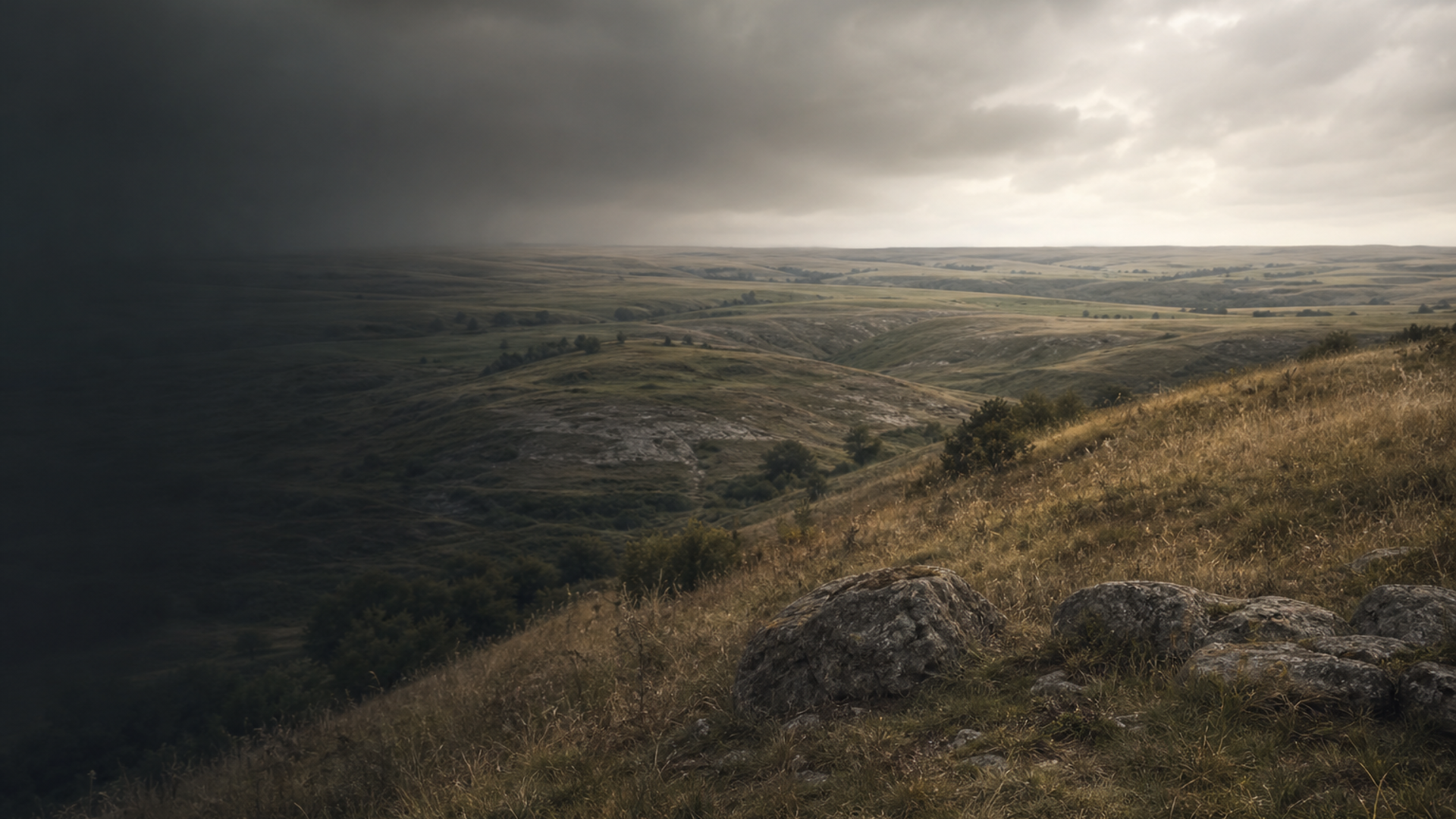
The Mont‑Aimé hypogées (hypogée I and II) occupy a dramatic ridge in the Marne, a place where stone and soil became the stage for ritual internment during the Middle to Late Neolithic. Archaeological data indicates these chambered tombs were used across centuries (here dated between 3366 and 2887 BCE), leaving assemblages of human bone, pottery fragments, and ritual deposits that speak to sustained communal practice.

Culturally, the Mont‑Aimé burials fit within broader northwestern French Neolithic patterns: collective interment in constructed rock chambers, emphasis on persistent mortuary loci, and material links to nearby farming communities. Lithics and ceramics from the site show affinities with regional Neolithic traditions rather than later Bell Beaker assemblages.

Genetically, the assemblage is small but informative: 11 individuals provide a snapshot of ancestry at a moment when the descendants of early Near Eastern farmers and local European hunter‑gatherers were interacting. Limited evidence suggests a community that retained local lineages while incorporating elements of incoming farmer ancestry. Because the sample size is modest and spatially restricted to two hypogées, broader inferences about population movement across France require more data.

Bulleted archaeological observations:

  • Site: Mont‑Aimé hypogée I & II (Marne, France)
  • Date range: 3366–2887 BCE
  • Evidence: collective burial architecture, grave goods, regional ceramic styles
  • Mont‑Aimé hypogée I & II used between 3366–2887 BCE
  • Collective chamber burial consistent with regional Neolithic practice
  • Site connects local communities to wider Neolithic networks
Kapitel IV

Daily Life & Society

Life in the hinterlands around Mont‑Aimé would have been anchored in mixed farming, seasonal foraging, and the maintenance of community ritual. Archaeological strata and artefact assemblages from the hypogées and nearby settlements point to domestic economies that combined cereal cultivation and animal husbandry with continued use of wild resources—an economy typical of Middle to Late Neolithic western Europe.

The collective burial chambers imply social practices that emphasized group identity over single‑grave kinship: repeated interment in the same stone crypts suggests remembered lineages or household groups, and mortuary treatment likely reinforced ties across generations. Objects placed with the dead—pottery sherds, worked bone, and occasional personal items—speak to ritualized care of the dead, possibly marking status or affiliation within the local community.

Archaeobotanical and zooarchaeological data from comparable regional sites indicate seasonal cycles: sowing and harvest, animal birthing seasons, and woodland management. Communal labor was required to construct the hypogées—large stones and careful masonry—and that labor investment highlights a society capable of organized cooperation.

Limitations: direct settlement evidence immediately adjacent to the hypogées remains sparse, so daily household reconstructions rely partly on regional analogies rather than continuous excavation around the tombs.

  • Mixed farming economy with continued wild resource use
  • Collective tombs imply long‑duration social memory and cooperation
Kapitel V

Genetic Profile

Ancient DNA from 11 individuals recovered from Mont‑Aimé hypogées yields a portrait of a small, regionally rooted Neolithic community with varied maternal and paternal lineages. Mitochondrial haplogroups are dominated by K (3), U (2), J (2), and H (including H3, total 3), lineages commonly associated with European Neolithic and Mesolithic maternal ancestries. These mtDNA types align with patterns seen across Neolithic France where farmer‑associated maternal lineages (K, J) coexist with older European maternal lines (U, H).

On the paternal side, Y‑DNA shows a prevalence of haplogroup I (5 individuals), a lineage frequently linked to long‑standing European hunter‑gatherer ancestry, alongside a single occurrence of haplogroup H (1). The presence of I in multiple males suggests a persistence or resurgence of local paternal lines, while H—uncommon in Neolithic western Europe—appears here as an isolated observation; its interpretation is uncertain and may reflect rare migration or a lineage underreported in comparative datasets.

Taken together, the genetic signal is consistent with admixture between incoming farmer populations and indigenous groups: maternal lineages point to a mixed Neolithic gene pool, and paternal lineages suggest substantial hunter‑gatherer contribution. However, with only 11 samples from two chambers, conclusions are provisional. Broader sampling across Marne and neighboring regions is required to quantify admixture proportions and to trace fine‑scale kin networks within the hypogées.

  • mtDNA: K, U, J, H — typical of Neolithic maternal diversity
  • Y‑DNA: predominance of I; single H—suggests persistent local paternal lines
Kapitel VI

Legacy & Modern Connections

The Mont‑Aimé hypogées are a poetic reminder of how ritual landscapes preserve echoes of ancient communities: stone chambers that once cradled generations now anchor modern understanding of Neolithic life in northeastern France. Genetically, the blend of maternal and paternal lineages observed at Mont‑Aimé foreshadows the complex ancestry of later European populations—an evolving tapestry woven from local hunter‑gatherers and migrating farmers.
Modern inhabitants of the region carry distant threads of these ancestries, but direct links remain subtle and dispersed across millennia of additional migration and admixture. Archaeogenetic work at Mont‑Aimé contributes a localized chapter to that long story, illuminating how small communities negotiated identity through burial practice and genetic continuity.

Caveat: the sample set is geographically focused and numerically modest, so while findings are evocative they are not definitive for all of Neolithic France. Continued excavation and more extensive ancient DNA sampling will refine how Mont‑Aimé fits into continental demographic transformations.

  • Mont‑Aimé illustrates long‑term local continuity and ritual memory
  • Genetic mix presages later European population complexity
KI-gestützt

KI-Assistent

Stellen Sie Fragen zur Mont‑Aimé Neolithic Collective-Kultur

KI-Assistent von DNAGENICS

Funktion freischalten
Stellen Sie Fragen zur Kultur Mont‑Aimé Neolithic Collective. Unser KI-Assistent kann genetische Befunde, historischen Kontext, archäologische Belege und moderne Verbindungen erläutern.
Beispiel einer KI-Analyse

Die Mont‑Aimé Neolithic Collective-Kultur ist ein faszinierendes Kapitel der Menschheitsgeschichte...

Genetische Analysen zeigen Übereinstimmungen mit früheren Populationen und Hinweise auf besondere Anpassungen und kulturelle Innovationen. Alte DNA-Proben liefern Einblicke in Migrationsmuster, soziale Strukturen und genetische Verbindungen zwischen Populationen.

Dies ist eine Vorschau der KI-Analyse. Schalten Sie den vollständigen KI-Assistenten frei, um detaillierte Einblicke zu erkunden:

  • Genetische Zusammensetzung und genetische Ähnlichkeit
  • Migrationsmuster und Ursprünge
  • Alltag und kulturelle Praktiken
  • Genetischer Bezug zu heutigen Populationen

Weitere antike Kulturen erkunden

Geschichten von Zivilisationen aus der antiken Welt entdecken

Use code for 30% off • Expires Nov 08




