Mtwapa Swahili: Echoes on the Kilifi Coast

Download PDF creates a visual, rasterized copy. Use Print for selectable text and better assistive-technology support.

Bericht wird vorbereitet

Verfügbare Informationen und Referenzen werden geladen

Verbindung mit dem archäologischen Quellenbestand...

Alte Quellen werden zusammengestellt

Zum Hauptinhalt springen
Mtwapa Swahili: Echoes on the Kilifi Coast
Zivilisations-Spotlight

Mtwapa Swahili: Echoes on the Kilifi Coast

A bustling Indian Ocean port where African mothers and foreign fathers shaped a cosmopolitan community.

1200 CE - 1700 CE
Mtwapa (Kilifi), Kenya — East African coast
Scrollen zum Start
Kapitel I

Die Geschichte

Die Mtwapa Swahili: Echoes on the Kilifi Coast-Kultur verstehen

Archaeology at Mtwapa (Kilifi, Kenya; 1200–1700 CE) reveals a cosmopolitan Swahili town. Ancient DNA from 46 individuals shows predominantly African maternal lineages (mtDNA L) alongside substantial Near Eastern Y-lineages (haplogroup J), suggesting male-mediated gene flow into local coastal communities.

Time Period

1200–1700 CE

Region

Mtwapa (Kilifi), Kenya — East African coast

Common Y-DNA

J (14), E (3), R (2), J1 (1)

Common mtDNA

L (39), M (2)

Kapitel II

Zeitleiste

Zentrale Momente in der Geschichte dieser Kultur

1200 CE

Mtwapa grows as a Swahili port

Archaeological layers show intensified settlement and trade-linked assemblages from c. 1200 CE.

1400 CE

Peak Indian Ocean connectivity

Material culture shows broad exchange with Arabia, Persia, India, and China around the 14th century.

1505 CE

Portuguese incursions alter trade

Portuguese naval activity disrupts established trade networks along the East African coast.

1700 CE

Omani influence rises

By the 18th century Omani political and economic power reshapes coastal dynamics.

Kapitel III

Origins & Emergence

Along the narrow tidal creeks of Kilifi County, the mound at Mtwapa rises like the memory of a harbor. Archaeological strata dated between the 13th and 17th centuries CE record Mtwapa as part of the wider Swahili network of towns—Kilwa, Pate, and Mombasa—woven into the Indian Ocean trade system. Excavations have recovered coral-rag architecture foundations, mosque remains, imported ceramics (Persian wares, Chinese celadon), glass beads, and coins that mark long-distance connections. Radiocarbon-anchored occupation layers place major growth from c. 1200 CE, with continuing occupation into the early modern period.

Material culture suggests a community oriented to maritime exchange: local goods (iron, grains, coastal forest products) were exchanged for textiles, ceramics, and prestige items from Arabia, Persia, India, and China. Epigraphic and architectural indicators attest to an early adoption of Islam, which spread across the Swahili coast through trade and social networks. Archaeological data indicates that Mtwapa was both a local center of production and a node in supraregional commerce; the town’s built form and burial contexts reveal social differentiation and global connections.

Genetically, the emergence of this coastal town coincides with patterns of admixture documented in ancient remains: archaeological evidence of sustained contact dovetails with DNA showing influxes of non-local male lineages into a predominantly African maternal population, consistent with a model of maritime exchange bringing people as well as goods.

  • Mtwapa occupied continuously c. 1200–1700 CE with coral-rag architecture
  • Imported ceramics, glass, and coins indicate Indian Ocean trade links
  • Early Islamic practice visible in mosque remains and inscriptions
Kapitel IV

Daily Life & Society

Life in Mtwapa would have been shaped by the tides and trade winds. Fisherfolk and sailors, traders and craftspeople, and kin groups who managed farms and salt pans all contributed to a vibrant, maritime economy. Streets and compounds flanked courtyards where women prepared food, wove mats and textiles, and curated household assemblages; beads and imported pottery appear in domestic contexts, linking private life to commercial circuits.
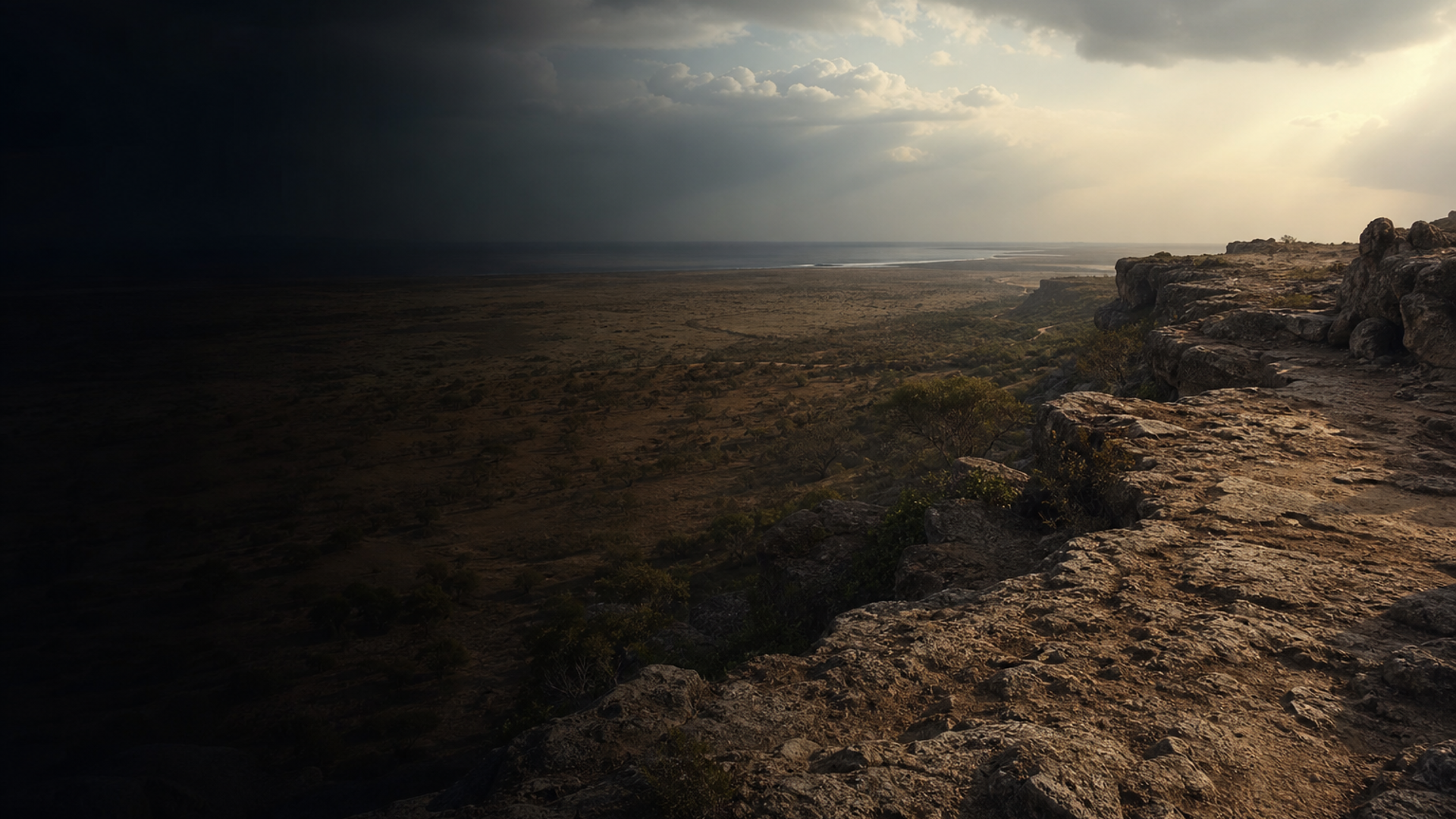
Burial practices at Mtwapa show both Islamic rites and local customs. Graves excavated in the cemetery areas include supine burials aligned with Muslim practice, often accompanied by personal ornaments and bead assemblages that speak to identity markers in life and death. Differential grave goods and house sizes suggest social stratification—some households had access to luxury imports, others focused on regional exchange.

Archaeobotanical remains and faunal assemblages indicate diets of sorghum, millet, marine fish, and domesticated animals, demonstrating mixed coastal and agricultural subsistence. Craft evidence—bead-making debris, metalworking slag, and pottery production—reveals local industry supporting long-distance trade. Together, the material record paints Mtwapa as a cosmopolitan town where everyday rhythms were infused with the sights and sounds of a globalized medieval shoreline.

  • Economy combined fishing, local craft, agriculture, and long-distance trade
  • Burials reflect Islamic practices blended with local traditions
Kapitel V

Genetic Profile

Ancient DNA from 46 individuals excavated at Mtwapa provides a window into the biological consequences of coastal connectivity between 1200 and 1700 CE. Mitochondrial DNA is overwhelmingly African: 39 samples carry haplogroup L lineages, with two carrying haplogroup M, indicating that maternal ancestry of buried individuals was predominantly local East African or sub-Saharan. By contrast, the Y-chromosome shows a different pattern: 14 Y-chromosomes belong to haplogroup J (including one reported as J1), commonly associated with populations in the Arabian Peninsula and parts of Southwest Asia; three belong to haplogroup E (typical across Africa), and two to haplogroup R (broadly distributed in Eurasia).

This sex-biased contrast—African mtDNA versus substantial Near Eastern-associated Y-DNA—supports a model of male-mediated gene flow into coastal settlements, consistent with historical records of traders and settlers arriving by sea. However, caution is required: haplogroup J has diverse sublineages and geographic histories, and Y-haplogroups alone cannot specify precise points of origin without higher-resolution subclade data and autosomal context. The sample size (46) is substantial for ancient DNA studies of a single site, but small numbers for specific haplogroups (for example R: n=2; E: n=3; J1: n=1) mean interpretations about frequency change or migration timing remain provisional.

Where available, autosomal analyses from the broader Swahili coast indicate admixture between local African and non-African ancestries; the Mtwapa uniparental patterns align with a narrative of predominantly African maternal inheritance with episodic male introductions from the Indian Ocean world. Continued sampling, finer Y-STR/SNP resolution, and comparative analyses with contemporary coastal populations will refine this picture.

  • 46 individuals analyzed: mtDNA dominated by L (39) — local African maternal ancestry
  • Y-DNA shows elevated J (14), suggesting male-mediated Southwest Asian gene flow
Kapitel VI

Legacy & Modern Connections

The genetic and archaeological record at Mtwapa speaks to enduring legacies along the Swahili coast. Linguistically and culturally, Swahili identity crystallized through centuries of interaction; Kiswahili itself carries loanwords and cultural markers from Arabic, Persian, and Indian spheres alongside Bantu foundations. Biologically, the pattern of local maternal lineages with mixed paternal inputs contributes to the genetic makeup of many present-day coastal communities, though the exact continuity and extent of that contribution vary regionally.

Archaeological sites like Mtwapa anchor modern cultural memory and provide tangible links between medieval trade networks and contemporary identities. While the DNA evidence points to episodes of admixture, it also underlines the primacy of African ancestry among women in these towns. These findings should be presented with nuance: they document connectivity and movement without reducing complex social histories to simple migration narratives. Further ancient and modern DNA sampling, integrated with archaeology and oral histories, will clarify how coastal peoples negotiated identity, kinship, and belonging across centuries.

  • Swahili culture emerges from both local African roots and Indian Ocean connections
  • Genetic patterns at Mtwapa reflect continuity of African maternal ancestry with admixture
KI-gestützt

KI-Assistent

Stellen Sie Fragen zur Mtwapa Swahili: Echoes on the Kilifi Coast-Kultur

KI-Assistent von DNAGENICS

Funktion freischalten
Stellen Sie Fragen zur Kultur Mtwapa Swahili: Echoes on the Kilifi Coast. Unser KI-Assistent kann genetische Befunde, historischen Kontext, archäologische Belege und moderne Verbindungen erläutern.
Beispiel einer KI-Analyse

Die Mtwapa Swahili: Echoes on the Kilifi Coast-Kultur ist ein faszinierendes Kapitel der Menschheitsgeschichte...

Genetische Analysen zeigen Übereinstimmungen mit früheren Populationen und Hinweise auf besondere Anpassungen und kulturelle Innovationen. Alte DNA-Proben liefern Einblicke in Migrationsmuster, soziale Strukturen und genetische Verbindungen zwischen Populationen.

Dies ist eine Vorschau der KI-Analyse. Schalten Sie den vollständigen KI-Assistenten frei, um detaillierte Einblicke zu erkunden:

  • Genetische Zusammensetzung und genetische Ähnlichkeit
  • Migrationsmuster und Ursprünge
  • Alltag und kulturelle Praktiken
  • Genetischer Bezug zu heutigen Populationen

Weitere antike Kulturen erkunden

Geschichten von Zivilisationen aus der antiken Welt entdecken

Use code for 30% off • Expires Nov 08




