Nästegården Steppe Echoes

Download PDF creates a visual, rasterized copy. Use Print for selectable text and better assistive-technology support.

Bericht wird vorbereitet

Verfügbare Informationen und Referenzen werden geladen

Verbindung mit dem archäologischen Quellenbestand...

Alte Quellen werden zusammengestellt

Zum Hauptinhalt springen
Nästegården Steppe Echoes
Zivilisations-Spotlight

Nästegården Steppe Echoes

A small Bronze Age assemblage in Sweden hinting at Steppe connections — preliminary genetic signals.

2194 CE - 1612 BCE
Nästegården, Sweden
Scrollen zum Start
Kapitel I

Die Geschichte

Die Nästegården Steppe Echoes-Kultur verstehen

Six Bronze Age individuals (ca. 2194–1612 BCE) from Nästegården, Sweden, show mitochondrial diversity (U, HV0, J, H+) consistent with mixed European ancestries. Archaeology indicates Steppe-influenced material culture; genetic data are limited and conclusions remain tentative.

Time Period

ca. 2194–1612 BCE

Region

Nästegården, Sweden

Common Y-DNA

Undetermined (limited data)

Common mtDNA

U (3), HV0 (1), J (1), H+ (1)

Kapitel II

Zeitleiste

Zentrale Momente in der Geschichte dieser Kultur

2194 BCE

Earliest dated individuals at Nästegården

First radiocarbon dates for sampled individuals mark the onset of the site's sampled Bronze Age horizon; genetic data remain preliminary (6 samples).

Kapitel III

Origins & Emergence

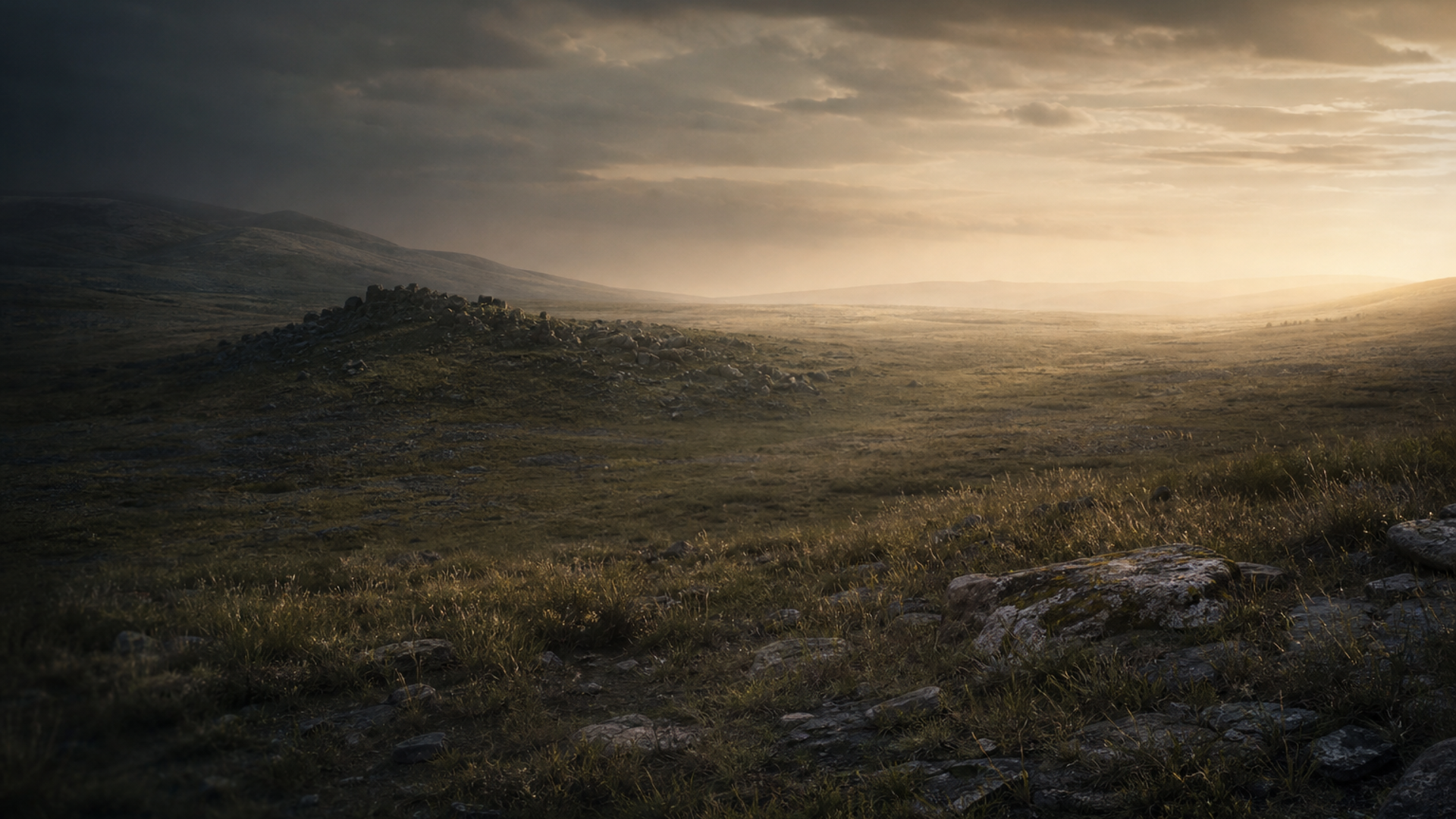
Nästegården sits in the luminous quiet of Sweden's Bronze Age landscape, where archaeological traces at the site have been interpreted as part of a Swedish Steppe-Influenced cultural horizon. Material culture and burial expression at Nästegården show elements archaeologists associate with wider north–central European interactions during the early to mid 2nd millennium BCE. This horizon is often described as 'Steppe-influenced' because certain artifact types and funerary gestures parallel developments further south and east that archaeologists link to populations carrying steppe-derived cultural packages.

Limited evidence suggests this was not a uniform migration but a mosaic of local communities adopting new technologies and social practices through contact, exchange, and possibly small-scale movement of people. Radiocarbon dates for the sampled individuals span ca. 2194–1612 BCE, placing them squarely within the northern Bronze Age milieu. Because only six individuals have been analyzed, conclusions about origins must remain cautious: archaeological signals may reflect cultural transmission as much as population replacement. Future excavations and denser sampling will be necessary to distinguish between material influence and demic movement with confidence.

  • Site: Nästegården (Sweden), dated 2194–1612 BCE
  • Archaeological evidence shows Steppe-influenced traits in material culture
  • Interpretations are provisional due to small sample size
Kapitel IV

Daily Life & Society

Archaeological data indicates communities around Nästegården lived within a Bronze Age economy balanced between local farming, herding, and long-distance exchange. Objects reflecting metallurgical skills—metalwork styles and raw material sources noted in the archaeological record—point to participation in wider trade networks that connected Scandinavia to continental Europe. Such networks transmitted prestige goods, ideas, and possibly people.

Social life at the site likely revolved around kin groups and seasonal cycles: pottery, toolkits and burial assemblages hint at household craft and ritual practices. Burial evidence attributed to the Swedish Steppe-Influenced Culture at Nästegården suggests social differentiation that could be expressed through grave goods and monumentality, although preservation and sample limitations complicate detailed reconstructions. Mobility should be understood as a spectrum: most individuals appear rooted in regional lifeways, while some elements—exotic metals, stylistic markers—signal intermittent connections across the Baltic and beyond.

  • Economy: mixed farming, herding, and participation in metal exchange networks
  • Social expression: differentiated burials and crafts indicate emerging social hierarchies
Kapitel V

Genetic Profile

Six individuals from Nästegården were sequenced for mitochondrial DNA and present a mitochondrial profile dominated by haplogroup U (3 individuals), along with HV0 (1), J (1), and H+ (1). Haplogroup U is frequent in Mesolithic and some Neolithic contexts across northern Europe and often reflects continuity of local hunter-gatherer maternal lineages. Haplogroups H and J are widespread in later Neolithic and Bronze Age Europe, frequently associated with farmer-descended maternal lineages or admixture events.

Crucially, Y-chromosome haplogroups are undetermined or not recovered in this small set, and autosomal ancestry data have not been reported here, so assertions about the presence or proportion of steppe-derived ancestry must be cautious. The archaeological label 'Steppe-influenced' suggests cultural links to populations known elsewhere to carry steppe-related ancestry, but within Nästegården the genetic signal visible in mtDNA is mixed and does not on its own demonstrate a large-scale male-mediated migration. Given the sample count is only six, these results are preliminary: wider sampling, including Y-DNA and genome-wide data, is required to resolve whether cultural change reflects movement of people, exchange of ideas, or both.

  • mtDNA: U (3), HV0 (1), J (1), H+ (1) — mixed maternal ancestries
  • Y-DNA: undetermined; autosomal data needed to test for steppe ancestry
Kapitel VI

Legacy & Modern Connections

The individuals from Nästegården offer a fragmentary but evocative glimpse into northern Bronze Age lifeways and the complex tapestry of ancestry in Scandinavia. Mitochondrial haplogroups observed here are ancestral threads that continue to exist in modern European populations, but direct lines of descent cannot be assumed from a handful of samples. Instead, Nästegården should be seen as a preliminary snapshot: a place where local traditions and external influences intertwined.

For modern genetic landscapes, these data remind us that Bronze Age Scandinavia was a place of interaction. The site underscores the value of combining careful archaeological context with genetic evidence to trace cultural transformations. Continued sampling, especially of male lineages and genome-wide markers, will be essential to clarify how Steppe-related influences contributed to the ancestry of later northern European populations.

  • mtDNA lineages at Nästegården reflect long-term European maternal diversity
  • More Y-DNA and genome-wide sampling needed to link Bronze Age changes to modern populations
KI-gestützt

KI-Assistent

Stellen Sie Fragen zur Nästegården Steppe Echoes-Kultur

KI-Assistent von DNAGENICS

Funktion freischalten
Stellen Sie Fragen zur Kultur Nästegården Steppe Echoes. Unser KI-Assistent kann genetische Befunde, historischen Kontext, archäologische Belege und moderne Verbindungen erläutern.
Beispiel einer KI-Analyse

Die Nästegården Steppe Echoes-Kultur ist ein faszinierendes Kapitel der Menschheitsgeschichte...

Genetische Analysen zeigen Übereinstimmungen mit früheren Populationen und Hinweise auf besondere Anpassungen und kulturelle Innovationen. Alte DNA-Proben liefern Einblicke in Migrationsmuster, soziale Strukturen und genetische Verbindungen zwischen Populationen.

Dies ist eine Vorschau der KI-Analyse. Schalten Sie den vollständigen KI-Assistenten frei, um detaillierte Einblicke zu erkunden:

  • Genetische Zusammensetzung und genetische Ähnlichkeit
  • Migrationsmuster und Ursprünge
  • Alltag und kulturelle Praktiken
  • Genetischer Bezug zu heutigen Populationen

Weitere antike Kulturen erkunden

Geschichten von Zivilisationen aus der antiken Welt entdecken

Use code for 30% off • Expires Nov 08