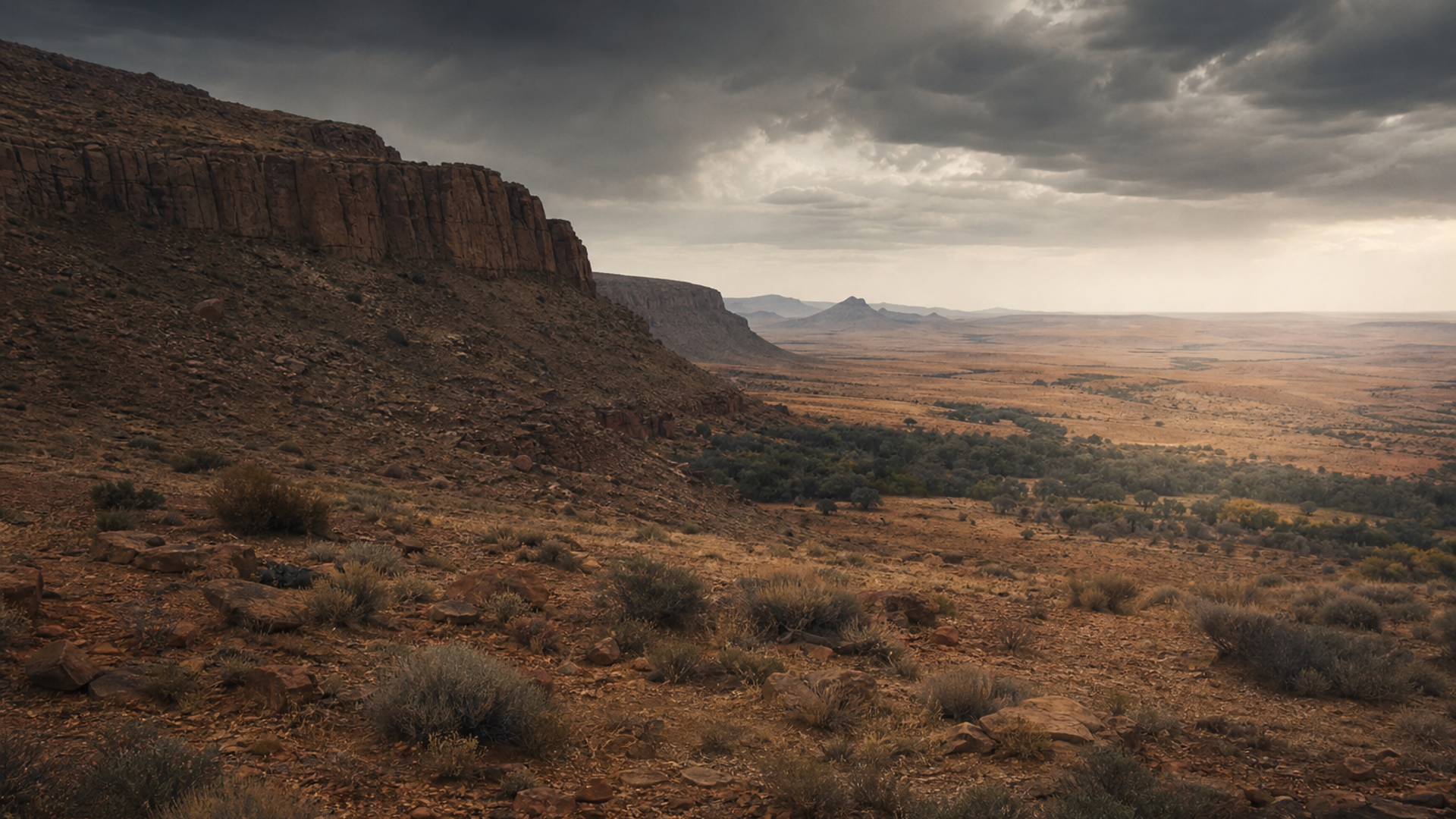
The material world of the sampled communities is shaped by the arid beauty of the Northern Cape: seasonal riverine agriculture along the Orange River, dispersed homesteads, and small towns that function as regional hubs. Archaeological traces in the region—stone scatters, rock engravings, and colonial farm remains—capture a long history of adaptation to scarce water, mobile herding, and trade routes that connected inland deserts to coastal markets.
In the modern era around 2000 CE, livelihoods blend ancestral practices and contemporary economies. People draw on pastoral knowledge, small‑scale agriculture where water permits, wage labor in towns, and cultural practices that preserve languages, stories, and ceremonial life. Material culture includes local crafts, household assemblages with both traditional and imported goods, and the visible imprint of twentieth‑century infrastructure. The sensory image is cinematic: wind‑scoured plains, orange river sunsets, and settlements that stand at the meeting point of past and present.
Archaeological observation indicates continuity of space use—old pathways reused as modern roads, rock art places remaining cultural landmarks—yet social identity is fluid, shaped by migration, intermarriage, and colonial histories. These layers are essential background when interpreting the genetic signals carried by modern residents.