Oise Iron Age Echoes

Download PDF creates a visual, rasterized copy. Use Print for selectable text and better assistive-technology support.

Zum Hauptinhalt springen
Zivilisations-Spotlight

Oise Iron Age Echoes

Fragile voices from Le Buissonnet linking graves, landscape and DNA

350 CE - 200 BCE
Le Buissonnet, Oise (Hauts-de-France), France

Die Geschichte

Three Iron Age individuals from Le Buissonnet (Oise, France; 350–200 BCE) reveal maternal lineages K and H and a paternal R signal. Archaeological context ties them to the Iron Age Culture of Oise; genetic data are preliminary but hint at wider European connections.

Time Period

350–200 BCE

Region

Le Buissonnet, Oise (Hauts-de-France), France

Common Y-DNA

R (1 sample)

Common mtDNA

K1a (1), H (1), K (1)

Zeitleiste

2500 BCE

Bronze Age ancestries consolidate in northern France

Regional Bronze Age population movements and social changes lay genetic and cultural foundations that later Iron Age groups in Oise inherit and transform.

Origins & Emergence

The Le Buissonnet assemblage sits within the Iron Age Culture of Oise, a local expression in northern France dated here to 350–200 BCE. Archaeological data indicates communities occupied river valleys and plateaus around the Oise, exploiting a landscape of woodlands and fields. Excavations at Le Buissonnet (Attichy-Bitry, Compiègne arrondissement) recovered funerary contexts and material traces that reflect regional Iron Age lifeways and contact with broader continental networks.

Limited evidence suggests cultural affinities with the La Tène cultural horizon to the east — visible in decoration styles and metalwork distributions across northern Gaul — but the Oise signature retains distinct local craft traditions. Settlement continuity from Late Bronze Age horizons is archaeologically plausible in the region, though direct stratified sequences at Le Buissonnet remain sparse. Radiocarbon anchors for the site place these individuals securely within the mid-to-late Iron Age timeframe.

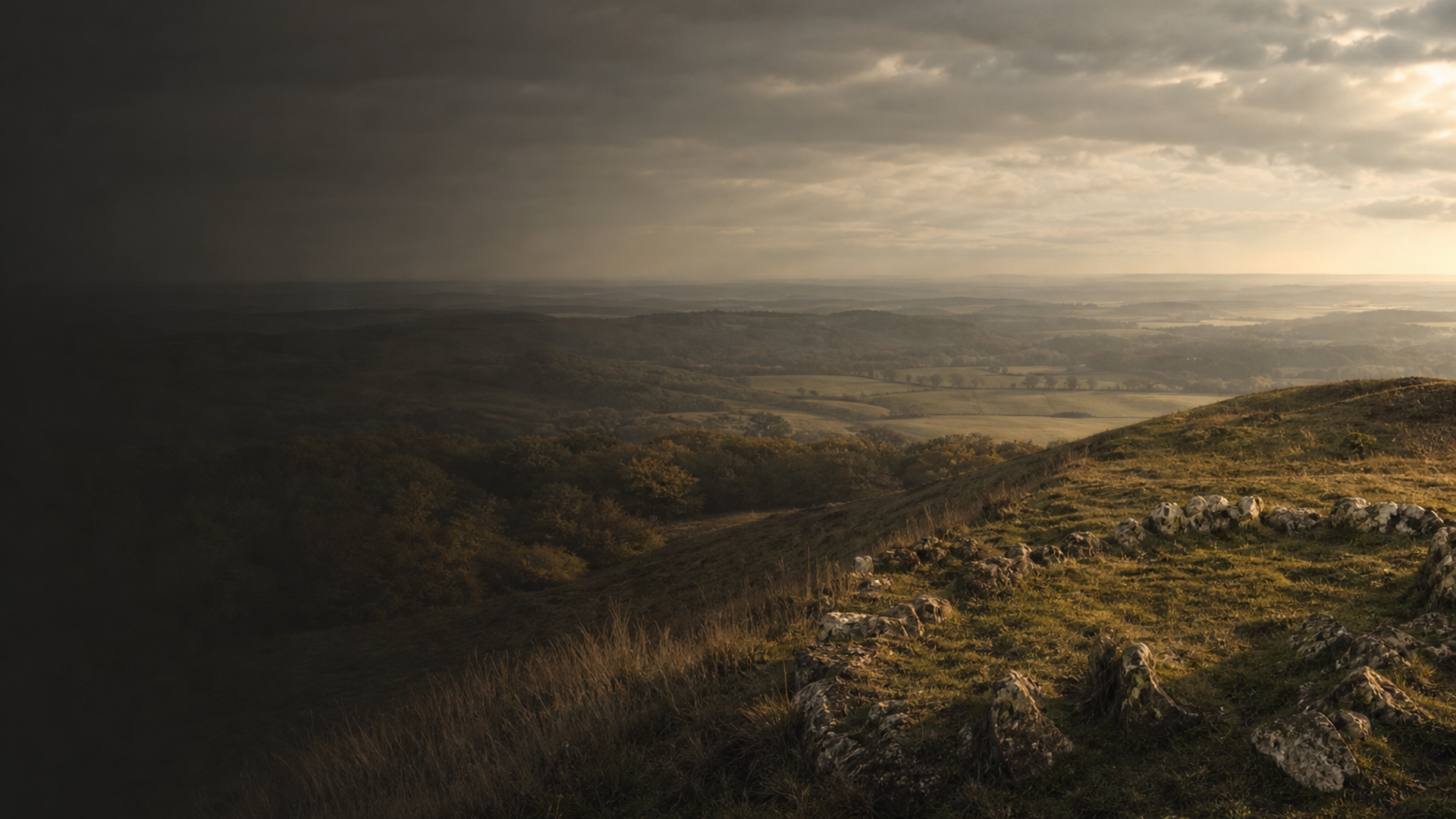
The cinematic convergence of river, field and burial mound gives a vivid picture: small communities negotiating identity through objects, rites and exchange. Yet, because the genetic sample here is very small, broader claims about population replacement or major migrations into Oise during this period must remain tentative.

  • Site: Le Buissonnet, Attichy-Bitry, Oise Department
  • Dates: 350–200 BCE (mid–late Iron Age)
  • Regional ties to La Tène influence with local traditions

Daily Life & Society

Archaeological traces from the Oise landscape paint daily life in layered strokes: agriculture on fertile river terraces, craft production in hamlets, and seasonal movements between fields and woodland resources. At sites like Le Buissonnet, burial contexts suggest structured community responses to death — placed in the landscape as markers of memory — though the preservation and excavation record is limited.

Material culture across the region includes pottery types and metal objects that imply both local manufacture and long-distance connections. Trade along river corridors such as the Oise likely carried goods and styles from the Seine and further afield. Social organization can be inferred from varied grave goods and settlement layouts elsewhere in northern Gaul: small kin-based households embedded within a network of exchange and ritual.

Archaeological data indicates craft specialization and increasing social differentiation during the Iron Age, but the small number of human samples from Le Buissonnet means interpretations about the social identity of the interred — age, gender roles, or status — must be cautious. The material palette, however, reveals a world of artisans, farmers and riverborne traders negotiating mobility and memory.

  • Economy: agriculture, craft production, river trade
  • Mortuary practice: burials as landscape markers; limited contextual data

Genetic Profile

Three individuals sampled from Le Buissonnet yield a compact but evocative genetic snapshot. Mitochondrial lineages include K1a (1), H (1) and K (1), while the single male-associated Y signal is reported as R (broadly defined). These haplogroups are common in Europe through the Bronze and Iron Ages; H and K maternal lineages are widespread and often appear in ancient and modern western European populations.

The designation R for Y-DNA is broad and can encompass several downstream branches — including R1b — that are prominent in later prehistoric Western Europe. If downstream resolution were available and pointed to R1b, that would align with patterns of steppe-derived paternal ancestry observed elsewhere in Iron Age France. However, because the reported Y call here is generic R and autosomal data are not summarized, we cannot specify ancestry proportions or precise affinities.

Crucially, sample count is very low (n=3). With fewer than ten individuals, conclusions about population continuity, migration, or social structure are preliminary. Archaeogenetic interpretation benefits from larger, well-dated series and integrated archaeological context: these three genomes act as initial beacons, suggesting connections to wider European maternal lineages and a paternal R signal, but demanding further sampling to turn hint into narrative.

  • mtDNA: K1a, H, K — maternal lineages common in Europe
  • Y-DNA: R (broad); downstream resolution needed to assess links to R1b

Legacy & Modern Connections

The genetic echoes from Le Buissonnet whisper into the present: haplogroups H and K remain common in modern Western Europeans, and broad R paternal signals are part of the deep male-line tapestry across France. Archaeologically, the Iron Age Culture of Oise contributes to regional identity that later historical sources fold into the tapestry of Gaulish societies encountered by the Romans.

However, linking three ancient genomes directly to modern populations requires restraint. Limited sample numbers and the absence of dense temporal sampling mean that observed haplogroups could represent local kin groups, transient lineages, or broader regional patterns. What is clear is a continuity of human presence in the Oise valleys across millennia, shaped by riverine connection, craft networks and shifting cultural horizons. Future, larger-scale ancient DNA sampling across Hauts-de-France and neighboring regions will clarify how these intimations fit into long-term population histories.

  • Maternal haplogroups H and K persist in modern populations
  • Small sample size prevents strong claims about direct continuity

KI-Assistent

KI-Assistent von DNAGENICS

Funktion freischalten
Stellen Sie Fragen zur Kultur Oise Iron Age Echoes. Unser KI-Assistent kann genetische Befunde, historischen Kontext, archäologische Belege und moderne Verbindungen erläutern.
Beispiel einer KI-Analyse

Die Oise Iron Age Echoes-Kultur ist ein faszinierendes Kapitel der Menschheitsgeschichte...

Genetische Analysen zeigen Übereinstimmungen mit früheren Populationen und Hinweise auf besondere Anpassungen und kulturelle Innovationen. Alte DNA-Proben liefern Einblicke in Migrationsmuster, soziale Strukturen und genetische Verbindungen zwischen Populationen.

Dies ist eine Vorschau der KI-Analyse. Schalten Sie den vollständigen KI-Assistenten frei, um detaillierte Einblicke zu erkunden:

  • Genetische Zusammensetzung und genetische Ähnlichkeit
  • Migrationsmuster und Ursprünge
  • Alltag und kulturelle Praktiken
  • Genetischer Bezug zu heutigen Populationen
Use code for 30% off • Expires Nov 14




