Pacapaccari: Echoes of the LIP Andes

Download PDF creates a visual, rasterized copy. Use Print for selectable text and better assistive-technology support.

Bericht wird vorbereitet

Verfügbare Informationen und Referenzen werden geladen

Verbindung mit dem archäologischen Quellenbestand...

Alte Quellen werden zusammengestellt

Zum Hauptinhalt springen
Pacapaccari: Echoes of the LIP Andes
Zivilisations-Spotlight

Pacapaccari: Echoes of the LIP Andes

Three genomes from Pacapaccari illuminate Late Intermediate Period life in Ayacucho, Peru

1175 CE - 1410 CE
Ayacucho, Lucanas, Laramate (Pacapaccari), Peru
Scrollen zum Start
Kapitel I

Die Geschichte

Die Pacapaccari: Echoes of the LIP Andes-Kultur verstehen

Ancient DNA from three individuals (1175–1410 CE) at Pacapaccari, Laramate, Ayacucho, links local Late Intermediate Period funerary contexts to broad Andean maternal lineages (B2/B2b) and preliminary Y-chromosome diversity (P/Q). Small sample size makes conclusions tentative.

Time Period

1175–1410 CE (Late Intermediate Period)

Region

Ayacucho, Lucanas, Laramate (Pacapaccari), Peru

Common Y-DNA

P (1 — unresolved), Q (1)

Common mtDNA

B2 (2), B2b (1)

Kapitel II

Zeitleiste

Zentrale Momente in der Geschichte dieser Kultur

1175 CE

Pacapaccari burials dated to the Late Intermediate Period

Radiocarbon and genomic analyses place three human remains at Pacapaccari between 1175 and 1410 CE, within the Late Intermediate Period; conclusions remain tentative due to low sample count.

Kapitel III

Origins & Emergence

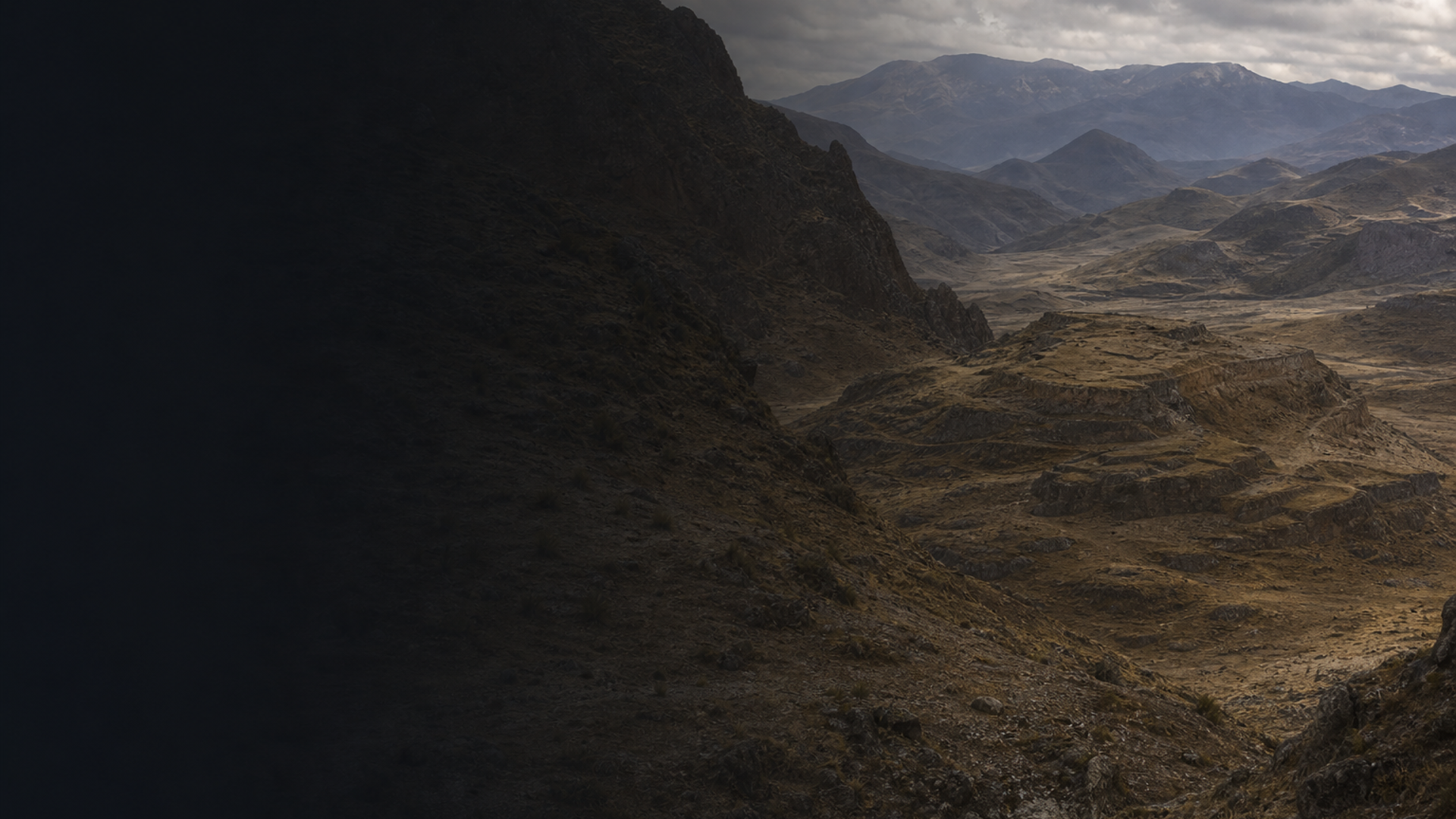
The Pacapaccari assemblage emerges from Laramate, a highland valley within Lucanas province (Ayacucho), during the Late Intermediate Period — a century-spanning era of regional reorganization after earlier state polities. Archaeological data indicates the human remains sampled were recovered from funerary contexts at Pacapaccari and date to roughly 1175–1410 CE. This places them in a landscape where local communities negotiated resource zones, vertical ecological niches, and shifting alliances.

Limited evidence suggests continuity with broad Andean lifeways rather than direct continuity with distant imperial centers. Material signatures typical of the LIP across the southern highlands include localized ceramic styles, platform architecture, and intensified agropastoral strategies; however, specific artifact assemblages from Pacapaccari remain sparsely published. The genomic data add a human dimension to these patterns: mitochondrial lineages typical to the region tie these individuals to wider maternal ancestries across the Andes, while Y-chromosome results are preliminary and partially unresolved.

The picture that emerges is one of a small, rooted community at the margins of larger political networks. With only three genomes, interpretations about migration, social boundaries, or population turnover must remain cautious. Future excavation and sampling at Pacapaccari and neighboring sites will be essential to test whether the patterns seen here reflect local continuity, mobility, or episodic contacts.

  • Samples from Pacapaccari (Laramate, Lucanas, Ayacucho), dated 1175–1410 CE
  • Context: Late Intermediate Period regional dynamics after earlier state decline
  • Conclusions preliminary due to low sample count
Kapitel IV

Daily Life & Society

Archaeological inference places Pacapaccari inhabitants within the textured economies of the high Andes: agriculture adapted to elevation, herding of camelids, and exploitation of vertical ecological zones. While direct botanical or zooarchaeological reports from the three sampled burials are limited, regional LIP patterns in Ayacucho suggest mixed farming of tubers (native potatoes), maize in lower terraces, and reliance on llamas for transport, wool, and meat.

Burials, as the source of the genetic material, offer a window into social identity. Funerary placement, grave goods, and body orientation — where documented in LIP contexts — often reflect household-level decisions and local ritual practice rather than imperial standardization. The small dataset from Pacapaccari cannot robustly reconstruct social hierarchy, but the presence of consistent maternal lineages hints at kin networks centered on matrilineal continuity in household groups.

Daily life would have been shaped by seasonal rhythms, exchange between valley and puna, and the negotiation of resources with neighboring communities. Archaeology paints a scene of communities stitching together resilience through diverse crop assemblages, herding economies, and ritual practices anchored in place — a cinematic highland world of terraces, llamas, and ritual fires that sustained human lives in thin air.

  • Likely agropastoralist lifeways: potatoes, maize, and camelid herding (regional inference)
  • Funerary contexts suggest household-centered social organization; specifics remain tentative
Kapitel V

Genetic Profile

Three genomes from Pacapaccari reveal a compact but informative genetic snapshot. On the maternal side, two individuals carry mtDNA haplogroup B2 and one carries B2b — lineages widely documented among Indigenous populations in the Andes and across South America. These maternal markers are consistent with deep Native American ancestry and suggest mitochondrial continuity with regional populations.

On the paternal side, results show one individual assigned to haplogroup Q, a well-established Native American Y-lineage, and one assigned at a broader resolution to haplogroup P. In global Y-chromosome phylogeny, P is a parent clade that includes Q; an assignment to P in ancient data often indicates limited resolution, so this may represent an unresolved Q-lineage or reflect preservation and coverage limits.

Because the sample count is three (<10), all genetic inferences must be labeled preliminary. Limited sampling constrains population-level statements (e.g., diversity, sex-biased migration, or admixture). Nonetheless, the concordance of mtDNA B2/B2b with regional expectations and at least one clear Q Y-haplogroup supports continuity with pre-contact Andean genetic landscapes. Future broader sampling from neighboring Lucanas valleys and comparative analysis with contemporaneous LIP and later Inca-period genomes will be necessary to test hypotheses about mobility, kinship structure, and demographic change.

  • mtDNA: B2 (2), B2b (1) — fits widespread Andean maternal lineages
  • Y-DNA: Q (1); P (1) likely reflects unresolved resolution and cautions about low coverage
Kapitel VI

Legacy & Modern Connections

The genetic signatures from Pacapaccari resonate with living Andean communities: mtDNA lineages such as B2 and B2b continue to appear across modern Indigenous groups in Peru and beyond, indicating long-standing maternal continuity in the highlands. Such continuity provides a genetic thread that ties contemporary populations to LIP-era inhabitants of valleys like Laramate.

Cultural legacy is equally evocative. Practices of agropastoral management, vertical exchange, and localized ceremonial life that characterized the Late Intermediate Period helped shape social landscapes later incorporated into Inca systems and persisted in many rural communities. However, with only three ancient genomes, we must avoid overclaiming direct ancestry or demographic processes. These individuals offer a human face to archaeological narratives and invite more extensive sampling to clarify how local lineages contributed to the genetic tapestry of modern Andean peoples.

In short, Pacapaccari provides a suggestive glimpse: continuity in maternal lines, hints of paternal diversity, and a promise that deeper sampling will better illuminate the threads between past and present in the Andes.

  • mtDNA continuity suggests links with modern Andean maternal lineages
  • Small sample size limits broad claims; more data needed for population-level connections
KI-gestützt

KI-Assistent

Stellen Sie Fragen zur Pacapaccari: Echoes of the LIP Andes-Kultur

KI-Assistent von DNAGENICS

Funktion freischalten
Stellen Sie Fragen zur Kultur Pacapaccari: Echoes of the LIP Andes. Unser KI-Assistent kann genetische Befunde, historischen Kontext, archäologische Belege und moderne Verbindungen erläutern.
Beispiel einer KI-Analyse

Die Pacapaccari: Echoes of the LIP Andes-Kultur ist ein faszinierendes Kapitel der Menschheitsgeschichte...

Genetische Analysen zeigen Übereinstimmungen mit früheren Populationen und Hinweise auf besondere Anpassungen und kulturelle Innovationen. Alte DNA-Proben liefern Einblicke in Migrationsmuster, soziale Strukturen und genetische Verbindungen zwischen Populationen.

Dies ist eine Vorschau der KI-Analyse. Schalten Sie den vollständigen KI-Assistenten frei, um detaillierte Einblicke zu erkunden:

  • Genetische Zusammensetzung und genetische Ähnlichkeit
  • Migrationsmuster und Ursprünge
  • Alltag und kulturelle Praktiken
  • Genetischer Bezug zu heutigen Populationen

Weitere antike Kulturen erkunden

Geschichten von Zivilisationen aus der antiken Welt entdecken

Use code for 30% off • Expires Nov 08