
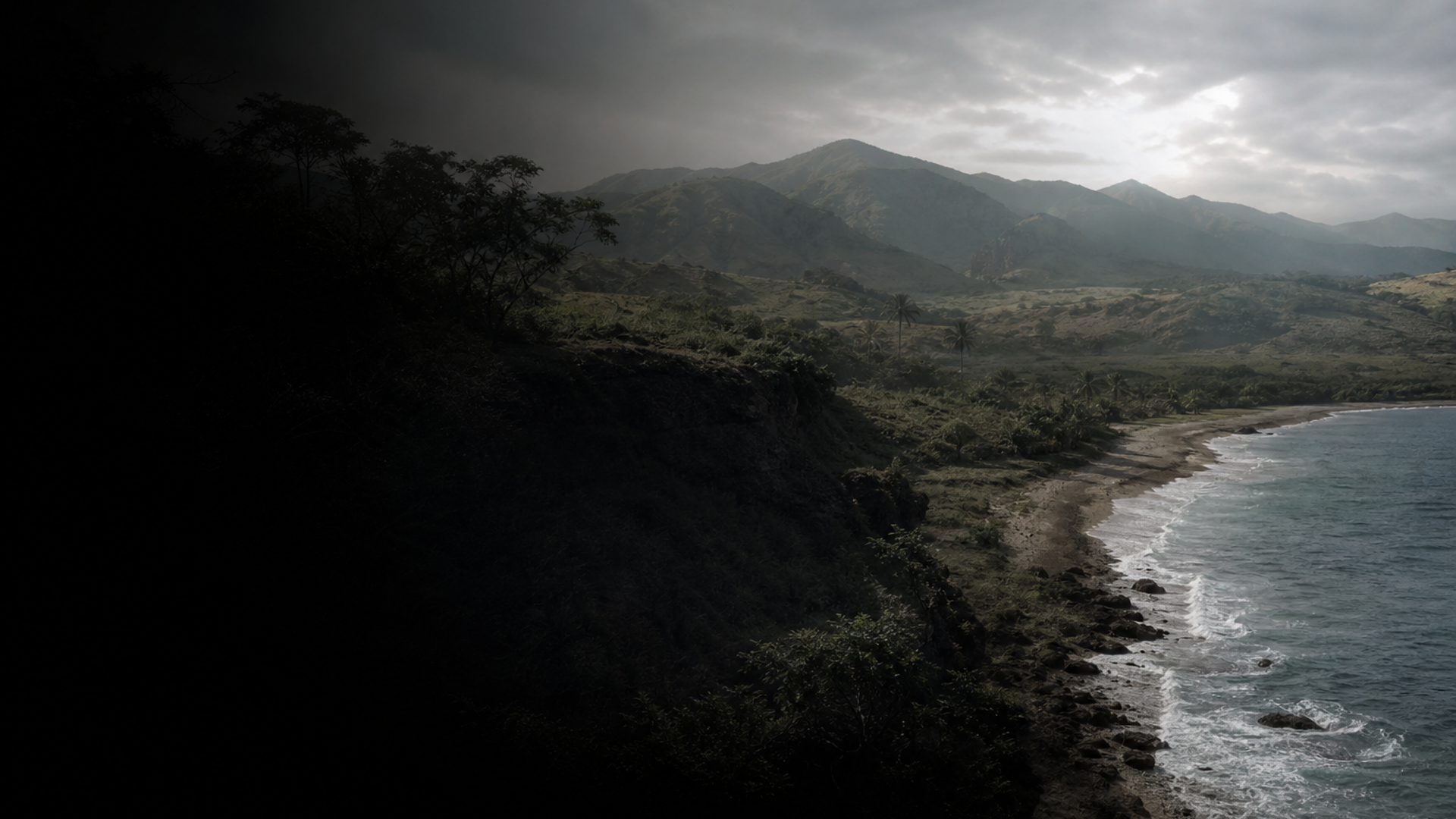
Paso del Indio Ceramic People

Download PDF creates a visual, rasterized copy. Use Print for selectable text and better assistive-technology support.

Bericht wird vorbereitet

Verfügbare Informationen und Referenzen werden geladen

Verbindung mit dem archäologischen Quellenbestand...

Alte Quellen werden zusammengestellt

Zum Hauptinhalt springen
Paso del Indio Ceramic People
Zivilisations-Spotlight

Paso del Indio Ceramic People

Ceramic-period communities of Vega Baja, Puerto Rico (650–1400 CE) — archaeology meets aDNA

650 CE - 1400 CE
Puerto Rico (Paso del Indio, Vega Baja)
Scrollen zum Start
Kapitel I

Die Geschichte

Die Paso del Indio Ceramic People-Kultur verstehen

Archaeological and genetic glimpses from Paso del Indio (Vega Baja, Puerto Rico) illuminate Ceramic-period life between 650–1400 CE. Eight ancient genomes reveal mainly Y-haplogroup Q and mtDNA A and C lineages, offering preliminary insights into Indigenous Caribbean ancestry and regional continuity.

Time Period

650–1400 CE (Ceramic Period)

Region

Puerto Rico (Paso del Indio, Vega Baja)

Common Y-DNA

Q (observed in 4 of 8 samples)

Common mtDNA

C (3), A (2), A2 (2), A2e (1)

Kapitel II

Zeitleiste

Zentrale Momente in der Geschichte dieser Kultur

650 CE

Ceramic Period Establishment

Archaeological deposits at Paso del Indio begin showing characteristic Ceramic-period pottery and occupation (c. 650 CE).

1000 CE

Regional Interaction Peak

Material culture suggests active exchange across the Greater Antilles and localized settlement stability around 1000 CE.

1493 CE

First European Contact (Impact Begins)

Columbian-era contact initiates demographic and cultural disruptions that reshape Indigenous Caribbean populations.

Kapitel III

Origins & Emergence

Along the river terraces of Vega Baja, the Paso del Indio site holds stratified deposits that capture centuries of Islander life. Archaeological data indicate a Ceramic-period occupation stretching roughly from the mid-first millennium CE through the late second millennium (here represented by radiocarbon and stratigraphic dates spanning 650–1400 CE). The material culture—pottery temper, decoration styles, and curated tools—ties these communities into broader Greater Antilles Ceramic traditions, reflecting patterns of migration, interaction, and local adaptation.

Genetic data from eight individuals recovered at Paso del Indio begin to fill a molecular portrait of this emergence. Limited evidence suggests a predominance of Native American paternal lineages (Y-haplogroup Q) alongside maternal lineages dominated by mtDNA clades A and C. These signals are consistent with deep pre-contact Indigenous ancestry across the Caribbean, but with only eight genomes the broader demographic story—timing of arrivals, the extent of continuity, and links to neighboring islands—remains provisional. Archaeology anchors the narrative in place and time; aDNA provides familial and population-scale threads that must be woven carefully, with clear attention to sampling limits and post-depositional processes.

  • Ceramic-period deposits dated ca. 650–1400 CE at Paso del Indio
  • Material culture connects to Greater Antilles Ceramic traditions
  • aDNA offers preliminary population-level signals but sample size is small
Kapitel IV

Daily Life & Society

The archaeological record at Paso del Indio evokes a community shaped by coastal and riverine lifeways. Ceramic assemblages, stone tools, and ecofacts recovered in excavations suggest subsistence strategies that would have combined fishing, foraging, horticulture, and the management of local resources. Pottery forms—often plain or stamped—served storage, cooking, and ritual roles, while wear patterns on tools indicate long-term craft and food-processing activities.

Burial contexts and associated grave goods, where preserved, provide intimate glimpses of social identity, age structure, and possibly status differentiation; however, preservation is uneven and interpretations are cautious. Settlement layouts inferred from feature clusters hint at kin-based neighborhoods rather than large urban centers. Entangling everyday practice from sparse remains requires combining hard archaeological data with comparative studies across the Antilles—while genetic data adds a complementary axis, revealing familial relationships and mobility patterns that artifacts alone cannot show.

  • Subsistence blended marine resources with horticulture and foraging
  • Material culture suggests household-level craft and storage practices
Kapitel V

Genetic Profile

Eight ancient individuals from Paso del Indio provide an initial genetic snapshot of Ceramic-period Puerto Rico. Y-chromosome haplogroup Q is observed in four samples, a lineage widely associated with Indigenous peoples of the Americas and consistent with regional paternal continuity. On the maternal side, mtDNA haplogroups C and A are common in Native American populations: three individuals carry haplogroup C, two carry A (including two classified specifically as A2), and one carries a sub-lineage labeled A2e. These maternal lineages are typical of pre-contact Caribbean and continental populations, indicating deep connections to broader Indigenous gene pools.

Caveats are essential. A total sample size of eight is small: any population-level inference must be treated as preliminary. The observed haplogroup counts may reflect local kin groups, sampling bias, or preservation-mediated survival of particular burials. Genome-wide analyses (autosomal ancestry, runs of homozygosity, and admixture modelling) are required to resolve questions about effective population size, connectivity with other islands, and potential gene flow from mainland South America or Central America. Still, the concordance between archaeological context and these Native American haplogroups supports continuity hypotheses and demonstrates how even limited aDNA can powerfully complement archaeological narratives.

  • Y-haplogroup Q in 4/8 samples suggests Indigenous paternal continuity
  • mtDNA dominated by A and C lineages; small sample size makes findings preliminary
Kapitel VI

Legacy & Modern Connections

The Paso del Indio genomes, paired with their archaeological context, speak to enduring Indigenous threads in Puerto Rico's past. Present-day genetic studies and community histories often reveal continuity with pre-contact lineages, and the presence of Q, A, and C haplogroups in these ancient remains aligns with those broader patterns. Yet the story is not simple: centuries of contact, demographic collapse, and later migrations have reshaped island populations since 1400 CE.

For descendants and researchers alike, these findings are both a resource and a responsibility. They illuminate ancestral connections while reminding us that conclusions drawn from small datasets are provisional. Continued collaboration among archaeologists, geneticists, and local communities, and increased sampling with careful ethical frameworks, will refine how Paso del Indio’s people are understood within Caribbean prehistory and how their legacy is honored today.

  • Ancient haplogroups align with broader Indigenous Caribbean genetic patterns
  • Small sample size highlights need for expanded, community-centered research
KI-gestützt

KI-Assistent

Stellen Sie Fragen zur Paso del Indio Ceramic People-Kultur

KI-Assistent von DNAGENICS

Funktion freischalten
Stellen Sie Fragen zur Kultur Paso del Indio Ceramic People. Unser KI-Assistent kann genetische Befunde, historischen Kontext, archäologische Belege und moderne Verbindungen erläutern.
Beispiel einer KI-Analyse

Die Paso del Indio Ceramic People-Kultur ist ein faszinierendes Kapitel der Menschheitsgeschichte...

Genetische Analysen zeigen Übereinstimmungen mit früheren Populationen und Hinweise auf besondere Anpassungen und kulturelle Innovationen. Alte DNA-Proben liefern Einblicke in Migrationsmuster, soziale Strukturen und genetische Verbindungen zwischen Populationen.

Dies ist eine Vorschau der KI-Analyse. Schalten Sie den vollständigen KI-Assistenten frei, um detaillierte Einblicke zu erkunden:

  • Genetische Zusammensetzung und genetische Ähnlichkeit
  • Migrationsmuster und Ursprünge
  • Alltag und kulturelle Praktiken
  • Genetischer Bezug zu heutigen Populationen

Weitere antike Kulturen erkunden

Geschichten von Zivilisationen aus der antiken Welt entdecken

Use code for 35% off • Expires Nov 09




