Pericú of Baja California

Download PDF creates a visual, rasterized copy. Use Print for selectable text and better assistive-technology support.

Bericht wird vorbereitet

Verfügbare Informationen und Referenzen werden geladen

Verbindung mit dem archäologischen Quellenbestand...

Alte Quellen werden zusammengestellt

Zum Hauptinhalt springen
Pericú of Baja California
Zivilisations-Spotlight

Pericú of Baja California

Sea, sand, and genes: tracing Pericú lifeways through archaeology and DNA

3000 BCE - 1700 CE
Baja California, Mexico (LC-218; Piedra Gorda)
Scrollen zum Start
Kapitel I

Die Geschichte

Die Pericú of Baja California-Kultur verstehen

Archaeological and genomic portrait of the Pericú of Baja California (3000 BCE–1700 CE) based on seven samples from LC-218 and Piedra Gorda. mtDNA B/C/CZ and Y haplogroup Q predominate; conclusions are preliminary given the small sample set.

Time Period

3000 BCE - 1700 CE

Region

Baja California, Mexico (LC-218; Piedra Gorda)

Common Y-DNA

Q (4), P (1)

Common mtDNA

B (3), C (2), CZ (2)

Kapitel II

Zeitleiste

Zentrale Momente in der Geschichte dieser Kultur

2500 BCE

Early coastal occupation

Archaeological deposits at LC-218 and nearby localities show repeated coastal use by at least the mid 3rd millennium BCE; evidence points to sustained maritime foraging.

Kapitel III

Origins & Emergence

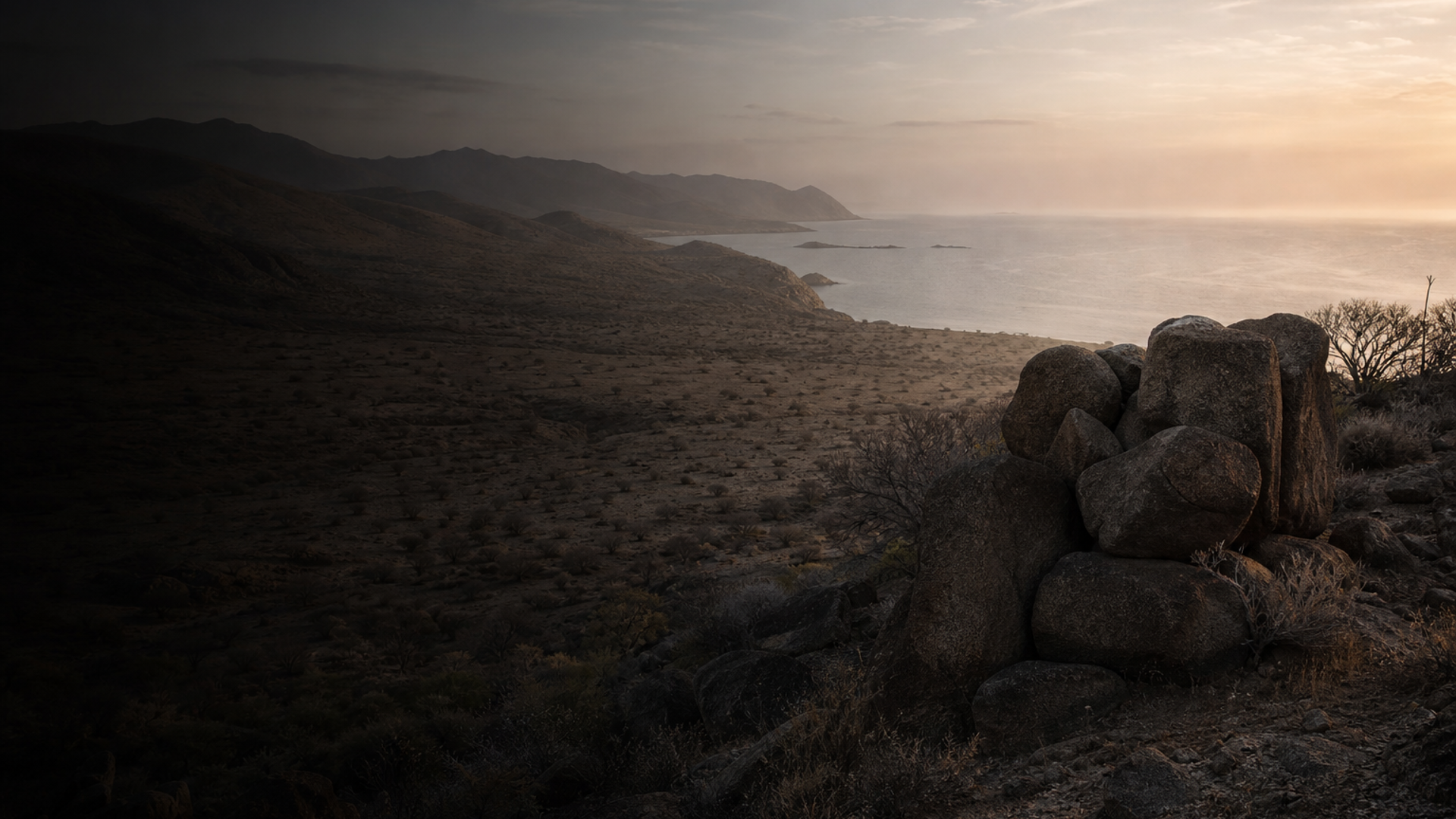
Along the jagged shorelines of southern Baja California, human presence is written in shells, chipped stone, and the bones of the sea. Archaeological investigations at sites such as LC-218 in Baja and Piedra Gorda (associated with the Las Palmas complex) place Pericúan cultural signatures across a long arc from ca. 3000 BCE into the early postcontact centuries. These occupations are characterized by coastal foraging economies and material assemblages that regional investigators have grouped under the Pericú/Las Palmas umbrella.

Archaeological data indicates episodic settlement of coastal and nearshore settings, where middens and toolkits record repeated exploitation of marine resources. The archaeological record alone suggests deep local roots but also change through time as technologies and contacts shifted. The genomic dataset for the Pericú currently comprises seven individuals sampled from LC-218 and Piedra Gorda; this small sample spans a vast chronological window and therefore offers only a first glimpse into origins and population dynamics. Limited evidence suggests continuity of Indigenous maternal lineages common across North and Central America, while paternal markers hint at deeper, more complex ancestries; both lines of evidence require larger, stratified samples to resolve demographic models with confidence.

  • Evidence from LC-218 and Piedra Gorda spans 3000 BCE–1700 CE
  • Coastal foraging and shell midden deposits are archaeological hallmarks
  • Seven aDNA samples provide preliminary insight but remain limited
Kapitel IV

Daily Life & Society

Imagine communities oriented toward surf and estuary, where tides dictated the rhythm of gathering and travel. Archaeological indicators from Pericú-associated sites point to diets rich in shellfish, fish, and other marine resources, supplemented by terrestrial hunting and plant foods where available. Material culture recovered in the region—stone tools, cutting implements, and curated artifacts—attests to skilled craft traditions adapted to a maritime environment.

Social life in coastal Baja likely combined mobility with persistent place-attachment: seasonal rounds would bring groups back to favored camps where middens, hearths, and interments accumulated. Burial practices documented in the region have been described as distinctive in past reports, but preservation biases and sparse sampling complicate reconstruction of social structure. Ethnographic parallels and archaeological patterning suggest small, kin-based groups with complex knowledge of navigation, resource scheduling, and intergroup exchange. The archaeological record offers evocative scenes of daily life but must be read cautiously alongside degraded or incomplete contexts.

  • Maritime resources dominated diet and technology
  • Seasonal mobility and repeated use of coastal camps
Kapitel V

Genetic Profile

The genetic portrait emerging from seven Pericú-associated individuals provides a preliminary but intriguing picture. Of the male Y-chromosome calls, haplogroup Q appears in four individuals, consistent with a major paternal lineage across Native American populations. One sample is assigned to haplogroup P; given the small dataset and potential coverage limitations, this may reflect a deep ancestral lineage or ambiguous resolution between related paternal branches. On the maternal side, mitochondrial haplogroups B (three individuals), C (two), and CZ (two) are reported. Haplogroups B and C are widespread in the Americas and align with patterns seen in many precontact Mexican and western North American populations; the CZ designation indicates either C or Z affinity when resolution is limited.

These results are compatible with archaeological signals of long-term regional continuity, but the sample count is fewer than ten, so interpretations must remain cautious. The distribution of maternal and paternal lineages could reflect local continuity, sex-biased mobility, or episodic contacts with neighboring groups. Low sample numbers, variable preservation, and potential temporal mixing across the 3000 BCE–1700 CE span mean that demographic models are provisional. Expanded, well-dated sampling and collaboration with descendant communities are essential to test hypotheses about population continuity, migration, and social organization in the Pericú world.

  • Y-DNA dominated by haplogroup Q; one P call requires cautious interpretation
  • mtDNA shows B, C, and ambiguous CZ lineages typical of Native American diversity
Kapitel VI

Legacy & Modern Connections

The Pericú story persists in the landscape: shell terraces, rock-shelters, and archaeological sites are palimpsests of lifeways finely tuned to a harsh maritime environment. Genetic data from seven individuals offers a tentative bridge between ancient inhabitants and broader Native American genetic clines, but direct ancestral claims to modern groups must be made carefully and in partnership with Indigenous communities.

Archaeogenetics can illuminate patterns of continuity and change, but when sample numbers are low and temporal coverage broad, results are best framed as hypotheses to guide further research. The true legacy of Pericú peoples lies in living descendant communities, stewardship of cultural heritage, and a research approach that blends archaeological detail, robust genomic sampling, and ethical collaboration. Together, these lines of evidence can reveal how coastal lifeways endured, adapted, and contributed to the human story along Baja California.

  • Genetic signals suggest links to wider Native American lineages but are preliminary
  • Responsible research requires community collaboration and expanded sampling
KI-gestützt

KI-Assistent

Stellen Sie Fragen zur Pericú of Baja California-Kultur

KI-Assistent von DNAGENICS

Funktion freischalten
Stellen Sie Fragen zur Kultur Pericú of Baja California. Unser KI-Assistent kann genetische Befunde, historischen Kontext, archäologische Belege und moderne Verbindungen erläutern.
Beispiel einer KI-Analyse

Die Pericú of Baja California-Kultur ist ein faszinierendes Kapitel der Menschheitsgeschichte...

Genetische Analysen zeigen Übereinstimmungen mit früheren Populationen und Hinweise auf besondere Anpassungen und kulturelle Innovationen. Alte DNA-Proben liefern Einblicke in Migrationsmuster, soziale Strukturen und genetische Verbindungen zwischen Populationen.

Dies ist eine Vorschau der KI-Analyse. Schalten Sie den vollständigen KI-Assistenten frei, um detaillierte Einblicke zu erkunden:

  • Genetische Zusammensetzung und genetische Ähnlichkeit
  • Migrationsmuster und Ursprünge
  • Alltag und kulturelle Praktiken
  • Genetischer Bezug zu heutigen Populationen

Weitere antike Kulturen erkunden

Geschichten von Zivilisationen aus der antiken Welt entdecken

Use code for 30% off • Expires Nov 08