Pre-Thracian Chalcolithic Echoes

Download PDF creates a visual, rasterized copy. Use Print for selectable text and better assistive-technology support.

Bericht wird vorbereitet

Verfügbare Informationen und Referenzen werden geladen

Verbindung mit dem archäologischen Quellenbestand...

Alte Quellen werden zusammengestellt

Zum Hauptinhalt springen
Pre-Thracian Chalcolithic Echoes
Zivilisations-Spotlight

Pre-Thracian Chalcolithic Echoes

A portrait of southeastern European communities between 5200–3100 BCE, seen through graves, gold, and genomes.

5204 CE - 3100 BCE
Bulgaria, Romania, Moldova
4 antike Proben
Scrollen zum Start
Kapitel I

Die Geschichte

Die Pre-Thracian Chalcolithic Echoes-Kultur verstehen

Archaeological and genetic data from 52 Chalcolithic individuals across Bulgaria, Romania, and Moldova reveal a mosaic of Neolithic farming continuity, local social complexity (notably Varna), and intriguing low-frequency paternal lineages. Findings are preliminary for several rare haplogroups.

Time Period

5204–3100 BCE

Region

Bulgaria, Romania, Moldova

Common Y-DNA

L (8), V88 (5), PF (3), M (2), FGC (2)

Common mtDNA

H (10), K (9), U (7), T (3), HV+ (2)

Kapitel II

Zeitleiste

Zentrale Momente in der Geschichte dieser Kultur

4500 BCE

Peak Varna funerary wealth

Richly furnished graves at Varna mark pronounced social inequality and extensive craft specialization in the mid‑5th millennium BCE.

Kapitel III

Origins & Emergence

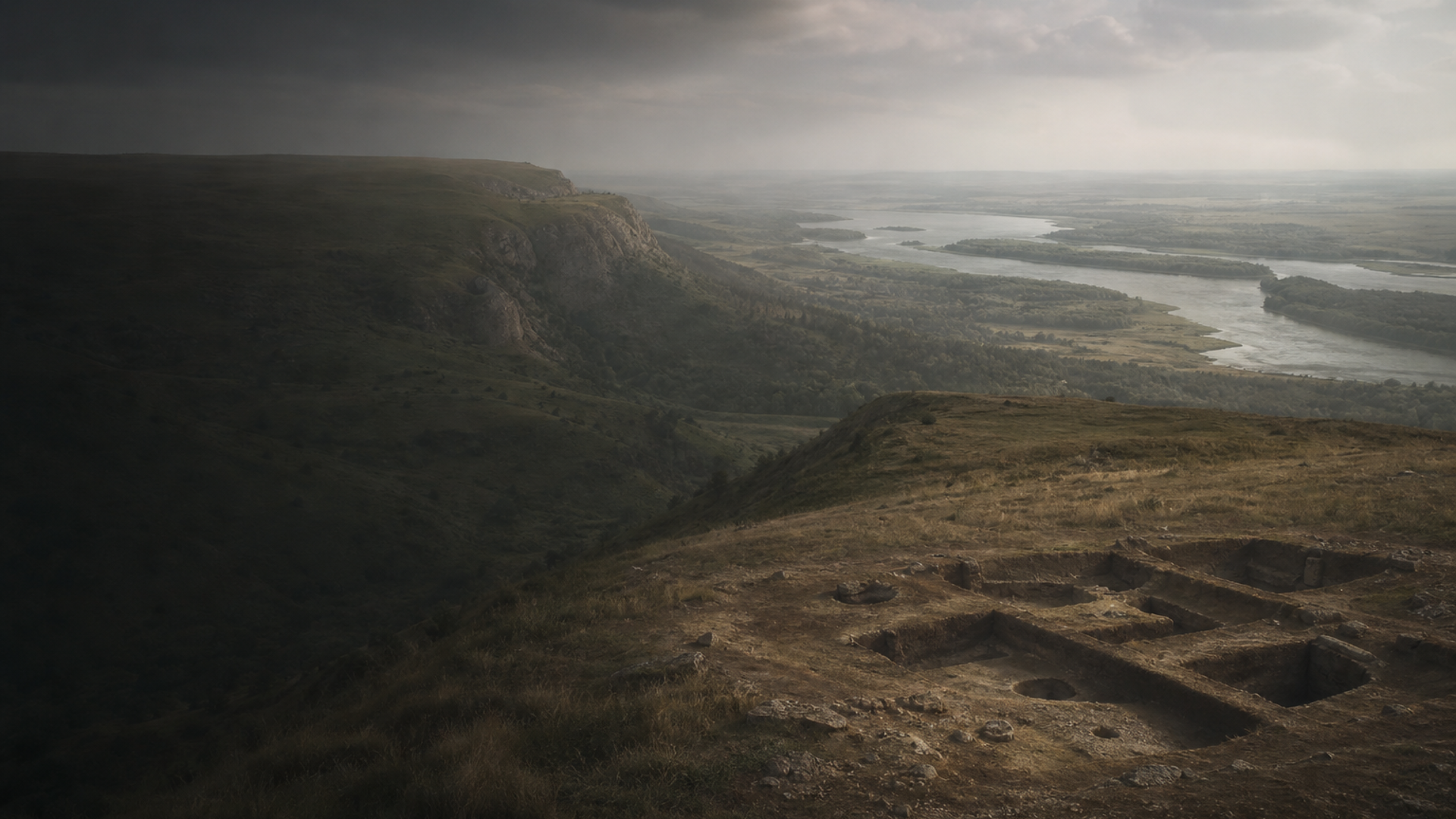
Across the rolling plains and river valleys of present-day Bulgaria, Romania and Moldova the archaeological record records a slow crescendo from Neolithic village life to Chalcolithic complexity. The chronological span represented by these 52 samples (5204–3100 BCE) captures sites associated with the Varna Complex (Varna, Petko Karavelovo), Gumelnița–Karanovo horizons (Yunatsite), and regional variants such as Boian and Gordinești.

Archaeological data indicates durable continuity of farming lifeways introduced earlier in the Neolithic, combined with increasing craft specialization: metallurgy and high-status burial practices appear particularly pronounced at Varna. Material links between Căscioarele, Sultana Valea (Călărași), Curătești, and Gordinești I suggest dense networks of exchange along rivers and coastal routes.

Limited evidence suggests that some social innovations emerged locally from long-standing farming communities rather than from sudden mass migrations; however, the incoming influences and contacts across the northern Black Sea and Aegean shores are visible in exotic materials and stylistic borrowings. The pace of change varies by site — e.g., the tell at Yunatsite shows occupational depth and transformation, whereas the Varna cemetery reflects striking ritual and social differentiation within the Chalcolithic timeframe.

  • Continuity of Neolithic farming lifeways across the region
  • Varna demonstrates marked social inequality and craft specialization
  • Site clusters imply riverine and coastal exchange networks
Kapitel IV

Daily Life & Society

Life in Pre-Thracian Chalcolithic communities combined household agriculture with emerging craft production. Excavations at Yunatsite and Petko Karavelovo reveal houses built in dense compounds, storage pits, and evidence for cereals, pulses, and livestock management. Pottery—often burnished and decorated—served both domestic and ritual roles.

The Varna cemetery (Varna, province Varna) provides a cinematic counterpoint: richly furnished graves with hammered gold, copper tools, and shells imply ranked society and long-distance value systems. Yet most people left simpler burials or settlement traces: everyday life was shaped by seasonal rhythms, craft specialists (potters, lithic and early copper workers), and exchange across the Danube and Black Sea littoral.

Settlement archaeology at Căscioarele and Curătești shows continuity of house plans alongside innovations such as storage architecture and workshop areas. Mortuary variability—some communal graves, some individual richly furnished burials—suggests flexible social identities and possibly inherited status for a minority. Archaeobotanical and zooarchaeological remains indicate a mixed subsistence base with growing reliance on secondary animal products and cultivated staples.

  • Mixed farming, herding, and early craft specialization
  • Varna burials indicate pronounced social differentiation alongside ordinary village life
Kapitel V

Genetic Profile

The genetic dataset of 52 individuals from Curătești, Căscioarele, Sultana Valea, Gordinești I, Petko Karavelovo, Varna, and Yunatsite provides a window into maternal and paternal diversity in the Chalcolithic lower Danube corridor. Mitochondrial haplogroups are dominated by H (10), K (9), and U (7), which is consistent with broad Neolithic farmer-related maternal ancestry in Europe combined with some persistence of hunter-gatherer–associated lineages (U). This maternal pattern aligns with archaeological indications of farming continuity.

On the paternal side, the apparent predominance of haplogroups labeled here as L (8) and V88 (5) is unexpected for Chalcolithic southeastern Europe and merits cautious interpretation. Low counts for several Y-chromosome lineages (PF: 3, M: 2, FGC: 2) mean conclusions about their population-wide importance are preliminary. Limited evidence suggests these rarer paternal signatures could reflect small-scale male-line contacts across the Mediterranean or Black Sea, survival of rare local lineages, or sampling variance; they do not necessarily indicate broad migrations.

Autosomal profiles from regional Chalcolithic contexts elsewhere typically show dominant Anatolian farmer ancestry with variable indigenous hunter-gatherer admixture and little steppe-related ancestry before ~3000 BCE. In this dataset, the overall pattern is compatible with farmer-derived genetic continuity, punctuated by low-frequency paternal diversity that requires more samples and higher-resolution analysis to interpret robustly.

  • mtDNA dominated by H, K, U—consistent with Neolithic farmer continuity
  • Unusual low-frequency Y lineages (L, V88) are intriguing but preliminary
Kapitel VI

Legacy & Modern Connections

The archaeological splendor of sites like Varna left a deep cultural imprint: goldsmithing traditions, social inequality visible in burial rites, and long-distance exchange networks anticipated later Bronze Age developments in the Balkans. Genetically, the regional signal of Neolithic farmer ancestry—visible in maternal lineages here—contributes to the deep genetic substratum of modern southeastern European populations.

However, continuity is not identity. Subsequent millennia brought Bronze Age migrations, Iron Age movements, and historic era population dynamics that reshaped genomic landscapes. Thus, while some modern groups in Bulgaria, Romania and Moldova may carry traces of these Chalcolithic ancestors, direct one-to-one cultural or genetic descent is complex and layered. Ongoing ancient DNA sampling and improved chronological coverage will refine how these prehistoric communities contributed to the genetic and cultural tapestry of the Balkans.
  • Varna's material culture influenced later regional craft and status display
  • Genetic continuity exists but was modified by later migrations; links are complex
Kapitel VII

Probenkatalog

4 alte DNA-Proben, die mit der Pre-Thracian Chalcolithic Echoes-Kultur in Verbindung stehen und genetische Einordnungen zu den Menschen dieses Zeitraums liefern.

4 / 4 Proben
Porträt Probe Land Epoche Datum Kultur Geschlecht Y-DNA mtDNA
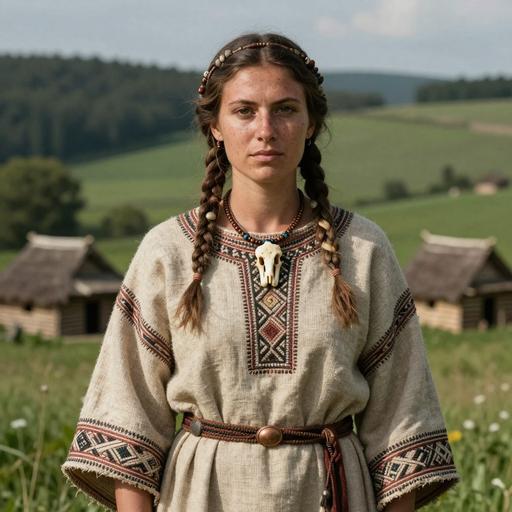
Künstlerische Rekonstruktion von N Boian individual, Romania
N Boian individual, Romania
Romania Romania_Curatesti_Boian_LN_Eneolithic 4931-4726 calBCE (5950±30 BP, Beta-440973) Pre-Thracian F - H
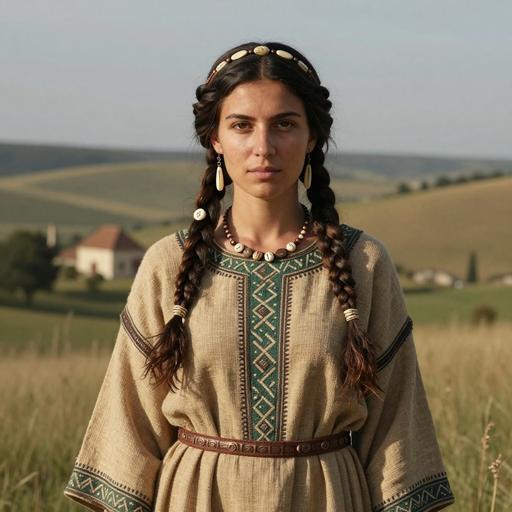
Künstlerische Rekonstruktion von N Boian individual, Romania
N Boian individual, Romania
Romania Romania_Curatesti_Boian_LN_Eneolithic 4984-4784 calBCE (5980±30 BP, Beta-440974) Pre-Thracian F - K1a+195
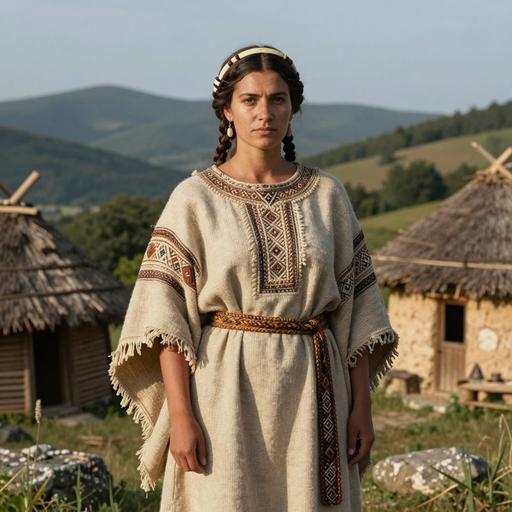
Künstlerische Rekonstruktion von N Boian individual, Romania
N Boian individual, Romania
Romania Romania_Curatesti_Boian_LN_Eneolithic 4984-4784 calBCE (5980±30 BP, Beta-430663) Pre-Thracian F - K1a+195
Künstlerische Rekonstruktion von N Boian individual, Romania
N Boian individual, Romania
Romania Romania_Curatesti_Boian_LN_Eneolithic 4938-4728 calBCE (5960±30 BP, Beta-440977) Pre-Thracian M G-L140 K1a+195
KI-gestützt

KI-Assistent

Stellen Sie Fragen zur Pre-Thracian Chalcolithic Echoes-Kultur

KI-Assistent von DNAGENICS

Funktion freischalten
Stellen Sie Fragen zur Kultur Pre-Thracian Chalcolithic Echoes. Unser KI-Assistent kann genetische Befunde, historischen Kontext, archäologische Belege und moderne Verbindungen erläutern.
Beispiel einer KI-Analyse

Die Pre-Thracian Chalcolithic Echoes-Kultur ist ein faszinierendes Kapitel der Menschheitsgeschichte...

Genetische Analysen zeigen Übereinstimmungen mit früheren Populationen und Hinweise auf besondere Anpassungen und kulturelle Innovationen. Alte DNA-Proben liefern Einblicke in Migrationsmuster, soziale Strukturen und genetische Verbindungen zwischen Populationen.

Dies ist eine Vorschau der KI-Analyse. Schalten Sie den vollständigen KI-Assistenten frei, um detaillierte Einblicke zu erkunden:

  • Genetische Zusammensetzung und genetische Ähnlichkeit
  • Migrationsmuster und Ursprünge
  • Alltag und kulturelle Praktiken
  • Genetischer Bezug zu heutigen Populationen

Weitere antike Kulturen erkunden

Geschichten von Zivilisationen aus der antiken Welt entdecken

Use code for 30% off • Expires Nov 08