Sagly Horizon: Ulaangom Burials

Download PDF creates a visual, rasterized copy. Use Print for selectable text and better assistive-technology support.

Zum Hauptinhalt springen
Zivilisations-Spotlight

Sagly Horizon: Ulaangom Burials

Early Iron Age funerary assemblage from Uvs aimag (405–57 BCE) connecting bones and genomes

405 CE - 57 BCE
Uvs aimag, Mongolia (Ulaangom, Chandman Uul)

Die Geschichte

Archaeological and genetic portrait of the Mongolia_EIA_Sagly_4 people (405–57 BCE) from Ulaangom cemetery, Uvs aimag. Eighteen genomes show a mix of West and East Eurasian maternal lineages and dominant Q/R paternal lineages, illuminating population dynamics on the western Mongolian steppe.

Time Period

405–57 BCE

Region

Uvs aimag, Mongolia (Ulaangom, Chandman Uul)

Common Y-DNA

Q (8), R (6), P (1)

Common mtDNA

T (3), U (3), C (3), F (2), H (2)

Zeitleiste

300 BCE

Active use of Ulaangom cemetery

Burials at the Chandman Uul Ulaangom cemetery, dated within the Early Iron Age Sagly horizon, reflect local funerary practices and community organization.

Origins & Emergence

In the shadow of the Chandman Uul ridges, the Ulaangom cemetery yields a cinematic but careful glimpse of a Small-steppe population during the Early Iron Age. Archaeological data indicates funerary activity at multiple graves — including Ulaangom cemetery graves #33, #35, #41, #46–49, and #58 — spanning roughly 405–57 BCE. The material culture recovered aligns with what archaeologists classify as the Sagly cultural horizon (Sagly Culture 4), a regional expression in western Mongolia that shows ties to broader steppe traditions.

Burials combine modest grave goods, deliberate body placement, and landscape-oriented cemetery planning, suggesting locally rooted communities with shared mortuary practices. Limited evidence suggests cultural interactions across the western Mongolian steppe: stylistic parallels in metalwork and horse gear point toward exchanges with neighboring groups to the west and south. The dataset comes from a single cemetery cluster in Ulaangom; while dense within that locus, it remains spatially limited. Archaeological interpretation therefore treats these burials as representative of a local community within the wider Sagly phenomenon rather than a comprehensive portrait of all eastern steppe populations.

  • Site cluster: Ulaangom cemetery, Chandman Uul, Uvs aimag
  • Date range: 405–57 BCE, Early Iron Age (Sagly Culture 4)
  • Local funerary traditions with steppe-wide stylistic ties

Daily Life & Society

Archaeological traces from the Ulaangom graves imply a community adapted to the high steppe's seasonal rhythms. Grave assemblages — often sparse but deliberate — include personal items that point to pastoral lifeways: harness fragments, simple metal ornaments, and tools consistent with herding economies. The distribution of burials within the Chandman Uul cemetery suggests household or lineage-based plots rather than isolated interments, evoking small, kin-focused residential groups.
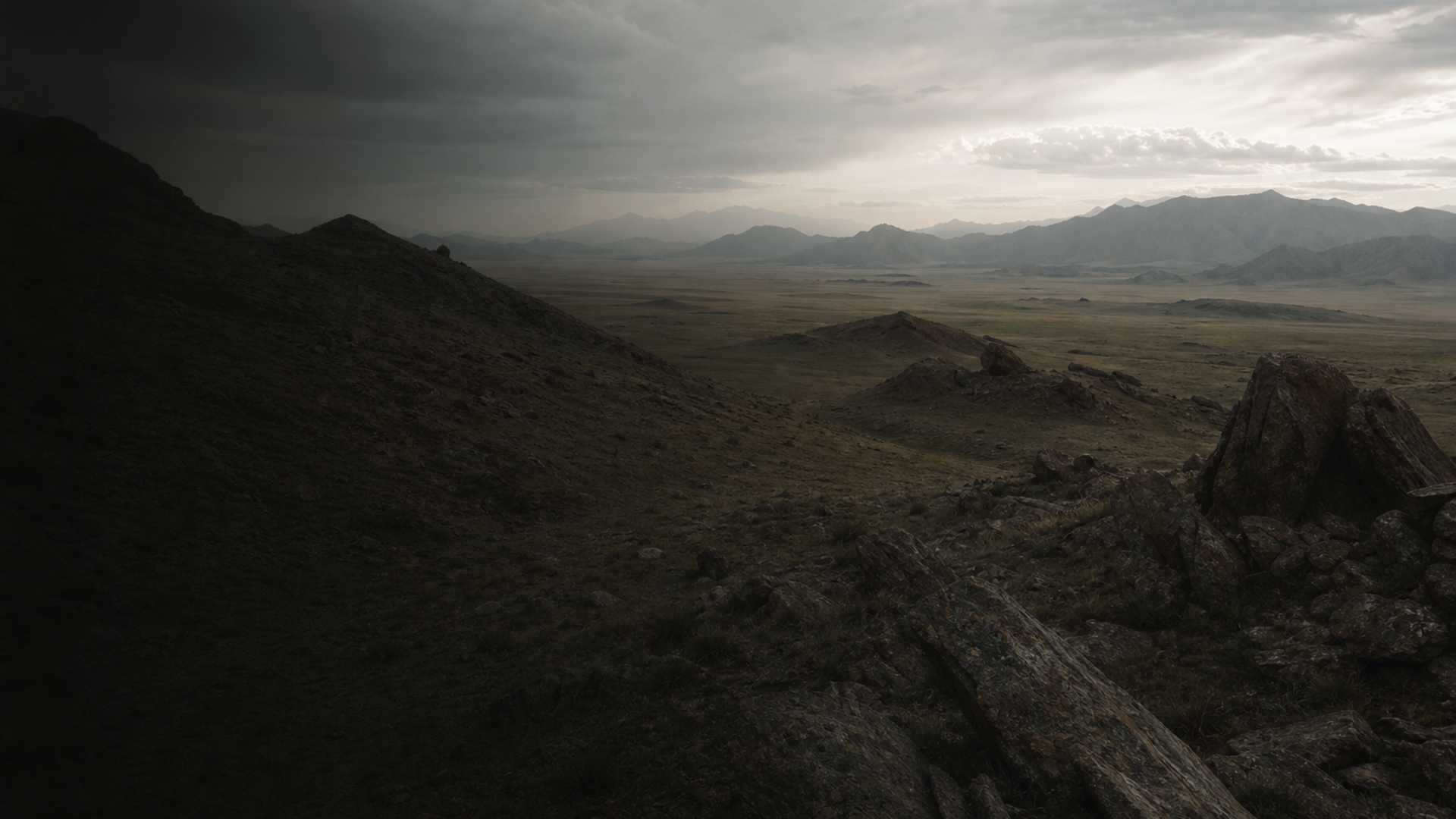

Ecological conditions in western Mongolia favor mobile herding of sheep, goats, horses, and camels. Textiles and leatherwork recovered in similar regional contexts indicate knowledge of composite craft traditions necessary for a mounted pastoral life. Social differentiation appears modest in these graves: few high-status markers are present, which may signal relatively egalitarian community structures or that elites were expressed through perishable items that rarely survive archaeologically. Archaeological data indicates strong engagement with the landscape — seasonal movement, communal pastures, and mortuary landmarks — all of which shaped identity and memory for people of the Sagly horizon.

  • Pastoral economy: herding and mounted mobility
  • Kin-based cemetery layout suggesting household groups

Genetic Profile

Eighteen ancient genomes from the Ulaangom cemetery provide a moderately robust window into population ancestry for this Early Iron Age locus. On the paternal side, common Y-chromosome haplogroups are dominated by Q (8 individuals) and R (6 individuals), with a single P lineage. Haplogroup Q is widespread in northern Eurasia and associated with Siberian and eastern steppe ancestries; R lineages reflect broader Eurasian connections often found across the steppe corridor. The presence of both suggests that male-mediated ancestry in this community reflects admixture or continuity between eastern Siberian and western steppe lineages.

Mitochondrial diversity shows a clear mixture of West and East Eurasian maternal lineages: T (3) and U (3) are typically West Eurasian-associated, while C (3) and F (2) are more common in East Asian and Siberian contexts; H (2) is another West Eurasian marker. This maternal blend supports an image of bi-directional gene flow on the western Mongolian frontier — women and men carrying both eastern and western mitochondrial signatures.

Caveats: all samples derive from a single cemetery cluster in Ulaangom (18 individuals). While the sample size is larger than many ancient datasets, geographic concentration limits broad generalizations; observed haplogroup frequencies reflect local population dynamics and should be integrated with wider regional datasets for robust models.

  • Paternal mix: Q dominant with substantial R presence
  • Maternal mix: West Eurasian (T, U, H) and East Eurasian (C, F) lineages

Legacy & Modern Connections

The genetic and archaeological signatures from Mongolia_EIA_Sagly_4 map onto a long history of interaction across the Eurasian steppe. The mixture of East and West Eurasian maternal lineages and the Q–R dominance on the Y-chromosome echo patterns later visible among broad steppe populations, suggesting continuity of mobility and exchange. These Ulaangom burials help trace strands of ancestry that contributed to the genetic tapestry of later Mongolic, Turkic, and multi-ethnic polities in Inner Asia.

For modern populations in western Mongolia and adjacent regions, the Sagly horizon represents one of many ancestral layers. Genomes from Ulaangom contribute to a finer-grained understanding of how local communities participated in continental networks of movement, marriage, and cultural transfer. Archaeological caution remains essential: these results illuminate a local community in a defined time window, not the full story of later historic groups.

  • Contributes ancestral components found in later steppe populations
  • Local cemetery data informs regional models of mobility and admixture

KI-Assistent

KI-Assistent von DNAGENICS

Funktion freischalten
Stellen Sie Fragen zur Kultur Sagly Horizon: Ulaangom Burials. Unser KI-Assistent kann genetische Befunde, historischen Kontext, archäologische Belege und moderne Verbindungen erläutern.
Beispiel einer KI-Analyse

Die Sagly Horizon: Ulaangom Burials-Kultur ist ein faszinierendes Kapitel der Menschheitsgeschichte...

Genetische Analysen zeigen Übereinstimmungen mit früheren Populationen und Hinweise auf besondere Anpassungen und kulturelle Innovationen. Alte DNA-Proben liefern Einblicke in Migrationsmuster, soziale Strukturen und genetische Verbindungen zwischen Populationen.

Dies ist eine Vorschau der KI-Analyse. Schalten Sie den vollständigen KI-Assistenten frei, um detaillierte Einblicke zu erkunden:

  • Genetische Zusammensetzung und genetische Ähnlichkeit
  • Migrationsmuster und Ursprünge
  • Alltag und kulturelle Praktiken
  • Genetischer Bezug zu heutigen Populationen
Use code for 30% off • Expires Nov 14




