Salt and Bone: Santa Rosa Island Chumash

Download PDF creates a visual, rasterized copy. Use Print for selectable text and better assistive-technology support.

Bericht wird vorbereitet

Verfügbare Informationen und Referenzen werden geladen

Verbindung mit dem archäologischen Quellenbestand...

Alte Quellen werden zusammengestellt

Zum Hauptinhalt springen
Salt and Bone: Santa Rosa Island Chumash
Zivilisations-Spotlight

Salt and Bone: Santa Rosa Island Chumash

Late precontact islanders whose shells, bones and DNA whisper of coastal lives and layered ancestry

1250 CE - 1450 CE
Santa Rosa Island, California, USA (CA-SRI-2B)
Scrollen zum Start
Kapitel I

Die Geschichte

Die Salt and Bone: Santa Rosa Island Chumash-Kultur verstehen

Archaeological and aDNA evidence from five individuals (CA-SRI-2B, Santa Rosa Island) dated 1250–1450 CE links Barbareno Chumash island lifeways to deep Indigenous maternal lineages (mtDNA A2). Small sample sizes make conclusions provisional.

Time Period

1250–1450 CE

Region

Santa Rosa Island, California, USA (CA-SRI-2B)

Common Y-DNA

Q (3 of 5)

Common mtDNA

A2 (5 of 5)

Kapitel II

Zeitleiste

Zentrale Momente in der Geschichte dieser Kultur

1250 CE

Island occupation intensifies at CA-SRI-2B

Archaeological deposits indicate increased use of Santa Rosa Island sites, with dense shell middens and burials dated to c.1250–1450 CE.

1542 CE

First recorded European contact in the region

Maritime explorers enter Channel Islands waters; long-term social and epidemiological impacts follow in subsequent centuries.

2020 CE

aDNA sampling and preliminary analysis

Five individuals from CA-SRI-2B analyzed for mitochondrial and Y-chromosome lineages, yielding preliminary haplogroup results.

Kapitel III

Origins & Emergence

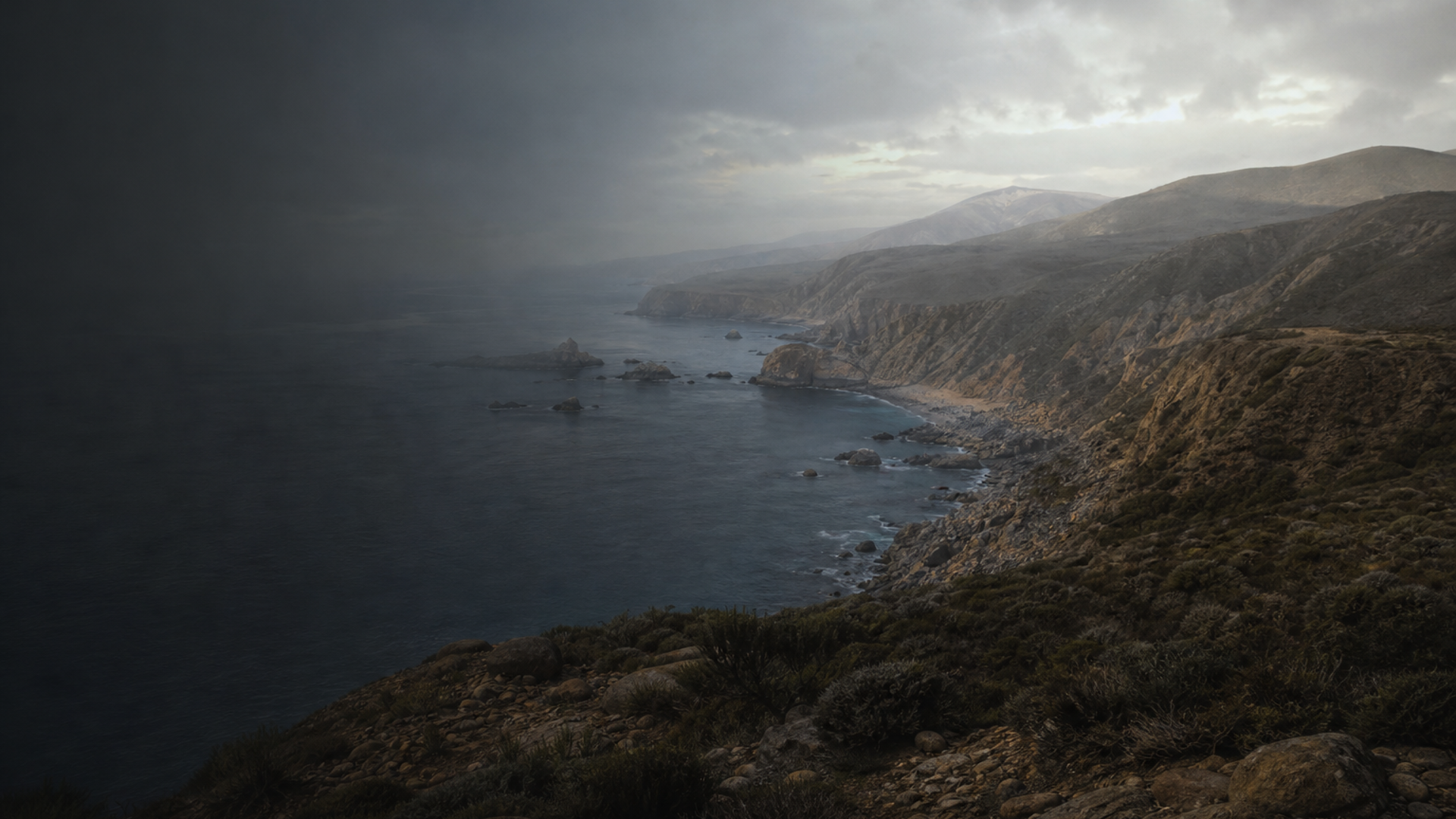
On the wind-scoured terraces of Santa Rosa Island, at the CA-SRI-2B locus known locally as Skull Gulch, human remains and midden deposits speak to island occupation in the centuries before sustained European contact. Archaeological data indicate occupation and intensive marine resource use between roughly 1250 and 1450 CE. Shell middens, stone tool assemblages and burial contexts suggest communities adapted to a maritime lifeway—tending close knowledge of kelp forests, seabirds and pinnipeds.

Genetic data from five sampled individuals provide a slender but evocative thread linking these islanders to broader Native American maternal lineages: all five carry mtDNA haplogroup A2, a lineage widespread across the Americas. Three of the five males sampled carry Y-haplogroup Q, a paternal lineage commonly found in Indigenous populations across North and Central America. These genetic signals are consistent with deep regional ancestry but—critically—are based on very few individuals. Limited evidence suggests continuity with earlier Channel Islands inhabitants, but small sample numbers and the complex social history of the California coast mean hypotheses about population origins and migration remain provisional.

Careful integration of stratigraphy, radiocarbon dates and aDNA—together with respect for descendant community knowledge—offers the best path forward to refine the picture of origin and emergence here.

  • Occupational window ca. 1250–1450 CE at CA-SRI-2B (Skull Gulch), Santa Rosa Island
  • Shell middens and tools indicate intensive maritime adaptation
  • All five samples show mtDNA A2; three males carry Y haplogroup Q — but sample size is small
Kapitel IV

Daily Life & Society

Life along the island’s salt-splashed ridgelines was shaped by the sea: fish, abalone, mussels and sea mammals punctuated diets, while rocky outcrops and sandy coves structured seasonal movement. Archaeological deposits at CA-SRI-2B contain dense shell refuse, fishbone, burned rock features and stone tools—evidence of repeated processing of marine resources and on-site food preparation. The Chumash maritime economy is archaeologically famous for plank watercraft (tomol) and a vibrant shell-bead exchange network; even where direct evidence of tomol construction is absent, the material culture of the Channel Islands reflects long-distance trade and social connectivity with mainland groups.

Social life likely combined small, kin-based households with broader ritual and exchange ties. Burials at island sites, sometimes accompanied by shell ornaments and food offerings, point to differentiated ritual practices and relationships to place. Yet many aspects of social organization—residence patterns, marriage networks, and the degree of year-round island occupation—remain incompletely documented at CA-SRI-2B. Archaeology provides compelling glimpses, but integrating oral histories and further excavation is essential to flesh out how these communities organized daily life beneath the salt haze.

  • Maritime diet dominated by shellfish, fish and occasional marine mammals
  • Material culture points to trade and social ties with mainland Chumash groups
Kapitel V

Genetic Profile

Genetic analysis of five individuals from CA-SRI-2B yields a concise but meaningful profile. All five preserve mitochondrial haplogroup A2, a foundational maternal lineage widely distributed among Indigenous peoples of the Americas. The uniform presence of A2 in this small sample hints at maternal continuity on Santa Rosa Island or within a closely related island lineage, but the sample size is too small to establish population-wide homogeneity.

On the paternal side, three of the sampled males carry Y-haplogroup Q, a lineage deeply rooted in Native American prehistory and common across North and Central America. The presence of Q is consistent with regional paternal ancestry patterns, but the absence of other Y-haplogroups in these five individuals should not be interpreted as absence in the past—sampling is limited and male lineages can be lost or overrepresented by chance.

From a population-genetic perspective, island communities often experience reduced effective population size and genetic drift, which can amplify certain haplogroups and obscure past diversity. The CA-SRI-2B results are therefore informative but preliminary: they suggest maternal continuity and paternal affiliation with broader Native American lineages, yet they cannot resolve questions of gene flow between island and mainland, timing of isolation, or finer-scale kinship without additional genomes. Community collaboration, expanded sampling, and comparative analyses with mainland Chumash and other Channel Islands aDNA will be needed to move from intriguing hints to robust models.

  • mtDNA A2 present in all five samples — suggests maternal continuity but is tentative
  • Y-DNA Q found in 3 of 5 males — consistent with wider Native American paternal lineages
Kapitel VI

Legacy & Modern Connections

The archaeological and genetic traces from CA-SRI-2B tie into living Chumash communities whose cultural memory continues to shape landscapes and relationships on the California coast. Genetic signals—especially when based on very small numbers—must be presented with humility: aDNA can suggest ancestral links, but it cannot by itself define cultural identity or replace the knowledge held by descendant peoples.
These five genomes open conversations: about continuity, interruption, and resilience. They underscore the importance of collaborative research frameworks that center tribal sovereignty, repatriation, and shared stewardship of sites and remains. Practically, results point to maternal lineages common in the Americas and paternal affiliations typical of regional Indigenous groups, aligning with broader expectations for Chumash-related ancestry while remaining provisional.

Responsible interpretation blends cinematic glimpses of island life with careful caveats about uncertainty. The bones and beads of Santa Rosa Island resonate with living traditions; future research—guided by scientific rigor and community partnership—can deepen our understanding without eclipsing the voices of those to whom this past belongs.

  • Findings suggest ancestral links to regional Indigenous lineages but remain provisional
  • Research must proceed with descendant community partnership and respect for repatriation
KI-gestützt

KI-Assistent

Stellen Sie Fragen zur Salt and Bone: Santa Rosa Island Chumash-Kultur

KI-Assistent von DNAGENICS

Funktion freischalten
Stellen Sie Fragen zur Kultur Salt and Bone: Santa Rosa Island Chumash. Unser KI-Assistent kann genetische Befunde, historischen Kontext, archäologische Belege und moderne Verbindungen erläutern.
Beispiel einer KI-Analyse

Die Salt and Bone: Santa Rosa Island Chumash-Kultur ist ein faszinierendes Kapitel der Menschheitsgeschichte...

Genetische Analysen zeigen Übereinstimmungen mit früheren Populationen und Hinweise auf besondere Anpassungen und kulturelle Innovationen. Alte DNA-Proben liefern Einblicke in Migrationsmuster, soziale Strukturen und genetische Verbindungen zwischen Populationen.

Dies ist eine Vorschau der KI-Analyse. Schalten Sie den vollständigen KI-Assistenten frei, um detaillierte Einblicke zu erkunden:

  • Genetische Zusammensetzung und genetische Ähnlichkeit
  • Migrationsmuster und Ursprünge
  • Alltag und kulturelle Praktiken
  • Genetischer Bezug zu heutigen Populationen

Weitere antike Kulturen erkunden

Geschichten von Zivilisationen aus der antiken Welt entdecken

Use code for 30% off • Expires Nov 08




