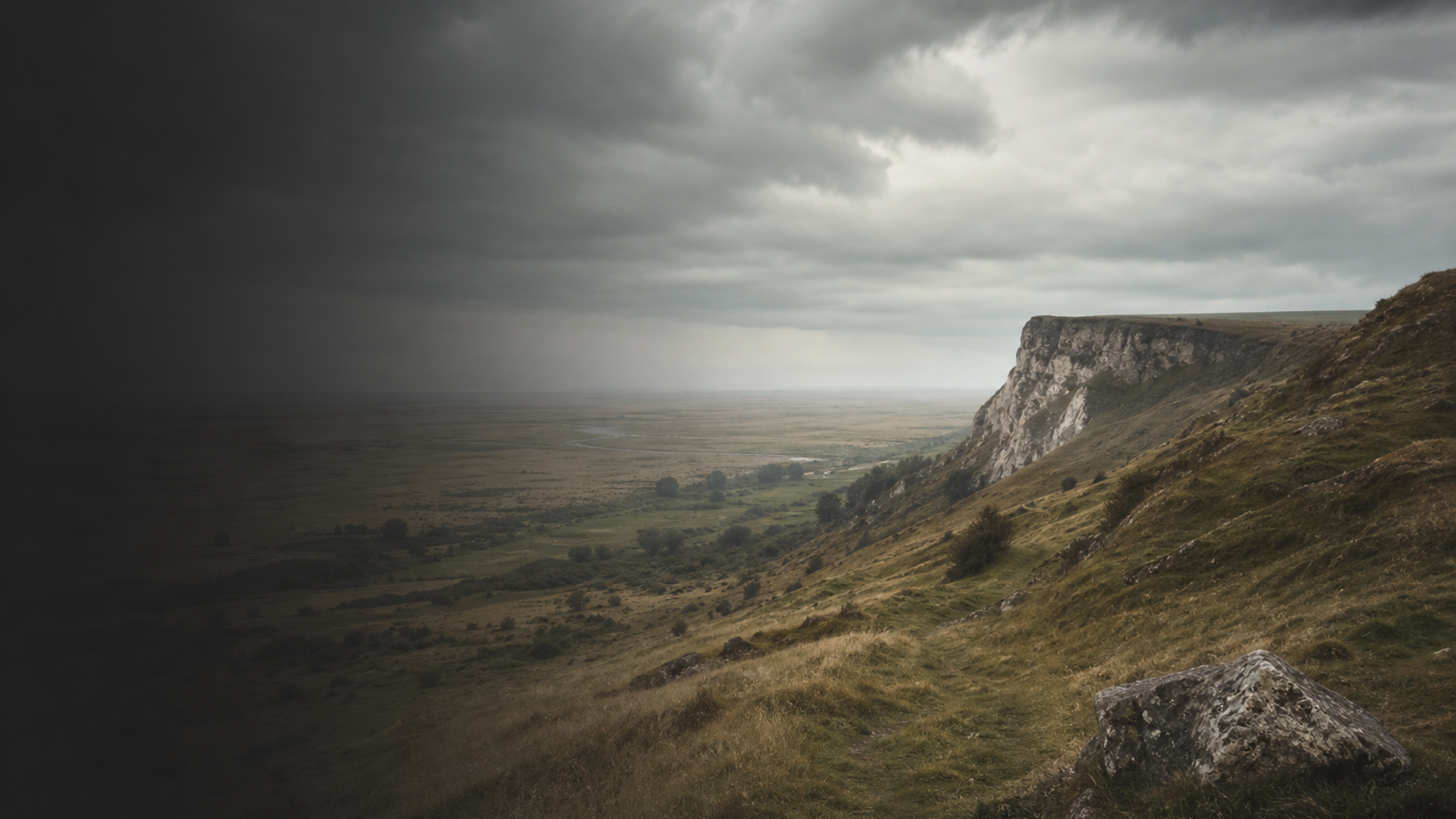
Saxon England: Echoes of Migration

Download PDF creates a visual, rasterized copy. Use Print for selectable text and better assistive-technology support.

Bericht wird vorbereitet

Verfügbare Informationen und Referenzen werden geladen

Verbindung mit dem archäologischen Quellenbestand...

Alte Quellen werden zusammengestellt

Zum Hauptinhalt springen
Saxon England: Echoes of Migration
Zivilisations-Spotlight

Saxon England: Echoes of Migration

Archaeology and genomes illuminate lives in early medieval eastern England.

400 CE - 1100 CE
Eastern England (Kent, Norfolk, Cambridgeshire, Suffolk)
Scrollen zum Start
Kapitel I

Die Geschichte

Die Saxon England: Echoes of Migration-Kultur verstehen

Archaeological sites in Kent, Norfolk and Cambridgeshire, paired with genome data from 86 individuals (400–1100 CE), reveal a mosaic of local continuity and continental migration that shaped early medieval England.

Time Period

c. 400–1100 CE

Region

Eastern England (Kent, Norfolk, Cambridgeshire, Suffolk)

Common Y-DNA

Varied — northern European lineages (e.g., I1, R1b‑U106, R1a)

Common mtDNA

Varied — Western Eurasian haplogroups (e.g., H, U, T, J)

Kapitel II

Zeitleiste

Zentrale Momente in der Geschichte dieser Kultur

410 CE

Roman withdrawal from Britain

Roman administration and legions depart Britain around 410 CE, precipitating social change and opening routes for migration and cultural realignment in subsequent centuries.

Kapitel III

Origins & Emergence

The transformation of Roman Britain into what historians call Saxon England unfolded over centuries rather than a single event. After the Roman military withdrawal around 410 CE, archaeological horizons change across eastern England: new cemetery forms, weapon and brooch types, and sunken-featured buildings appear at sites such as Eastry and Polhill in Kent, Oakington and Hatherdene in Cambridgeshire, Lakenheath in Suffolk, and Sedgeford in Norfolk. These material changes have long been read as expressions of incoming peoples from continental northwest Europe — from the Frisian, Saxon and Jutish coasts — interacting with local populations.

Archaeological data indicates a patchwork of adoption, cultural blending and local continuity. In some cemeteries inhumation graves with continental-style grave goods sit alongside burials that follow long-standing British practices, suggesting complex social processes: migration, elite emulation, and integration. The process also coincides with the early formation of Old English as a language and with the emergence of early political centres in Kent and East Anglia.

Limited evidence cautions against a simple migration narrative; instead the archaeological record points to regionally variable dynamics of movement, exchange, and cultural change, with eastern coastal counties showing the most pronounced continental signals.

  • Post‑Roman horizon marked by new burial types and material culture.
  • Key sites: Eastry (Kent), Oakington (Cambridgeshire), Lakenheath (Suffolk), Sedgeford (Norfolk).
  • Archaeological pattern: mixture of incoming traits and local continuity.
Kapitel IV

Daily Life & Society

Everyday life in Saxon England was a tapestry of farming, craft, kinship and shifting belief. Archaeobotanical and zooarchaeological remains from cemeteries and settlements show cereal cultivation (wheat, barley, rye), pastoral herding of cattle, sheep and pigs, and seasonal labour rhythms shaped by the temperate East Anglian landscape. Graves often contain personal items—iron knives, pins, beads, and occasionally weapons—indicating gendered roles and expressions of identity. Furnished burials at Sedgeford and Eastry suggest social differentiation: some individuals were interred with more lavish goods, hinting at local elites.

Settlement evidence points to small nucleated hamlets with timber halls and sunken-featured buildings; craft specializations such as metalworking and textile production are visible in stray finds and tool assemblages. Christianization in the 7th century (e.g., Canterbury’s missionary role in Kent) gradually altered ritual and burial customs, producing layered landscapes where pagan and Christian practices coexisted during transition.

Isotopic analyses from teeth and bones at some sites indicate varied childhood mobility and diets, reinforcing an image of a population with both local-born and nonlocal individuals. Taken together, material culture and bioarchaeology present a society negotiating new identities through daily practices, trade, and family ties.

  • Agrarian economy with localized craft production and evidence of trade.
  • Burials reflect social differentiation and changing ritual practice (pagan → Christian).
Kapitel V

Genetic Profile

Genome-wide data from 86 individuals dated between 400 and 1100 CE offer a substantial window into the biological landscapes of early medieval eastern England. Genetic results show a clinal pattern: many individuals cluster with continental northern European populations, while others are close to local Iron Age and Romano‑British clusters. This mixture supports archaeological interpretations of migration combined with local continuity rather than complete population replacement.

Patterns within cemeteries are heterogeneous: some burial grounds contain predominantly continental-like ancestry, others a strong local signal, and many show intermediate, admixed profiles. Where sex-specific markers and uniparental lineages are preserved, researchers observe examples consistent with some degree of male-biased continental migration (e.g., northern European Y-lineages appearing alongside local mitochondrial diversity), but this is not universal across sites. The most robust conclusion is of regionally variable admixture: eastern coastal counties — represented here by Kent, Cambridgeshire, Suffolk and Norfolk samples — display heavier continental input than many inland areas.

Although 86 samples provide meaningful resolution, regional and temporal sampling remains uneven; further genomes from western and northern Britain and greater chronological coverage would refine estimates of migration scale, timing and social patterns.

  • Spectrum of ancestry: continental northern European to local British — evidence of admixture.
  • Signs of sex-biased input in some sites, but patterns vary by cemetery and region.
Kapitel VI

Legacy & Modern Connections

The biological and cultural legacies of the Saxon centuries are woven into modern England. Linguistically, Old English, introduced and transformed during this era, forms the backbone of modern English. Genetically, populations in eastern and central England retain larger proportions of ancestry traceable to early medieval continental sources than some peripheral regions; however, later migrations (Viking, Norman) and continuous gene flow have reshaped the genetic landscape since 1100 CE.

For users of DNA ancestry platforms, these ancient genomes provide anchor points: they help distinguish signals of early medieval migration from earlier Bronze Age and later medieval inputs. Yet caution is essential—ancestry proportions derived from these samples reflect a specific set of sites concentrated in eastern England and a time span of seven centuries. As more genomes from other regions and social contexts are sequenced, our picture of who moved, why, and how they integrated will continue to sharpen.

  • Contributed to the genetic and linguistic foundations of eastern and central England.
  • Ancient genomes from these sites provide reference points but are regionally focused.
KI-gestützt

KI-Assistent

Stellen Sie Fragen zur Saxon England: Echoes of Migration-Kultur

KI-Assistent von DNAGENICS

Funktion freischalten
Stellen Sie Fragen zur Kultur Saxon England: Echoes of Migration. Unser KI-Assistent kann genetische Befunde, historischen Kontext, archäologische Belege und moderne Verbindungen erläutern.
Beispiel einer KI-Analyse

Die Saxon England: Echoes of Migration-Kultur ist ein faszinierendes Kapitel der Menschheitsgeschichte...

Genetische Analysen zeigen Übereinstimmungen mit früheren Populationen und Hinweise auf besondere Anpassungen und kulturelle Innovationen. Alte DNA-Proben liefern Einblicke in Migrationsmuster, soziale Strukturen und genetische Verbindungen zwischen Populationen.

Dies ist eine Vorschau der KI-Analyse. Schalten Sie den vollständigen KI-Assistenten frei, um detaillierte Einblicke zu erkunden:

  • Genetische Zusammensetzung und genetische Ähnlichkeit
  • Migrationsmuster und Ursprünge
  • Alltag und kulturelle Praktiken
  • Genetischer Bezug zu heutigen Populationen

Weitere antike Kulturen erkunden

Geschichten von Zivilisationen aus der antiken Welt entdecken

Use code for 30% off • Expires Nov 08