Sealand: Early Viking Voices

Download PDF creates a visual, rasterized copy. Use Print for selectable text and better assistive-technology support.

Bericht wird vorbereitet

Verfügbare Informationen und Referenzen werden geladen

Verbindung mit dem archäologischen Quellenbestand...

Alte Quellen werden zusammengestellt

Zum Hauptinhalt springen
Sealand: Early Viking Voices
Zivilisations-Spotlight

Sealand: Early Viking Voices

Genetic and archaeological glimpses from Sealand bogs and farms, 660–1000 CE

660 CE - 1000 CE
Sealand, Denmark
Scrollen zum Start
Kapitel I

Die Geschichte

Die Sealand: Early Viking Voices-Kultur verstehen

Six Early Viking Age individuals from Sealand (Tollemosegard, Hundstrup Mose) reveal a predominantly northern European genetic profile with diverse maternal lineages. Limited sample size means conclusions are preliminary; archaeological context suggests local continuity amid wider Viking Age networks.

Time Period

660–1000 CE

Region

Sealand, Denmark

Common Y-DNA

I (3), I1 (1)

Common mtDNA

H (2), J, HV6, V25, U

Kapitel II

Zeitleiste

Zentrale Momente in der Geschichte dieser Kultur

793 CE

Lindisfarne raid signals wider Viking activity

The 793 CE raid on Lindisfarne marks a dramatic intensification of Norse maritime activity across the North Sea, a background context for Sealand communities.

Kapitel III

Origins & Emergence

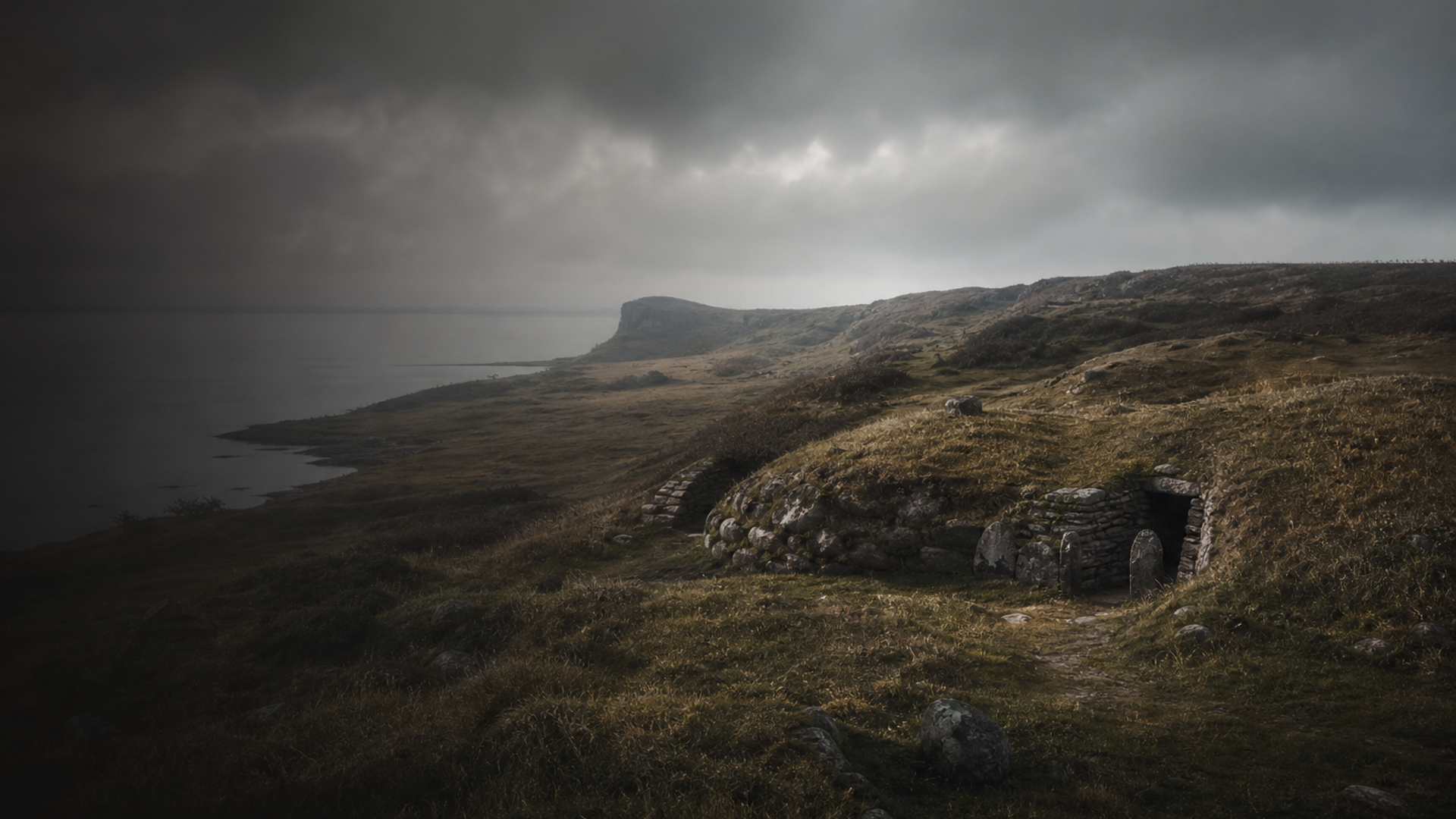
The Early Viking Age on Sealand unfolds like a misted shoreline: long-established agricultural communities encountering expanding maritime networks. Archaeological data from Tollemosegard and Hundstrup Mose dates to ca. 660–1000 CE and situates these individuals within a landscape of farms, wetlands, and coastal routes linking Denmark to the wider North Sea world. Excavations and survey work in Sealand reveal local settlement continuity from the late Iron Age into the Viking Age, but also signs of changing material culture — metalwork styles, boat gear, and imported objects — that reflect intensified contacts across Scandinavia and beyond.

Limited evidence suggests that wetland contexts at Hundstrup Mose were places of deposition and memory: peatlands often preserve organic materials and human remains in striking condition, preserving a direct window into local practices. Tollemosegard, by contrast, represents more terrestrial occupation traces where daily life and economy left a different archaeological signature. Together these sites capture both the rootedness of Sealand communities and their participation in the dynamic social currents of the Early Viking Age. Because the archaeological record is patchy and the genetic sample is small, interpretations emphasize plausibility and connection rather than firm population-wide claims.

  • Dates: ca. 660–1000 CE, Early Viking Age Denmark
  • Sites: Sealand — Tollemosegard (terrestrial), Hundstrup Mose (wetland)
  • Archaeological indicators of local continuity and increased long-distance contact
Kapitel IV

Daily Life & Society

Imagine a shoreline village on Sealand at dawn: peat smoke, fields of rye, and the creak of small boats being readied for short coastal voyages. Archaeological contexts from Tollemosegard suggest agrarian lifeways — houses, pits, and craft debris consistent with mixed farming, animal husbandry, and artisanal production. Wetland finds at Hundstrup Mose point to different practices of deposition and possibly ritual or accidental preservation of organic items. Material culture across Sealand shows both local traditions and imported objects, implying participation in exchange networks that brought people, ideas, and goods into regular circulation.

Society at this scale was likely organized around family groups and farmsteads, with social ties reinforced by marriage, trade, and occasional raiding or seasonal mobility. Grave goods are not abundant in these particular sample contexts, so reconstructing status or hierarchy is tentative. Archaeological data indicates continuity of landscape use and adaptive resilience to climatic and economic shifts of the early medieval North Sea. The human remains recovered are therefore best read as intimate, localized biographies that also speak to broader Viking Age dynamics.

  • Economy: mixed farming, craft production, coastal exchange
  • Social structure: farmsteads, household networks, regional connections
Kapitel V

Genetic Profile

Six sequenced individuals from Sealand provide a small but telling snapshot of Early Viking Age genetic diversity. Y-DNA in this set is dominated by haplogroup I (three individuals) with one specifically assigned to I1 — a lineage often associated in later periods with northern Scandinavian male ancestry. Mitochondrial diversity is greater: two H lineages, and one each of J, HV6, V25, and U, reflecting multiple maternal ancestries and typical European mitochondrial variability.

These genetic signals align with archaeological expectations for northern European communities: a predominance of local northern lineages with maternal inputs that may reflect regional mobility, patrilocal residence patterns, or broader marriage networks. However, the sample count is six — below ten — so conclusions must remain preliminary. Small samples are especially sensitive to kinship: a cluster of molecules can reflect a few related families rather than population-wide structure. Preservation biases in wetland versus terrestrial contexts can also skew which individuals are available for sequencing.

In comparative terms, Early Viking Age Denmark generally shows strong continuity with earlier Scandinavian genetic profiles, punctuated by movements and contacts across the North Sea. These Sealand samples add local resolution to that picture but require integration with larger datasets before firm demographic models can be drawn.

  • Predominant Y-DNA: I (3), including I1 (1) — suggests northern male continuity
  • Diverse mtDNA (H, J, HV6, V25, U) indicates multiple maternal ancestries; small sample size = preliminary
Kapitel VI

Legacy & Modern Connections

The echoes of Early Viking Age Sealand reach into the present in both subtle and measurable ways. Haplogroup I1, present among these individuals, remains common in modern Scandinavia and is often invoked as a marker of long-term northern male lineage continuity. Mitochondrial diversity seen in the samples mirrors patterns across later medieval and modern Danish populations, suggesting sustained regional genetic continuity with periodic influxes of new maternal lines.

Archaeogenetic work on Sealand is still nascent: with just six individuals, the story is suggestive rather than definitive. These genomes enrich the tapestry of Viking Age research by tying specific places — Tollemosegard and Hundstrup Mose — to human lives and movements. As more samples from Denmark and neighboring regions are published, researchers will be able to test hypotheses about mobility, kinship, and the genetic footprint of maritime networks that shaped northern Europe.

  • Continuity: elements of Sealand genetic profile align with modern Scandinavian lineages
  • Caution: small sample size underscores the need for more local ancient DNA
KI-gestützt

KI-Assistent

Stellen Sie Fragen zur Sealand: Early Viking Voices-Kultur

KI-Assistent von DNAGENICS

Funktion freischalten
Stellen Sie Fragen zur Kultur Sealand: Early Viking Voices. Unser KI-Assistent kann genetische Befunde, historischen Kontext, archäologische Belege und moderne Verbindungen erläutern.
Beispiel einer KI-Analyse

Die Sealand: Early Viking Voices-Kultur ist ein faszinierendes Kapitel der Menschheitsgeschichte...

Genetische Analysen zeigen Übereinstimmungen mit früheren Populationen und Hinweise auf besondere Anpassungen und kulturelle Innovationen. Alte DNA-Proben liefern Einblicke in Migrationsmuster, soziale Strukturen und genetische Verbindungen zwischen Populationen.

Dies ist eine Vorschau der KI-Analyse. Schalten Sie den vollständigen KI-Assistenten frei, um detaillierte Einblicke zu erkunden:

  • Genetische Zusammensetzung und genetische Ähnlichkeit
  • Migrationsmuster und Ursprünge
  • Alltag und kulturelle Praktiken
  • Genetischer Bezug zu heutigen Populationen

Weitere antike Kulturen erkunden

Geschichten von Zivilisationen aus der antiken Welt entdecken

Use code for 30% off • Expires Nov 08




