Sicily Early Bronze Age Peoples

Download PDF creates a visual, rasterized copy. Use Print for selectable text and better assistive-technology support.

Bericht wird vorbereitet

Verfügbare Informationen und Referenzen werden geladen

Verbindung mit dem archäologischen Quellenbestand...

Alte Quellen werden zusammengestellt

Zum Hauptinhalt springen
Sicily Early Bronze Age Peoples
Zivilisations-Spotlight

Sicily Early Bronze Age Peoples

Archaeology and ancient DNA reveal shifting communities across Sicily, 2872–1400 BCE.

2872 CE - 1400 BCE
Sicily, Italy
Scrollen zum Start
Kapitel I

Die Geschichte

Die Sicily Early Bronze Age Peoples-Kultur verstehen

Archaeological remains from Sicilian sites (Buffa, Castellucciana, Isnello, Vallone Inferno, Grotta dell’Uzzo) and ancient DNA from 13 individuals (2872–1400 BCE) illuminate population continuity and incoming Bronze Age influences. Genetic signals (Y: R, J; mtDNA: U, H, T, K) link local lineages to wider Mediterranean dynamics.

Time Period

2872–1400 BCE

Region

Sicily, Italy

Common Y-DNA

R (6), J (1)

Common mtDNA

U (3), H (3), T (2), K (2), H5a (1)

Kapitel II

Zeitleiste

Zentrale Momente in der Geschichte dieser Kultur

2872 BCE

Earliest sampled individual

The oldest directly dated individual in this series (c. 2872 BCE) anchors genetic continuity and interaction in early EBA Sicily.

Kapitel III

Origins & Emergence

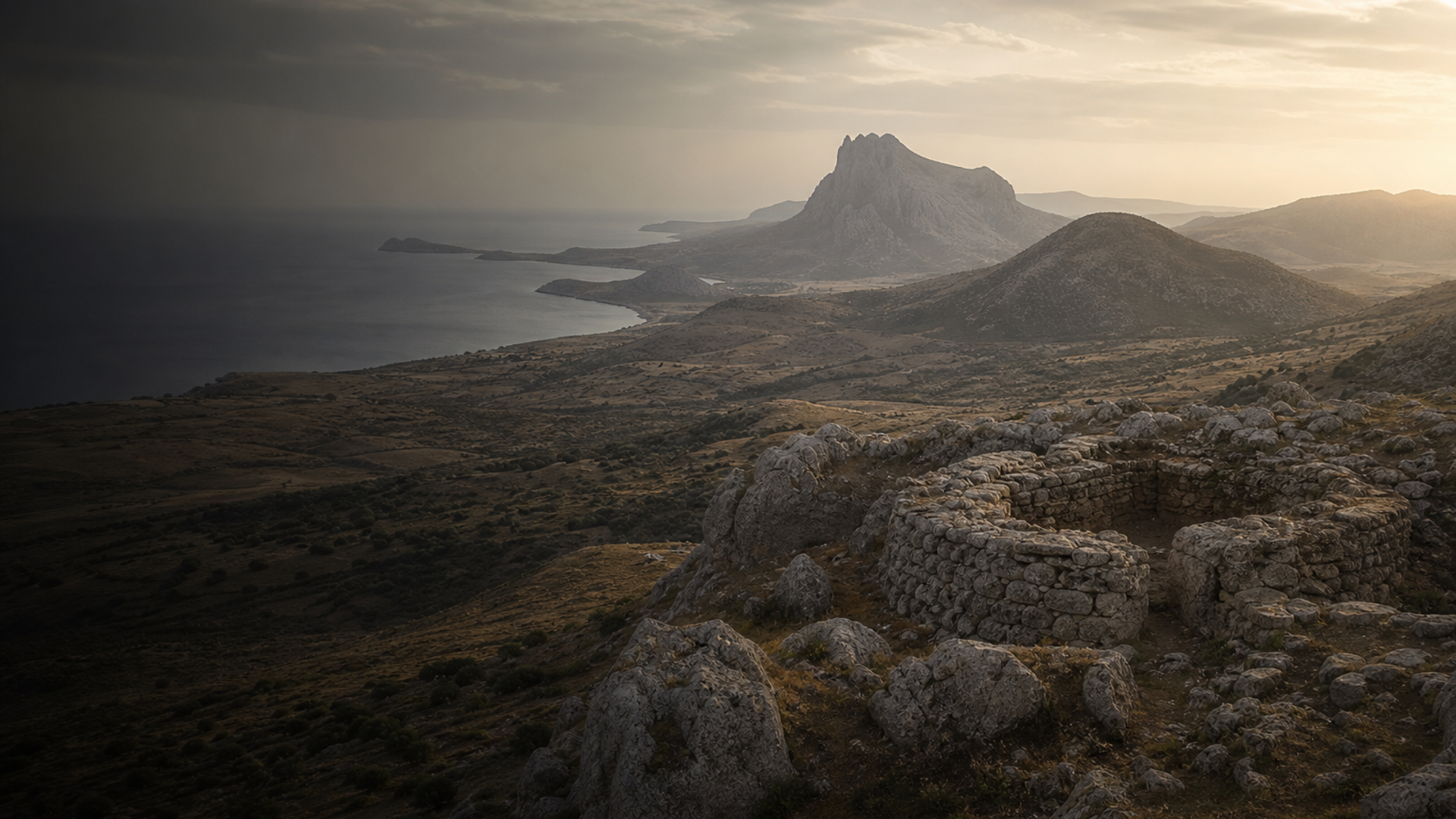
The Early Bronze Age of Sicily unfolds like a coastal dawn: long-standing island traditions meet new currents of people and material culture. Archaeological layers at Grotta dell’Uzzo, Buffa, Contrada Paolina (Castellucciana), Isnello and Vallone Inferno record continuity with Late Neolithic lifeways while also showing novel funerary practices, craft forms and imported objects that mark broader Mediterranean interaction.

Limited evidence suggests that some demographic change began by the late 3rd millennium BCE (our earliest sampled individual dates to 2872 BCE), consistent with the island’s role as a crossroads between Italy, the central Mediterranean and the Aegean. Archaeological data indicate localized settlement nucleation — small villages and cave use — and continuity of certain pottery styles alongside new types, implying both in situ development and influence from incoming groups.

The material record hints at shifting trade networks and mobility along maritime routes. However, the archaeological picture is regionally variable: some sites preserve long-term occupation sequences, others are episodic. Where ancient DNA is available, it provides a new axis to separate cultural change from biological movement. In all cases, conclusions remain cautious: archaeological patterns are complex, and genetic sampling remains modest in scale.

  • Sites: Grotta dell’Uzzo, Buffa, Castellucciana, Isnello, Vallone Inferno
  • Earliest sampled individual: 2872 BCE
  • Evidence for both continuity and external influence across the EBA
Kapitel IV

Daily Life & Society

Sicilian daily life in the Early Bronze Age combined coastal foraging, cereal cultivation and pastoralism, set against dramatic island landscapes. Caves such as Grotta dell’Uzzo preserve faunal remains indicating mixed diets: marine resources, domesticated sheep and pigs, and cultivated grains. Settlement traces at open-air sites and terraces suggest small household units with craft activity — stone working, pottery production and occasional long-distance exchange of exotic items.

Burial contexts range from simple inhumations to more elaborate placements with grave goods, implying varied social identities and perhaps differential access to prestige items. Archaeological indicators point to emerging social complexity without clear, island-wide hierarchical elites during much of the EBA. Mobility played a role: both seasonal movements of herds and longer-range voyages brought people and ideas into contact.

Material culture evokes a lived landscape of continuity and change: familiar forms of pottery and toolkits endure, while new motifs and imported objects appear intermittently. Limited settlement sizes and the mosaic of site types suggest community-level organization rather than large urban centers. This patchwork supports a story of resilient island life adapting to broader Bronze Age networks.

  • Mixed subsistence: agriculture, herding, marine resources
  • Small settlements, varied burial practices, evidence of craft and exchange
Kapitel V

Genetic Profile

Thirteen ancient individuals from Sicily dated between 2872 and 1400 BCE provide a snapshot of Early Bronze Age island genetics. The male Y-DNA distribution is dominated by haplogroup R (6 individuals) and includes J (1 individual). Maternal lineages are diverse: U (3), H (3), T (2), K (2) and H5a (1).

Archaeogenetic interpretation: R lineages are widespread in Bronze Age Europe and their presence here is consistent with gene flow or demographic influence from mainland continental or island populations during the 3rd–2nd millennia BCE. The single J lineage may reflect eastern Mediterranean connections that archaeology has long hinted at. Maternal haplogroups H and U are common across Europe since the Neolithic and earlier; their persistence in Sicily suggests substantial continuity of local female-line ancestry alongside incoming male-biased signals.

Caveats and context: with 13 samples the dataset is informative but modest. Patterns—such as a predominance of R among males—are notable but preliminary; more sampling is needed to test sex-biased migration hypotheses, population structure between inland and coastal sites, and timing of admixture. Genomic data combined with isotope and archaeological context (sites: Buffa, Castellucciana, Isnello, Vallone Inferno, Grotta dell’Uzzo) allows cautious reconstructions of mobility and interaction across the central Mediterranean.

  • 13 individuals sampled (2872–1400 BCE) — informative but modest sample size
  • Y-DNA shows R predominance; mtDNA indicates continuity with Neolithic maternal lineages
Kapitel VI

Legacy & Modern Connections

The Early Bronze Age peoples of Sicily contributed threads to the island’s deep genetic tapestry. Maternal haplogroups common in these ancient individuals (H, U, T, K) persist in Mediterranean populations today, while paternal signals (R, J) echo broader Bronze Age movements that shaped European and Mediterranean ancestry profiles.

Archaeologically, the EBA set patterns of coastal connectivity and local resilience that would influence later cultural formations on Sicily. Genetically, these individuals exemplify how islands can preserve blends of long-standing local ancestry and waves of incoming lineages. Limited sample sizes mean direct lines to specific modern populations are suggestive rather than definitive; nevertheless, combining archaeology with ancient DNA yields a cinematic, evidence-based view of how early Bronze Age Sicilians lived, moved and contributed to the genetic heritage of the central Mediterranean.

  • mtDNA continuity suggests long-term maternal ancestry in the region
  • Paternal haplogroups reflect Bronze Age-wide demographic processes
KI-gestützt

KI-Assistent

Stellen Sie Fragen zur Sicily Early Bronze Age Peoples-Kultur

KI-Assistent von DNAGENICS

Funktion freischalten
Stellen Sie Fragen zur Kultur Sicily Early Bronze Age Peoples. Unser KI-Assistent kann genetische Befunde, historischen Kontext, archäologische Belege und moderne Verbindungen erläutern.
Beispiel einer KI-Analyse

Die Sicily Early Bronze Age Peoples-Kultur ist ein faszinierendes Kapitel der Menschheitsgeschichte...

Genetische Analysen zeigen Übereinstimmungen mit früheren Populationen und Hinweise auf besondere Anpassungen und kulturelle Innovationen. Alte DNA-Proben liefern Einblicke in Migrationsmuster, soziale Strukturen und genetische Verbindungen zwischen Populationen.

Dies ist eine Vorschau der KI-Analyse. Schalten Sie den vollständigen KI-Assistenten frei, um detaillierte Einblicke zu erkunden:

  • Genetische Zusammensetzung und genetische Ähnlichkeit
  • Migrationsmuster und Ursprünge
  • Alltag und kulturelle Praktiken
  • Genetischer Bezug zu heutigen Populationen

Weitere antike Kulturen erkunden

Geschichten von Zivilisationen aus der antiken Welt entdecken

Use code for 30% off • Expires Nov 08




