Sicily's Middle Neolithic Echoes

Download PDF creates a visual, rasterized copy. Use Print for selectable text and better assistive-technology support.

Bericht wird vorbereitet

Verfügbare Informationen und Referenzen werden geladen

Verbindung mit dem archäologischen Quellenbestand...

Alte Quellen werden zusammengestellt

Zum Hauptinhalt springen
Sicily's Middle Neolithic Echoes
Zivilisations-Spotlight

Sicily's Middle Neolithic Echoes

Six genomes from Grotta dell'Uzzo and Fossato di Stretto Partana, 4988–3951 BCE

4988 CE - 3951 BCE
Sicily, Italy
Scrollen zum Start
Kapitel I

Die Geschichte

Die Sicily's Middle Neolithic Echoes-Kultur verstehen

Genomes from six Middle Neolithic Sicilians (4988–3951 BCE) illuminate island life: Anatolian-derived farmers blended with local hunter-gatherers. Limited samples mean conclusions are provisional; archaeological context from Grotta dell’Uzzo and Fossato di Stretto Partana anchors genetic signals.

Time Period

4988–3951 BCE

Region

Sicily, Italy

Common Y-DNA

C (observed in 2/6)

Common mtDNA

K (3), H (2), X2b (1)

Kapitel II

Zeitleiste

Zentrale Momente in der Geschichte dieser Kultur

4500 BCE

Middle Neolithic occupations at Grotta dell’Uzzo

Grotta dell’Uzzo records coastal habitation and burials illustrating the fusion of farming and foraging in Sicily around 4500 BCE.

Kapitel III

Origins & Emergence

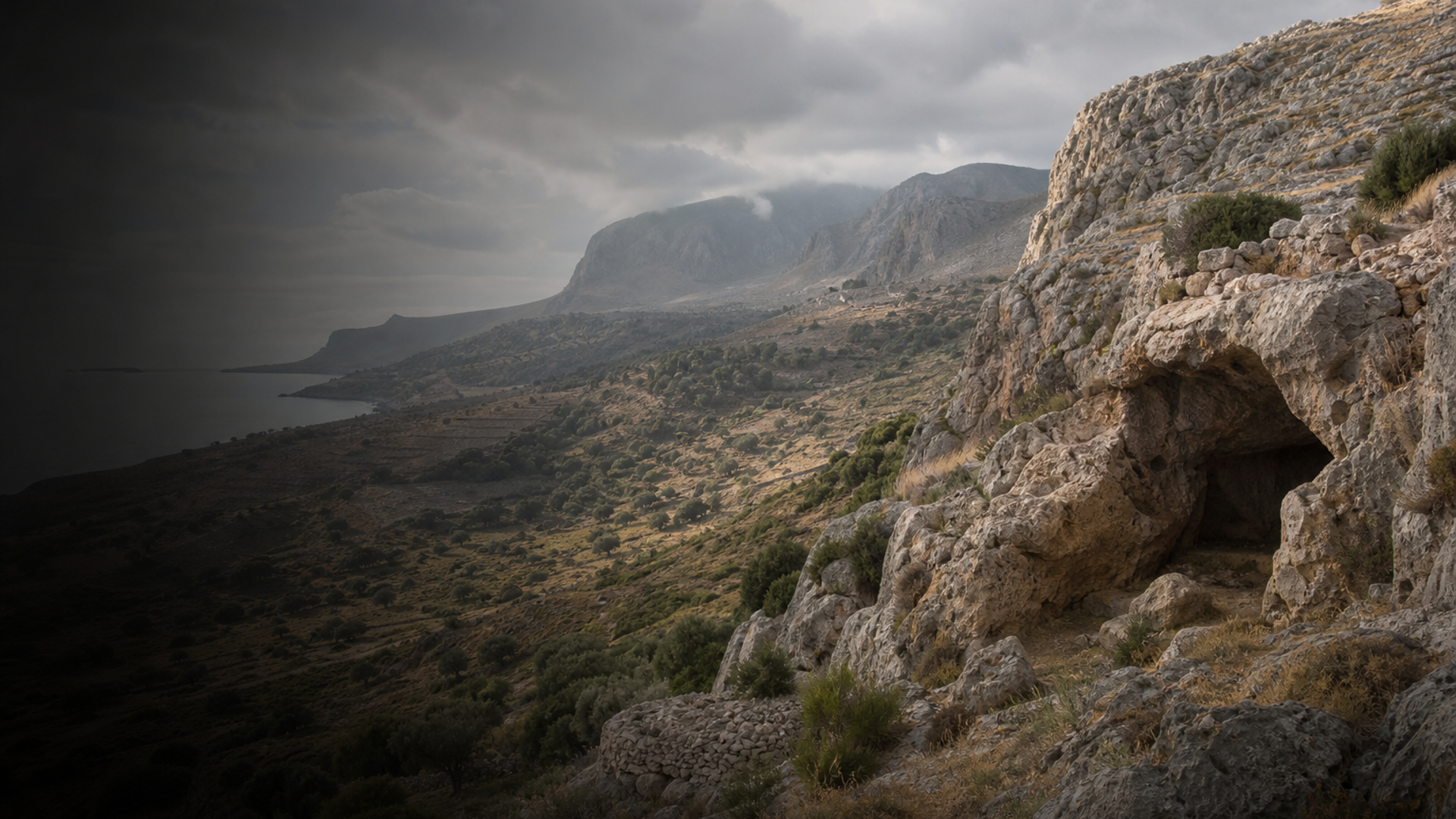
The Middle Neolithic of Sicily, dated here between 4988 and 3951 BCE, unfolds along limestone coasts and in karst caves where people left layered traces of daily life. Archaeological data indicates that sites such as Grotta dell’Uzzo and Fossato di Stretto Partana were focal points for settlement and burial activity. Pottery styles, polished stone tools, and plant and animal remains show a community shaped by the spread of farming across the central Mediterranean.

Genetic data from six individuals provides a window into that process: the results are consistent with incoming Anatolian-derived early farmers mixing with indigenous hunter-gatherer groups already present on the island. Limited evidence suggests this integration was variable across households and generations, producing mosaic communities rather than a single homogeneous population.

Landscape and seascape mattered. Caves like Grotta dell’Uzzo preserve stratified sequences where coastal resources and cultivated crops intersect, and the material culture hints at seasonal mobility and localized exchange networks. While the archaeology paints a picture of everyday adaptation, the ancient DNA anchors that story in biological kinship, revealing movement and mixture on the human level. Because the sample set is small, these interpretations remain provisional and invite further excavation and sequencing to refine the narrative.

  • Middle Neolithic Sicily, 4988–3951 BCE
  • Key sites: Grotta dell’Uzzo; Fossato di Stretto Partana
  • Evidence of Anatolian farmer influence plus local hunter-gatherer ancestry
Kapitel IV

Daily Life & Society

The people of Sicily’s Middle Neolithic lived where sea wind met cultivated terraces. Archaeological remains—pottery sherds, grinding stones, animal bones and plant residues—suggest an economy based on cereal cultivation, herding of sheep and goats, and continued use of marine and freshwater resources. Shell middens and fish bones attest to sophisticated coastal foraging that complemented domestic production.

Homes and habitations are often inferred from hearths, refuse pits and the distribution of ceramic types; cave sites preserved both domestic debris and burials, allowing archaeologists to link material culture with mortuary practice. Social life likely revolved around kin groups, seasonal rounds, and reciprocal exchange of crafted goods. Ornamentation and decorated pottery indicate aesthetic values and possibly signaling of group identity across short-distance networks.

Archaeogenetic approaches add an intimate layer to these reconstructions: DNA from individuals can reveal kinship ties within graves, sex-biased mobility, and whether households were founded by local lineages or incoming families. In Sicily’s case, preliminary genetic data hint at both continuity and new ancestry arriving with farming, suggesting that daily life was a negotiation between inherited traditions and novel practices. Further multidisciplinary work (archaeozoology, archaeobotany, isotopes) will clarify diet, mobility and social structure.

  • Mixed economy: cereals, herding, and coastal foraging
  • Cave sites preserve both domestic debris and burials enabling kinship studies
Kapitel V

Genetic Profile

The genetic snapshot from six Middle Neolithic Sicilians (samples from Grotta dell’Uzzo and Fossato di Stretto Partana) offers a tentative but evocative portrait. Mitochondrial haplogroups are dominated by K (3 individuals), with H (2) and X2b (1) present—patterns commonly associated with early Neolithic farmers across Europe and the Mediterranean. On the paternal side, two individuals carry Y-haplogroup C, a lineage that is uncommon in later European prehistoric populations but has been observed sporadically in Neolithic and Mesolithic contexts.

Archaeogenetic analyses indicate that these individuals most likely belonged to populations carrying predominantly Anatolian-derived farmer ancestry, layered with variable amounts of local hunter-gatherer (western hunter-gatherer-type) ancestry. This mixture aligns with archaeological indicators of cultural continuity interwoven with new farming technologies. However, because only six genomes are available, any demographic inference must be treated as preliminary. Small-sample noise can exaggerate the importance of rare lineages; the presence of Y-haplogroup C in two of six people is intriguing but not yet conclusive evidence for a widespread paternal pattern.

Future increases in sample size, genome coverage, and comparative datasets from neighboring regions will allow more precise estimation of admixture proportions, kinship patterns within burial groups, and the timing of genetic inputs into Sicily. For now, the data signal both connectivity and local persistence in a changing Neolithic Mediterranean landscape.
  • mtDNA dominated by K (3), with H (2) and X2b (1)
  • Y-DNA shows C in 2 of 6 — intriguing but preliminary
Kapitel VI

Legacy & Modern Connections

The Middle Neolithic inhabitants of Sicily contributed threads to the long tapestry of Mediterranean population history. Genetic signals associated with Anatolian-derived farmers spread across the islands and mainland, shaping the ancestry of later Neolithic and Bronze Age communities. Some mitochondrial lineages observed in these six individuals (notably haplogroup K) persist at low frequencies in modern southern European and Mediterranean populations, indicating continuity of certain maternal lines.

Archaeologically, the material traditions and subsistence strategies established in this era helped stabilize human presence on the island, setting patterns of agriculture, herding and marine exploitation that endured and adapted through subsequent millennia. Yet caution is warranted: the sample count is small (<10), so links between these particular genomes and broad modern populations are suggestive rather than definitive. Ongoing aDNA sampling across Sicily and the central Mediterranean will clarify how much of the island’s present-day genetic landscape descends from these Middle Neolithic groups versus later migrations and admixture events.

  • Some maternal lineages (e.g., mtDNA K) show long-term persistence
  • Small sample size means modern connections are provisional
KI-gestützt

KI-Assistent

Stellen Sie Fragen zur Sicily's Middle Neolithic Echoes-Kultur

KI-Assistent von DNAGENICS

Funktion freischalten
Stellen Sie Fragen zur Kultur Sicily's Middle Neolithic Echoes. Unser KI-Assistent kann genetische Befunde, historischen Kontext, archäologische Belege und moderne Verbindungen erläutern.
Beispiel einer KI-Analyse

Die Sicily's Middle Neolithic Echoes-Kultur ist ein faszinierendes Kapitel der Menschheitsgeschichte...

Genetische Analysen zeigen Übereinstimmungen mit früheren Populationen und Hinweise auf besondere Anpassungen und kulturelle Innovationen. Alte DNA-Proben liefern Einblicke in Migrationsmuster, soziale Strukturen und genetische Verbindungen zwischen Populationen.

Dies ist eine Vorschau der KI-Analyse. Schalten Sie den vollständigen KI-Assistenten frei, um detaillierte Einblicke zu erkunden:

  • Genetische Zusammensetzung und genetische Ähnlichkeit
  • Migrationsmuster und Ursprünge
  • Alltag und kulturelle Praktiken
  • Genetischer Bezug zu heutigen Populationen

Weitere antike Kulturen erkunden

Geschichten von Zivilisationen aus der antiken Welt entdecken

Use code for 30% off • Expires Nov 08




