Sitifis: Numido‑Roman Berber Lives

Download PDF creates a visual, rasterized copy. Use Print for selectable text and better assistive-technology support.

Bericht wird vorbereitet

Verfügbare Informationen und Referenzen werden geladen

Verbindung mit dem archäologischen Quellenbestand...

Alte Quellen werden zusammengestellt

Zum Hauptinhalt springen
Sitifis: Numido‑Roman Berber Lives
Zivilisations-Spotlight

Sitifis: Numido‑Roman Berber Lives

Three skeletal voices from Sitifis illuminate Berber life under Roman skies, cautiously linked to North African genetic threads.

40 BCE - 210 CE
Sitifis (Sétif), Algeria
Scrollen zum Start
Kapitel I

Die Geschichte

Die Sitifis: Numido‑Roman Berber Lives-Kultur verstehen

Archaeological remains from the Necropole Orientale at Sitifis (Sétif, Algeria), dated 40 BCE–210 CE, reveal everyday and funerary practices of Numido‑Roman Berber communities. Ancient DNA from three individuals offers preliminary genetic glimpses that must be treated cautiously.

Time Period

40 BCE – 210 CE

Region

Sitifis (Sétif), Algeria

Common Y-DNA

Unknown / insufficient data (3 samples)

Common mtDNA

Unknown / insufficient data (3 samples)

Kapitel II

Zeitleiste

Zentrale Momente in der Geschichte dieser Kultur

46 BCE

Roman annexation of Numidia

Rome consolidates control over Numidia, accelerating administrative and cultural integration across the region including Sitifis.

Kapitel III

Origins & Emergence

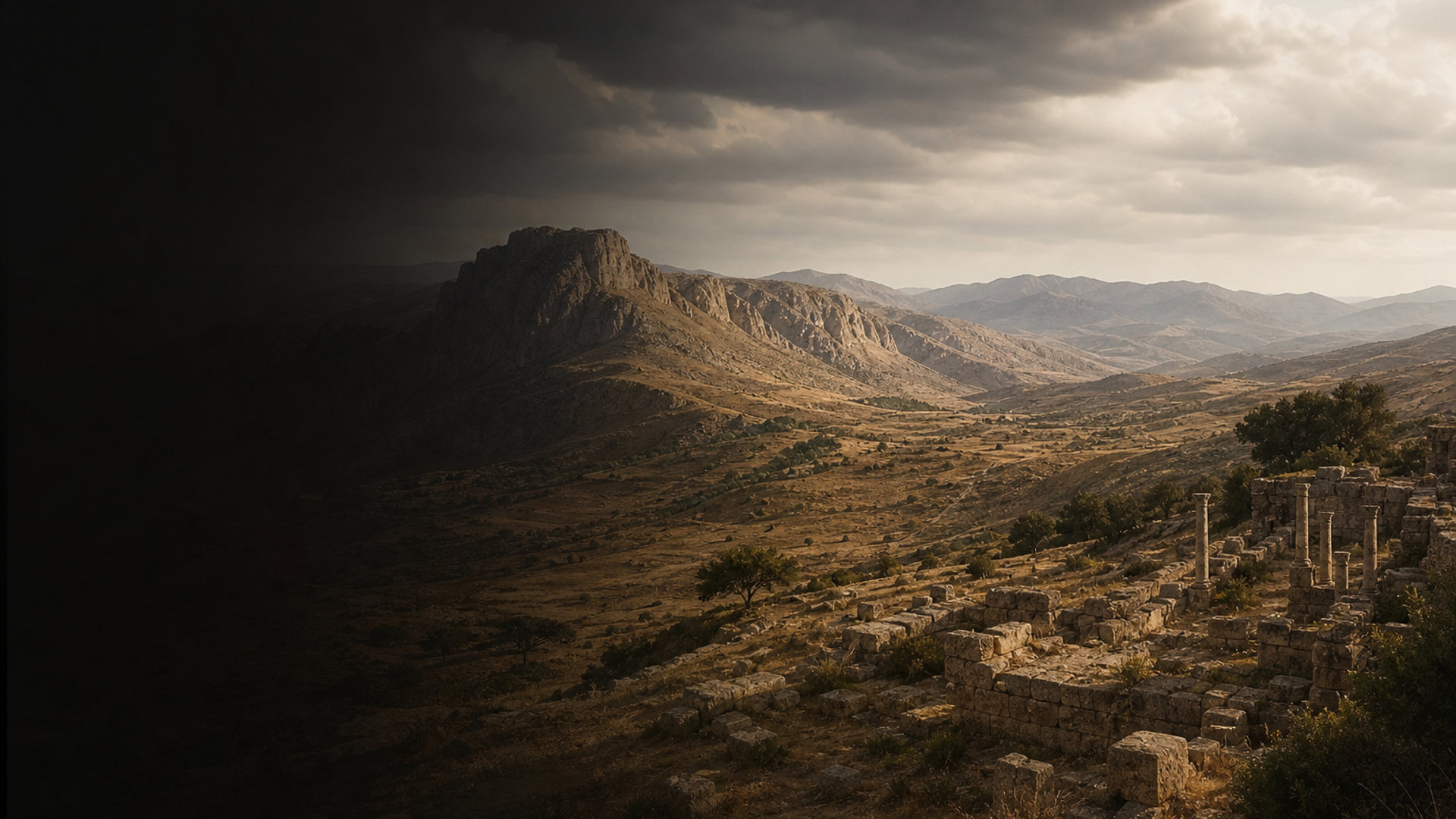
Along the highland edges of Roman Africa, Sitifis (modern Sétif) glowed as a provincial city where indigenous Berber traditions braided with Roman institutions. Archaeological data indicates occupation layers and funerary use of the Necropole Orientale between roughly 40 BCE and 210 CE, a period archaeologists often label the Numido‑Roman Berber Era. Material culture — local coarse ware, imported amphorae, and funerary stelae with Punic or Latin inscriptions — paints a picture of communities negotiating identity under imperial structures.

Limited evidence suggests continuity with earlier Numidian settlements in the region; cemeteries at Sitifis show burial orientations and grave goods that echo pre‑Roman Maghrebi practices even as Roman dress and grave types appear. The cinematic contrast — stone sarcophagi beside simple inhumations, Latin graffiti scratched into dressed rock — captures a society both anchored in local landscapes and reoriented by Mediterranean exchange.

Caution: only three ancient genomes are available from the Necropole Orientale. Archaeological inferences about population movement and cultural origins remain provisional until larger sample sets and stratified radiocarbon sequences are recovered.

  • Sitifis (Sétif) functioned as a regional Roman administrative and market center
  • Material culture shows a blend of indigenous Berber and Roman forms
  • Continuity with pre‑Roman Numidian traditions is archaeologically plausible
Kapitel IV

Daily Life & Society

Daily life in the Numido‑Roman Berber communities around Sitifis would have been shaped by the rhythms of Mediterranean trade, pastoralism, and local agriculture. Archaeological assemblages include olive oil amphorae, local ceramics, and agricultural tools, suggesting olive and cereal cultivation supplemented by sheep and goat herding on nearby hills. Urban strata reveal workshops, mosaics in wealthier homes, and public buildings that testify to municipal life under Roman administration.

Funerary contexts in the Necropole Orientale offer intimate windows into social values: grave goods vary from modest personal items to more elaborate containers, indicating social differentiation. Inscriptions and iconography sometimes combine local symbols with Roman motifs, suggesting bilingual or bicultural elites alongside households that maintained older Berber practices. Ceramic typologies and isotopic studies (where available in comparable sites) hint at local foodways and mobility patterns — seasonal transhumance for some households, more sedentary agriculture for others.

These archaeological signals are vivid but partial; they sketch a lived environment in which identity was performed through language, dress, and ritual while materially shaped by imperial commerce and local ecologies.

  • Economy blended agriculture, pastoralism, and participation in Mediterranean trade
  • Burials show social variation and a mixture of local and Roman funerary practices
Kapitel V

Genetic Profile

Genetic data from the Necropole Orientale at Sitifis currently comprises three ancient individuals dated between 40 BCE and 210 CE. Because the sample count is small (<10), conclusions must be preliminary: the genetic signal is a first glimpse rather than a representative survey.

Archaeogenetic context: broader ancient DNA studies in North Africa often detect North African‑associated maternal lineages such as U6 and M1 and paternal lineages within E‑M81/E1b1b clades, reflecting deep Maghrebi ancestry and varying degrees of Mediterranean and Saharan gene flow through time. However, those patterns come from multiple sites across millennia; they inform comparative interpretations but cannot be directly projected onto the three Sitifis samples without risk.

What the Sitifis samples allow: limited exploration of ancestry components and affinities to neighboring populations (Roman provincial communities, earlier Numidian groups, and trans‑Mediterranean contacts). Any reported affinities should be framed as tentative — small sample sizes, possible post‑mortem DNA damage, and uneven preservation mean that further sampling and replication are essential. Future work combining additional genomes, stable isotopes, and precise contextual archaeology will test whether Sitifis individuals reflect local North African continuity, increased Mediterranean admixture, or a mosaic of ancestries.

  • Only three genomes available: preliminary and not population‑representative
  • Comparative patterns in North Africa suggest Maghrebi markers (e.g., U6, M1; E‑M81/E1b1b) but these are not confirmed for these samples
Kapitel VI

Legacy & Modern Connections

The human stories buried at Sitifis echo in the genetic and cultural landscapes of modern Algeria. Archaeological continuity of settlement patterns, combined with genetic continuity observed at broader regional scales, supports a long‑standing Maghrebi presence in the highlands and lowlands of Algeria. Yet the Roman period left material and institutional imprints — roads, towns, legal frameworks — that shaped subsequent centuries and influenced patterns of mobility and identity.

For contemporary descendants, the Sitifis assemblage offers a fragmentary mirror: some genetic components seen across present‑day North Africa likely trace roots back through periods like the Numido‑Roman era, while other elements reflect later movements across the Mediterranean and Sahara. Given the small ancient sample set, any claims linking these three individuals directly to living communities should be made with restraint. The true power of such finds lies in their ability to anchor stories — of adaptation, exchange, and continuity — that will be refined as more archaeological and genetic data accumulate.

  • Archaeology and genetics together hint at long‑term Maghrebi continuity
  • Roman era material culture shaped local identities, but genetic links to modern populations remain tentative
KI-gestützt

KI-Assistent

Stellen Sie Fragen zur Sitifis: Numido‑Roman Berber Lives-Kultur

KI-Assistent von DNAGENICS

Funktion freischalten
Stellen Sie Fragen zur Kultur Sitifis: Numido‑Roman Berber Lives. Unser KI-Assistent kann genetische Befunde, historischen Kontext, archäologische Belege und moderne Verbindungen erläutern.

Beispiel einer KI-Analyse

Die Sitifis: Numido‑Roman Berber Lives-Kultur ist ein faszinierendes Kapitel der Menschheitsgeschichte...

Genetische Analysen zeigen Übereinstimmungen mit früheren Populationen und Hinweise auf besondere Anpassungen und kulturelle Innovationen. Alte DNA-Proben liefern Einblicke in Migrationsmuster, soziale Strukturen und genetische Verbindungen zwischen Populationen.

Dies ist eine Vorschau der KI-Analyse. Schalten Sie den vollständigen KI-Assistenten frei, um detaillierte Einblicke zu erkunden:

  • Genetische Zusammensetzung und genetische Ähnlichkeit
  • Migrationsmuster und Ursprünge
  • Alltag und kulturelle Praktiken
  • Genetischer Bezug zu heutigen Populationen

Weitere antike Kulturen erkunden

Geschichten von Zivilisationen aus der antiken Welt entdecken

Use code for 30% off • Expires Nov 08