Starčevo Farmers of Southwest Hungary

Download PDF creates a visual, rasterized copy. Use Print for selectable text and better assistive-technology support.

Bericht wird vorbereitet

Verfügbare Informationen und Referenzen werden geladen

Verbindung mit dem archäologischen Quellenbestand...

Alte Quellen werden zusammengestellt

Zum Hauptinhalt springen
Starčevo Farmers of Southwest Hungary
Zivilisations-Spotlight

Starčevo Farmers of Southwest Hungary

Early Neolithic Danube communities (5830–5482 BCE) where archaeology and ancient DNA meet

5830 CE - 5482 BCE
Western Hungary (Danube region)
Scrollen zum Start
Kapitel I

Die Geschichte

Die Starčevo Farmers of Southwest Hungary-Kultur verstehen

Archaeological and genetic glimpses from five Early Neolithic individuals (5830–5482 BCE) in Hungary reveal Starčevo-era farmers with Anatolian-related ancestry, Y haplogroups H and G, and mtDNA dominated by K. Small sample size makes conclusions preliminary but evocative.

Time Period

5830–5482 BCE

Region

Western Hungary (Danube region)

Common Y-DNA

H (2), G (2) — small sample

Common mtDNA

K (2), N (1), T (1), H (1)

Kapitel II

Zeitleiste

Zentrale Momente in der Geschichte dieser Kultur

5830 BCE

Earliest dated samples from Hungary_EN_Starcevo_1

First of five individuals in this group date to c. 5830 BCE, from sites in western Hungary linked to the Starčevo tradition.

Kapitel III

Origins & Emergence

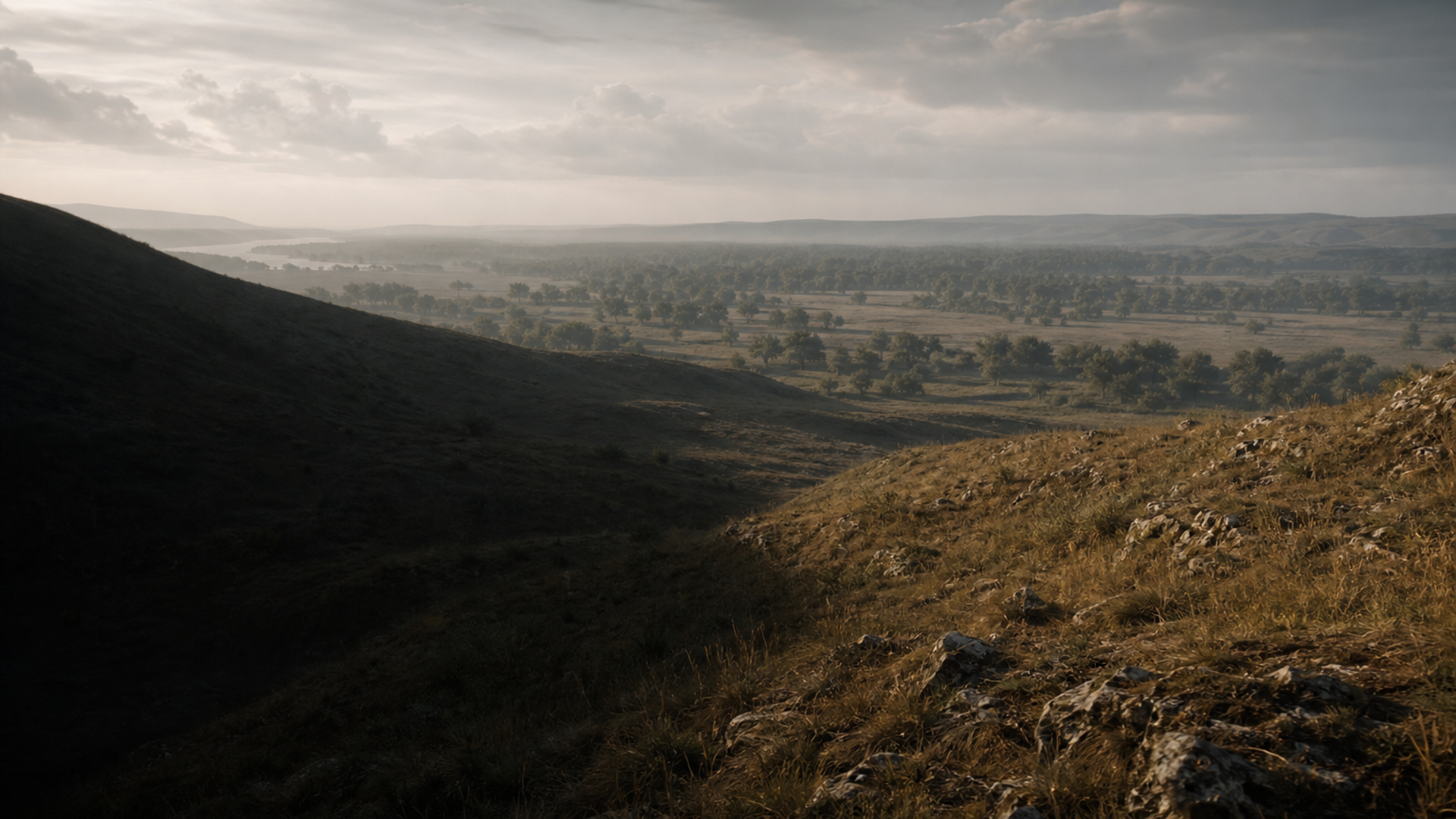
In the cool light of the Early Neolithic, farmsteads appear along the western margins of the Danube — a human drama of movement and innovation. Archaeological assemblages attributed to the Starčevo complex in Hungary (5830–5482 BCE) show pottery styles, house plans, and tool types that tie these communities to the wider wave of farming cultures spreading northwest from the Balkans and ultimately from Anatolia. Key excavated loci for the Hungary_EN_Starcevo_1 grouping include Alsonyek-Bataszek, Mérnöki telep; Vörs-Màriaasszonysziget (Zala County, Marcali); and the west-of-Danube trench at Siklós-elkerülö út (Siklós-Csukman dülö).

Archaeological data indicates small, nucleated settlements focused on cereal cultivation and stock-keeping. Material culture — decorated pottery, polished stone tools, and early architectural traces — marks a shared lifeway across sites. Genetic evidence from five individuals provides a complementary line: their genomes largely reflect the Anatolian-derived Early European Farmer ancestry common in Starčevo contexts, consistent with movement of people as well as ideas. Limited evidence suggests local interaction with Mesolithic groups, producing regional variation in both artifacts and genes. Because this dataset is small (n = 5), interpretations of migration routes and fine-scale population structure remain preliminary; future sampling across more sites and time points will sharpen the picture.

  • Sites: Alsonyek-Bataszek; Vörs-Màriaasszonysziget; Siklós-Csukman dülö
  • Cultural link: Early Neolithic Starčevo tradition from the Balkans
  • Anatolian-derived farmer ancestry apparent but locally varied
Kapitel IV

Daily Life & Society

Imagine mist over river meadows as people tend emmer and einkorn, the clink of stone sickles and the hush of crafted pottery drying in the sun. Starčevo-period settlements in southwestern Hungary present traces of domestic life: post-built houses, hearths, storage pits, and a toolkit geared to farming and household production. Archaeobotanical remains at related Starčevo sites indicate wheat, barley, pulses, and the beginnings of landscape management. Animal bones show herding of sheep, goats, and cattle alongside hunting.

Social life likely revolved around kin-based households and small villages connected by exchange networks. Pottery—with comb impressions and painted motifs—served both everyday storage and social signaling. Burials in Starčevo contexts vary: some interments are simple, others accompanied by grave goods, suggesting differences in status, age, or ritual practice. Skeletal evidence, although sparse for this Hungary_EN_Starcevo_1 sample set, can hint at mobility, diet, and workload when combined with isotopic and genetic data.

Archaeological evidence indicates a society transforming landscapes and lifeways, but many details remain tentative. Limited sample sizes and uneven preservation mean reconstructions of seasonal movement, community size, and social hierarchy are provisional and must be refined with further excavation and biomolecular study.

  • Economy centered on cereals and herding; supplemented by hunting
  • Material culture: comb-impressed pottery, polished stone tools
Kapitel V

Genetic Profile

The Hungary_EN_Starcevo_1 assemblage comprises five individuals dated between 5830 and 5482 BCE. Their genetic profile echoes broader Early European Farmer (EEF) ancestry associated with the Neolithic expansion from Anatolia via the Balkans. Y-chromosome lineages observed include haplogroups H (two individuals) and G (two individuals), while mitochondrial haplogroups are dominated by K (two individuals) alongside N, T, and H. These markers are broadly compatible with Neolithic farmer populations: G-lineages are commonly found in early farming male lineages, and mtDNA K is frequent in Neolithic maternal lineages across Europe.

However, important caveats apply. With only five genomes, statistical power is low and sampling bias may distort perceived frequencies. The presence of Y-H, which is less typical for classical Anatolian farmer datasets, could reflect local male-lineage diversity, possible assimilation of hunter-gatherer males, or sampling noise. Likewise, mtDNA H appears in one individual; haplogroup H became widespread in later periods but its early presence can signal either low-level hunter-gatherer admixture or regional variation within incoming farmer groups.

Archaeogenetic contrasts — comparing these genomes to contemporaneous Starčevo and neighboring Balkans samples — reinforce a narrative of migrating farmer ancestry blended with local inputs. Yet conclusions must remain cautious: limited sample counts (<10) make these signals preliminary. Expanded sequencing from more Starčevo sites in Hungary and the Balkans will be required to resolve patterns of male and female lineage transmission, admixture timing, and microregional population structure.

  • Y: H (2) and G (2) observed; suggests male-line diversity
  • mtDNA: K dominant; N, T, H present — typical of Neolithic maternal lineages
Kapitel VI

Legacy & Modern Connections

The Starčevo communities left an enduring imprint: they introduced farming economies that reshaped European demography, ecology, and culture. Genetic contributions from these early farmers form part of the ancestry of many later European populations, but direct one-to-one descent is complex. Archaeological continuity in pottery traditions and settlement patterns feeds into later Neolithic cultures in the Carpathian Basin, while genetic traces mingle with successive waves of migrants over millennia.

Modern Hungarians do not derive solely from these Early Neolithic people; later Bronze Age, Iron Age, and historic migrations layered new ancestries onto the landscape. Nevertheless, the fingerprints of Starčevo-era farmers survive in regional genetic components associated with Early European Farmers (EEF). Because the Hungary_EN_Starcevo_1 dataset is small, any claims of direct continuity to present-day groups should be made cautiously. Continued integration of archaeology, ancient DNA, and isotopic studies will clarify how these early farmers contributed to the genetic tapestry of Europe.

  • Contributed Early European Farmer ancestry to later populations
  • Cultural practices influenced subsequent Neolithic traditions in the region
KI-gestützt

KI-Assistent

Stellen Sie Fragen zur Starčevo Farmers of Southwest Hungary-Kultur

KI-Assistent von DNAGENICS

Funktion freischalten
Stellen Sie Fragen zur Kultur Starčevo Farmers of Southwest Hungary. Unser KI-Assistent kann genetische Befunde, historischen Kontext, archäologische Belege und moderne Verbindungen erläutern.
Beispiel einer KI-Analyse

Die Starčevo Farmers of Southwest Hungary-Kultur ist ein faszinierendes Kapitel der Menschheitsgeschichte...

Genetische Analysen zeigen Übereinstimmungen mit früheren Populationen und Hinweise auf besondere Anpassungen und kulturelle Innovationen. Alte DNA-Proben liefern Einblicke in Migrationsmuster, soziale Strukturen und genetische Verbindungen zwischen Populationen.

Dies ist eine Vorschau der KI-Analyse. Schalten Sie den vollständigen KI-Assistenten frei, um detaillierte Einblicke zu erkunden:

  • Genetische Zusammensetzung und genetische Ähnlichkeit
  • Migrationsmuster und Ursprünge
  • Alltag und kulturelle Praktiken
  • Genetischer Bezug zu heutigen Populationen

Weitere antike Kulturen erkunden

Geschichten von Zivilisationen aus der antiken Welt entdecken

Use code for 30% off • Expires Nov 08




