Taiga Bronze: Krasnoyarsk MLBA

Download PDF creates a visual, rasterized copy. Use Print for selectable text and better assistive-technology support.

Zum Hauptinhalt springen
Zivilisations-Spotlight

Taiga Bronze: Krasnoyarsk MLBA

Bronze Age communities of the Krasnoyarsk region revealed through burials and ancient DNA.

1900 CE - 1400 BCE
Krasnoyarsk Krai; Minusinsk Basin, Russia

Die Geschichte

A concise portrait of Mid–Late Bronze Age communities (1900–1400 BCE) from Krasnoyarsk Krai and the Minusinsk Basin (Orak, Potroshilovo II, Ust‑Bir IV, Chumysh‑Perekat‑1). 18 genomes reveal dominant R Y‑lineages and diverse maternal haplogroups—linking steppe ancestry with local Siberian threads.

Time Period

1900–1400 BCE

Region

Krasnoyarsk Krai; Minusinsk Basin, Russia

Common Y-DNA

R (11), Q (1)

Common mtDNA

U (6), T (5), K (2), H2b (2), W (1)

Schlagwörter

Zeitleiste

1900 BCE

Earliest dated burials in dataset

Around 1900 BCE the burials at Orak and early Minusinsk Basin graves mark the beginning of the sampled Mid–Late Bronze Age sequence.

Origins & Emergence

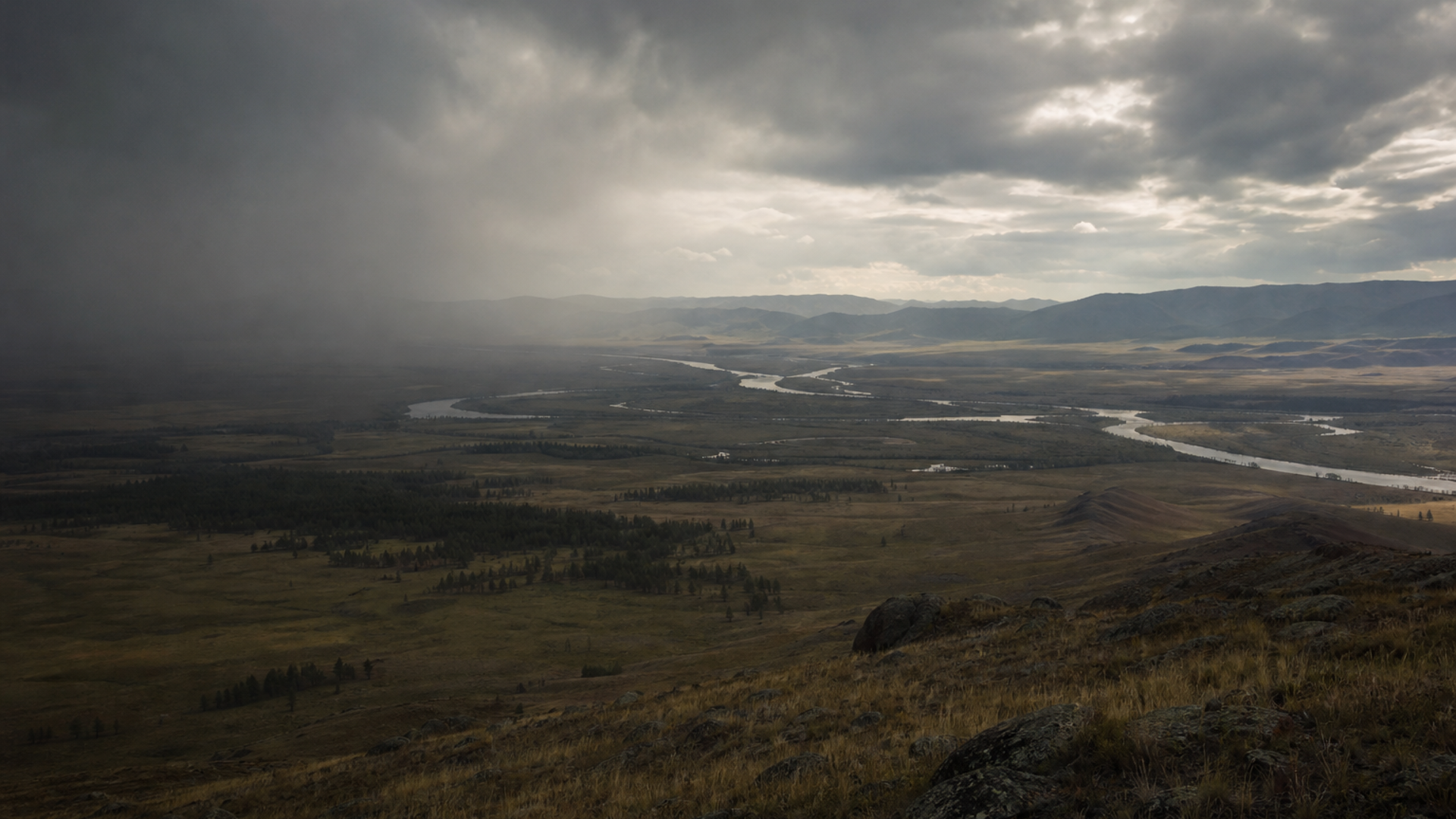
The Mid–Late Bronze Age horizon in Krasnoyarsk (c. 1900–1400 BCE) unfolds across river valleys and the high edges of the Minusinsk Basin. Archaeological data indicates a network of burial places — Orak burial place near Orak Ulus, Potroshilovo II and Ust‑Bir IV in the Minusinsk Basin, and Chumysh‑Perekat‑1 — where funerary rites and material culture were deposited over generations. Limited evidence suggests continuity with earlier Bronze Age traditions in southern Siberia, while new influences appear in ceramics and metalwork styles.

The landscape itself — a mix of forest‑steppe and riverine corridors — likely shaped mobility and contact. Grain agriculture, pastoralism on river terraces, and seasonal movement across the taiga‑steppe ecotone are plausible economic strategies inferred from regional parallels. Genetic sampling (18 individuals) provides a tangible thread: a predominance of Y‑lineage R alongside a variety of maternal haplogroups hints at incoming male‑biased steppe affinities combined with more heterogenous local female lineages. This pattern is consistent with broader Eurasian Bronze Age dynamics, but local variation in burial practice and chronology suggests a mosaic of communities rather than a single, uniform culture.

  • Sites: Orak burial place; Potroshilovo II; Ust‑Bir IV; Chumysh‑Perekat‑1
  • Landscape: Minusinsk Basin river valleys, forest‑steppe ecotone
  • Cultural signal: continuity with Siberian Bronze traditions plus external steppe influences

Daily Life & Society

Archaeological traces from graves and settlement scatters suggest a life shaped by mobility, craft, and seasonal rhythms. Funerary deposits commonly include pottery, occasional metal ornaments, and stone tools; variation in grave form points to diverse local traditions. Archaeological data indicates cattle, sheep, and goat herding were plausible economic mainstays, supplemented by hunting, fishing, and small‑scale cultivation in sheltered valleys.

Social organization can be glimpsed through burial variability: some graves are richer, others austere, which may reflect differences in status, age, or kinship. The distribution of male versus female grave goods is uneven, a pattern that pairs well with genetic signals of male‑biased incoming ancestry but diverse maternal origins. Craft specialization—bronze working, bone and antler tools, and ceramic production—would have anchored seasonal exchange networks connecting the Minusinsk Basin with broader Siberian and steppe zones. Yet many inferences remain provisional: settlement preservation is uneven, and direct evidence for houses, storage, and agriculture is limited at some sites.

  • Economy: herding, hunting, fishing, limited cultivation
  • Society: variability in grave wealth suggests ranked or kin‑based groups

Genetic Profile

Eighteen genomic samples from Krasnoyarsk MLBA contexts provide the first moderately sized DNA window into this region for 1900–1400 BCE. Y‑chromosome data are dominated by haplogroup R (11 of 18) with a single Q lineage; mitochondrial diversity includes U (6), T (5), K (2), H2b (2), and W (1).

This distribution points to a pronounced male lineage continuity with broader Eurasian steppe populations, where R lineages are frequent, while maternal lineages are more diverse and include haplogroups common in both West Eurasia and Siberia. Archaeological and genetic patterns together are consistent with a scenario of steppe‑derived male ancestry mixing with local or regionally varied maternal pools. Such a pattern is seen elsewhere in Bronze Age Eurasia and can reflect processes like male‑biased migration, patrilocal residence, or elite mobility.

Caveats: although 18 samples are substantial for regional prehistoric DNA, substructure exists and site‑level variation is notable; some conclusions remain provisional until larger and more geographically balanced samples are available. Also, exact subclades of R are not resolved here, so linking to specific steppe groups (e.g., Andronovo, Karasuk) requires further genomic and archaeological cross‑comparison.

  • Dominant paternal signal: Y haplogroup R (11/18), suggesting steppe‑linked male ancestry
  • Maternal diversity (U, T, K, H2b, W) indicates mixed local and regional female lineages

Legacy & Modern Connections

The human stories buried in Krasnoyarsk’s Bronze Age graves echo into the genetic makeup of later Siberian populations. The combination of steppe‑affiliated paternal lineages and varied maternal haplogroups helped seed genetic diversity in the Minusinsk Basin and adjacent regions. Archaeological continuities and breaks in material culture hint at interactions that would contribute to later cultural phenomena in south Siberia, including the transformations of the Late Bronze and Iron Ages.

From a modern perspective, these genomes are fragments that help trace population movements across Eurasia. They provide empirical fuel for reconstructing how steppe migrations interacted with resident Siberian groups and how social practices (such as patrilocality) affected gene flow. Still, many links to present‑day groups remain tentative: further sampling across time and space is needed to map direct ancestries.
  • Contributed to later Siberian genetic mosaic via steppe‑linked paternal and diverse maternal inputs
  • Helps contextualize regional cultural changes leading into the Late Bronze and Iron Ages

KI-Assistent

KI-Assistent von DNAGENICS

Funktion freischalten
Stellen Sie Fragen zur Kultur Taiga Bronze: Krasnoyarsk MLBA. Unser KI-Assistent kann genetische Befunde, historischen Kontext, archäologische Belege und moderne Verbindungen erläutern.

Beispiel einer KI-Analyse

Die Taiga Bronze: Krasnoyarsk MLBA-Kultur ist ein faszinierendes Kapitel der Menschheitsgeschichte...

Genetische Analysen zeigen Übereinstimmungen mit früheren Populationen und Hinweise auf besondere Anpassungen und kulturelle Innovationen. Alte DNA-Proben liefern Einblicke in Migrationsmuster, soziale Strukturen und genetische Verbindungen zwischen Populationen.

Dies ist eine Vorschau der KI-Analyse. Schalten Sie den vollständigen KI-Assistenten frei, um detaillierte Einblicke zu erkunden:

  • Genetische Zusammensetzung und genetische Ähnlichkeit
  • Migrationsmuster und Ursprünge
  • Alltag und kulturelle Praktiken
  • Genetischer Bezug zu heutigen Populationen
Use code for 30% off • Expires Nov 14




