Tunis Today: A Living Palimpsest

Download PDF creates a visual, rasterized copy. Use Print for selectable text and better assistive-technology support.

Bericht wird vorbereitet

Verfügbare Informationen und Referenzen werden geladen

Verbindung mit dem archäologischen Quellenbestand...

Alte Quellen werden zusammengestellt

Zum Hauptinhalt springen
Tunis Today: A Living Palimpsest
Zivilisations-Spotlight

Tunis Today: A Living Palimpsest

Modern Tunisian populations at the crossroads of Mediterranean, Saharan and Levantine histories.

2000 CE
Tunisia
Scrollen zum Start
Kapitel I

Die Geschichte

Die Tunis Today: A Living Palimpsest-Kultur verstehen

Modern Tunisian samples (n=15) collected in Tunis and among migrants in Israel (2000 CE) reveal a living mix of North African, Mediterranean and Near Eastern ancestries. Archaeological context in Tunis connects these genetic signals to millennia of migration; results remain tentative.

Time Period

2000 CE (modern)

Region

Tunisia

Common Y-DNA

Not reported (dataset)

Common mtDNA

Not reported (dataset)

Kapitel II

Zeitleiste

Zentrale Momente in der Geschichte dieser Kultur

2000 CE

Modern sampling in Tunis & migrant registers

Fifteen modern samples were collected from residents in Tunis and from migrants recorded in Israel; dataset records contemporary genetic variation and recent mobility patterns.

Kapitel III

Origins & Emergence

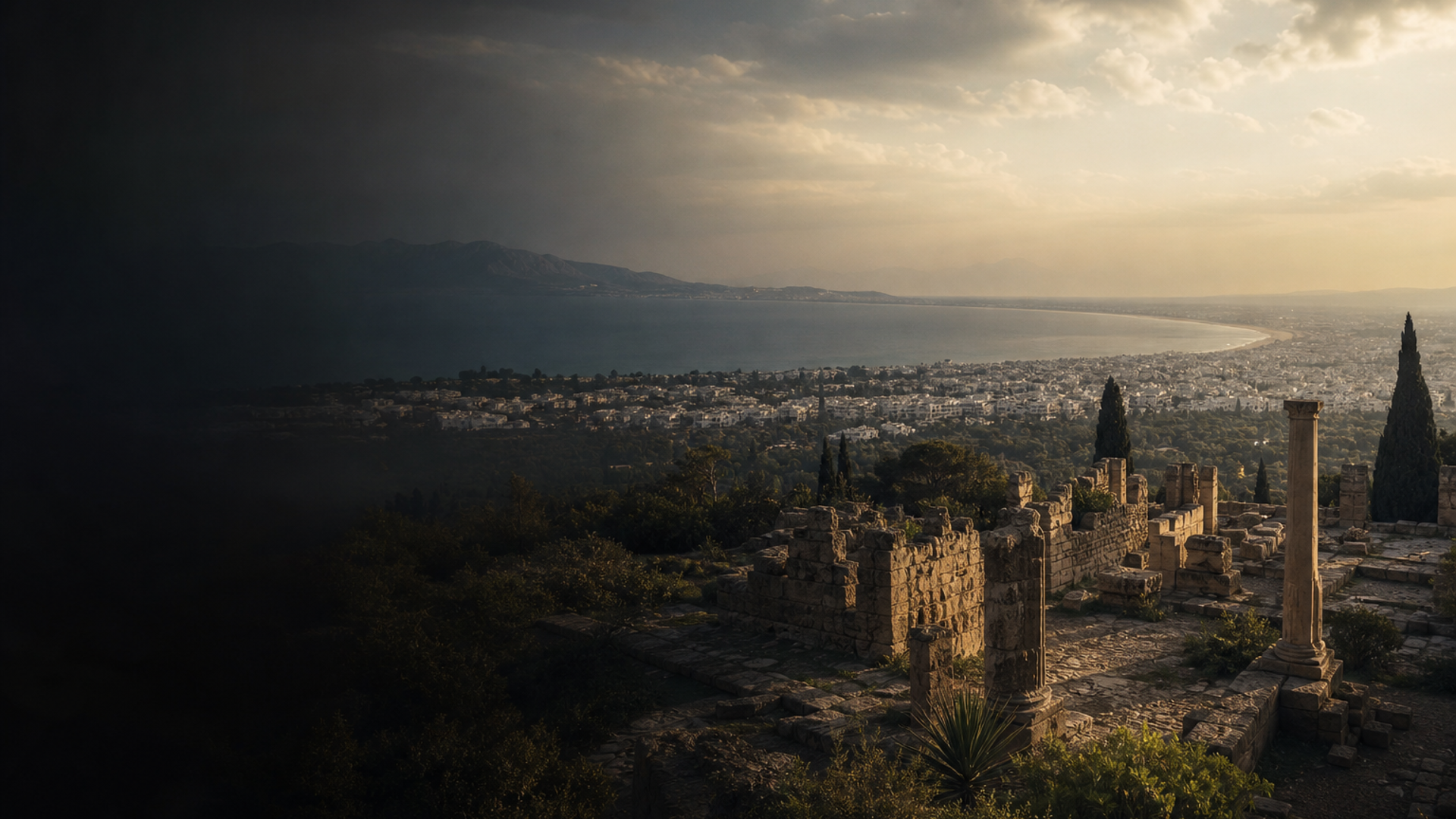
Tunis in 2000 CE stands as a modern urban center layered upon millennia of human activity. The archaeological landscape of the capital and its environs — from the ancient ruins at Carthage to the dense lanes of the medina of Tunis — records successive waves of settlement, trade and cultural change. Material culture, stratified city plans and continuity in coastal occupation indicate persistent human presence and repeated connections across the central Mediterranean.

For the genetic record presented here (15 samples collected in Tunis and among migrants recorded in Israel in 2000 CE), origins must be read cautiously. Archaeological data indicates long-standing contacts with the Maghreb interior, the Mediterranean islands, and the Levant; these contacts create expectations of mixed ancestry in modern Tunisians. Limited evidence in this small dataset can suggest patterns, but archaeological continuity does not equate to genetic uniformity: migrations, urban influx, and social mobility over centuries all reshape ancestry profiles.

In short, the origin story of modern Tunisian populations is one of layered arrivals and local continuity. The archaeological backdrop provides the physical narrative against which genetic snapshots — like this 2000 CE dataset — can be interpreted, but broad historical claims require larger, more geographically varied samples.

  • Tunis is archaeologically continuous with sites such as Carthage and the medina
  • Material culture shows millennia of Mediterranean and Saharan contact
  • Small genetic sample (n=15) offers preliminary insights, not final answers
Kapitel IV

Daily Life & Society

Modern daily life in Tunis is shaped by a tapestry of traditions visible in urban architecture, crafts, cuisine and social networks. Archaeological studies of household assemblages in Tunisian towns document long-term practices — such as olive cultivation, pottery styles and urban market organization — that have analogues in contemporary neighborhoods. The medina’s alleys and souks echo a continuity of trade and artisanal production that archaeological layers make visible.

The 2000 CE genetic samples include both residents of Tunis and migrants recorded in Israel, underscoring the role of mobility in modern social life: labor migration, educational travel and diasporic ties are part of the everyday. Archaeological indicators of trade and exchange mirror contemporary patterns of movement, where families and individuals maintain cross-border ties. These social networks influence the distribution of cultural traits and genetic lineages alike.

While archaeology documents the material conditions and social organization that shape daily life, genetic data provides a complementary lens on the human movements underlying those patterns. Together they show how markets, migration and municipal life produce a city that is at once local and cosmopolitan.

  • Material culture continuity visible in craft and market studies
  • Mobility (local and international) shapes both culture and genetic diversity
Kapitel V

Genetic Profile

The dataset considered here comprises 15 modern samples dated to 2000 CE, collected in Tunis and from migrants recorded in Israel. Crucially, the dataset does not report common Y-DNA or mtDNA haplogroups, which limits direct haplogroup-based inferences. Archaeological context and broader population genetics literature allow cautious, comparative interpretation: modern Tunisians often show a mosaic of North African (Maghrebi) ancestry, eastern Mediterranean / Near Eastern input, and variable sub-Saharan contributions resulting from historic trans-Saharan and recent movements.

Because haplogroup details are absent, focus shifts to autosomal patterns and historical expectation. Archaeological evidence of long-distance trade and repeated population contact provides a plausible framework for admixture signals: coastal Tunisia has been a genetic crossroads since the Phoenician and Roman eras, intensified by medieval and early modern movements. The small sample size (n=15) and the mix of residents and migrants mean that any observed genetic affinities are tentative and may disproportionately reflect recent mobility rather than long-term regional averages.

In short, genetics here interacts with archaeology to suggest a plural heritage in modern Tunis, but definitive statements require larger, geographically stratified samples and explicit haplogroup data.

  • Dataset: 15 modern samples from Tunis and migrants in Israel (2000 CE)
  • Haplogroup data not provided; autosomal admixture expected but conclusions tentative
Kapitel VI

Legacy & Modern Connections

The legacy of Tunis is visible in both stone and genome. Archaeological layers—ruins, urban plans, and material culture—trace enduring links to the Mediterranean and Saharan worlds. Genetically, modern Tunisians are typically a living synthesis of local North African ancestry and multiple incoming streams; the present dataset gestures toward that complexity but is not yet decisive.

For people exploring ancestry through DNA, these samples highlight two lessons: first, material history helps explain why genetic signals are mixed; second, small modern datasets may reflect recent migration as much as deep prehistory. Future integration of larger sample sets, explicit Y and mtDNA reporting, and continued archaeological study in Tunis and surrounding sites will refine how we read the city’s genetic palimpsest.

  • Cultural and genetic diversity stems from centuries of Mediterranean and Saharan exchange
  • Small, modern sample sets can illuminate recent mobility but require larger datasets for deep-time claims
KI-gestützt

KI-Assistent

Stellen Sie Fragen zur Tunis Today: A Living Palimpsest-Kultur

KI-Assistent von DNAGENICS

Funktion freischalten
Stellen Sie Fragen zur Kultur Tunis Today: A Living Palimpsest. Unser KI-Assistent kann genetische Befunde, historischen Kontext, archäologische Belege und moderne Verbindungen erläutern.
Beispiel einer KI-Analyse

Die Tunis Today: A Living Palimpsest-Kultur ist ein faszinierendes Kapitel der Menschheitsgeschichte...

Genetische Analysen zeigen Übereinstimmungen mit früheren Populationen und Hinweise auf besondere Anpassungen und kulturelle Innovationen. Alte DNA-Proben liefern Einblicke in Migrationsmuster, soziale Strukturen und genetische Verbindungen zwischen Populationen.

Dies ist eine Vorschau der KI-Analyse. Schalten Sie den vollständigen KI-Assistenten frei, um detaillierte Einblicke zu erkunden:

  • Genetische Zusammensetzung und genetische Ähnlichkeit
  • Migrationsmuster und Ursprünge
  • Alltag und kulturelle Praktiken
  • Genetischer Bezug zu heutigen Populationen

Weitere antike Kulturen erkunden

Geschichten von Zivilisationen aus der antiken Welt entdecken

Use code for 30% off • Expires Nov 08




